Sarah E. Makin ن
17.9K posts

Sarah E. Makin ن
@DCSas
Jesus Follower. Frm Sr Advisor @VP & @POTUS. @WHNSC45 alum. Filmmaker. Advocate. Fiercely patriotic 🇺🇸. Unapologetically passionate. Doer of hard things.


One of them was executed this morning. The others are still alive. There is still time to save them. The international community must act now: use every tool and demand an immediate halt to executions. Ordinary people must not become victims of a regime’s brutal revenge.


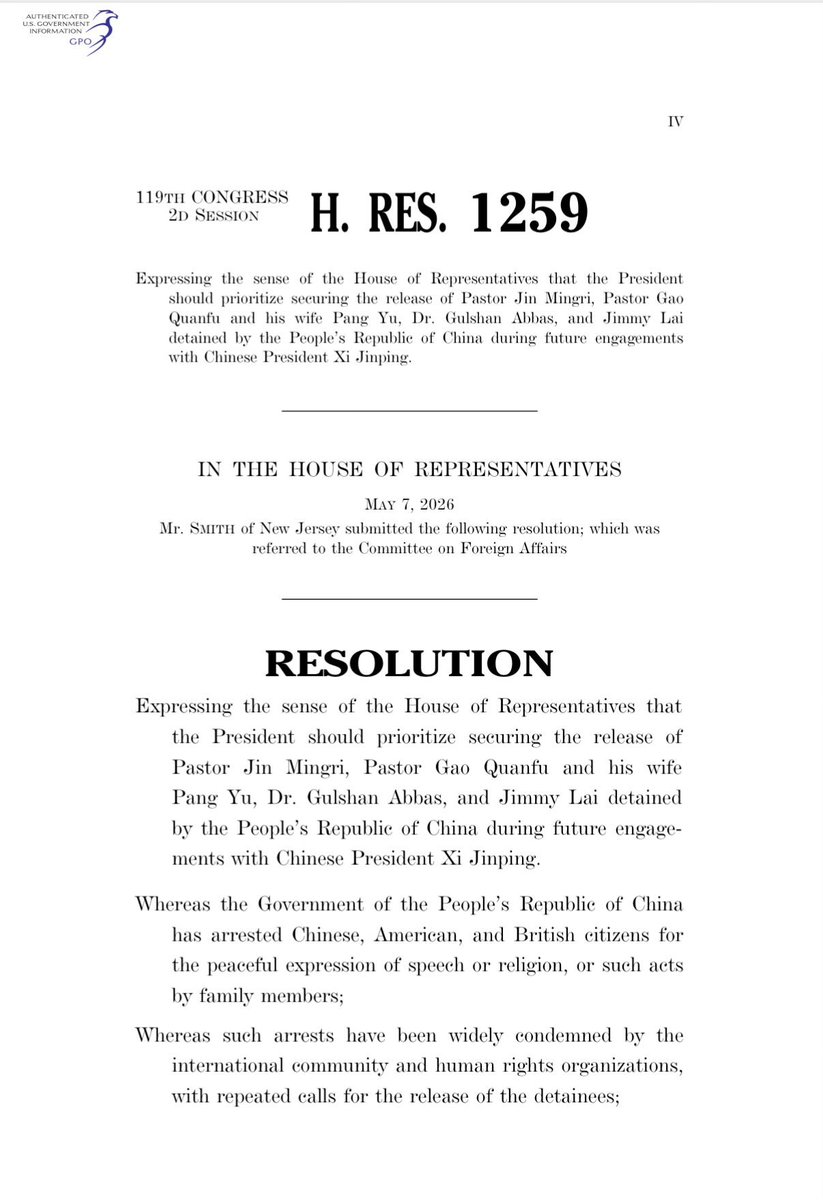
An important @HudsonInstitute event, particularly with the upcoming Trump-Xi summit. Grateful for @OliviaEnos’ leadership! I’ll moderate a panel about policy tools for political prisoner release with Olivia, Corey Jackson (@luke_alliance), and @PedroPizano (@McCainInstitute).


North Korea sentences American Otto Warmbier, a 21-year-old from Cincinnati, Ohio, to 15 years hard labor for removing a political poster from a hotel.

锡安教会“10.9”教案代祷信--为律师团队献上祷告 Zion Church “10·9” Prayer Letter—Interceding for the Lawyers‘ Team #锡安109教案 #FreeZionChurch #PrayForZionChurch


Security Alert – U.S. Embassy Baghdad, Iraq – March 17, 2026 Location: Iraq Update to Jordan border crossing information. Iran-aligned terrorist militias have encouraged and conducted widespread attacks on U.S. citizens and targets associated with the United States throughout Iraq, including the Iraqi Kurdistan Region (IKR). Attacks by Iran-aligned terrorist militia groups on public venues, including hotels, pose a significant threat to public safety. U.S. citizens should leave Iraq now. Iran-aligned terrorist militias have repeatedly attacked the International Zone in central Baghdad. The International Zone remains closed, with limited exceptions. There have also been repeated attacks in the area around the Erbil International Airport and U.S. Consulate General Erbil. Do not attempt to come to the embassy in Baghdad or the consulate general in Erbil in light of ongoing risk of missiles, drones, and rockets in Iraqi airspace. The U.S. Embassy in Iraq reminds U.S. citizens of the Level 4: Do Not Travel warning for Iraq. U.S. citizens are advised: “Do not travel to Iraq due to terrorism, kidnapping, armed conflict, civil unrest, and the U.S. government’s limited ability to provide emergency services to U.S. citizens in Iraq. Do not travel to Iraq for any reason. Leave now if you are there.” Iran and Iran-aligned terrorist militia groups pose a significant threat to public safety in Iraq. There have been attacks against U.S. citizens, U.S. interests, and critical infrastructure. These groups have attacked U.S. diplomatic facilities, U.S. businesses, and U.S.-operated energy infrastructure and have threatened to continue targeting them. Iran-aligned terrorist militias have also attacked hotels frequented by foreigners and other facilities with U.S. ties throughout Iraq, including in the IKR. Americans face risk of kidnapping, and individual Americans have been targeted. Iran-aligned terrorist militias may impede Iraqi authorities’ ability to respond effectively in an emergency. U.S. citizens should leave Iraq now. U.S. citizens choosing to remain in Iraq are strongly encouraged to reconsider in light of the significant threat to public safety posed by Iran-aligned terrorist militia groups. We are closely monitoring the situation and will keep you updated so you can make decisions about your safety. If you want to leave Iraq, the U.S. government is ready to assist by providing you the latest information about the departure options available. President Trump, Secretary of State Rubio, and the Department of State have no higher priority than the safety and security of American citizens. Options to Depart Airspace is closed and commercial flights are not operating out of Iraq. There are overland routes to Jordan, Kuwait, Saudi Arabia and Türkiye. Land borders are generally open. Travelers should expect long delays. Local ground transportation options are functioning. Americans should depart now via one of these overland routes. Airspace in neighboring countries may also be closed, and local entry and exit requirements apply. The following information is intended to inform your decision making and is subject to change. Jordan Commercial flights are operating out of Queen Alia International Airport, but flight disruptions may occur. Information on flights out of Amman can be found here: qaiairport.com/en/arrivals-de… Visas on arrival are available at the land border crossing with Iraq. U.S. citizens may also apply for a visa using the eVisa Application through the Ministry of Interior to speed up the process at the border. Kuwait Commercial flights are not operating out of Kuwait due to the continuing threat of missile and drone attacks. Roadways to Saudi Arabia are open. The border may close and reopen on short notice. Kuwait issues visas or visas on arrival to U.S. citizens visiting Kuwait. Visas on arrival cost 10 Kuwaiti Dinars for U.S. citizens and can be paid either via K-net (for residents of Kuwait) or by limited credit card options. Payment by cash is not available, and some travelers have reported difficulty paying by credit card. Obtaining an eVisa in advance of arrival is recommended to ensure a smooth arrival. Travelers can apply for the visa online at kuwaitvisa.moi.gov.kw. Information for U.S. citizens exiting Kuwait and entering Saudi Arabia can be found on U.S. Embassy Kuwait’s Alerts for U.S. Citizens page. Saudi Arabia Commercial flights are operating out of Saudi Arabia. American citizens are strongly encouraged to apply for a Saudi eVisa at least 48 hours before traveling to avoid delays at the border. Only use the official website. Third party sites have been reported to charge higher process, and some have failed to provide a visa after payment. To apply, you will need your passport, a recent passport-style photograph, a completed online application form, and a valid email address. The cost is approximately $105 USD and processing time is generally less than two business days. Saudi Arabia has been flexible with U.S. citizens and may allow them to enter even if passports are valid for less than 6 months. Visas on arrival are generally available. Transit visas cost approximately $10.50 but are only valid for up to 96 hours. U.S. citizens report being able to purchase transit visas in person at the land borders. Türkiye Commercial flights are available out of Türkiye. U.S. citizens can enter Türkiye visa free for up to 90 days. Passports must be valid for a minimum of 60 days. If your passport is valid for less than 150 days, you may be charged a visa fee. Read the Turkey Travel Advisory and be aware the area of Türkiye near the Iran and Iraq borders is designated Level 4: Do Not Travel. On March 9, 2026, the Department of State ordered non-emergency U.S. government employees and U.S. government employee family members to leave Consulate General Adana due to safety risks. Americans in southeast Türkiye are strongly encouraged to depart now. U.S. citizens who plan to enter Türkiye from Iraq via the land border crossing and would like assistance from U.S. Embassy Ankara should send the following information to Ankara-ACS@State.gov at least one business day in advance: Name, date of birth, passport information (number and dates of issue/expiration), photograph of the passport biodata page, name of the intended border crossing, and the anticipated date of crossing. Follow the Department of State guidelines to protect yourself from scams. Be careful of anyone asking for money. If you are a victim of a scam, learn how the FBI can help. Widespread Attacks on U.S. Citizens and Interests U.S. Mission Iraq has implemented ordered departure for all designated non-emergency U.S. government employees in Iraq. There is no higher priority than the safety of our people. There have been riots, protests, and other demonstrations against the United States, especially on the south bank of the July 14th Bridge and Tahrir Square in Baghdad. These riots have at times been violent, and there are calls for additional demonstrations throughout Iraq. U.S. citizens should avoid these areas. Iran-aligned terrorist militia groups have encouraged and conducted attacks on U.S. citizens and targets associated with the United States throughout Iraq. Terrorist militias have targeted hotels frequented by foreigners, including in the Iraqi Kurdistan Region. U.S. businesses and U.S.-operated energy infrastructure have also been the target of attacks. The acute risk of missiles, drones, and rockets in Iraqi airspace continues. While in Iraq, stay under cover to the extent possible to avoid falling debris. Iran-aligned terrorist militias have repeatedly attacked the International Zone in central Baghdad. Iraqi authorities have closed the International Zone in central Baghdad, with limited exceptions. Do not attempt to come to the Embassy in Baghdad or Consulate General in Erbil in light of the ongoing risk of missiles, drones, and rockets in Iraqi airspace. Consular Operations The U.S. Embassy Baghdad and Consulate General Erbil have suspended all routine consular services. Americans should contact BaghdadACS@state.gov or ErbilACS@state.gov in case of emergency. Actions to Take Leave Iraq now. Enroll in the Smart Traveler Enrollment Program (STEP) to receive safety and security updates from the U.S. Embassy. Maintain communication with family and friends to inform them of your status. Have travel documents up to date and easily accessible. If your passport has less than 6-months validity, contact BaghdadACS@state.gov or ErbilACS@state.gov. Have a supply of food, water, medications, and other essential items. In case of an attack, stay away from any debris, and monitor news outlets for official guidance. Avoid protests and demonstrations, keep a low profile, and stay aware of your surroundings. Pay close attention to communications from local officials. Follow the “U.S. Department of State - Security Updates for U.S. Citizens” channel on WhatsApp. Download WhatsApp at whatsapp.com/download. Keep your cell phone charged and pre-programmed with the following emergency numbers. Assistance Local emergency number for Iraq: 911 U.S. Embassy Baghdad: BaghdadACS@state.gov. Consulate General Erbil: ErbilACS@state.gov. U.S. Department of State 24/7 Task Force: call +1-202-501-4444 from abroad or +1-888-407-4747 when calling from the U.S. and Canada.

Coast Guard Petty Officer 2nd Class Tyler Jaggers, an aviation survival technician, died from injuries sustained during a helicopter rescue operation. stripes.com/branches/coast…


Sec Marco 'Mr Worldwide' Rubio GROOVES to Pitbull's FIREBALL at Trump's NYE do