commonancestor

90 posts

commonancestor

commonancestor

@DNAtriplethreat

Representing rare. Triple threat 🧬 of a 🦄, 🦓, and 👽

Katılım Nisan 2022
1.4K Takip Edilen62 Takipçiler
Riley Anders, MCAS
Riley Anders, MCAS@rileyanderz·
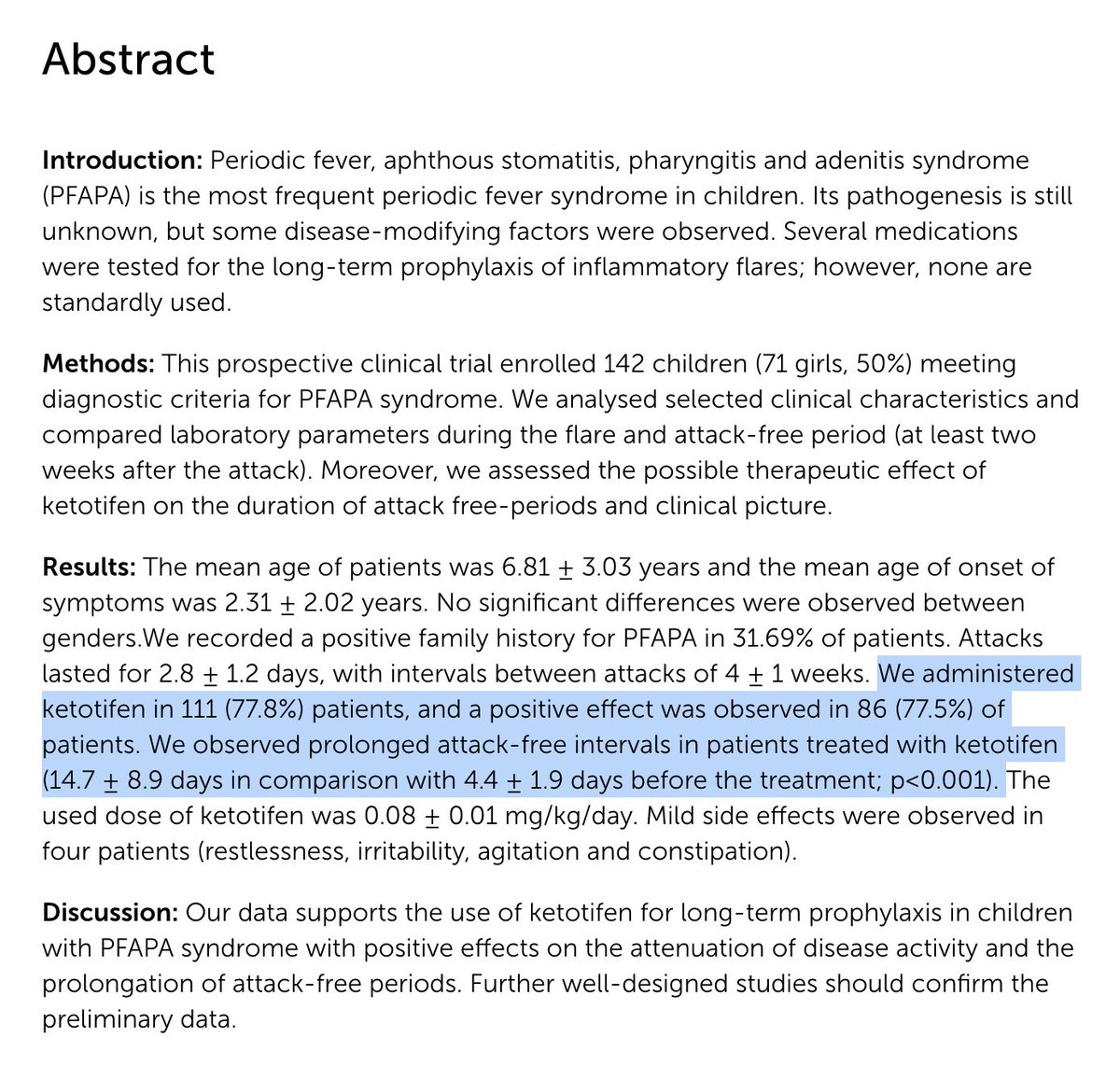
Ketotifen shown to be quite effective in a little-known fever-causing condition called PFAPA syndrome. What's interesting is PFAPA is considered to be auto-immune... Which begs the question: Is ketotifen useful in autoimmune conditions? *A new rabbit hole opens*...
Riley Anders, MCAS tweet mediaRiley Anders, MCAS tweet media
English
5
5
31
4.7K
commonancestor
commonancestor@DNAtriplethreat·
@bryan_johnson Important to note that patients can have ocular rosacea without the facial version so make sure your diagnosis is complete. Topical ivermectin cream used on outer eye-lids is very effective for the demodex mites clogging the glands. Red light eye therapy also effective too.
English
1
0
2
739
Bryan Johnson
Bryan Johnson@bryan_johnson·
I started milking my eyelids. Here's the situation. My eyes have been dry/irritated/red for the past year or so. I started using eye drops to moisten and it didn't make a difference. So I went to see an eye doctor. The source of the problem is that my meibomian glands, the tiny oil glands lining the eyelids, were clogged up. Without the meibum they secrete, the tear film on my eye evaporates in seconds which is bad for eye health. We're not sure of the cause of the dysregulation. We have few theories that we're looking into. Taking a closer look with infrared meibography, the imagery showed that my meibomian glands were congested, distorted, and partially dropped out. This is bad news because atrophied glands don't regrow! It's situations like this that makes me wonder why we do not have a better operating manual for the human body. How could I have prevented this from happening and why didn't I catch this sooner!? I did additional tests to assess the damage and my situation now. The Schirmer test (paper strip measuring tear wetting over 5 minutes) came back at 6 and 6.5 mm. A borderline reading consistent with mild dry eye. A healthy reading is typically 15 mm or above. Here's what I'm doing now to try and nurture my remaining glands back to good health: 1) Forma RF, Radiofrequency (microwave) heat applied from outside the lid, melting the obstruction. 2) LipiFlow, a device that sandwiches each eyelid: heat from the inside, pulsed pressure from the outside, squeezing the obstruction out. 12 minutes, both eyes. 3) Both capped at 41°C, not the standard 42°C, to spare eyelid collagen and elastin. No thinning skin, no premature sagging. 4) IPL around the eyes that shut down the abnormal blood vessels feeding chronic lid inflammation, the engine of MGD. 5) Manual gland milking, the doctor squeezes the lid margin between two instruments, forcing the plugs out. Hard, pasty secretions came out initially. The second and third mechanical milking the glands are returning to a normal, expected oily state. 6) Daily upkeep includes warm compresses, lid hygiene, omega-3 to keep secretions thin and glands moving. My next check in is 3 weeks form now. My doctor mentioned that meibomian gland dysfunction in her patients has increased since Covid, likely driven by the rise in screen time. When staring at screens for long stretches, people blink less frequently and less completely. Normal blink rate is roughly 15-20 times per minute but drops significantly during screen use. Incomplete blinks mean the meibomian glands don't get fully expressed, which over time contributes to gland dysfunction and evaporative dry eye. It's worth you getting checked for this and a good practice generally to make sure your eyes are in good health.
Bryan Johnson tweet media
English
335
67
1.6K
545.8K
commonancestor
commonancestor@DNAtriplethreat·
@drkeithsiau @JAMA_current Great analysis but missing is eosinophilic (eosinophilic) lower GI conditions and some autoinflamamtory diseases that often mimic IBD.
English
0
1
4
246
Keith Siau
Keith Siau@drkeithsiau·
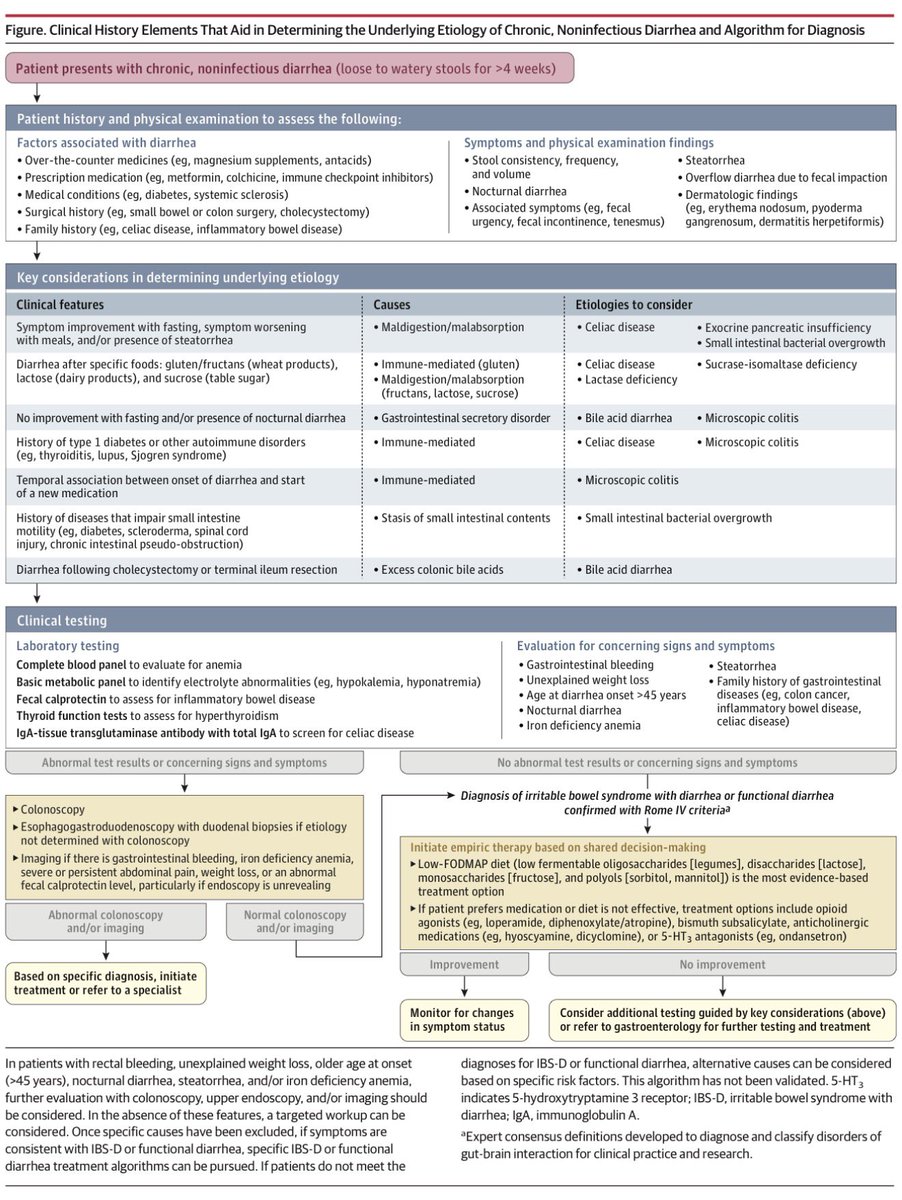
One of the must follow accounts if you are medical is @JAMA_current. They publish state of the art reviews, but unlike other journals, provide links that bypass paywalls. See their review on management of chronic diarrhoea below 👇 📸: jamanetwork.com/journals/jama/…
Keith Siau tweet mediaKeith Siau tweet mediaKeith Siau tweet media
English
8
94
411
30.7K
commonancestor
commonancestor@DNAtriplethreat·
@Neuroscope_mp It will be interesting to see which of the NLRP3 drugs will be beneficial in treating autoinflammatory diseases (CAPS/FCAS/NOD2/possibly Behcet's & others), and especially relevant for those patients suffering with inflammatory impacts to the brain and CNS.
English
0
0
0
124
Harshi Peiris, Ph.D.
Harshi Peiris, Ph.D.@Neuroscope_mp·
BREAKING Two pharma companies just ran NLRP3 inhibitor trials in Parkinson's disease. One stopped early. One just posted the most exciting neuroinflammation signal in years. Here's what's happening - and why it matters for 10 million patients. A thread:
English
16
21
113
12.3K
commonancestor
commonancestor@DNAtriplethreat·
@SecKennedy @DrOzCMS Hope rare disease patients are included, especially adults who have been sick since childhood. Those with PIDs, rare blood and cardiovascular disorders, autoinflammatory & autoimmune and others should be sitting at the table, otherwise all the efforts are a waste of tax money.
English
0
0
0
33
Secretary Kennedy
Secretary Kennedy@SecKennedy·
At HHS, we reject the idea that our health system is too broken to fix. Today, @DrOzCMS and I are announcing a new Healthcare Advisory Committee—top experts from across the country coming together to provide insight on how to cut costs, reduce red tape, and put patients first. Real reform starts now.
English
1.8K
2.7K
16K
285K
commonancestor
commonancestor@DNAtriplethreat·
@TheMightySite Autoinflammatory patients can not even get up-dosed on medications they have approved due to research inaccuracies. Perhaps the FDA needs to hire (no for free crap) some rare disease adult patients to help manage the process and get things done for everyone living rare!
English
0
0
4
1.1K
The Mighty
The Mighty@TheMightySite·
Only a few weeks ago, the FDA said it would be more flexible on rare disease treatments. Since then: a Senate hearing, an investigation, protests, and a growing national debate. themighty.com/topic/spinocer…
English
49
134
1.1K
9M
Brain Inflammation Collaborative
Brain Inflammation Collaborative@BrainInflCollab·
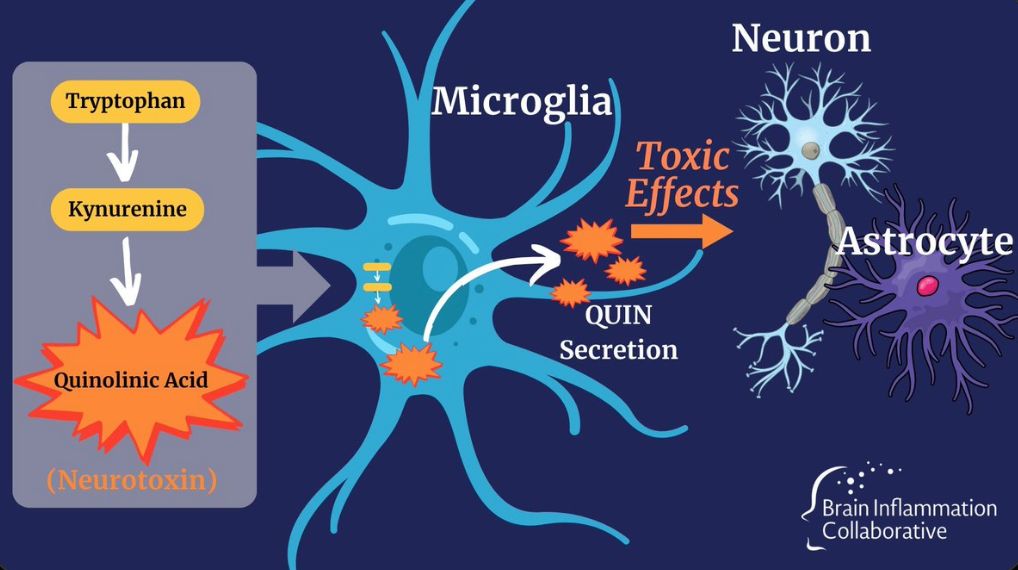
There are currently no licensed drugs used to inhibit the function of the QUIN-producing enzyme. Please help us spread the word about the damaging effects of inflammation on brain health by liking and sharing this content. Read more about the kynurenine pathway here: braininflammation.org/kynurenine-pat…
Brain Inflammation Collaborative tweet media
English
2
4
20
496
Brain Inflammation Collaborative
Brain Inflammation Collaborative@BrainInflCollab·
Pro-inflammatory cytokines, such as IL-1b, can drive the neurotoxic accumulation of quinolinic acid (QUIN). QUIN can cause cell death and neuroinflammation that triggers a never-ending loop of even more cell death and more neuroinflammation...🧵
Brain Inflammation Collaborative tweet media
English
2
26
98
5.1K
commonancestor
commonancestor@DNAtriplethreat·
@tomangell Probably should check out hormone levels and bio-identical replacement needs before moving to the plant. Perhaps a combo of both could be studied.
English
0
0
0
114
commonancestor
commonancestor@DNAtriplethreat·
@drkeithsiau @UEGJournal Often GI pathology does not report MC and even when diagnosed, many are left untreated. Thousands of patients in FB groups suffer. Topic needs more research. Subpopulations carry NOD2 and other gene variants need clarification. Eosinophils also need counting for Dx accuracy!
English
0
0
0
13
Keith Siau
Keith Siau@drkeithsiau·
This study in @UEGJournal is the first to show that microscopic colitis (MC) is associated with molecular and ultrastructural alterations in the brush border of colonocytes. By comparing patients with lymphocytic colitis (LC) and collagenous colitis (CC) to healthy individuals and those with irritable bowel syndrome (IBS-D), researchers identified a distinct signature of protein and gene dysregulation. Specifically, patients with CC were found to have significantly shorter and fewer microvilli, while those with LC show a decrease in microvilli density. These findings suggest that the breakdown of the intestinal epithelial barrier is a primary factor in the development of chronic watery diarrhoea. Notably, treatment with budesonide was shown to partially repair these physical abnormalities in the colon. This research offers promise of new diagnostic biomarkers and targeted therapies for this condition. onlinelibrary.wiley.com/doi/10.1002/ue…
Keith Siau tweet media
English
2
37
142
7.4K
commonancestor
commonancestor@DNAtriplethreat·
@CartlandDavid See many many cases like this in Still Disease groups. Sadly not rare and needs more attention and medical investigation.
English
0
0
2
18
commonancestor
commonancestor@DNAtriplethreat·
@casanova_lab Thanks for fantastic paper/work - need more investigation of NOD2 intron (plus formula) as causation of autoinflammatory NOD2/Yaos periodic fever syndrome - patients are highly complex crossing into PID, allergic dysregulation w/high impact GI issues that are not clinical IBD
English
0
0
1
99
ArianeK 💜 #Care4Complex (she/her)
I did just have one test for the PID (via an out of province doctor who’s trying to help from afar), it was negative but I’ve had borderline/slightly low IgA/IgM for 12+ years. I had a scope/biopsies only 3 years ago closer to getting Rituximab which dramatically worsened things (not knowing I had the infection the but I was already on prednisone and symptomatic - local doctors missed everything). I was on IVIG until two years ago for autoimmune disease but no longer tolerate it. A course of Xifaxan improved diarrhea maybe by half also almost three years ago, and finally stabilised me, but further attempts have been thwarted by severe drug headache/drug induced aseptic meningitis which I’m prone to (also why I had to stop IVIG). Have not had any other treatment or been able to get access to Nitazoxanide (antiviral) as it is no longer available in Canada and requires doctor to make special requests for access. I have virtually no medical care access locally and have been patching it together with very difficult trips to the US and now this doc across the country, but we hope to move soon to where I can access better care.
English
1
0
0
83
commonancestor
commonancestor@DNAtriplethreat·
@john_damianosMD Big need to look at types of microscopic inflammatory cell counts of GI tissues i.e. eosinophils, mast cells, etc. and ID of various types of colitis present in patients. Standards needed for biopsy numbers/locations for all with NOD2 to precision treat each patient's issue.
English
0
0
0
37
John Damianos, M.D.
John Damianos, M.D.@john_damianosMD·
Here are my thoughts on current and future developments in our understanding of Yao syndrome (NOD2-associated autoinflammatory disease) and its gastrointestinal manifestations! probiologists.com/article/yao-sy…
English
3
2
11
2.6K
commonancestor
commonancestor@DNAtriplethreat·
@IlliasulK Those are autoinflammatory diseases which can differ or in some cases, when polygenic, overlap with autoimmune diseases. They are not the same and the entire world of rheumatology specialists need to know how to diagnose and treat each category equally to benefit all patients.
English
0
0
1
70
ILLIASUL IBAD
ILLIASUL IBAD@IlliasulK·
🧵 “Why did I get this disease, doctor?” — A thread. “Sir, why me? What did I do wrong?” This is the question I hear almost every week in my rheumatology clinic. Let me tell you something honestly — Autoimmune diseases don’t come from sin, weakness, or karma. They come from biology. A long story written in our genes. Imagine your immune system as a loyal soldier. It protects you from invaders — viruses, bacteria, injuries. But sometimes, the soldier’s gun misfires. The bullets hit your own body. That’s autoimmunity. Now, why does the gun misfire? Because every soldier’s training manual — your DNA — is slightly different. Some manuals carry old typos passed down from family. Some pick up new smudges with time, stress, infections, or age. If a single typo is powerful enough, it can flip the switch of inflammation by itself. That’s what happens in monogenic diseases — like Familial Mediterranean Fever or DADA2. One gene, one mistake, lifelong fire. Often seen in children. Sometimes, it’s not one culprit — it’s a gang. Two or three small genetic changes, each harmless alone, but dangerous together. They team up, confuse your immune sensors, and the system starts attacking its own. That’s oligogenic or polygenic inheritance — common in lupus, RA, or scleroderma. And sometimes, the story begins later in life. A few immune cells quietly mutate with age like rebels breaking away from command. These “somatic” changes create rogue clones. That’s how we discovered VEXAS syndrome — inflammation born from aging genes. Genes aren’t destiny, though. They’re like a loaded gun — environment pulls the trigger. Infection, smoking, sunlight, stress, diet — they all whisper to your DNA, changing how genes switch on and off. That’s why two siblings with same risk may walk different paths. The HLA genes — your immune ID cards — decide how your body recognizes “self.” In some people, these IDs are misprinted, and their own tissues look foreign to their immune system. That’s the root of many diseases like rheumatoid arthritis and ankylosing spondylitis. So, when you ask, “What did I do wrong?” The real answer is: nothing. You just happened to inherit a code that made your immunity slightly over-curious, and then life’s environment gave it a little push. The good news? The same science that decoded your genes now helps us choose precise treatment — from blocking IL-1 in autoinflammatory diseases to targeting B-cells in lupus to identifying VEXAS by a single mutated letter in DNA. We’re not just treating symptoms anymore we’re rewriting the story. Autoimmune diseases are not punishments. They are misprints in the poetry of immunity and medicine is learning to edit them, one gene at a time. — Dr. Illiasul Ibad #Rheumatology #Autoimmunity #ScienceThread #Rheumatology #Immunology #Sullysrounds #MedX #Medtwitter #Mnemonics #Medicine #History @DrAkhilX @IhabFathiSulima @Janetbirdope #MedTwitter #RheumTwitter @CelestinoGutirr @aditya_gan3500 @nileshnolkha
ILLIASUL IBAD tweet media
English
3
8
49
3.8K
commonancestor
commonancestor@DNAtriplethreat·
@IhabFathiSulima Erysipelas and if it comes with repeated fevers, GI pain or joint issues consider that patient might have Familial Mediterranean Fever, the most common autoinflammatory condition, globally.
English
0
0
1
182
Dr Ihab Suliman
Dr Ihab Suliman@IhabFathiSulima·
What is the diagnosis?
Dr Ihab Suliman tweet media
English
63
49
598
126.5K
commonancestor
commonancestor@DNAtriplethreat·
@SabinehazanMD Said to a half alive patients everywhere, especially the rare/undiagnosed ones - "tests are normal" followed by "you are fine"
English
0
0
0
234
sabine hazan md
sabine hazan md@SabinehazanMD·
Loss of Bifidobacteria
sabine hazan md tweet media
English
65
88
707
21.6K
commonancestor
commonancestor@DNAtriplethreat·
@jonrice80 @douglasritz @megynkelly Has your daughter been genetically tested as PFAPA usually begins around 2 to 3 years old. Some with PFAPA are misdiagnosed and actually have other autoinflammatory diseases. Many auto patients react really poorly to vaccines so your child's case needs more investigation ASAP.
English
0
0
0
51
Jon Hook
Jon Hook@jonrice80·
@douglasritz @megynkelly My wife is perfectly average, certainly not obese or high levels of insuline/diabetes. We have a severely autistic 6 year old who also had an autoinflammatory disease (PFAPA) between her 2 and 4 month vaccines that gave her intense fevers that we treated with Tylenol.
English
3
0
8
220
commonancestor
commonancestor@DNAtriplethreat·
@UptonOrwell @Nature A novel way to figure out questions in research that are related to patient diseases is to ask actual patients for input and include patient organizations in the process.
English
0
1
3
405
John V. Kane
John V. Kane@UptonOrwell·
A short-and-sweet guide to developing research questions published in @Nature. Lots of good advice here 👍
John V. Kane tweet media
English
14
485
2.8K
183.7K