
Sabitlenmiş Tweet
DK
8.1K posts


DK
@D__K25
AK&KK|JM44|TVCC Alumni | @pokybb25 assistant coach|
Pocatello, ID Katılım Nisan 2012
581 Takip Edilen634 Takipçiler
DK retweetledi

DK retweetledi

DK retweetledi

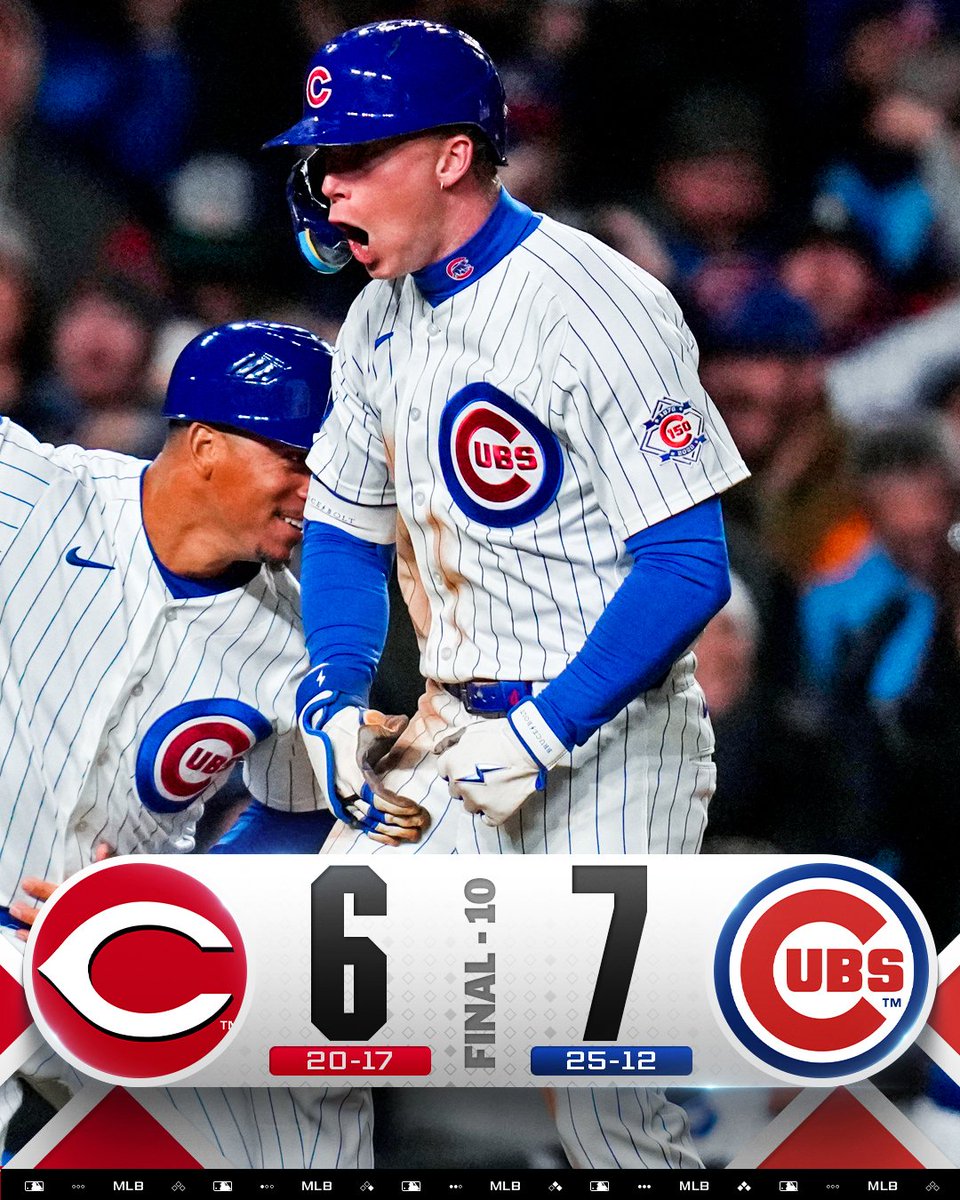
Today’s Batting Average on balls hit on the ground or on a line: .500
Today’s batting average on fly balls: .162 (one of those left the park).
You want success as a hitter. Learn to stay on top of the ball.
If you do that, and you get stronger and stronger the power will come, I promise you.
English

DK retweetledi

First thing is that pitcher is 1.7 to plate. Hard to throw people out with that slow of a time.
For those that don’t know, 1.5 is absolutely slowest time to have a chance, UNLESS you are a 1.8 on the money thrower behind the plate. Not many of those.
Foot work looks solid, especially being in the one knee stance. But, he’s losing his front side a little bit. Left arm/elbow needs to be a hair more up and square toward target.
Catcher is taking the blame for stolen bases but he can’t throw it until he gets it.
John Bollman@JohnBollman11
I dont know whats more insane… That a D1 ACC catcher has a 3.2% caught stealing percentage or that there are 3 catchers in D1 that are worse than him.
English
DK retweetledi

My JUCO coach used to say “When you’re struggling at the plate, keep your hands up and work down. 99.9% of the time you’re missing under”
Masterclass by Miguel Cabrera
English
DK retweetledi

University of South Carolina (@GamecockBSB) Baseball head coach, @CoachMonteLee on their “Bonds Drill.”
Lee says the hands are the steering wheel and the body is the engine.
English
DK retweetledi

I work with a lot of infielders that do not understand the speed of the game and the internal clock you must have.
1st ball SS slows his feet which slows the arm down and almost throws ball away. 2nd ball doesn’t make the same mistake. They practice at a certain speed, which translates to the game. Every line time in this video is under 4.4.
Put your infielders on the stop watch at practice. Challenge them to be under or at a certain time. Start at 4.5 and work down. Call out every time so they know if they are rushed or have time. The internal clock is one of the most important parts an infielder can have!!
English
DK retweetledi


DK retweetledi
A Coach Cignetti jewel: “Good players want coached. Great players you can’t coach them enough, they want more, more, more.
Inconsistent players want to be coached on their terms.” …(and always have a response or excuse)
English
DK retweetledi
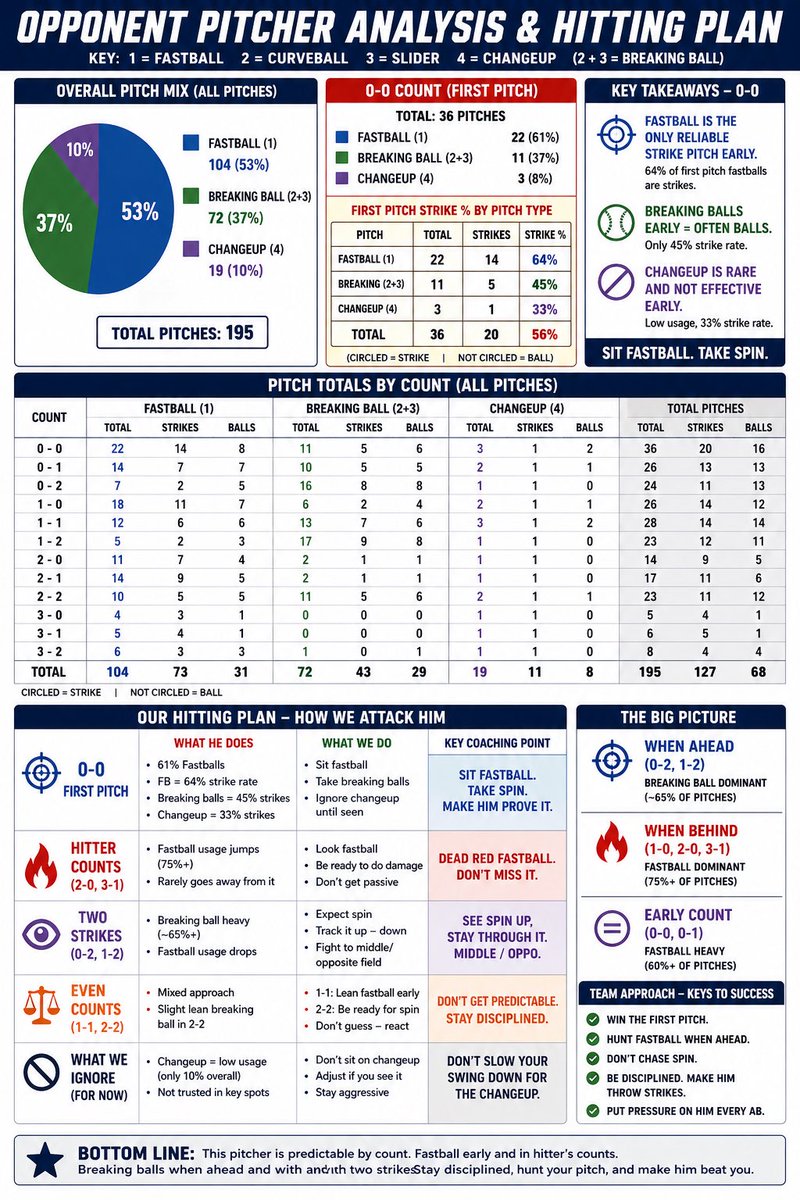
The hitter’s swings, foul balls, and takes give you a good idea of his approach. What do I mean?
Fastballs:
Is he late on the FB? Where are his foul balls? Pulled foul? Or over the opposite dugout? Or, is he taking them?
So, if late, this means that we pitch FB in, up, and expand down. If he’s taking them, he might be sitting strike offspeed.
Also, if he’s late on FB, be careful throwing a get me over strike offspeed pitch. You will be doing him a favor.
A good question to ask is, where can we go where his barrel can’t square the ball up?
Offspeed: is he pulling them foul? Are his takes good or bad? Does his swing look comfortable on the offspeed? Where does he chase?
A good tidbit to follow is that we should chase bad swings.
The best hitters in the world can make the adjustment pitch to pitch.
Most players, especially at the HS and below level, can’t do that. So if he takes a bad swing on a pitch, throw it again. If he takes it, throw a different pitch, then go back to bad swing pitch.
Another tidbit is that if the hitter fouls a ball straight back to the backstop, be very careful repeating that, because he just missed it.
Many more nuances to this but this is basic food for thought.
Jim Vaughn 🤘🏻@JimVaughn_
@JLucroy20 Can you expand on how you teach this concept to catchers? It's good to know what a hitter's deficiencies are, but that doesn't explain the proper way to sequence.
English
DK retweetledi

DK retweetledi
DK retweetledi

You won’t see this in D3. Wanna know why? Coaches had the boys perfecting bunt d and 1st and 3rds in the back of the auditorium for a month now. #WhyD3 #d3baseball
Jake McKeever@CBCJakeMck
The first runs of the year come a botched PFP. @karenmotherof2 we have a clue
English
DK retweetledi
DK retweetledi

DK retweetledi

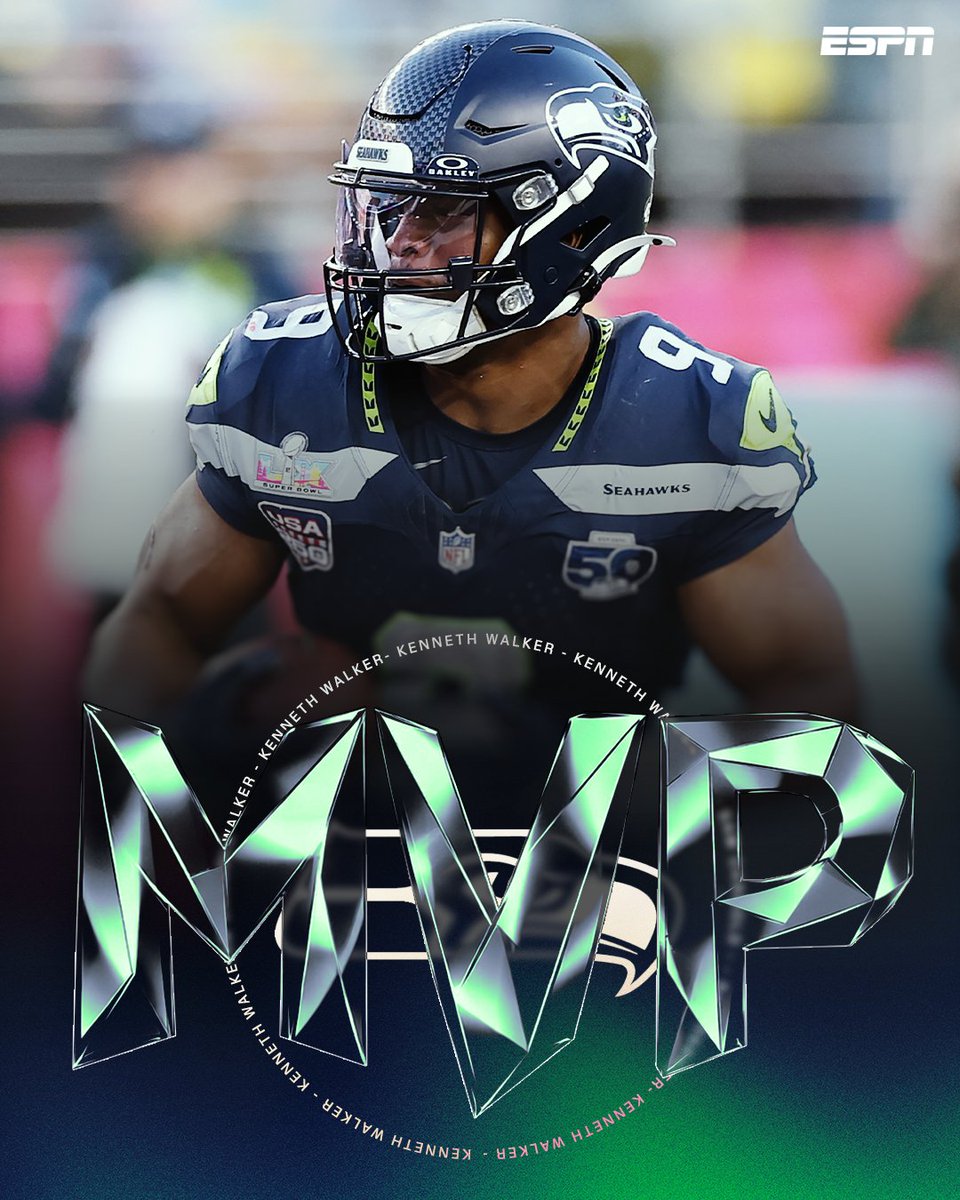
Kenneth Walker III is the Super Bowl LX MVP 🏆
He is the first running back to win the award in 28 years 👏
English
DK retweetledi

DK retweetledi


DK retweetledi
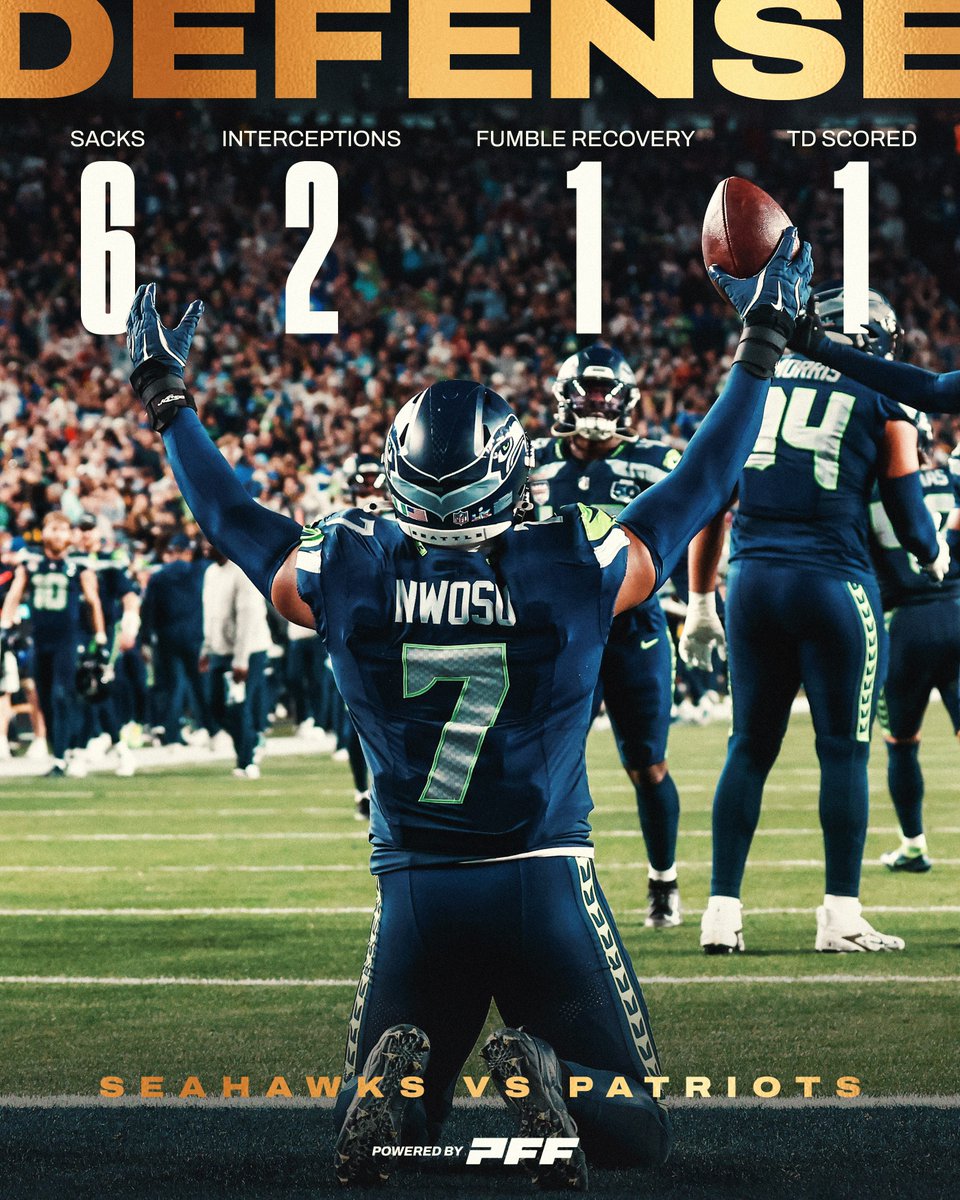
This game may not be exciting to some but this film will be studied by every team trying to mimic what this Seahawks Defense is doing. Great defensive football is art!
English