DK Wegure

4K posts

DK Wegure banner
DK Wegure

DK Wegure

@DanielWegure

Please, hit the subscribe button on my YouTube channel for me kk. Follow for follow😉 and lastly, still let Love lead.

Nsawam, Ghana Katılım Şubat 2018
291 Takip Edilen106 Takipçiler
DK Wegure retweetledi

Noah B. Price
Noah B. Price@TrueOnX·
🚨 MIND-BLOWING THROWBACK ALERT 🚨 This 2014 documentary just hit different in 2026... THE NEW WORLD ORDER SYSTEM FULL 102 MINUTE EXPOSÉ They told you it was "just a conspiracy theory." But this film was dropping RED PILLS over a DECADE AGO about the global machine printing money from nothing, engineering crises, building the police state, and herding humanity into total control. David Rockefeller quotes. Federal Reserve secrets. Military docs. The whole blueprint. This isn't "coming"... it's been running in the background the entire time. And now? You’re living in the final chapters. Watch it. Share it. Wake up your timeline before they scrub it. What’s the ONE thing in this doc that shocked you the most when you first saw it (or now)? If this system has been in motion for decades... how deep do you think it actually goes in 2026? Drop your biggest takeaway. Let me know what you think, and SHARE THIS so that others may too! and if you're not already following @TrueOnX... What the heck are you doing?!
English
23
741
1.4K
49.2K
DK Wegure retweetledi
Martina Akusika Mensah, ESQ., LL.M
Sam George is so incompetent. He is a loud propagandist, nothing more. They should have settled him financially or given him a position that doesn’t require high standards, maturity, and critical thinking.
English
47
260
985
31.1K
DK Wegure retweetledi
Whiplash437
Whiplash437@MrWhiplash_·
🚨 BREAKING: Three nuclear superpowers just met in Moscow—and the British Empire is in full panic mode. Trump's envoy + Putin + China's foreign minister = The end of 300 years of imperial control. This is the geopolitical earthquake they don't want you to see. Watch now 👇 FOLLOW ME THE NEXT DROP WILL BE SHOCKING
English
156
3K
8.8K
277.1K
DK Wegure retweetledi
Tech In Twi
Tech In Twi@tech_twi·
Drop that bill and enable the youth.
English
46
125
953
18.8K
DK Wegure retweetledi
Nana B.
Nana B.@koboateng·
@lordcudjoe @jacq_weh2 There are 14 other digital bills being introduced. The NITA bill is just a tiny piece of the pie. We created apdigh.org to break down all the digital bills. 👍🏾
English
1
6
23
674
Franklin CUDJOE
Franklin CUDJOE@lordcudjoe·
Regulation by Invoicing: The Systemic Flaws in NITA’s Licensing Push and the Threat to Ghana’s Digital Trust By John Sitsofe Mensah , Technology Policy Analyst, IMANI. 9 mins read The architecture of a nation’s digital economy relies entirely on the integrity of its regulatory frameworks. When the rules governing technological innovation are clear, predictable, and legally sound, Digital Public Infrastructure (DPI) thrives, and digital trust is established. However, when regulatory bodies bypass foundational legislation in favor of administrative bootstrapping, the entire ecosystem is placed at risk. The recent push by the National Information Technology Agency (NITA) to mandate licenses for individual ICT professionals and general private tech businesses presents a textbook case of regulatory overreach. By leaning on the Fees and Charges (Miscellaneous Provisions) Act, 2022, and its subsequent 2023 Regulations to justify this sweep, NITA is attempting to extract a substantive regulatory mandate out of a consolidated financial instrument. A rigorous analysis of the underlying issues, laws, and frameworks surrounding this development reveals structural legal contradictions, a glaring historical legislative void, and a reactive regulatory posture that threatens to stifle local innovation and erode the very digital trust the agency was established to protect. *The Foundational Blueprint: Strict Statutory Boundaries* To understand the current friction, one must examine the original 2008 regulatory architecture. NITA was established by the National Information Technology Agency Act, 2008 (Act 771), with a companion framework provided by the Electronic Transactions Act, 2008 (Act 772). These laws were designed with a specific, corporate-focused regulatory intent: - Infrastructure over Individuals: NITA was tasked with regulating the "provision" of ICT, managing networks, and ensuring quality of service at the enterprise level. - Strict Licensing Limitations: Act 772 explicitly limits NITA’s certification powers to highly sensitive corporate services, specifically encryption and authentication. - The Individual Prohibition: Most crucially, Section 38(1) of Act 772 contains an unambiguous, specific prohibition: "A licence shall not be issued or granted by the Agency to an individual." Under the 2008 framework, a data analyst or software developer simply utilizing ICT infrastructure to practice their trade operates entirely outside NITA’s licensing purview. *The Legislative Void and the Pivot to "Regulation by Invoicing"* To operationalize a primary Act—especially one establishing a "Certifying Agency" with highly technical mandates—a detailed Legislative Instrument (LI) is legally required. Despite multiple drafts circulating over the years, no comprehensive, sector-specific LIs were ever formally enacted to operationalize NITA’s broad statutory mandates under the 2008 Acts. Without an operational LI, NITA found itself holding broad enabling legislation but completely lacking the subsidiary legal tools required to actually execute its mandate. This legislative vacuum directly explains the agency's current reliance on the Fees and Charges (Miscellaneous Provisions) Act, 2022. By sliding pricing schedules for "IT Professional Licenses" and broad business certifications into a general financial instrument, the agency engaged in administrative bootstrapping—hoping the authorization to collect a fee would be interpreted as the legal mandate to establish the regulatory regime itself. This approach is legally flawed: - The Fallacy of Revenue as Regulation: The Fees and Charges Act is a consolidated national pricing catalog. Passing a financial schedule that sets a price tag for a "Software Developer Certification" does not magically grant the agency the substantive legal authority to create or enforce that professional guild. Pricing does not equal permission. - Hierarchy of Laws: A fundamental rule of statutory interpretation dictates that general laws cannot implicitly repeal specific laws. A line item buried in a general fees schedule cannot override the explicit prohibition against individual licensing found in Section 38(1) of Act 772. *The Fallacy of the IT Guild: Why State Gatekeeping is Needless* While legislative integrity demands that any move to regulate human capital must occur through rigorous primary legislation, we must ask a more fundamental question: Should the state be licensing IT professionals at all? Attempting to shoehorn the tech sector into a traditional, state-mandated professional guild is a profound misunderstanding of how the global digital economy operates. Creating a mandatory IT guild is entirely needless for two core reasons: - Global Standards Already Exist: The IT sector is inherently borderless and already governed by rigorous, globally recognized standards. International certification systems—ranging from vendor-neutral accreditations like CISSP, CompTIA, and ISACA to vendor-specific credentials from AWS, Cisco, and Microsoft—are continuously updated to reflect the bleeding edge of technology. A localized, state-run certification system cannot hope to outpace or out-rigor these global benchmarks. Rather than mandating a redundant local license, policy should encourage and perhaps subsidize the acquisition of these internationally recognized credentials. - The Meritocracy of Self-Taught Knowledge: Unlike medicine or law, the tech ecosystem thrives on decentralized learning and the open-source movement. A developer's competence is proven by their code repositories, their problem-solving logic, and their deployment history, not by a state-issued piece of paper. The sector is famously meritocratic, heavily relying on brilliant, self-taught innovators. Erecting a mandatory guild system risks disenfranchising these self-taught experts, creating artificial barriers to entry that will ultimately starve the local industry of talent. *The Path Forward: Fostering Enablement Over Gatekeeping* In 1865, as the first motorized vehicles emerged, the British Parliament panicked. To maintain control over a disruptive new technology, they passed the Locomotive Act—famously known as the "Red Flag Act." It required every motorized vehicle to be preceded by a man walking on foot, waving a red flag to warn pedestrians. While intended to create order, the law effectively strangled the British automobile industry in its crib, allowing nations with more enabling frameworks to leapfrog them. Today, attempting to force the modern, decentralized IT sector into a localized, state-mandated licensing guild is the digital equivalent of the Red Flag Act. It imposes analog constraints on a purely digital frontier. Furthermore, in structural engineering, there is an unforgiving truth: you cannot build a skyscraper on a foundation poured for a bungalow. You can add as many floors as you like, and you can paint the facade to look modern, but eventually, the structural reality will assert itself, and the edifice will collapse. The exact same principle applies to regulatory frameworks. A regulatory regime built on the fragile foundation of a pricing catalog will inevitably fracture under the weight of actual enforcement and legal scrutiny. To foster innovation and build enduring digital trust, Ghana does not need to mandate professional guilds via invoices. We require: Regulatory Clarity: Agencies must operate strictly within the bounds of their enabling Acts. - Incentivizing Global Competence: The state should encourage the use of rigorous, existing international certifications to raise the national skill floor, rather than forcing practitioners into a localized licensing trap. - Transparent Recourse Mechanisms: The industry needs mandatory performance metrics and operational data publication from regulators to ensure accountability and prevent administrative overreach. If Ghana is to build a secure, effective, and globally competitive digital economy, its regulatory foundation must be grounded in robust law and an architecture of enablement, not merely in a schedule of fees. John Sitsofe Mensah is a Technology Policy Analyst with IMANI. @JoyNewsOnTV @Joy997FM @Nuetey @Citi973 @Channel1TVGHA @STARRNEWS @starr1035fm @NiiMoiThompson @mocghana @samgeorgegh @Graphicgh @utvghana @starr1035fm @tv3_ghana @radiogold905fm @3fm927 @AccraFM1005 @gbcnews_ @ghonetv @Citi973 @Ghanaian_Times @Adomonline @onua951fm @OnuaTV @Peace1043fm @LuvFM995
English
15
128
219
9.1K
DK Wegure
DK Wegure@DanielWegure·
@lordcudjoe The only true way to make these belligerent class of politicians listen is to present ourselves in a unified front through an X community.If not these our politicians who are supposed to serve we the people will keep lording over us because we allow them. Such a disgusting bill😏
English
0
0
0
39
DK Wegure
DK Wegure@DanielWegure·
@TheDumbTechGuy Let's unite through an X community and have a unified front against our servants the political class. They can't keep lording over us, except we are docile and allow them
English
0
0
1
18
TheSophisticatedDumbTechGuy
TheSophisticatedDumbTechGuy@TheDumbTechGuy·
Ursula called me a "so called IT Professional". Today Sam has done the same thing. You're not only not different, you're worse.
Sam 'Dzata' George 🦁🇬🇭@samgeorgegh

I have always reiterated that personally and officially, I am always open to informed and constructive criticism and opinions. Criticisms that jump on bandwagon trends and fail to be based on fact are treated with contempt because they are not only mischievous but intended to misinform. To all the 'IT Professionals' who all of a sudden are making all manner of spurious claims that the @MoCDTI through its Agency - @NITAGhana - is acting illegally, please read the National Information Technology Agency Act, 2008 (Act 771), Electronic Transactions Act, 2008 (Act 772), the Fees and Charges (Miscellaneous Provisions) Regulations, 2023 (L.I. 2481) and the Fees and Charges (Miscellaneous Provisions) (Amendments) Regulations 2025 (L.I. 2512). The Ministry is simply ENFORCING existing legislation that has been on our books since 2008, 2023 and 2025. The proposed new legislation has NOT even been laid before Parliament. I welcome anyone to point out which specific action of the Agency is NOT backed by a provision under the stated legislation. We have a Country to build, and we will ensure enforcement and sanity in our Technology space. Cheers.

English
24
199
580
30.4K
DK Wegure
DK Wegure@DanielWegure·
@tech_twi Hey @tech_twi let's get other tech guys on board an X community and let's unite as a unified front against this damned NITA stuff. The government are here to serve we the people and not to lord over us
English
0
0
1
207
Tech In Twi
Tech In Twi@tech_twi·
They even posted this pricing in dollars, and after the backlash, they took the page down. These NDC people are just cowards. They can’t even change the position of a single person in their own party, but they act tough in opposition talking about arresting members of other parties.
English
23
99
430
15.4K
DK Wegure retweetledi
Tech In Twi
Tech In Twi@tech_twi·
Tesla, Intel, Google, Amazon, SpaceX and many others might not have survived if their government had not supported them financially. Now ask yourself, since Ghana’s independence, which Ghanaian youth startups has the government truly helped? Never. Rather, they come to take the money instead. And now you have the guts to tell us to make annual payments to you. 🤣🤣🤣😂😂😂😂
English
11
79
366
7.1K
NITA Ghana
NITA Ghana@NITAGhana·
We wish to inform the general public and all stakeholders that the proposed X Space discussion on the new NITA Bill has been rescheduled. 🗓️ New Date: Tuesday, 26th May 2026 ⏰ Time: 1:00 PM GMT The rescheduling is to allow for broader /1
NITA Ghana tweet media
English
180
130
329
167.3K
DK Wegure retweetledi
Seth Doe Esq
Seth Doe Esq@seth_doe22·
Your point is, you’re enforcing already existing legislations and not a Bill. But as someone with legal knowledge and a legislator too, you definitely know and the courts have cemented into public knowledge that existing legislation can be wrong and can be criticized. NPP v IGP. The IGP was enforcing existing legislation (Public Order Act) to restrict people from embarking on demonstrations without his permit. Supreme Court struck down those provisions. Mensima v Ag. Existing L.I stated that one must be part of a cooperative society to be granted a license to be a local distiller. Court struck down that provision. Martin Kpebu v Ag. Existing legislation that’s the Criminal Procedure Act stated that one cannot be granted bail for certain severe offenses. The Supreme Court over fifty years later struck down that provision. When your response is that you’re just enforcing an existing legislation, any citizen of Ghana who is adversely affected by that legislation can bring an action to strike it down as breaching the constitution or administrative power. Even in the case of Ghana Independent Broadcasters Association v NMC, the court struck down existing regulations that sought to censor and restrict the broadcasting content of independent broadcasters. Infact common sense makes it clear that only existing legislations can be problematic. In the case of Amanda Odoi v Ag as well as Richard Sky v Ag the court held it is not Bills but existing legislation that can be questioned by citizens in the public interest. Ghanaians have a right to question, critique and even challenge existing legislation in court. They don’t have to be IT experts to challenge a law you think only affects IT experts. The law potentially affects every prospective IT specialist and every single Ghanaian who will utilize those services because we will pay the extra costs when these license costs and restrictions are imposed on them, because WE are the final consumers. Administrative fairness under the Wednesbury case principle mandates that the administrative body will be REASONABLE if it considers all that it ought to take into consideration. On one hand you were fighting exorbitant DSTV prices for the “people” because it benefited your mandate. On the other hand you’re now imposing exorbitant fees on the same people you’re going to release as coders and such costs will be transferred to every Ghanaian. The former government did not impose such fees under the existing law because it would’ve been unreasonable and harsh to do so. You’re known for many things but you’re not known for passing and enforcing unreasonable laws or?
Sam 'Dzata' George 🦁🇬🇭@samgeorgegh

I have always reiterated that personally and officially, I am always open to informed and constructive criticism and opinions. Criticisms that jump on bandwagon trends and fail to be based on fact are treated with contempt because they are not only mischievous but intended to misinform. To all the 'IT Professionals' who all of a sudden are making all manner of spurious claims that the @MoCDTI through its Agency - @NITAGhana - is acting illegally, please read the National Information Technology Agency Act, 2008 (Act 771), Electronic Transactions Act, 2008 (Act 772), the Fees and Charges (Miscellaneous Provisions) Regulations, 2023 (L.I. 2481) and the Fees and Charges (Miscellaneous Provisions) (Amendments) Regulations 2025 (L.I. 2512). The Ministry is simply ENFORCING existing legislation that has been on our books since 2008, 2023 and 2025. The proposed new legislation has NOT even been laid before Parliament. I welcome anyone to point out which specific action of the Agency is NOT backed by a provision under the stated legislation. We have a Country to build, and we will ensure enforcement and sanity in our Technology space. Cheers.

English
51
372
855
55K
DK Wegure
DK Wegure@DanielWegure·
@elonmusk Except you wanna take care of the whole world
English
0
0
0
6
DK Wegure retweetledi
DAAVI
DAAVI@davibaah·
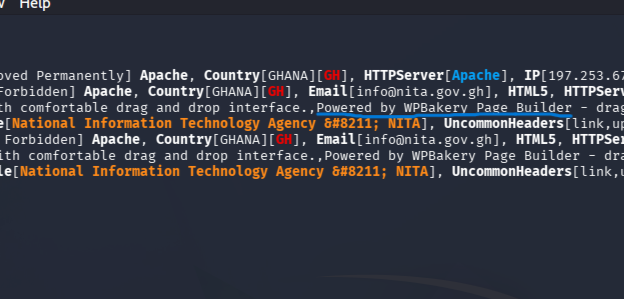
A basic Web scan on @NITAGhana reveals their server type, country, IP range, email, and CMS stack publicly. This is information that should be protected. Sharing this in good faith. SECURE NITA WEBSITE 🔐 @NITAGhana, Charles, be serious. Your server stack, IP, and admin path are all exposed. Did someone's nephew build this website? Because this is not it 😂 @samgeorgegh #ResponsibleDisclosure #Ghana
DAAVI tweet media
English
61
177
519
45.6K
DK Wegure retweetledi
Black President
Black President@niiquaye_djani·
Companies like this are setting the precedent for modern spare parts trade in Ghana! Abusuo Okai spare parts dealers will start crying soon! In Ghana, local companies refuse to innovate to meet modern standards until foreigners enter, then we start crying! Kivo Gari is a prime example.
English
29
141
603
27.6K
DK Wegure retweetledi
Paul Azunre
Paul Azunre@pazunre·
We need a bill to certify politicians Term limits. Tests on common sense, logic economics Cuz someone who cannot define what Coding is should not be making laws about it. It is not surprising that they would produce retarded bills like this
Raphael Apeyusi@RApeyusi

@pazunre Exactly. And we won’t have indigenous people creating software for us so we wiill resort to buying foreign software for local use. 😂

English
36
629
1.4K
45.3K
Anastasia❤️💙
Anastasia❤️💙@Annie_stacia0·
“Tech is making waves” Rwanda: Wow, then let’s create an enabling ecosystem for techies. Ghana: Perfect way to retard the ordinary tech guy. Let’s introduce licenses and certifications. For a country that can’t guarantee its citizens a simple job? Next joke please!
English
29
589
1.4K
19.2K