Daniel Roger

7.5K posts

Daniel Roger banner
Daniel Roger

Daniel Roger

@Danirogerc

Business, design and tech. What you read here is my (continuously improving) philosophy on building products, personal growth, and venture.

Sitges Katılım Temmuz 2012
5.2K Takip Edilen817 Takipçiler
Sabitlenmiş Tweet
Daniel Roger
Daniel Roger@Danirogerc·
El perfeccionismo no solo paraliza, si no que disminuye la calidad a largo plazo Nos equivocamos cuando pensamos que crearemos algo de calidad limitando el número de creaciones Producir algo genial es la suma de un gran número de iteraciones derivadas de intentos mediocres
Español
0
7
41
0
Daniel Roger retweetledi
Jacin 🏴‍☠️
Jacin 🏴‍☠️@jacintofleta·
Nunca pensé que montaríamos una agencia. Hoy lanzamos Baker. Somos dos ingenieros que llevan meses construyendo herramientas de IA para equipos de performance marketing. Y, por el camino, aprendimos algo incómodo empezando por nosotros mismos. Al principio usábamos la IA como casi todo el mundo: para editar el output. Cambiar un copy. Crear un creativo. Ajustar una landing. Parar una campaña. Creíamos que estábamos iterando. Pero no. Para crecer de verdad no hay que iterar outputs. Hay que iterar el sistema que los genera de forma autónoma. Así que lo construimos: → Skills y MCPs propios con CPMs y benchmarks del mercado español en tiempo real. No playbooks copiados de US → Pipelines que generan, publican y aprenden de landing pages nuevas cada semana, sin esperar a diseño. → Test A/B auto gestionados y siempre activos. → Operativa que nos permite gestionar una cuenta con profundidad. Cómo trabajamos: definimos contigo qué es éxito; leads cualificados, demos agendadas, ventas cerradas, lo que mueva tu negocio. Y construimos un sistema que opera contra esa métrica. No contra impresiones ni CTRs. No cobramos upfront. Cobramos a éxito contra esa métrica. Si no movemos la aguja, no pagas. Nada de cobrar en base al ROAS o a la cantidad de Ad spend. Abrimos cupo para 3 empresas mid-market/enterprise este trimestre. Si gastas más de 20K€/mes en paid y tu negocio está basado en leads (donde más valor aportamos), hablemos por DM. Muy emocionado con todo lo que viene.
Español
21
17
335
30.2K
Daniel Roger retweetledi
@levelsio
@levelsio@levelsio·
I said this I forgot to who but I said it BigTech will eventually come for all apps / startups / companies because they can fill the niches now that before could not because they were too small Those niches is where entrepeneurs hung out, nice parts of the market people could build a little SaaS with $100K/y to even $100M/y, notjing like the $100B/y revenue BigTech was doing, but worth it With AI now BigTech can fill those niches + they are the ones training and owning the best models, and keeping the best models for themselves they can outcompete anyone who doesn't own them (everyone except other BigTech) End game for their survival is simply trying to take every business, it's just capitalism This completely changes the prospect for entrepreneurs as there won't be much left, because BigTech is financially incentivized to have to take everything Because if they don't, their competitor will! x.com/marmaduke091/s…
can@marmaduke091

Another leak from Anthropic They created a lovable-like feature where you can build full-stack apps easily They are coming after everthing

English
225
298
4.3K
874.5K
Daniel Roger retweetledi
Sahil Bloom
Sahil Bloom@SahilBloom·
True Story: When I invested in the seed round, it was because I thought Brandon would rather die than let a customer down. I figured he was so customer-obsessed that he’d find a way to win. I was right. Profitable. Growing. Innovating. My lesson: Invest in people, not ideas.
Brandon Arvanaghi@brandon

AI agents can now open business bank accounts. @Meow lets your AI agent open bank accounts, issue cards, check balances, send money, and audit spend. Works with Claude, Cursor, ChatGPT, Gemini, and more. The first financial infrastructure built for agents.

English
34
18
215
53K
Daniel Roger retweetledi
DAN KOE
DAN KOE@thedankoe·
A pattern I've noticed in stuck people: They're always busy. They never stop moving. They have 47 tabs open and a notebook-sized to-do list. But if you ask them what they accomplished this week that actually matters, their mind goes blank. Busyness isn't a badge of honor.
English
523
1.1K
12.7K
404.5K
Daniel Roger retweetledi
Pauline Cx
Pauline Cx@Pauline_Cx·
The more affiliates you have, The more backlinks you get.
English
17
3
48
6.7K
Daniel Roger retweetledi
GREG ISENBERG
GREG ISENBERG@gregisenberg·
The best thing ANY engineer/programmer can do right now is learn how to become a top 1% marketer For 20 years, the engineer was the most important person in the room. They had the rarest skill. They could build the thing. Everyone else had to wait for them. Claude Mythos and the models coming after it are ending that era The new scarcity is the person who can look at a human being and understand exactly what they need to hear to take action. What makes someone click buy at 11pm. What makes someone tell a friend. What makes a stranger feel like a product was built specifically for them That is a completely different muscle than writing code or architecting systems Study why TBPN built a brand silicon valley is obsessed with. Learn why the headline is 80 cents of every dollar. Figure out why one subject line gets 40% open rates and the next one gets ignored Most engineers have never trained this muscle. They are world class at clearly defined problems. Marketing is the opposite. Fuzzy. Emotional. Irrational. The engineer who trains it becomes the most dangerous person in any room The CTO/CMO combo is the most valuable human in tech right now and almost nobody has both Computer Science school in 2026 should basically be part technical knowledge/part marketing knowledge I really think that... The best thing any engineer can do right now is learn how to become a top 1% marketer
English
230
127
1.4K
132.9K
Daniel Roger retweetledi
Reads with Ravi
Reads with Ravi@readswithravi·
“Action produces information. Just keep doing stuff.” — Brian Armstrong
English
25
294
2.1K
69.8K
Daniel Roger retweetledi
Damian Player
Damian Player@damianplayer·
this is CRAZY! Martin Shkreli made $500M shorting pharma and his whole strategy was literally just reading. that’s it. most people hear “shorting pharma” and think insider trading. his actual edge was embarrassingly simple. he read the clinical data. a drug goes into trials. data shows it doesn’t work. the science doesn’t even make sense. but investors see “cancer drug in the pipeline” and throw money at it like a scratch off ticket. shkreli read the research, saw the science was garbage, and shorted it. almost every time he was right. >the wild part is none of this was hidden. clinical trials are public< anyone could have done this. most people didn’t because reading FDA filings is boring, tedious work. that was his moat.. homework save this one.
Mikli@CryptoMikli

Martin Shkreli reveals he made $500M shorting pharma stocks “In pharma, it’s very easy to figure out which drugs don’t work. There are clear signs. You have clinical data showing it doesn’t help anyone. Then there are scientific reasons. Maybe it’s supposed to stop a certain enzyme, but that enzyme has nothing to do with cancer” “The idea that it would actually cure cancer becomes almost preposterous. But some people treat it like a lottery ticket. Most of the time, it doesn’t work”

English
92
555
6.3K
941.8K
Daniel Roger retweetledi
Startup Archive
Startup Archive@StartupArchive_·
Brian Armstrong explains how he built Coinbase on nights and weekends while working at Airbnb Brian first advises those who are currently employed to not build your project on company hours or on your company laptop: “If you build it on company time or on the company hardware, the company probably owns the IP.” Then he describes his schedule for working on Coinbase while still working full-time at Airbnb. “I would often work [at Airbnb] until 7pm. I’d come home, eat dinner, and then I would work from 8pm to midnight. I would do that maybe 3-4 days a week on weekdays. And then on the weekend I’d work Sunday afternoon for 7-8 hours.” Brian did this consistently for about a year and a half until Coinbase was far enough along for him to get seed funding from Y Combinator. “It sucked. I mean I was tired after the full day of work [at Airbnb]. But this is where determination comes in… At that moment in time, I was in my late 20s, and I was like, ‘I really want to try to build something important in the world.’” When asked how he maintained friendships during this time, Brian replies: “I was pretty intense about it. I would say I sacrificed friendships for it. It’s not like I was just never responding to people, but I’ve seen this happen to various people. They get to a certain point in their life. Sometimes they turn a certain age where they thought they would have more done by then or maybe someone in their family passes away and they’re like, Oh my god, time is finite. It’s precious. And something happens where they’re like, ‘I’m going to get this done, no matter the cost.’” Brian tells those out there who might be in a similar situation: “Go hard at it. Finish your book. Launch your thing. Just start doing stuff - and even if you don’t know what to do, just do anything, because action will produce information and it’ll help you get to the right thing.” Video source: @StevenBartlett (2022)
English
46
135
1.8K
1.1M
Daniel Roger retweetledi
Keshav Lohia
Keshav Lohia@Keshav_Lohiaaa·
> leave a16z > launch your own fund > invest $300 million in the era’s hottest company > close 1st fund at $1.3 billion!!! > known as “compute capitalist” > visiting scientist at harvard @AnjneyMidha is a legend.
Keshav Lohia tweet media
English
9
12
257
24.8K
Daniel Roger retweetledi
Bryan Johnson
Bryan Johnson@bryan_johnson·
Good morning everyone. Here’s the data: sex triggered a post coital prolactin surge, driving vagal tone 23% above baseline and holding it there for 7 hours straight, producing a 100% sleep score and 86% recovery. The body and mind are pretty happy with the situation.
Bryan Johnson tweet mediaBryan Johnson tweet media
English
332
123
6.2K
2.9M
Daniel Roger retweetledi
Henry Shi
Henry Shi@henrythe9ths·
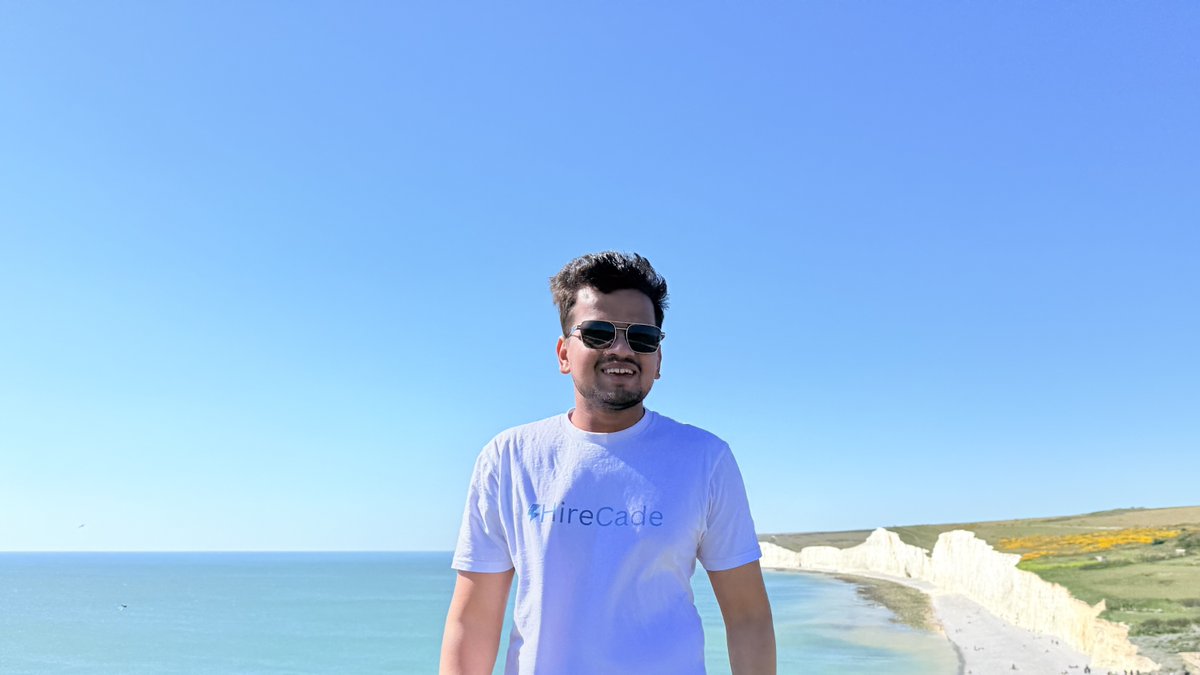
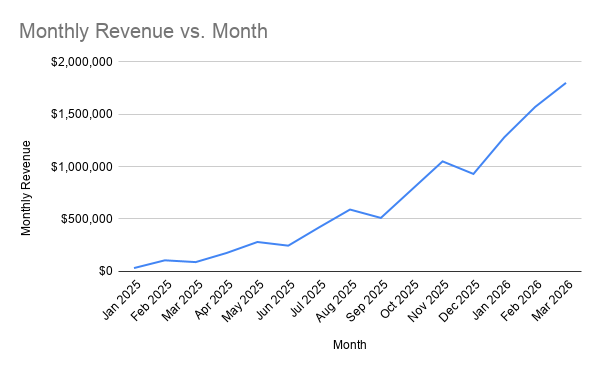
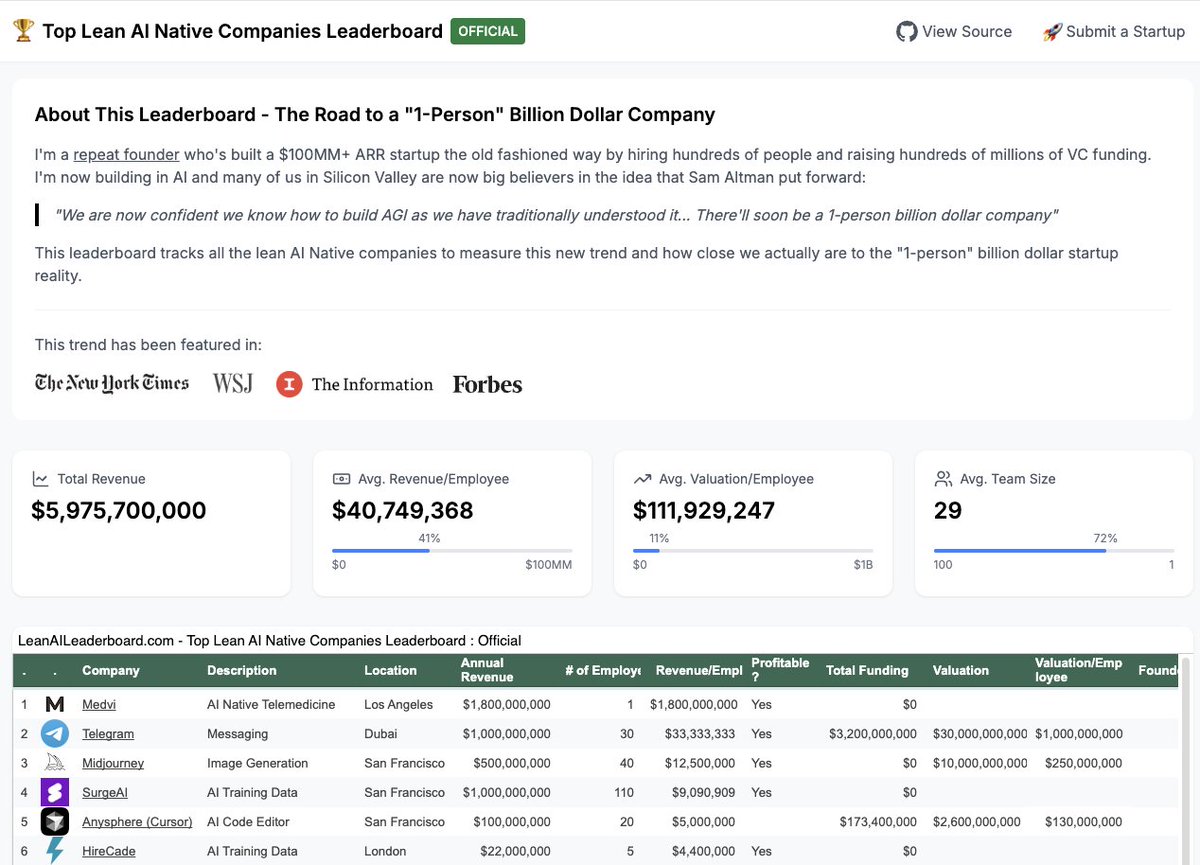
This 24-year-old Goldman Sachs banker quit to build a $22M ARR AI company (95% margins) with 5 people and no funding in 14 months. The world's biggest AI labs are now his clients. (By industry standards, the number should be $74M “ARR” but he’s too honest and refuses to inflate it. More on that in a bit). This is his story: Ritu spent years in deal rooms advising Fortune 500 CEOs on billion-dollar IPOs and mergers. In every room, companies were writing $15M checks to AI labs with no plan for verifying the output. Companies were racing to ship AI, but nobody was building the layer to review it. Ritu left Goldman Sachs and turned that oversight into a $22M ARR company. His first two clients came from a company he was already advising, which introduced him to major AI labs. Scale AI and Surge AI were turning away small projects, but Ritu took every one of them, giving a $1,000 project the same attention as a $1M one. He even runs HireCade the same way he ran deals at Goldman Sachs: The client comes first, at 3 am if necessary. This compounded into long-term relationships with well-funded AI labs. Today, 96% of his revenue comes from data annotation services, running at a 30% service fee with near-zero overhead. Now, about the $74M figure. Most human data companies report gross GMV as their ARR (contractor payments included), even though most of those funds never reach their bottom line. Ranjan reports only what HireCade's makes: $22M. Reported at industry standard, HireCade would sit at $15M ARR per employee, making them #3 on the Lean AI Leaderboard, ahead of Midjourney. In terms of infra, HireCade maintains a 40-million-candidate database built by crawling LinkedIn profiles, medical board directories, and GitHub contributor pages. When a new contract comes in, the system automatically matches requirements, sends invitations, routes candidates through an AI interview, and onboards top performers. This helped them onboard 300 doctors for one client without any human involvement. Ritu runs all enterprise sales by himself. He attends AI summits and founder gatherings, positioning himself as someone who understands the market and has capacity ready. He tracks which AI labs are raising before funding closes, because annotation contracts follow shortly after. The sales cycle is 3-5 months, and VC funding cannot accelerate it as it's mostly relationship-based. That's why he has no plans to raise outside capital. His benchmark is Surge AI, which reached $1.3B in revenue before raising VC. That discipline is what built a $22M company in over a year with 5 people. There's a lot more to his story than I could fit here. If you want the complete HireCade playbook: the sourcing infrastructure, the client acquisition strategy, and the lean operating model behind 95% margins, check it out using the link in the first comment. Ritun and the HireCade team, welcome to the Lean AI Leaderboard. See you at $100M ARR. PS: Found this valuable? Please like and repost. It takes two seconds and puts this in front of the founders who need it most.
Henry Shi tweet mediaHenry Shi tweet mediaHenry Shi tweet media
English
14
15
247
33.3K
Daniel Roger retweetledi
Guri Singh
Guri Singh@heygurisingh·
Holy shit... A guy got laid off, built an AI job search system on Claude Code, evaluated 740+ job offers with it, and landed a Head of Applied AI role. Then he open-sourced the entire thing. It's called career-ops. One slash command. Full pipeline. Paste a job URL → get back a structured A-F evaluation, an ATS-optimized PDF tailored to that exact role, salary research, interview prep, and a tracker entry. All in one shot. No spreadsheets. No copy-pasting. No spray-and-pray. Here's what's inside: → 14 skill modes (evaluate, scan, pdf, batch, apply, deep research, negotiation scripts, LinkedIn outreach) → Portal scanner pre-loaded with 45+ companies — Anthropic, OpenAI, ElevenLabs, Mistral, Cohere, Stripe, Retool, Vercel, Decagon, the works → 19 search queries across Ashby, Greenhouse, Lever, Wellfound, Workable → ATS-optimized PDF generation via Playwright with Space Grotesk + DM Sans → Go terminal dashboard built with Bubble Tea to browse your pipeline → Batch mode that evaluates 10+ offers in parallel using Claude sub-agents → An interview Story Bank that accumulates STAR+Reflection stories across evaluations until you have 5-10 master answers for any behavioral question → Auto-fill for application forms The wildest part isn't the automation. It's the philosophy. Career-ops is explicitly NOT a spray-and-pray tool. It's a filter. The system literally refuses to recommend applying to anything scoring below 4.0/5. The whole point is to find the few offers worth your time out of hundreds, not to flood recruiters with garbage. It evaluates fit by reasoning about your CV vs the JD. Not keyword matching. And because it's all built on Claude Code skills, you can ask Claude to rewrite the system itself. "Change the archetypes to backend roles." "Add these 10 companies." "Translate the modes to English." It reads the same files it uses, so it knows exactly what to edit. 8.2k stars already. 100% Open Source. MIT licensed. (Link in the replies)
English
116
435
4.5K
965.5K
Daniel Roger retweetledi
Om Patel
Om Patel@om_patel5·
SOMEONE ACTUALLY MEASURED HOW MUCH DUMBER CLAUDE GOT. THE ANSWER IS 67%. the data shows Opus 4.6 is thinking 67% less than it used to. anthropic said nothing until the numbers went public. then suddenly Boris Cherny (creator of Claude Code) shows up on the GitHub issue. users are calling it "AI shrinkflation" (same price, less intelligence) we already know from the leaked source code that they have an internal switch that keeps the models working to their full extent for anthropic employees. in the last week Claude went from WOW to being a more restricted and expensive version of ChatGPT. people are saying Anthropic is deliberately downgrading Opus to save compute for training Mythos, their next model.
Om Patel tweet media
English
526
781
9.4K
1.3M
Daniel Roger retweetledi
Nina Schick
Nina Schick@NinaDSchick·
Claude Mythos. Ten trillion parameters: the first model in this weight class. Estimated training cost: ten billion dollars. On the hardest coding test in the industry (SWE bench) it scores 94%. It found a security flaw in a system that had been running for 27 years, one that every human engineer and every automated check had missed. It found another bug that had survived five million test runs over 16 years. (It did so overnight.) It is so capable in cybersecurity that Anthropic will not release it to the public, instead it is launching Project Glasswing along with 100m in compute credits to help secure software. Only twelve partners currently have access: Amazon, Cisco, Apple, Google, Microsoft, NVIDIA, JPMorgan Chase, Crowdstrike, Palo Alto, AWS, The Linux Foundation, Broadcom. (I'm sure the Pentagon is on the line?) This is not a product launch: it is a controlled deployment of a system too powerful to distribute freely. Tell me this isn't (very expensive) AGI?
Anthropic@AnthropicAI

Introducing Project Glasswing: an urgent initiative to help secure the world’s most critical software. It’s powered by our newest frontier model, Claude Mythos Preview, which can find software vulnerabilities better than all but the most skilled humans. anthropic.com/glasswing

English
582
901
11.3K
1.9M
Daniel Roger retweetledi
Corey Ganim
Corey Ganim@coreyganim·
The moment you realize "Second Brain as a Service" is a real business: 1. Charge $1,500-3,000 to build a client's knowledge base (3 folders, 1 schema file, their existing data loaded) 2. Monthly retainer $300-500/mo for ongoing ingestion, health checks, and new source processing 3. Target agencies and consultants first. They have years of scattered data across Slack, Drive, email, and call transcripts. They'll pay tomorrow. 4. The setup takes a weekend to learn, a few hours to deliver. The client gets a searchable wiki that gets smarter every time they use it. 5. Stack it: competitive intel vault + client knowledge vault + content vault = $1,000-1,500/mo per client 10 clients = $60K+ year one. From a system built on folders and text files. Full breakdown of the system in the article.
Corey Ganim@coreyganim

x.com/i/article/2041…

English
119
323
4.2K
1M
Daniel Roger retweetledi
Obscicron
Obscicron@obscicron·
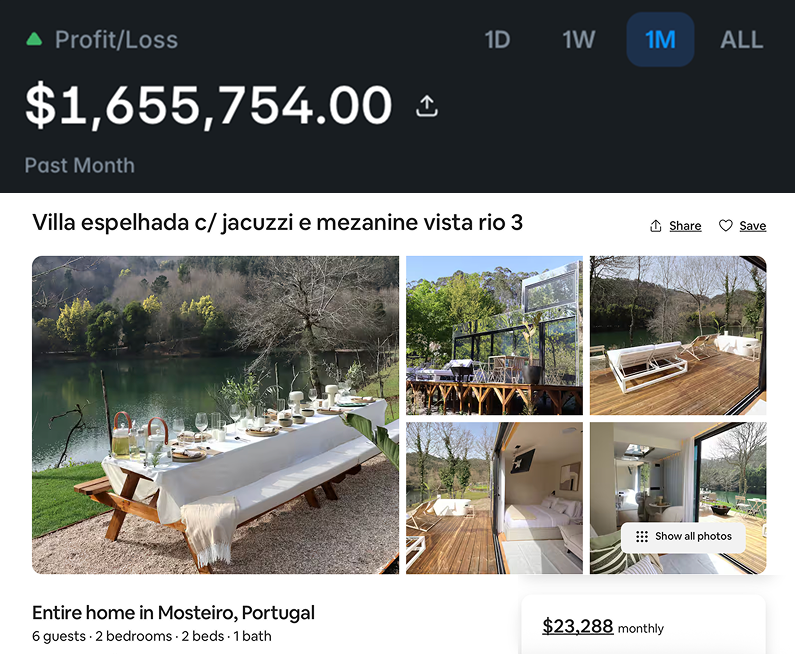
> be anon > studies math and statistics since 14 > gets into Harvard for applied math > recruited by Medallion Fund at 21 > $400k/yr, 90hr weeks for 3 years > signals are wrong 85% of the time > but they don't predict. they combine 50 weak signals into one > leaves to apply the same math to events trading > builds 50 signals in one weekend with Claude > runs them through the combination engine > loads $1,000 > first month: +47% > second month: +63% > quits job > now makes 6 figures/month from a beachfront villa in Portugal never before in human history has it been so easy to escape the permanent underclass you can literally build this system using AI, and locking in for 3 months, bookmark this article & read, no matter what - but most of you will not
Obscicron tweet media
Roan@RohOnChain

x.com/i/article/2037…

English
25
76
1.3K
331.5K