

David Elgena
6.7K posts
David Elgena
@DavidElgena
Creating remarkable brands and winning products, in health tech. Eko Health, @ButterflyNetInc
Katılım Nisan 2009
897 Takip Edilen646 Takipçiler

@thedennisobaro1 At a certain point your reputation speaks for you...
English

It seems the higher you get the simpler things become, most minimalistic portfolio I have seen today.
benji.org

Benji Taylor@benjitaylor
I’m honoured to be joining 𝕏 to lead design. I believe this is the most important platform in the world, and I can’t think of a more exciting place to help shape the future. I’m looking forward to working closely with @elonmusk, @nikitabier, and the rest of the team. I’m grateful for the opportunity, humbled to be part of it, and can't wait to get started!
English

I’m honoured to be joining 𝕏 to lead design. I believe this is the most important platform in the world, and I can’t think of a more exciting place to help shape the future.
I’m looking forward to working closely with @elonmusk, @nikitabier, and the rest of the team. I’m grateful for the opportunity, humbled to be part of it, and can't wait to get started!

English
@oykun The ability AI gives designers to directly have a hand in incredibly high-polished/high-craft apps and websites is like never before.
It closes the knowledge gap previously required.
English

@jenny_wen i'm surprised by this trend as well, most of the designers i work with play an almost hybrid product role, solving business needs, product innovating, etc. through design
English

increasing demand for PMs is interesting / surprising to me! i wonder how this might change in the next 6-12 months.
it's much more feasible to ship something with just a few engineers (think personal pan pizza not large pizza), so there's less coordination, PRD-writing, etc.
Lenny Rachitsky@lennysan
I don’t know exactly what’s going on here, but it does feel AI-related. Unlike PM and eng, which started growing in 2024 (two years post-ChatGPT), design didn’t. If I had to venture a theory, I’d say that because AI is allowing engineers to move so quickly, there’s less opportunity—and less desire—to involve the traditional design process. That said, you’d think design would become a differentiator as more products compete for attention. Something to think about for your company! We’ll keep watching this trend and AI’s impact on org design more generally. One interesting observation we made when we went a level deeper: the ratio of demand for PMs vs. designers has flipped. In mid-2023, we went from more open designer roles to more open PM roles. And ever since, PM demand has been pulling away (currently 1.27x). This will be another trend to monitor, in terms of how AI is reshaping org design.
English
Good question... for iteration/perfecting the exact intent I want for an interaction.
Faster for me to do it, build it to my phone, play with it natively.
For production quality code, I haven't tested that yet. But my guess would be it would still be faster to perfect the interaction I want, and then share that with a front-end engineer to perfect for production?
English

@DavidElgena Some good insight, thank you!
My question to you: Do you think you're faster with this approach than working with a dedicated and talented front-end engineer?
English
I tried Figma MCP + Claude (design to code) a couple times now and its usually fairly good at taking a first structural stab at something, but the design details are usually quite off and it takes a good amount to refine those (prompts are very detailed and Claude has access to tons of context/MD files with further instructions from existing front-end codebase, but most of my tasks do not have an underlying design system in the traditional sense, otherwise this would be easier).
Any tips on getting it closer to pixel perfect? I know it also takes the Figma design file structure into account, did you notice that annotations/comments, layer labels or certain other tricks inside Figma get it closer to the goal as outlined above?
Thank you!
English
@Lukeedesigner @BrettFromDJ They're missing the "ive" though 🙄
English

@BrettFromDJ I guess is "welcome to creative side of design world, as we care about that a lot"
English


@pmitu The amount of ai engagement bait posts are driving me mad.
English



@vanschneider I think if you're a great designer, then ai actually just expands the surfaces you can touch.
Ai essentially closes the knowledge and skill gap, that was previously a barrier.
English
Honestly, I’m glad this type of design is being automated because it’s so boring there can’t possibly be any designer who enjoys doing this type of work manually.
To me it’s just Templates 2.0
Google Labs@GoogleLabs
Introducing the new @stitchbygoogle, Google’s vibe design platform that transforms natural language into high-fidelity designs in one seamless flow. 🎨Create with a smarter design agent: Describe a new business concept or app vision and see it take shape on an AI-native canvas. ⚡️ Iterate quickly: Stitch screens together into interactive prototypes and manage your brand with a portable design system. 🎤 Collaborate with voice: Use hands-free voice interactions to update layouts and explore new variations in real-time. Try it now (Age 18+ only. Currently available in English and in countries where Gemini is supported.) → stitch.withgoogle.com
English
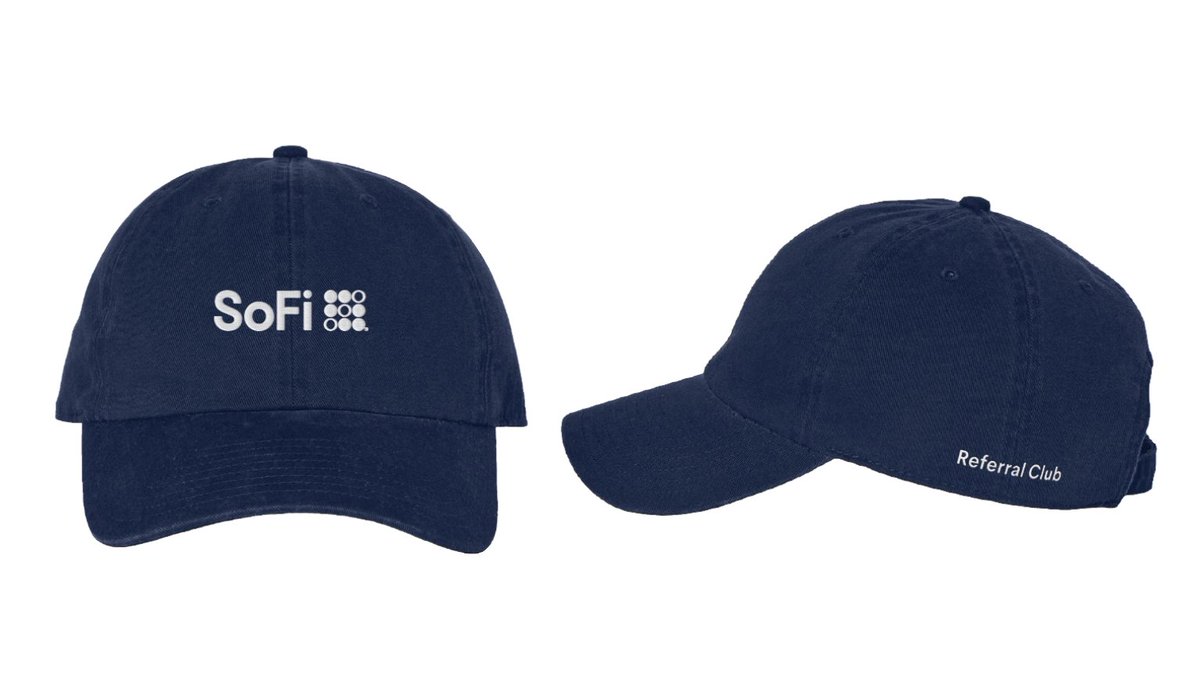
Now through 3/31, when you refer a friend to SoFi Checking & Savings you’ll earn $100—they get $25 just for joining.* No Plus membership or direct deposit needed.
Want even more? Comment below with proof of one successful referral to score a limited-edition SoFi Referral Club hat 🏦 First come, first served while supplies last.
Terms apply, check sofi.com/referral-progr… and sofi.com/referralhats
English
@BrettFromDJ Honestly, we're in peak "ai fear" click bait headline era. Everyone is just leveraging everyone's fear of the unknown to farm engagement.
English

Bro wrote an entire thread on how AI has replaced logo designers, yet couldn’t produce a single logo to prove it.
James@jamescoder12
GOODBYE LOGO DESIGNERS IN 2026. Here are 7 expert Gemini prompts that generate brand identity, visual direction, and logo concepts without hiring anyone: 👇🏼👇🏼
English

@marcuslemonis @marcuslemonis its actually @RobinhoodApp Banking. Their checking account yields 3.50%
English

Where can you find the highest rated deposit in the United States on a checking account?
English

Apple should make a Macbook in British racing green.

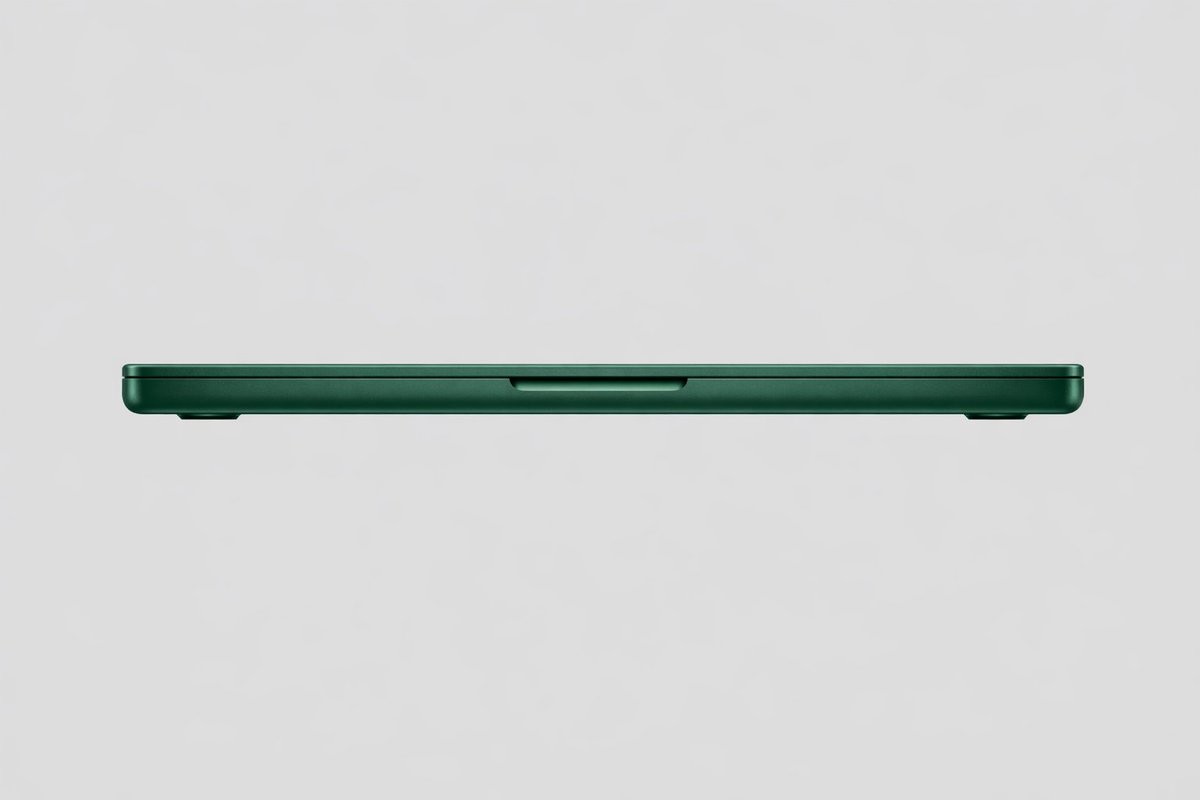
GregsGadgets@GregoryMcFadden
Hey Apple, see how everyone loves the colors on the Neo and how the iPhone 17 Pro is selling really well? I have an idea for you, free of charge.
English
@juanpersand @vanschneider @musho 100% its driving me nuts. We're at peak hype/fear cycle of a new tool. That's all.
English

@DavidElgena @vanschneider @musho None talks about this, and it's the key. Principles. Concept. It's not about the tools. It's about the soul.
English

AI WAGMI Designers:
1) Strong generalist
2) Deep specialist
3) Cracked new grad
Lenny Rachitsky@lennysan
My biggest takeaways from @jenny_wen (design lead at @AnthropicAI): 1. The traditional design process is breaking down. The classic discover-diverge-converge loop that designers have relied on for years doesn’t work when engineers can spin up seven coding agents and ship a working version before a designer finishes exploring options. 2. Design work is splitting into two distinct modes. The first is supporting execution: consulting with engineers as they build, giving feedback, polishing in code. The second is setting short-range vision, now scoped to three to six months instead of multi-year roadmaps. The vision work is still critical because when everyone can build anything fast, someone needs to point the team in a coherent direction. 3. Build trust through speed, not perfection. Anthropic ships products early, labels them research previews, and then iterates publicly based on real feedback. Jenny argues that what actually degrades a brand isn’t launching something rough; it’s launching something rough and then going silent. If you ship fast, respond to feedback visibly, and keep improving, users will trust you more, not less. 4. The most overlooked hire in design right now is the cracked new grad. Most companies are hiring senior designers with deep experience. Jenny argues that early-career people with blank slates, fast learning curves, and no attachment to legacy processes may be uniquely suited to this moment. They don’t carry baked-in rituals that are now obsolete, and their lack of expectations can actually be an advantage. 5. Chat as an interface isn’t going away. Despite expectations that chatbots were a temporary stop on the way to richer UIs, Jenny sees chat as a permanently valuable interface because it offers infinite flexibility. But she expects a hybrid future where models increasingly generate UI elements on the fly for specific tasks (like the interactive widgets Claude recently shipped) while chat remains the connective tissue between them. 6. Jenny went from design director (12 to 15 reports) back to IC. She questioned whether middle management had a safe future and wanted hands-on time during a period of rapid change. The IC time is giving her hard skills she wouldn’t have gained while managing. 7. AI will likely get better at taste and judgment. Jenny says designers may be holding onto “taste” as a moat too tightly. But someone still has to be accountable for what ships, the same way an engineer is accountable for AI-generated code. 8. Hire three archetypes: strong generalists, deep specialists, and “cracked new grads.” Strong generalists are “block-shaped” (80th percentile across multiple skills). Deep specialists are top 10% in one area. Cracked new grads—the most overlooked—have no baked-in processes and learn new tools fastest. 9. Figma is still essential, but for different reasons than before. Jenny says Figma remains the best tool for rapidly exploring 8 to 10 different design directions on a canvas, something that coding tools handle poorly because they’re too linear and create investment bias toward one direction. For micro-level visual and interaction decisions, spatial exploration still beats sequential iteration. 10. Low-leverage work is often the highest-leverage thing a manager can do. Jenny pushes back on the conventional management advice to ruthlessly prioritize only high-leverage tasks. She points to leaders who obsessively dogfood the product, repro bugs, and personally fix small issues—activities that seem “below” a senior leader but create deep product familiarity, set a cultural tone of care, and earn trust from the team in ways that strategic planning never can. Watch our full conversation: youtube.com/watch?v=eh8bcB…
English