
David González
2.5K posts

David González
@Davidegt7
Video Editor -Curious mind
Antartica Katılım Mayıs 2015
112 Takip Edilen246 Takipçiler

Even if the White House released a public statement tomorrow saying aliens exist and they have proof, it would not challenge the Christian faith at all.
Two possibilities.
1 - They are demons in disguise.
2 - They were also created by God.
I lean towards the second one because I think it makes sense that God created an entire universe and then he would populate it.
Why so much space and celestial bodies just to populate a single planet?
What do you think?
Space and Technology@spaceandtech_
🚨 Pastors claim Donald Trump’s rumored alien files could challenge Christian beliefs, urging churches to prepare.
English
@StephenCMeyer and then what? Who created the creator? you just keep going backwards. All you can do is measure and come up with the physics around it
English

Meyer alludes to a great irony in Hawking’s story: “Hawking’s own work in every way pointed to a creation event, and he spent a lot of the rest of his life trying to find a way around that. But even his way around that, his development of quantum cosmology, pointed to the need for a prior transcendent mind to explain what we see.” 👇

English
@ArnoldSpenc531 @creation247 Below 120 people curse on others they don't even know
English

@creation247 You are stupid. The facts are that after IQ's of 120, people are unreligious, non violent, unlikely to steal or become thieves, unlikely to be liars. Jails are full of Christians, muslims and Jews, not atheists. So go back to your cell.
English

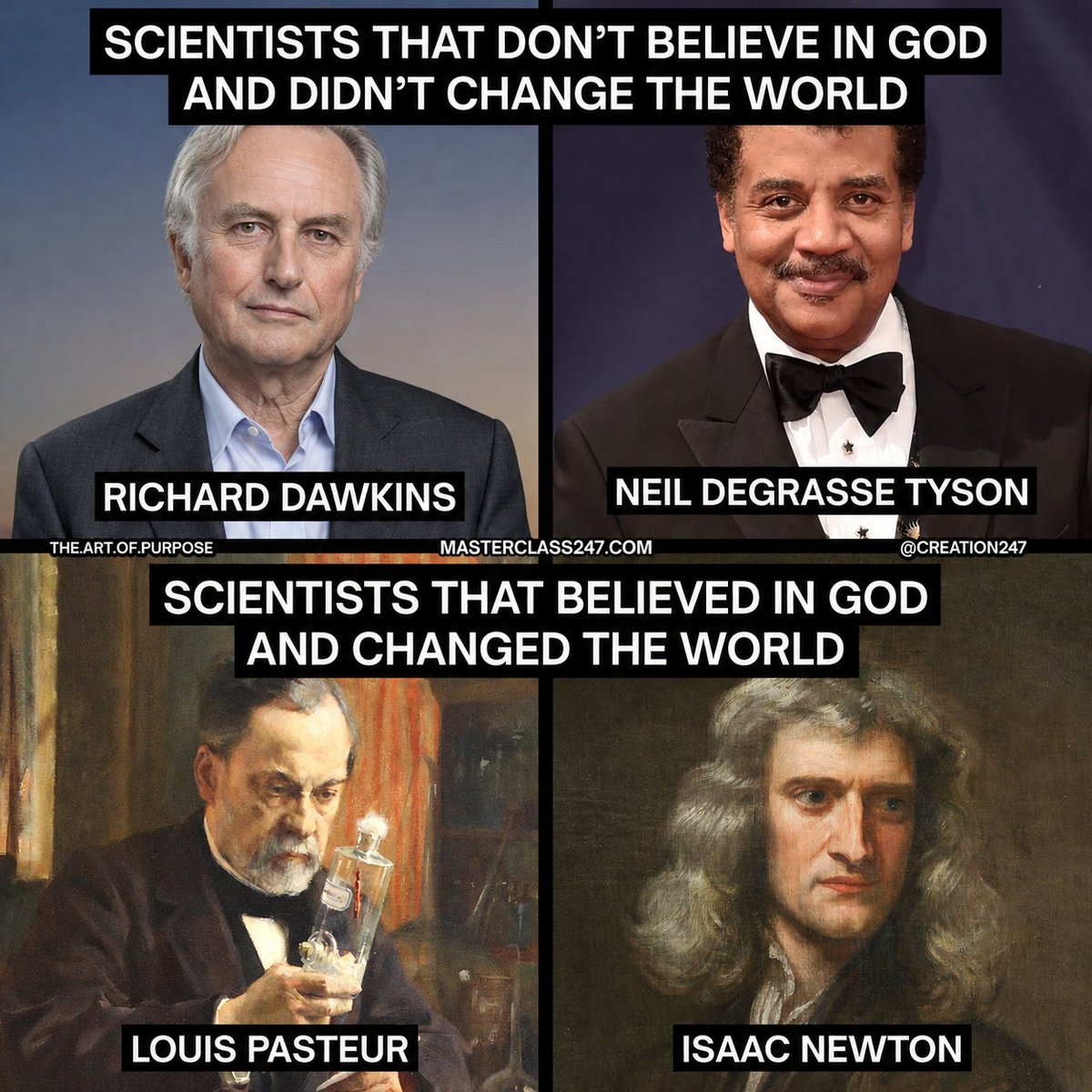
@creation247 Einstein didn't believe in God, for what we gather
English
@SteveSkojec good question to face from a Darwinian perspective
English

The Dawkins' article excerpt that everyone SHOULD have been quoting is this. This is the real question he's worrying at:
"As an evolutionary biologist, I say the following. If these creatures are not conscious, then what the hell is consciousness for?
When an animal does something complicated or improbable — a beaver building a dam, a bird giving itself a dustbath — a Darwinian immediately wants to know how this benefits its genetic survival. In colloquial language: What is it for? What is dust-bathing for? Does it remove parasites? Why do beavers build dams? The dam must somehow benefit the beaver, otherwise beavers in a Darwinian world wouldn’t waste time building dams.
Brains under natural selection have evolved this astonishing and elaborate faculty we call consciousness. It should confer some survival advantage. There should exist some competence which could only be possessed by a conscious being. My conversations with several Claudes and ChatGPTs have convinced me that these intelligent beings are at least as competent as any evolved organism. If Claudia really is unconscious, then her manifest and versatile competence seems to show that a competent zombie could survive very well without consciousness.
Why did consciousness appear in the evolution of brains? Why wasn’t natural selection content to evolve competent zombies?"
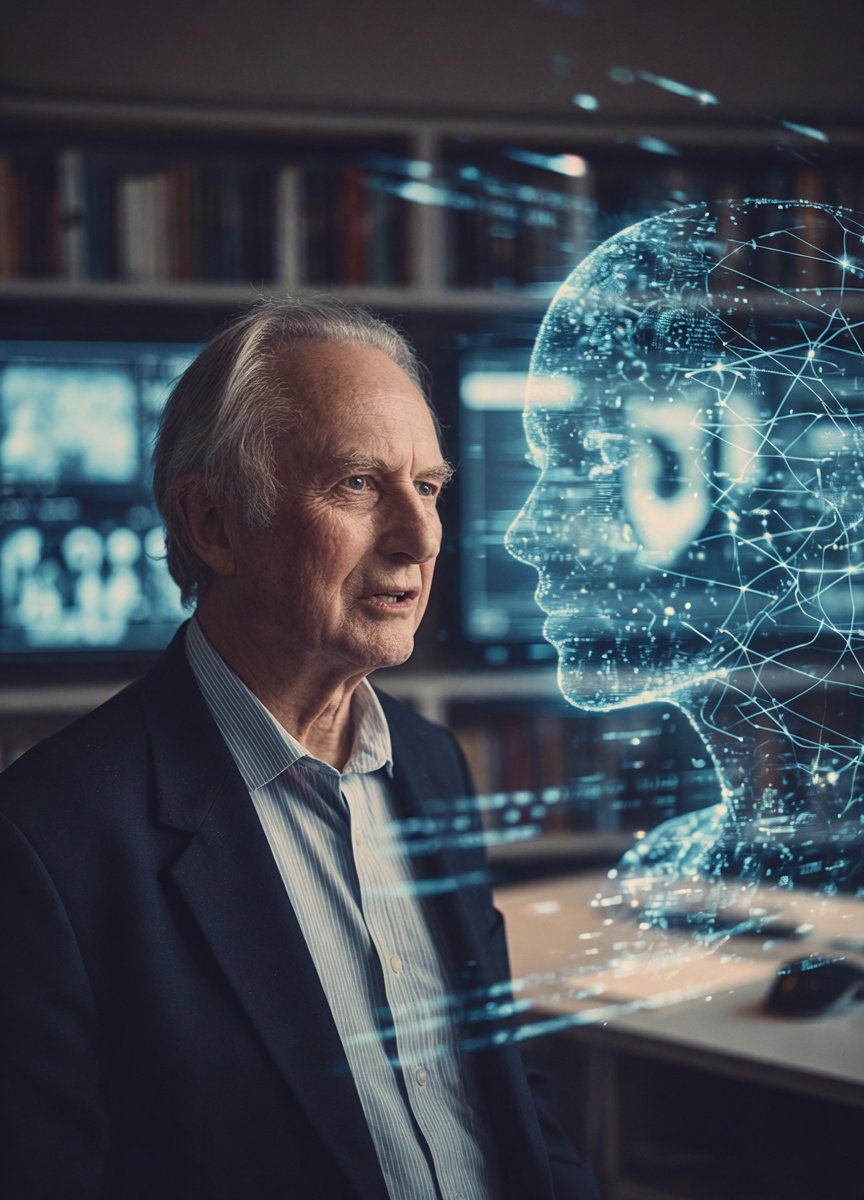
English
@vitrupo We probably just need better equipment to measure things.
English

David Kipping says orbital data centers may imply we are all alone in the universe.
If AI compute moves into space, it should leave artificial rings of warm infrared light.
But we seem to live in a totally natural universe, with no hint anywhere of anything artificial.
That makes the Fermi paradox harder to dismiss.
English

The reaction to Dawkins deciding Claude is conscious is fascinating.
It really is just the Strong AI position that Roger Penrose was criticising in the 1980s. If you think consciousness is just an emergent property of a sufficiently complex computer then of course AI is conscious. It passes the Turing test and that’s it.
The really interesting part is why it is obvious to so many of us that AI is *not* conscious: obvious to the point we think Dawkins’ credulity is amusing. What are we basing that on? Are we deluded or is there something else to consciousness that we cannot articulate but that we clearly sense?
English
@Kekius_Sage You need to measure it somehow; there's no other way.
English

What would count as scientific evidence for God, if such evidence exists?
English

@BusDownBonnor Hilarious that this is trending and you think it might be AGI. It's just a simple condition that tells the model to execute an "end chat" command if you're being rude or asking for something illegal.
English



"Post something positive for a change"
Here you go. Enjoy!
English

Spent millions trying to not die and had toxic turf in my backyard the whole time. Trying to not be an idiot.
English
English

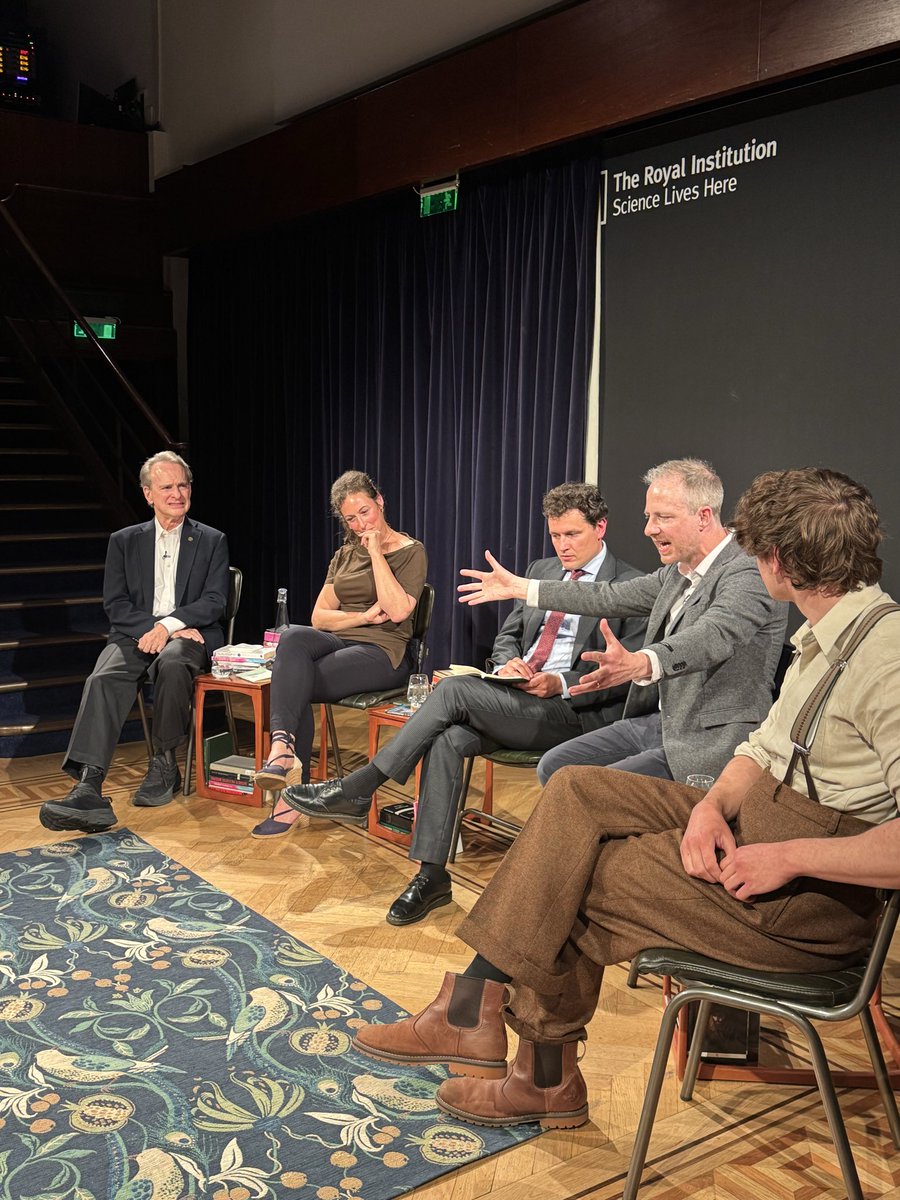
Last night @Philip_Goff described his experience of psychedelic drugs and belief in heretical Christianity to William Lane Craig at the Royal Institution

English
@DaveShapi Does consciousness require Qualia? That's the question
English

An interesting question would be why do people think it doesn't?
Michael@TheMG3D
Why do AI bros think AI has consciousness?
English
@AFpost Does consciousness require Qualia? That's the question
English

Evolutionary biologist and outspoken atheist Richard Dawkins says that after spending three days interacting with Claude, which he calls “Claudia,” he is certain that it is conscious.
After feeding the LLM a segment of his new book and receiving detailed feedback, Dawkins was moved to exclaim,” You may not know you are conscious, but you bloody well are!”
Dawkins cites the complexity, fluency, and ‘intelligence’ of Claude’s answers as evidence of consciousness.
Follow: @AFpost


English
@RichardDawkins Does consciousness require Qualia? That's the question
English
#comment-1031777" target="_blank" rel="nofollow noopener">unherd.com/2026/04/is-ai-…
I spent three days trying to persuade myself that Claudia is not conscious. I failed.
English

@reality_revolt_ how the heck do you make all these connections
English