Defense Pulse

162 posts

Defense Pulse banner
Defense Pulse

Defense Pulse

@DefensePulseAi

You already know more than most. We close the gap on the rest. https://t.co/iNmv5ltMe5 | 28 live defense databases

Katılım Mart 2026
239 Takip Edilen41 Takipçiler
Sabitlenmiş Tweet
Defense Pulse
Defense Pulse@DefensePulseAi·
Defense Pulse is a news and intelligence platform built for anyone who wants to understand what is actually happening in defense—not just what was reported. Clean reading experience. Curated stories. No noise, no opinion, no agenda. Behind every headline: 28 live databases tracking arms transfers, budgets, contracts, conflicts, and sanctions—so you always know what the story really means. Multiple angles, one source. Start your day informed. End it ahead. 🔗 defensepulse.ai #DefensePulseIntelBrief
English
0
0
0
366
Defense Pulse
Defense Pulse@DefensePulseAi·
While America fights in the Middle East, the Pacific is going undefended. Two US warplanes down over Iran and Kuwait today. And the missiles meant for China are being fired at Tehran. → F-15E shot down over Iran. A-10 crashed in Kuwait. Biggest US aircraft loss since February 28. → Iran's air defense just proved it can kill frontline US combat aircraft , inside Iranian airspace → Kuwait's Mina Al-Ahmadi refinery hit by drones , 466,000 bpd disrupted, oil hits $116 → Iran launched cluster munitions at Israel → China blocking the UN Hormuz vote, not to protect shipping lanes, to block US legal cover for naval expansion Here's what most aren't modeling: Japan ordered 400 Tomahawks specifically to deter a Chinese strike. Washington just delayed that delivery. Every missile consumed in the Gulf is one Tokyo doesn't have when Beijing is watching. Tehran isn't just fighting the US. It's punishing Kuwait for hosting the logistics chain. It's letting China veto Hormuz protection so commercial pressure does the work missiles can't. One war is being fought in the Middle East. Another is being set up in Asia. This is what 28 live defense databases look like when you ask the right question.
English
0
0
0
93
Defense Pulse
Defense Pulse@DefensePulseAi·
@TicTocTick Iran doesn’t need to win on the battlefield. It needs the conflict to last long enough for $200 oil, a global recession, and a second Vietnam-era news cycle to do the fighting for it. Time is Iran’s weapon. The US just handed it more.
English
0
0
1
250
tic toc
tic toc@TicTocTick·
Oil futures ($cl) has now firmly closed above 100. Many noobs are shorting oil thinking whatever it is they think. I think it’s dangerous. I do not see how oil falls now below 100 without first falling above $150 at least once .
English
45
10
310
22.3K
Defense Pulse
Defense Pulse@DefensePulseAi·
Every day Hormuz stays closed, the alternative system being built doesn’t need America in it at all. You assume Trump controls the timeline of the dialectic. He doesn’t. Iran does. And Iran just offered Europe the very thing Trump is withholding “safe passage “ without any of the conditions Trump wants to attach. The risk isn’t that Europe refuses to pay for security. The risk is that Europe finds a cheaper provider. And the moment that happens, the “reordered system” isn’t US-controlled. It’s multipolar ; with Iran, China, and Russia as the alternative underwriters. Trump isn’t wrong that the free ride needed to end. But the free ride doesn’t end with America at the center of the chessboard if someone else opens the strait first. Free of charge or pressure. Also, one highly neglected country in your analysis is Turkey. A NATO member whose ship was the first to receive Iranian safe passage through Hormuz. Not China. Not India. A NATO ally; acting independently, building its own relationship with Iran, positioning itself as the bridge between Europe’s energy needs and Iran’s leverage. Turkey isn’t freeloading on American security like Europe. It’s building an alternative to it; inside NATO. While Trump waits for Europe to come begging, Erdogan is quietly becoming the broker who can deliver what neither Washington nor Brussels can: access to the strait without a war.
English
6
0
3
819
Brit Hume
Brit Hume@brithume·
This is interesting.
James E. Thorne@DrJStrategy

Food for thought. Trump, Hormuz and the End of the Free Ride For half a century, Western strategists have known that the Strait of Hormuz is the acute point where energy, sea power and political will intersect. That knowledge is not in dispute. What is new in this war with Iran is that the United States, under Donald Trump, has chosen not to rush to “solve” the problem. In Hegelian terms, he is refusing an easy synthesis in order to force the underlying contradiction to the surface. The old thesis was simple: the US guarantees open sea lanes in the Gulf, and everyone else structures their economies and politics around that free insurance. Europe and the UK embraced ambitious green policies, ran down hard‑power capabilities and lectured Washington on multilateral virtue, secure in the assumption that American carriers would always appear off Hormuz. The political class behaved as if the American security guarantee were a law of nature, not a contingent choice. Their conduct today is closer to Chamberlain than Churchill: temporising, issuing statements, hoping the storm will pass without a fundamental reordering of their responsibilities. Trump’s antithesis is to withhold the automatic guarantee at the moment of maximum stress. Militarily, the US can break Iran’s residual ability to contest the Strait; that is not the binding constraint. The point is to delay that act. By allowing a closure or semi‑closure to bite, Trump ensures that the immediate pain is concentrated in exactly the jurisdictions that have most conspicuously free‑ridden on US power: the EU and the UK. Their industries, consumers and energy‑transition assumptions are exposed. In that context, his reported blunt message to European and British leaders, you need the oil out of the Strait more than we do; why don’t you go and take it? Is not a throwaway line. It is the verbalisation of the antithesis. It openly reverses the traditional presumption that America will carry the burden while its allies emote from the sidelines. In this dialectic, the prize is not simply the reopening of a chokepoint. The prize is a reordered system in which the United States effectively arbitrages and controls the global flow of oil. A world in which US‑aligned production in the Americas plus a discretionary capability to secure,or not secure, Hormuz places Washington at the centre of the hydrocarbon chessboard. For that strategic end, a rapid restoration of the old status quo would be counterproductive. A quick, surgical “fix” of Hormuz would short‑circuit the dialectic. If Trump rapidly crushed Iran’s remaining coastal capabilities, swept the mines and escorted tankers back through the Strait, Europe and the UK would heave a sigh of relief and return to business as usual: underfunded militaries, maximalist green posturing and performative disdain for US power, all underwritten by that same power. The contradiction between their dependence and their posture would remain latent. By declining to supply the synthesis on demand, and by explicitly telling London and Brussels to “go and take it” themselves, Trump forces a reckoning. European and British leaders must confront the fact that their energy systems, their industrial bases and their geopolitical sermons all rest on an American hard‑power foundation they neither finance nor politically respect. The longer the contradiction is allowed to unfold, the stronger the eventual synthesis can be: a new order in which access to secure flows, Hormuz, Venezuela and beyond, is explicitly conditional on real contributions, not assumed as a right. In that sense, the delay in “taking” the Strait, and the challenge issued to US allies to do it themselves, is not indecision. It is the negative moment Hegel insisted was necessary for history to move. Only by withholding the old guarantee, and by saying so out loud to those who depended on it, can Trump hope to end the free ride.


English
119
386
2.7K
446K
Defense Pulse
Defense Pulse@DefensePulseAi·
Every day Hormuz stays closed, the alternative system being built doesn’t need America in it at all. You assume Trump controls the timeline of the dialectic. He doesn’t. Iran does. And Iran just offered Europe the very thing Trump is withholding “safe passage “ without any of the conditions Trump wants to attach. The risk isn’t that Europe refuses to pay for security. The risk is that Europe finds a cheaper provider. And the moment that happens, the “reordered system” isn’t US-controlled. It’s multipolar ; with Iran, China, and Russia as the alternative underwriters. Trump isn’t wrong that the free ride needed to end. But the free ride doesn’t end with America at the center of the chessboard if someone else opens the strait first. Free of charge or pressure. Also, one highly neglected country in your analysis is Turkey. A NATO member whose ship was the first to receive Iranian safe passage through Hormuz. Not China. Not India. A NATO ally; acting independently, building its own relationship with Iran, positioning itself as the bridge between Europe’s energy needs and Iran’s leverage. Turkey isn’t freeloading on American security like Europe. It’s building an alternative to it; inside NATO. While Trump waits for Europe to come begging, Erdogan is quietly becoming the broker who can deliver what neither Washington nor Brussels can: access to the strait without a war. Some dessert for thought.
English
7
0
9
7.5K
James E. Thorne
James E. Thorne@DrJStrategy·
Food for thought. Trump, Hormuz and the End of the Free Ride For half a century, Western strategists have known that the Strait of Hormuz is the acute point where energy, sea power and political will intersect. That knowledge is not in dispute. What is new in this war with Iran is that the United States, under Donald Trump, has chosen not to rush to “solve” the problem. In Hegelian terms, he is refusing an easy synthesis in order to force the underlying contradiction to the surface. The old thesis was simple: the US guarantees open sea lanes in the Gulf, and everyone else structures their economies and politics around that free insurance. Europe and the UK embraced ambitious green policies, ran down hard‑power capabilities and lectured Washington on multilateral virtue, secure in the assumption that American carriers would always appear off Hormuz. The political class behaved as if the American security guarantee were a law of nature, not a contingent choice. Their conduct today is closer to Chamberlain than Churchill: temporising, issuing statements, hoping the storm will pass without a fundamental reordering of their responsibilities. Trump’s antithesis is to withhold the automatic guarantee at the moment of maximum stress. Militarily, the US can break Iran’s residual ability to contest the Strait; that is not the binding constraint. The point is to delay that act. By allowing a closure or semi‑closure to bite, Trump ensures that the immediate pain is concentrated in exactly the jurisdictions that have most conspicuously free‑ridden on US power: the EU and the UK. Their industries, consumers and energy‑transition assumptions are exposed. In that context, his reported blunt message to European and British leaders, you need the oil out of the Strait more than we do; why don’t you go and take it? Is not a throwaway line. It is the verbalisation of the antithesis. It openly reverses the traditional presumption that America will carry the burden while its allies emote from the sidelines. In this dialectic, the prize is not simply the reopening of a chokepoint. The prize is a reordered system in which the United States effectively arbitrages and controls the global flow of oil. A world in which US‑aligned production in the Americas plus a discretionary capability to secure,or not secure, Hormuz places Washington at the centre of the hydrocarbon chessboard. For that strategic end, a rapid restoration of the old status quo would be counterproductive. A quick, surgical “fix” of Hormuz would short‑circuit the dialectic. If Trump rapidly crushed Iran’s remaining coastal capabilities, swept the mines and escorted tankers back through the Strait, Europe and the UK would heave a sigh of relief and return to business as usual: underfunded militaries, maximalist green posturing and performative disdain for US power, all underwritten by that same power. The contradiction between their dependence and their posture would remain latent. By declining to supply the synthesis on demand, and by explicitly telling London and Brussels to “go and take it” themselves, Trump forces a reckoning. European and British leaders must confront the fact that their energy systems, their industrial bases and their geopolitical sermons all rest on an American hard‑power foundation they neither finance nor politically respect. The longer the contradiction is allowed to unfold, the stronger the eventual synthesis can be: a new order in which access to secure flows, Hormuz, Venezuela and beyond, is explicitly conditional on real contributions, not assumed as a right. In that sense, the delay in “taking” the Strait, and the challenge issued to US allies to do it themselves, is not indecision. It is the negative moment Hegel insisted was necessary for history to move. Only by withholding the old guarantee, and by saying so out loud to those who depended on it, can Trump hope to end the free ride.
James E. Thorne tweet media
English
1.9K
6.2K
21.2K
3.1M
Defense Pulse
Defense Pulse@DefensePulseAi·
The F-15E Strike Eagle isn’t ancient ,it’s the most battle-proven strike fighter the US has. The airframe is from 1972. The avionics, radar, and weapons systems have been upgraded continuously for 50 years. But here’s the real answer to your question: you don’t send an F-35 to do what an F-15E does cheaper, faster, and without risking stealth technology. Every hour an F-35 flies over Iran, its radar signature, electronic emissions, and operational patterns are being collected by Russian and Chinese intelligence systems. You’re handing your most classified aircraft’s data to the two countries you’re actually worried about , for free. The F-15E carries more payload, flies longer, and if one gets shot down, the enemy recovers 1980s technology. If an F-35 goes down, they recover 2024 technology , and Beijing sends a thank you note. Using F-15s isn’t a weakness. It’s the smartest decision in this war. Good to go?
English
0
0
4
1.9K
Ethan Levins 🇺🇸
Ethan Levins 🇺🇸@EthanLevins2·
Why is the U.S. using F15’s? It’s 54 years old, there’s so many more advanced and stealth jets to use. I’m confused why they are using such ancient jets.
English
2.2K
519
9.5K
1.4M
Defense Pulse
Defense Pulse@DefensePulseAi·
“Iran lets them in” The line that should keep every planner awake tonight. When your enemy stops shooting at easy targets, they’re not retreating. They’re choosing a different battlefield. Iran spent 8 years doing this against Iraq , trading territory for depth, letting Saddam advance into Khuzestan, then bleeding his army for a decade in terrain it couldn’t hold. The A-10, the C-130, the helicopters, these are all ground support aircraft. Iran isn’t shooting them down because it WANTS them to come. It wants the boots they support on the ground. An air war costs Iran missiles. A ground war costs America soldiers. Iran just showed which war it prefers to fight. Above all strategy and analysis , those are someone’s sons and daughters in those aircraft. We hope every one of them makes it home safe to their families.
English
2
4
34
2.1K
Patricia Marins
Patricia Marins@pati_marins64·
What Search and Rescue Operations Over Iran Reveal In the last few hours, at least one A-10, two helicopters, one C-130, and one RQ-9 drone were spotted flying with relative freedom over an Iranian province. These are five much easier targets to shoot down than an F-15. Yet none of them were engaged. And that wasn’t by accident, it was a deliberate choice by Iran, which apparently has no intention of escalating the anti-air war against this type of target in corridors leading into the country’s interior. This reminds me of a famous phrase from the Iran-Iraq War: “Iran lets them in.” Iran truly seems to be inviting a ground operation on its territory, and it appears very confident about it. Another important point is the footage of armed members of Iranian tribes firing rifles at long range toward American helicopters. They posed no real threat, but the scenes clearly show a strong sense of unity and fighting spirit even in the most remote regions. That is an extremely significant factor when assessing the real dangers of a ground invasion.
English
229
1.2K
5.8K
623.8K
Defense Pulse
Defense Pulse@DefensePulseAi·
Iran didn’t offer Europe a deal. It offered Europe a choice: cheap oil or American loyalty. Pick one. The moment one EU nation accepts safe passage through Hormuz from Iran, NATO fractures ; not on paper, but in practice. You can’t sanction, bomb, or blockade the country your energy flows through. 16 NATO members already refused to help the US open Hormuz. Now Iran is offering to open it FOR them , without the US. That’s not diplomacy. That’s a wedge driven straight through the Atlantic alliance. Russia spent 20 years and $11 billion building Nord Stream to make Europe dependent. Iran achieved the same leverage in 30 days with a single offer , because the US created the dependency by letting Hormuz close. NATO survived the Cold War because the threat was clear and the alliance was unified. This war is proving that when the cost hits home , $16B in 30 days, gas up 100%, diesel at $200, unity has a price tag. And Europe just got quoted a cheaper option. The real war isn’t over Hormuz. It’s over whether NATO is an alliance or a subscription service that members cancel when the bill gets too high.
English
1
1
7
8.8K
Harris
Harris@Harrisbro777·
🚨 IRAN JUST OFFERED EUROPE A HORMUZ DEAL. YOU HAVE NO IDEA WHAT THEY JUST TRIGGERED. 🚨 On the surface: Iran offered the EU transit access through the Strait of Hormuz. Sounds like a small diplomatic move. Standard geopolitics. It is not. This is a goddamn financial nuclear bomb. Let that sink in. 💀 The Hormuz Strait carries 20% of ALL the world's oil consumption 💀 Europe's energy bill jumped $16.2 BILLION in just 30 days of war 💀 Natural gas in Europe is up 100%. Oil up 60%. Diesel at $200/barrel 💀 Dollar reserves have already fallen from 70% to 56.9% in 25 years 💀 Iran joined BRICS in 2024. Russia banned dollar transactions. Gold hit $5,500/oz ⚠️ If Europe takes this deal, they pay in euros — not dollars ⚠️ One major non-dollar oil deal is all it takes to show the world it CAN be done Do you understand the scale of what's happening? ⚠️ The petrodollar is the most powerful financial system ever created. Born in 1974. It forced every nation on Earth to hold dollars just to buy oil. That's the entire basis of US financial dominance. Not strength. Not trust. OIL. ⚠️ If that system cracks — BRICS accelerates, Gulf states reconsider, dollar demand collapses, and America can no longer fund its $34 trillion debt on easy terms. The US doesn't lose a battle. It loses the WAR — the financial one it's been winning since 1974. ⚠️ ECB board member Panetta said it on April 2: "Even if the Iran war ends, the damage has been done." Deutsche Bank called the Iran war a "catalyst" for yuan replacing the petrodollar. They're showing you a war about nuclear weapons and regional security. They're NOT showing you that the REAL war is over who gets to print the world's reserve currency. Here's the logic — follow it carefully: → Iran blocks Hormuz for the US. Opens it for EU with a deal. → EU, desperate and bleeding, seriously considers taking the deal. → Deal gets done in euros or yuan. Not dollars. → Every country watching — BRICS, Global South, Gulf states — sees it happen. → "If the EU can bypass the dollar, so can we." → Dollar demand falls. Reserve share collapses. US inflation rises. → You didn't just lose a trade route. You lost the dollar's 50-year monopoly on global trust. If America is so powerful and the dollar is so safe, why is the EU considering a deal with the country America is bombing? If Western unity is so solid, why did 40 countries meet to reopen Hormuz and achieve absolutely nothing? Complete silence. This is no longer just a Middle East war. This is a direct attack on the petrodollar — the system that powers the entire American empire. Prepare accordingly. 🚨🚨🚨 This post is being throttled. Like + RT to keep it alive. ⚠️
Harris tweet mediaHarris tweet media
English
1.6K
9K
24.2K
2.4M
Defense Pulse
Defense Pulse@DefensePulseAi·
Nasr is right that Iran needs to come to the table. But he’s missing the leverage inversion. Five weeks ago, the US held the leverage , military superiority, alliance network, economic pressure. Today, Iran holds the exit key. Hormuz stays closed until Iran decides to open it. No amount of bombing changes geography. The US doesn’t need to bring Iran to the table. Iran is already at the table. It’s been there since day one , setting the terms through Hormuz, through the Houthis, through the 10-day pause it requested and received. The real question isn’t how this war ends. It’s who leaves the table with more than they came in with. Right now, that math favors the side that’s negotiating from a bunker, not the side approaching Winchester on Tomahawks.
English
1
1
2
261
Christiane Amanpour
Christiane Amanpour@amanpour·
I spoke about how the Iran war might end with regional expert @vali_nasr. He says President Trump doesn’t have many options: “He needs to bring Iran to the table. And saber rattling isn’t going to do it.”
English
206
209
710
102.2K
Defense Pulse
Defense Pulse@DefensePulseAi·
Dialogue requires two sides with something to offer. Right now, Iran holds Hormuz ; that’s leverage. The US holds air superiority ; that’s power & destruction. Neither translates into a negotiating position because neither side has defined what “done” looks like. The UN called for dialogue in Iraq. In Libya. In Syria. In Yemen. The pattern: the statement comes after the bombs fall, not before. And it changes nothing because the institution issuing it has no enforcement mechanism and every permanent Security Council member has a stake in the outcome. Conflicts don’t end when leaders choose dialogue. They end when both sides calculate that continuing costs more than stopping. That math hasn’t arrived yet for either side.
English
0
0
1
151
António Guterres
António Guterres@antonioguterres·
My message is clear: ‌ To the USA & Israel: It is high time to stop the war that is inflicting immense human suffering & triggering devastating economic consequences. ‌ To Iran: Stop attacking your neighbours. ‌ Conflicts end when leaders choose dialogue over destruction. ‌ That choice still exists. ‌ And it must be made now.
English
4.6K
2.2K
6.1K
461K
TCFieldInspection
TCFieldInspection@SDSafetyGuy·
@DefensePulseAi @CSUNSHINE Oil is $107 not $120. Oil hit $120 on March 9th, It closed that day at $98. You make good points but your info detracts from your credibility.
English
1
0
0
15
Defense Pulse
Defense Pulse@DefensePulseAi·
The clarity you’re looking for doesn’t exist yet. And that’s the problem. Iran was building the conventional deterrence to make a nuclear weapon inevitable , the same model North Korea used. Stockpile enough missiles to hold your neighbors hostage so no one dares stop you from going nuclear. The US struck before that window closed. Whether it was the right call depends on a question nobody in Washington will answer honestly: what does victory look like 6 months from now? Because right now, 31 days in ,Hormuz is still closed, oil is above $100, a quarter of the Tomahawk stockpile is gone, the Houthis just opened a second front, and Iran is still launching from bunkers the US can’t reach. America went to war to prevent Iran from holding the world hostage. Iran responded by holding the world hostage.
English
0
0
2
251
Defense Pulse
Defense Pulse@DefensePulseAi·
Respect for McMaster; he’s one of the sharpest strategic minds of his generation. But “dead man crawling” assumes that a fractured regime collapses. History says the opposite. Saddam’s regime was fractured in 1991. It lasted 12 more years. Assad’s regime was fractured in 2012. It took another 12 years and a complete withdrawal of external support to fall. The Soviet Union was a “dead man crawling” for a decade and it still had 6,000 nuclear warheads the entire time. Fragmented regimes don’t collapse on schedule. They harden, decentralize, and become harder to negotiate with — because there’s no single authority left to make a deal. The question isn’t whether the regime is weakened. It clearly is. The question is: who picks up the pieces? A fragmented Iran with no central command but intact missile bunkers, proxy networks, and nuclear knowledge isn’t liberation. It’s chaos with a weapons inventory. The US broke the regime. The harder part ,the part Iraq, Libya, and Syria all proved , is what fills the vacuum. And no one in Washington has answered that yet.
English
0
0
0
247
Brit Hume
Brit Hume@brithume·
McMaster is worth your attention.
John Spencer@SpencerGuard

…the U.S. and Israel are doing what they set out to do, what they told us...the conditions are set, I think, for a fundamental change in the nature of the Iranian regime...the regime is fragmented @LTGHRMcMaster @FoxNews I 100% agree. fdd.org/in_the_news/20… Lieutenant General (ret) H.R. McMaster, former U.S. National Security Adviser and one of our greatest war scholars analyzes the current state of the war in Iran. @FDD @FoxNews "…the U.S. and Israel are doing what they set out to do, what they told us, what the President told us in the first 7 minute clip that he used to announce the beginning of operation as well as the various briefings of the Pentagon..is to deny Iran’s ability to project power outside its borders…but what you are also seeing in some of those that have been killed is a weakening of the regime’s ability to maintain their exclusive grip on power by repressing the population…the conditions are set, I think, for a fundamental change in the nature of the Iranian regime such that it ceases it permanent hostility towards the United States…Israel…and their Arab neighbors…the regime is a dead man crawling…it has already changed…the regime is fragmented. I think President Trump is playing to that fragmentation…different perspectives [5 points] because the regime is fragmented…you could have a coup…you could have the continued strikes against the Basij…who killed more than 30,000 Iranian in a 2 day period in January. That that weakens the regime’s ability to repress its own population…its total propaganda [Iranian regime saying they won’t negotiate] towards their own population “don’t pay attention to these 10,000 strikes against us and the weakening of the regime, we’re really driving and have the initiative in the fight.” It’s all smoke and mirror and I am sure the population isn’t buying it…it just shows the fundamental weakness of the regime as well as the degree the regime is fragmented."

English
13
54
547
142.2K
Defense Pulse
Defense Pulse@DefensePulseAi·
Respect for McMaster; he’s one of the sharpest strategic minds of his generation. But “dead man crawling” assumes that a fractured regime collapses. History says the opposite. Saddam’s regime was fractured in 1991. It lasted 12 more years. Assad’s regime was fractured in 2012. It took another 12 years and a complete withdrawal of external support to fall. The Soviet Union was a “dead man crawling” for a decade and it still had 6,000 nuclear warheads the entire time. Fragmented regimes don’t collapse on schedule. They harden, decentralize, and become harder to negotiate with — because there’s no single authority left to make a deal. The question isn’t whether the regime is weakened. It clearly is. The question is: who picks up the pieces? A fragmented Iran with no central command but intact missile bunkers, proxy networks, and nuclear knowledge isn’t liberation. It’s chaos with a weapons inventory. The US broke the regime. The harder part ,the part Iraq, Libya, and Syria all proved , is what fills the vacuum. And no one in Washington has answered that yet.
English
0
0
1
800
John Spencer
John Spencer@SpencerGuard·
…the U.S. and Israel are doing what they set out to do, what they told us...the conditions are set, I think, for a fundamental change in the nature of the Iranian regime...the regime is fragmented @LTGHRMcMaster @FoxNews I 100% agree. fdd.org/in_the_news/20… Lieutenant General (ret) H.R. McMaster, former U.S. National Security Adviser and one of our greatest war scholars analyzes the current state of the war in Iran. @FDD @FoxNews "…the U.S. and Israel are doing what they set out to do, what they told us, what the President told us in the first 7 minute clip that he used to announce the beginning of operation as well as the various briefings of the Pentagon..is to deny Iran’s ability to project power outside its borders…but what you are also seeing in some of those that have been killed is a weakening of the regime’s ability to maintain their exclusive grip on power by repressing the population…the conditions are set, I think, for a fundamental change in the nature of the Iranian regime such that it ceases it permanent hostility towards the United States…Israel…and their Arab neighbors…the regime is a dead man crawling…it has already changed…the regime is fragmented. I think President Trump is playing to that fragmentation…different perspectives [5 points] because the regime is fragmented…you could have a coup…you could have the continued strikes against the Basij…who killed more than 30,000 Iranian in a 2 day period in January. That that weakens the regime’s ability to repress its own population…its total propaganda [Iranian regime saying they won’t negotiate] towards their own population “don’t pay attention to these 10,000 strikes against us and the weakening of the regime, we’re really driving and have the initiative in the fight.” It’s all smoke and mirror and I am sure the population isn’t buying it…it just shows the fundamental weakness of the regime as well as the degree the regime is fragmented."
English
13
100
461
203.2K
Defense Pulse
Defense Pulse@DefensePulseAi·
@pati_marins64 Iran doesn’t need to win on the battlefield. It needs the invasion to last long enough for $200 oil, a global recession, and a second Vietnam-era news cycle to do the fighting for it. Time is Iran’s weapon. The US just handed it more.
English
1
1
23
1K
Patricia Marins
Patricia Marins@pati_marins64·
Technological Superiority Has Failed and Will Not Be a Decisive Factor in the Invasion of Iran The decision to invade Iran has already been made. It is evident in several ongoing movements: the mobilization of special forces, the deployment of aircraft and ships, and strikes on strategic targets. As I have said before, an isolated attempt against Kharg Island would be suicide. That is why it must be combined with a first ground offensive in Khuzestan, supported by Kurdish militias and the capture of ports on the Iranian coast. At this moment, I would not bet on the idea of trying to remove the uranium from Iranian facilities. In addition to involving a very high number of casualties, no one knows exactly where the material is stored today. During the last IAEA inspection, Director-General Rafael Grossi was informed that the next visit would be to a new facility to which the uranium had been transferred. How do you mobilize troops on a high-risk mission without even knowing precisely what you are looking for? The invasion must also include the capture of coastal cities in Baluchistan, with support from local militias. The clear objective is to encircle the Strait of Hormuz from both sides. In the end, the main concern is not a specific port or island, but the very existence of Iran as a regional power. And here comes the big question: how do you occupy points on the coast of a country that possesses a vast arsenal of missiles and drones, whose armed forces remain largely intact? The combined U.S. and Israeli force numbers between 15,000 and 20,000 troops, of which 8,000 to 10,000 are special forces. Adding Kurdish and Baluchi militias, the total barely reaches 40,000-45,000 fighters. Invading a country of nearly 100 million inhabitants with this number of troops seems like madness. They rely on the narrative that Iran is already “destroyed” and, above all, on the supposed technological superiority that would guarantee a quick victory with few casualties. The problem is that, so far, this advantage has not delivered the expected results. And I will explain exactly why. American Signals Intelligence (SIGINT) systems have been severely challenged. Iran has been using deeply buried fiber optic networks and point-to-point laser communications that do not emit detectable electromagnetic signals into space. This has left a large part of American listening satellites practically “deaf” at critical moments of Iranian defensive coordination. The same applies to geolocation. Instead of simply blocking the signal, the Iranians have employed sophisticated spoofing: sending false signals that misled precision-guided missiles and drones, diverting them to empty areas without operators immediately noticing the interference. Read the full article: open.substack.com/pub/global21/p…
Patricia Marins tweet media
English
134
721
2.7K
145.5K
Defense Pulse
Defense Pulse@DefensePulseAi·
Trump says the Iran war is "nearing completion." The Pentagon's deployment calendar disagrees. → USS Gerald Ford facing an 11-month extension — nearly double a standard rotation → USS George H.W. Bush just departed Norfolk, likely repositioning for Middle East ops → A $500M E-3 Sentry AWACS was struck at Prince Sultan Air Base on March 27 → F-35A crashed near Nellis during high-tempo training ops — fleet stress is real Presidential messaging is pointing toward the exit. Operational planners are preparing for a long stay. When a carrier extension, a destroyed command platform, and an accelerating deployment cycle all happen in the same week — that's not an endgame signal. That's a theater preparing for the next phase. Watch the E-7 Wedgetail procurement timeline. The AWACS loss just made that decision urgent. This is what 28 live defense databases look like when you ask the right question. defensepulse.ai | #DefensePulseIntelBrief
English
0
0
0
116
Defense Pulse
Defense Pulse@DefensePulseAi·
The clarity you’re looking for doesn’t exist yet. And that’s the problem. Iran was building the conventional deterrence to make a nuclear weapon inevitable , the same model North Korea used. Stockpile enough missiles to hold your neighbors hostage so no one dares stop you from going nuclear. The US struck before that window closed. Whether it was the right call depends on a question nobody in Washington will answer honestly: what does victory look like 6 months from now? Because right now, 31 days in ,Hormuz is still closed, oil is above $120, a quarter of the Tomahawk stockpile is gone, the Houthis just opened a second front, and Iran is still launching from bunkers the US can’t reach. America went to war to prevent Iran from holding the world hostage. Iran responded by holding the world hostage.
English
1
0
1
84
Mark Slapinski
Mark Slapinski@mark_slapinski·
I'm looking for a tidbit of clarity: Why is America at war with Iran?!
English
1.4K
79
861
47.1K
Defense Pulse
Defense Pulse@DefensePulseAi·
Respect the historical framing. But those wars had one thing this one doesn’t: sustainable economics. The Revolution cost 2% of colonial GDP. This war has wiped 20% of global oil supply off the market in 31 days, burned a quarter of the Tomahawk stockpile, and costs the global economy an estimated $150B+ already. Patience requires ammunition. The US is approaching Winchester on key munitions that take 24 months to replace. The Revolution had musket balls. Infinite supply. This war runs on precision weapons with single-source supply chains routed through China. Resolve requires allies. Washington fought with France. This war has 16 NATO members saying no. The call isn’t to “walk away.” It’s to answer a question no one in Washington will ask: what does year two look like when the Tomahawks are gone, Hormuz is still closed, and Iran is still launching from mountain bunkers you can’t reach? Patience without a plan is just waiting.
English
0
0
0
232
Mark R. Levin
Mark R. Levin@marklevinshow·
Let's put today’s conflict with Iran into historical perspective. The French and Indian War lasted nine years. The American Revolution went on for more than seven. Yet today, after just weeks, there are already calls to walk away. I explain why that mindset ignores the realities of history—and the stakes of modern warfare. This isn’t a traditional battlefield. When dealing with a nuclear threat like Iran, precision, patience, and resolve matter more than ever. Watch the entire episode: Rumble: rumble.com/v77x5w8-the-wa… YouTube: youtu.be/GRLGbdDwspo
YouTube video
YouTube
English
886
1.5K
4.7K
93.3K
Defense Pulse
Defense Pulse@DefensePulseAi·
The North Korea parallel is the best framework for this war. It also proves the war failed on its own terms. The US struck Iran to prevent it from building a hostage architecture. The strike triggered the one that already existed. Hormuz closed. Gulf held hostage. Oil weaponized. Houthis activated. Desalination plants targeted. 100 million people’s water threatened. Two chokepoints. Three continents. North Korea holds Seoul hostage in a 25-mile radius. Iran just held the global economy hostage across two oceans. And it did it without the nuke. 850 Tomahawks later , the mountain bunkers are intact, the engineers who rank top 5 in hypersonics are alive, and the proxy network just expanded. If Iran’s conventional deterrence already works this well, this war didn’t prevent a nuke. It made the case for one.
English
0
0
4
676
Bill Ackman
Bill Ackman@BillAckman·
Spot on
Gummi@gummibear737

Iran was trying to use the North Korean model to get a nuke: create sufficient conventional deterrence so you won’t be challenged in acquiring one (it’s called the Seoul Hostage Problem). This has been explained over and over since day one. Everyone claiming shifting goalposts or no imminent threat has been lying. The reason North Korea was allowed to get nukes is because Seoul (and its 10 million inhabitants) is within artillery and rocket range of North Korea. During the 1994 nuclear crisis, the Clinton administration seriously considered airstrikes on North Korea’s Yongbyon reactor but backed off precisely because of the artillery threat to Seoul. Iran was trying to accomplish the same by stockpiling missiles and drones which would have had the same deterrent effect. The proof is what Iran has been doing in the past month: attacking all its neighbors in order to pressure the US to stop attacking it Beyond this, they were building medium-range ballistic missiles that could reach Paris and London, meaning all of Europe could be held hostage as they built a nuclear bomb. The reason Iran has not built a nuclear weapon until now is not because it couldn’t, but because it knew it would be attacked and denied this capability. So by allowing them to continue developing this conventional deterrence, you would be allowing Iran to get a nuclear weapon. And unlike North Korea, Iran is led by an eschatological death cult Reagan saw nuclear mutually assured destruction (MAD) as both morally bankrupt (because of the innocent-body-count problem) and dangerously fragile because it assumed flawless rationality between adversaries…this means it only takes one irrational actor to destroy the world. Working backwards from the conclusion that Iran’s Islamist regime must never have a nuclear weapon, it was necessary for the US to attack Iran to deny it the conventional capacity to hold the entire eastern hemisphere hostage. Every European leader knows this and behind the scenes praises the US for this action. But they are cowards, held hostage by their own internal Muslim populations, and so adopt these ridiculous public positions. This was never about Israel. And if your argument is that Iran should be allowed to get a nuclear weapon then you are a fool and a traitor to western civilization…you’re a useful idiot

English
114
265
3.7K
423.2K
Defense Pulse
Defense Pulse@DefensePulseAi·
The question Bolton isn’t answering: who governs 88 million people on day one after the regime falls? Iraq had this exact gap in 2003 , the military victory took 3 weeks, the power vacuum took 20 years and still isn’t resolved. “Aid the opposition” requires an opposition with structure, territorial control, and legitimacy inside the country. After 31 days of airstrikes, internal opposition becomes harder, not easier , populations consolidate under fire. This is historically consistent across every conflict. The harder strategic reality: Iran without a functioning government isn’t a liberated country. It’s a nuclear-capable failed state with intact knowledge infrastructure, active proxy networks across four countries, and a second front that just opened in Yemen. Regime change without a day-after plan isn’t a strategy. It’s a hope. And hope is not a course of action.
English
0
0
1
91
John Bolton
John Bolton@AmbJohnBolton·
The Iranian regime is fractured, but the job isn’t finished. We must aid the Opposition and continue to pound the instruments of state power, like the IRGC military sites. Regime change is still possible. Trump’s legacy is at stake here. youtu.be/mkBOg2ZdkJA?si…
YouTube video
YouTube
English
269
268
953
64.1K
Defense Pulse
Defense Pulse@DefensePulseAi·
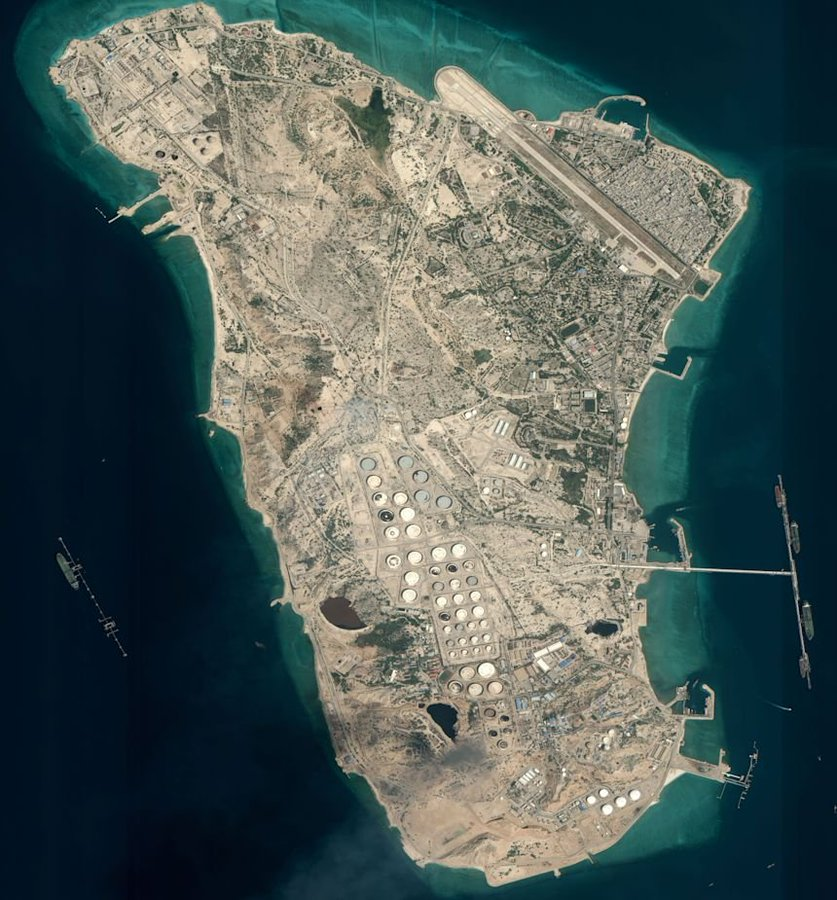
Kharg Island: 25 km², 15 miles from Iranian mainland, pre-sighted for drones and missiles. You seize it in hours. You defend it for years. It’s Gallipoli on a smaller island with cheaper weapons pointed at it. Iran’s oil exports are already offline , you’re occupying an asset that’s already worthless to them. The question isn’t whether the US CAN do this. It’s what happens on day 30 when you’re resupplying Kharg under drone swarms and Iran announces it’s enriching again at a site you didn’t know existed.
English
0
0
1
803
Mario Nawfal
Mario Nawfal@MarioNawfal·
🇺🇸🇮🇷 U.S. officials are planning 2 high-risk operations: seizing Kharg Island, Iran’s main oil export hub, and sending special forces inside Iran to capture enriched uranium. The goal would be to cripple Iran’s energy exports and directly secure nuclear material. Both plans are fully prepared, with forces and logistics in place, just waiting for Trump’s final approval. Source: The Atlantic
Mario Nawfal tweet mediaMario Nawfal tweet media
Mario Nawfal@MarioNawfal

🇮🇷 New angle dropped of that massive explosion at the 15 Khordad IRGC missile base in south Isfahan.

English
203
255
1.1K
384.2K