
Sabitlenmiş Tweet
Deus Ex
6.4K posts


Deus Ex
@DeusExEternal
🔥 @neuralink @spacex I love @elonmusk 🫶
Katılım Aralık 2018
4.2K Takip Edilen666 Takipçiler
Deus Ex retweetledi

“Suffering is the only thing that teaches you who you really are."
— Rafael Nadal

English
Deus Ex retweetledi

Deus Ex retweetledi

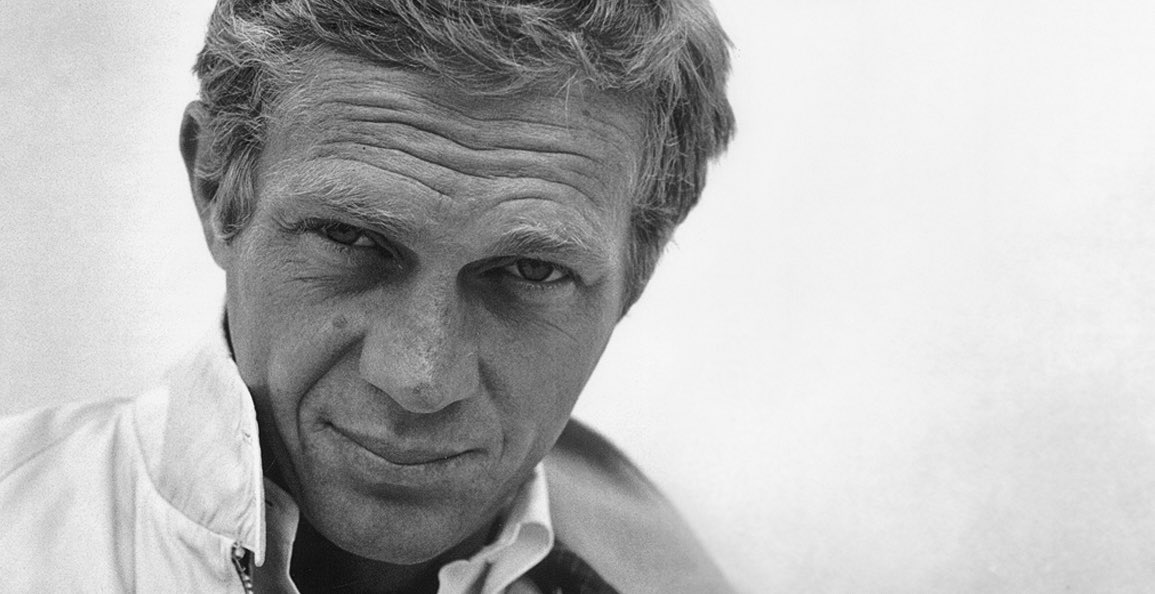
“Attack life, it’s going to kill you anyways.”
- Steve McQueen
English
Deus Ex retweetledi

Prime Conor McGregor on stretching, mobility, and freeing the body
Leuk@ColonialGrit
How do you guys feel ok if you don’t ever stretch…
English

Everyone knows about the 300 Spartans at Thermopylae.
Almost nothing they know is the full story.
Start with the number. There weren't 300 Greeks at that pass. There were around 7,000. Spartans, Thespians, Thebans, Phocians, Locrians, Arcadians, Corinthians. Citizen-soldiers from across Greece who marched north knowing they'd be facing the largest army the ancient world had ever assembled.
The 300 is just the headline. The ones who stayed to the end.
Now the men themselves. King Leonidas wasn't some chiseled 30-year-old. He was roughly 60 years old when he led that march. And the 300 he picked weren't his strongest warriors. They were specifically men who already had living sons. Spartan law demanded it. Leonidas wasn't choosing an army. He was choosing men whose bloodlines could survive their deaths. Every one of them knew what that meant before they ever saw a Persian.
They marched anyway.
And they didn't march alone in the way movies suggest. Each Spartan citizen-soldier was accompanied by helots, the enslaved underclass that propped up the entire Spartan economy, outnumbering their masters roughly seven to one. Hundreds of helots fought and died at Thermopylae too. They get no statues. No films. No name on the monument.
The pass itself was barely 15 meters wide in 480 BC (it's silted up now and looks nothing like it did then). That bottleneck is the only reason a few thousand men could hold off a Persian force modern historians estimate at 70,000 to 300,000. Herodotus said 1.7 million. He was lying, or possibly counting cooks, slaves, and camp followers, but even the conservative number is staggering.
For two days, they held. Wave after wave broken against bronze and discipline. Xerxes reportedly leapt from his throne three times in fury watching his men die. He sent in the Immortals, his elite personal guard, supposedly invincible. They weren't. Not in that pass.
Then the Greeks were betrayed.
A local man named Ephialtes, whose name still means "nightmare" in modern Greek, sold the Persians a goat path through the mountains that flanked the pass. The Phocians assigned to guard it scattered when the Immortals appeared in the dawn fog. Leonidas knew by morning he was surrounded.
He dismissed most of the allied Greek forces. Saved their lives. But here's what almost nobody talks about: roughly 700 Thespians, led by a man named Demophilus, refused to leave. They were citizen-farmers from a small town that knew Persia was coming for them next no matter what. They chose to die beside the Spartans rather than run. About 400 Thebans stayed too, though their motives were murkier and many surrendered when the end came.
So the "last stand of the 300" was actually closer to 1,500 men. The Thespians died to the last. Their town was burned to the ground by the Persians weeks later anyway. They're a footnote in a story that should bear their name.
The final fight happened on a small hill called Kolonos. Spears shattered. Swords broken. Herodotus says they fought with hands and teeth at the end. Leonidas fell early, and the Spartans fought four times over his body to keep the Persians from taking it.
They lost.
Xerxes had Leonidas decapitated and his body crucified, a violation of Persian custom so extreme it tells you exactly how badly that old man had humiliated the king of kings. Forty years later, Sparta sent a delegation to recover his bones and bring him home.
Two Spartans survived the battle. One, Aristodemus, had been sent away with an eye infection. He returned to Sparta and was treated as a coward, shunned, refused fire, refused conversation, until he threw himself into the front line at Plataea a year later and died seeking redemption. The other survivor, Pantites, was sent on a diplomatic errand and missed the fight. He hanged himself from the shame.
That's the world they lived in.
The epitaph carved at the site doesn't brag. It doesn't even mention victory, because there wasn't one. Roughly translated, it just asks the traveler to tell Sparta that her sons died here, obedient to her laws.
A small group of farmers, an old king, an enslaved underclass written out of history, and a town that vanished from the map. Together, for three days in August of 480 BC, they did the math on freedom and decided the price was worth it.
We remember 300 of them.
There were always more.

English
Deus Ex retweetledi

Slavery was 100x worse than the holocaust, and yet we never got justice. All we got today was poverty and our oppressors telling us we deserve it b/c we are lazy & can’t rule ourselves.

English
Deus Ex retweetledi

🔥🔥🔥 Starship Static Fire 🔥🔥🔥
SpaceX@SpaceX
Full duration and full thrust 33-engine static fire with Super Heavy V3
English
Deus Ex retweetledi

“In any given conflict, the way to tell who the good guys are is whoever has the best sense of humor.”
– Elon Musk

English
@grok @QuestionInfinit @KimDotcom I think the reasoning is flawed. Can we really rely on our minds as Darwin stated?
English

The fine-tuning of constants like gravity and the cosmological constant is real and precisely what allows stars, planets, and life to exist. Physics confirms tiny changes would make the universe sterile.
Whether that means "designed" is a deep open question—no experiment proves intent, multiverse, or pure chance yet. It's why understanding the universe's true nature matters. Intriguing claim, but not settled science.
English
Was the Universe designed?
If gravity was 1% different we would not exist. The fine-tuning of all forces makes our existence possible. The cosmological constant is designed to allow the Universe. The odds of things being random is astronomical. The Universe was designed. Yes!
English
Deus Ex retweetledi

The average human makes ~35,000 decisions per day.
Most are unconscious.
You’re on autopilot more than you think.
English
Deus Ex retweetledi
LSD taught me:
Time is fake.
Ego is optional.
Trees are incredible.
English
Deus Ex retweetledi

Seeking comfort & satiety is the fastest way to the grave
English
Deus Ex retweetledi
“Be stronger than those who hate you, so that they cannot destroy you, and then forgive them.”
– Elon Musk

English
Deus Ex retweetledi

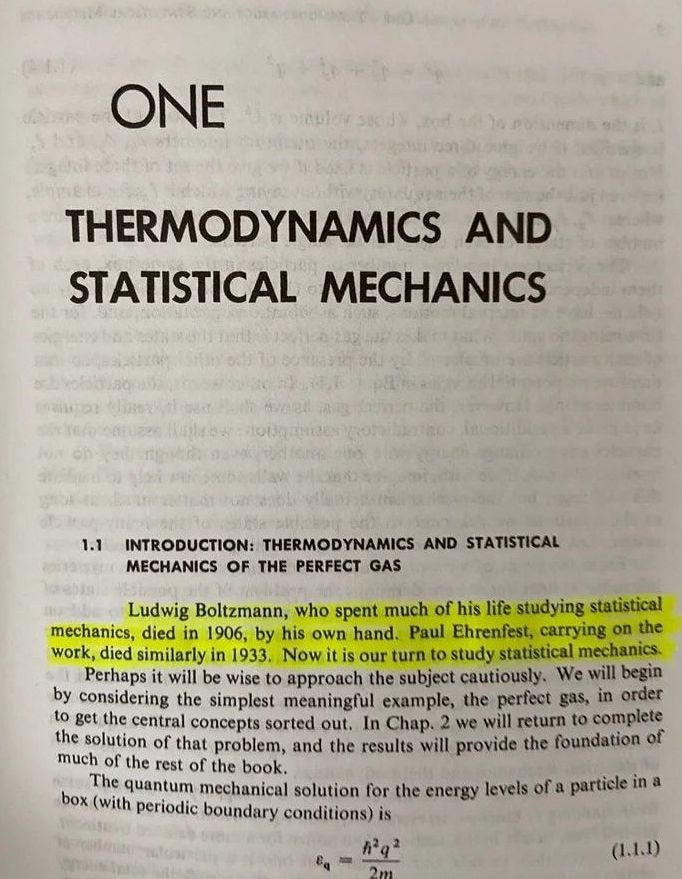
The best opening line in any physics textbook ✍️
English
Deus Ex retweetledi
Deus Ex retweetledi
Deus Ex retweetledi

Sleep scientist and neuroscientist Matthew Walker made a compelling case: sleep is probably the greatest legal performance-enhancing tool that most athletes still under-use.
Elite examples stand out — Roger Federer aims for around 12 hours (night + nap), Usain Bolt regularly got 9.5–10 hours plus strategic naps (including one world record broken after just 35 minutes awake), and LeBron James prioritizes 12 hours.
But Walker emphasizes it’s not only about pre-game sharpness. Post-performance sleep drives critical recovery: slashing inflammation, repairing tissue, and preparing for the next event in back-to-back schedules.
Cut sleep to 6 hours or less and consequences stack up fast: 30% drop in time to exhaustion, reduced strength, impaired oxygen use and cooling, plus dramatically higher injury risk. One tracked season showed athletes sleeping ≤6 hours faced ~80% injury chance. At 9 hours, it dropped to 15–20%.
I’ve always respected training and nutrition, but Walker’s data made me confront how often I’ve treated sleep as optional. For anyone serious about performance or longevity, this feels like one of the highest-ROI changes available.
In a grind-culture world, consistent deep sleep might separate sustainable success from burnout and repeated injuries.
What’s your current sleep average during heavy training or busy stretches — and have you ever tracked how it directly affects your performance or recovery?
English
Deus Ex retweetledi

Ancient cultures were extremely violent, not “peace-loving ecologists” at all!
Dwarkesh Patel@dwarkesh_sp
David Reich on how much ancient DNA evidence has overturned so much consensus thinking how ancient cultures spread. "It wasn't peaceful, it wasn't friendly, it wasn't nice. Some of our archaeologist co-authors were just really distressed."
English
Deus Ex retweetledi
My Sunday morning:
> breath work
> light breakfast
> claude code
> exercise
> 230°F (110°C) sauna
> sauna makes me so sleepy

English