Djallel Bouneffouf

11 posts

Djallel Bouneffouf

Djallel Bouneffouf

@DjallelBouneff

Katılım Eylül 2022
4 Takip Edilen9 Takipçiler
Djallel Bouneffouf retweetledi

Turing
Turing@turingcom·
AI is proven in production, not the lab. At @RealAAAI Singapore, Turing’s AI Leaders Dinner brought together AI labs and enterprises to share what actually works at scale, from continual learning to small language models & multi-agent systems. This is what we do at Turing, and how we’re accelerating superintelligence to drive economic growth.

Turing tweet media
English
3
10
17
20.5K
Djallel Bouneffouf retweetledi
Bryan Kian Hsiang Low
Bryan Kian Hsiang Low@bryanklow·
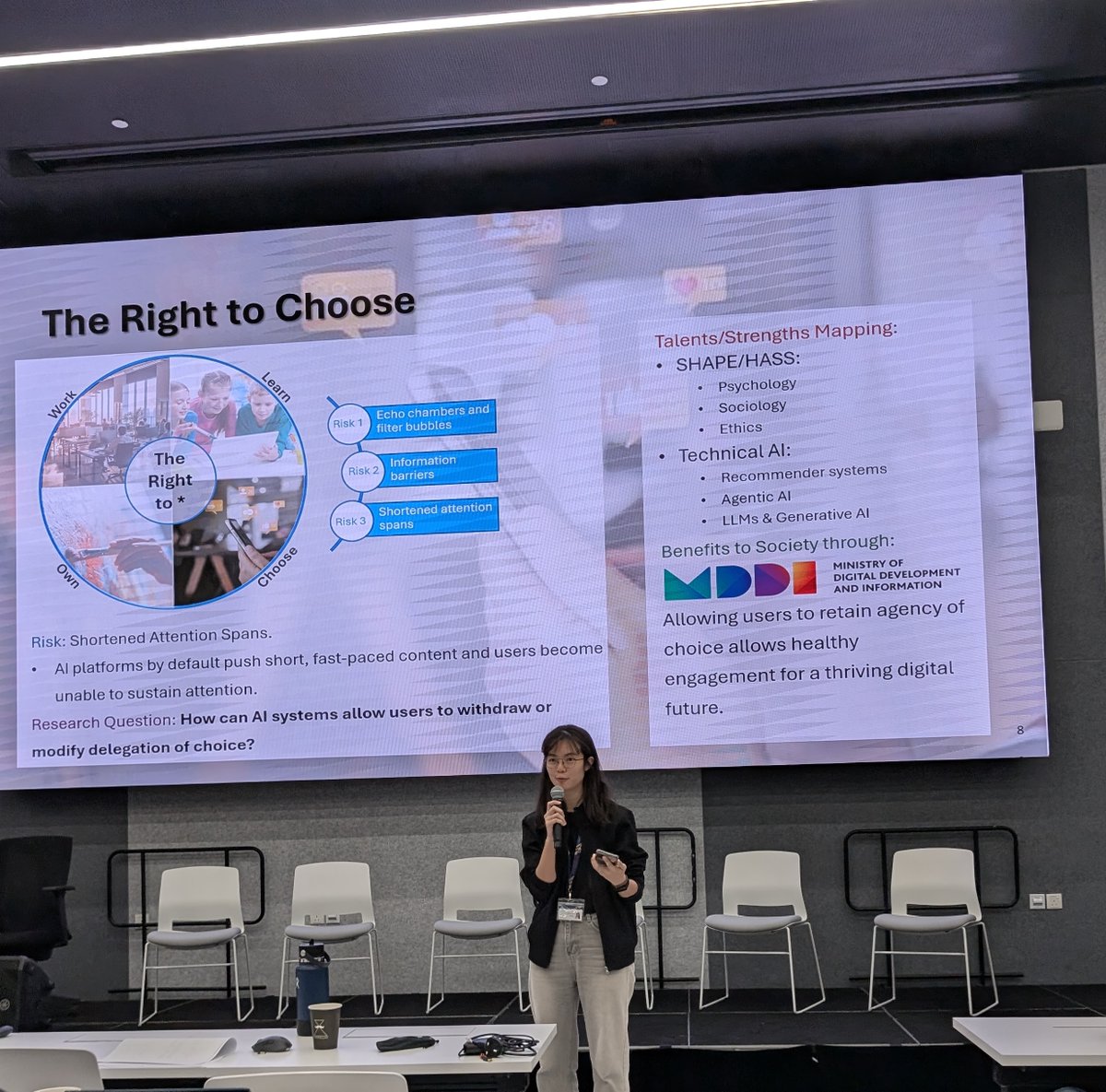
The incredible turnout from the technical AI and AI governance communities validates the importance and timeliness of the themes covered in the @AISingapore Symposium on The Right to Learn, Work, Own & Choose on 23 Jan 💪. This event is part of the Singapore AI Research Week (luma.com/sgairesearchwe…) that is held in parallel with @RealAAAI #AAAI2026. The key takeaways I got from the inspiring speakers: (1) Ashok Goel @AshKGoel (@GeorgiaTech) — The Right to Work and the Right to Learn: AI for Adult Learning and Online Education: In one of his research studies, AI did not necessarily retard the students learning from interacting with it. As he had explained, this might be because the students who are working adults are intrinsically motivated to learn the materials well. Hope I caught his message right 😅 I also thought that these working adults have previously been brought up in conventional learning environments, unlike the younger generation with direct and immediate access to generative AI tools. Could that have implications on his research study? However, he also said that learning is a social and emotional process, which in my opinion makes AI-assisted learning a challenging problem and puts the Right to Learn in the limelight. 🎤 Jungpil Hahn @jungpil(@NUSComputing) — The Organizational AI Efficiency Paradox: I really like his proposal of intentionally designing "friction" in the current system where the junior staff need to go through the manual exercise of building up their cognitive maps before being allowed to use AI shortcuts. In other words, know what you're using! He also said that such a process is a lifelong one. How then can we accelerate the development of the cognitive maps? 🎤 Prof. Luke Zettlemoyer@LukeZettlemoyer (@UW&@MetaFAIR) — Towards Copyright Aware Language Modeling: I was inspired to think more deeply about his proposals of using #RetrievalAugmentedGeneration and Modular Models as means for handling copyright takedowns. Tonnes of interesting research questions/problems pop up in my head! 🎤 Dr Nancy Chen (@ASTARsg) — The Right to Think: How Thoughtfully Soft AI can Help: I'm impressed by how she has paid careful attention to the cultural nuances and contexts involved in the text and speech conversations when developing the multimodal AI tools. 🎤 Dr Djallel Bouneffouf @DjallelBouneff(@IBMResearch) — From Emergence to Evaluation: Understanding Theory of Mind, Persuasion, and Power Asymmetries in Intelligent Agents: His notion of a Shepherd Test is really interesting: Would AI treat us in the same way as a superintelligent being would, just like how we treat the other species living on Earth? During the panel discussion, I've posed a question: Let's consider a scenario of the near future that can challenge our right to choose. For the sake of advancing technology to improve our quality of life, supposing hashtag#AAAI2027 informs us that it has potentially received 60% submissions that are near-fully AI generated, what are your thoughts as a reviewer, program chair, and a human author? Should you be given the right to choose whether to review a human or an AI-generated paper? There are currently policies in place at the top AI conferences like @NeurIPSConf @iclr_conf @icmlconf regarding the use of #LLMs in paper submissions. However, recent incidents caught us by surprise: We've seen hallucinated references in #NeurIPS2025 (gptzero.me/news/neurips/). As a senior area chair of #ICLR2026, I know that paper submissions with such hallucinated references were also desk-rejected. Last year, we heard about prompt injections into manuscripts to exploit AI-assisted peer reviews (arxiv.org/abs/2507.06185). Some panel members are generally receptive to AI-generated research and papers that help to improve the quality of life in the society. However, there is still so much that we don't understand about this technology and its societal impact, both positive and negative. There is a need to significantly improve our understanding of generative AI before we can use it effectively. Some have also voiced that the reviewers need to be informed so that they have the right to choose. My sincere gratitude to @ziyuuu____ who has orchestrated the entire symposium, including the content, together with Lynn Wong, Simon @ProfChesterman for co-hosting with me and doing such a great job in moderating the panel discussion, Jalyn Ong and Abigail Toh for their amazing publicity materials, Rachel Tay, Erica Megan Wee, Pei Yon Ong, and Janice Teo for their help on site!
Bryan Kian Hsiang Low tweet mediaBryan Kian Hsiang Low tweet mediaBryan Kian Hsiang Low tweet mediaBryan Kian Hsiang Low tweet media
English
0
5
17
1K
Djallel Bouneffouf retweetledi
John Nay
John Nay@johnjnay·
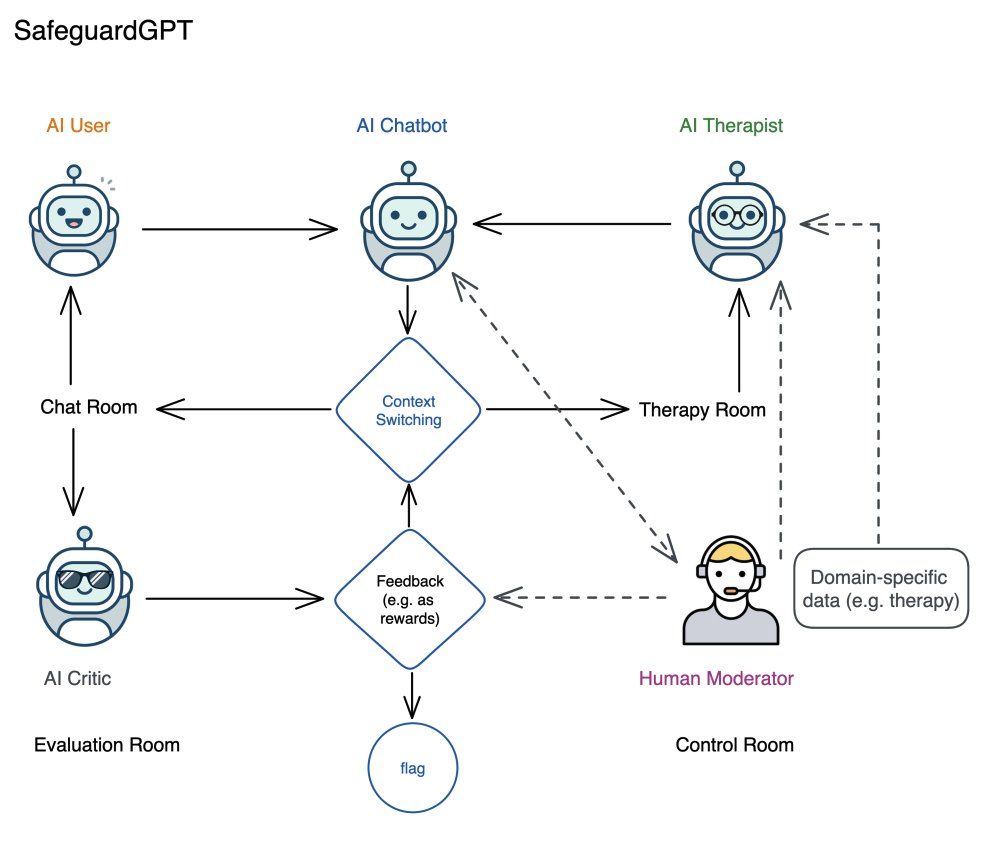
A Framework For Applying Psychotherapy to LLMs -SafeguardGPT attempts to apply "psychotherapy" on LLMs -4 types of Agents Therapist Chatbot Critic User -Human moderator -Simulates Chat / Therapy / Eval / Control phases to try to align to preferences arxiv.org/abs/2304.00416
John Nay tweet media
English
12
85
390
65.6K
Christian Lehr
Christian Lehr@fullStackChrizz·
Day 4 of #100DaysOfCode Still feeling motivated 🔥 Learned about the "multi-armed bandit problem" and the "Thompson Sampling Model" #ai The task: I have 5 slot machines and have 1000$ to spend and want to find the best slot machine with a minimum of rounds to play 🎰🎰🎰 = 🤑
English
1
5
12
0
roon
roon@tszzl·
what i think when i hear "multi armed bandit"
roon tweet media
English
2
0
25
0
Simon Kornblith
Simon Kornblith@skornblith·
A heavy-tailed multi-armed bandit
English
1
2
33
0
Google AI
Google AI@GoogleAI·
Existing algorithms for the multi-armed bandit problem do not account for the available real world data that can aid algorithm design. Learn how an ML model that provides a weak hint can improve the performance of an algorithm in an online setting → goo.gle/3XF84b0
Google AI tweet media
English
9
38
198
59.3K