Dhrubajyoti Deka

5K posts

Dhrubajyoti Deka banner
Dhrubajyoti Deka

Dhrubajyoti Deka

@Djdhruba2

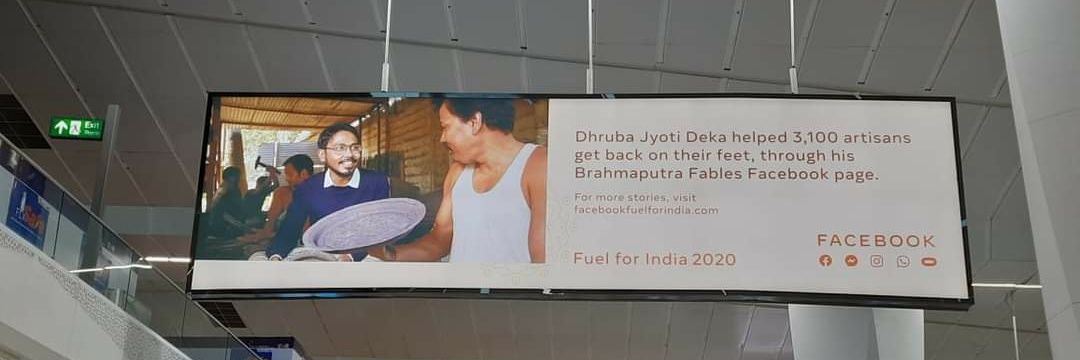
Founder | Chemistry MSc | @TheSSEIndia Fellow | Featured on Facebook Billboards | Speaker at #DigitalIndiaWeek2022 | Building in NE India | Mostly Retweets

Guwahati, India Katılım Kasım 2010
1K Takip Edilen621 Takipçiler
Dhrubajyoti Deka retweetledi
Vinodsrinivasan
Vinodsrinivasan@vinodsrinivasan·
What to actually watch. Weekly RBI reserves print. Crude basket and rupee daily. Any pump price hike notification. OMC quarterly under-recovery numbers. Hormuz transit volumes via Lloyd’s List or Kpler. The noise is on TV. The signal is in the data. Not SEBI registered. Personal opinion only.
English

2
11
229
49.3K
Congress
Congress@INCIndia·
🔥
Congress tweet media
QME
1K
2.7K
16.3K
416.7K
Dhrubajyoti Deka retweetledi
Karthik Balachandran
Karthik Balachandran@karthik2k2·
If Trisha didn't look this good, she would have been criticised a lot (more). Morality has an aesthetic bias.
English
175
1.3K
14.9K
718.9K
Dhrubajyoti Deka retweetledi
Dr. Brahma Chellaney
Dr. Brahma Chellaney@Chellaney·
A rare India-positive piece in @washingtonpost: “The BJP is consolidating power just as India takes its place among the world’s great powers: largest by population, second-largest by military personnel, on the way to becoming third-largest by economy, and the only nation with the potential to counterbalance China in Asia.” The piece argues, “More votes have been cast for Modi than for any politician in human history, by a margin in the hundreds of millions. Modi has comfortably outperformed every other democratically elected leader in the world in Morning Consult’s global leader approval tracker for many years, despite the longevity of his tenure.” washingtonpost.com/opinions/2026/…
English
193
1.7K
6.3K
287.8K
Dhrubajyoti Deka retweetledi
Manifest_Lord
Manifest_Lord@Manifest_Lord·
Manifest_Lord tweet media
ZXX
2
25
309
62.7K
Dhrubajyoti Deka retweetledi
Aaraynsh
Aaraynsh@aaraynsh·
Himanta Biswa Sarma’s win is so by default and predictable that even hitting 100 seats out of 126, nobody is talking about him! GOAT politician 😭🤣
English
52
1.9K
20.2K
185.5K
Dhrubajyoti Deka retweetledi
Bitcoin Teddy
Bitcoin Teddy@Bitcoin_Teddy·
I watch this every time my life starts falling apar
English
116
1.5K
9.8K
351.9K
Dhrubajyoti Deka retweetledi
Sahil Bloom
Sahil Bloom@SahilBloom·
A mentor told me this: “Always assume things will work out, then do the work to make it true.” I’ve found the combination creates a quiet confidence that allows you to tolerate uncertainty better than anything else. I’ll never forget that.
English
183
1.9K
11.8K
191K
Dhrubajyoti Deka retweetledi
Natural Philosophy
Natural Philosophy@Naturalphilosy·
“Ordinary life is even more horrible than war.” — Yukio Mishima
Natural Philosophy tweet media
English
240
1.2K
8.3K
9.2M
Dhrubajyoti Deka retweetledi
Paul Graham
Paul Graham@paulg·
Hamming's talk is so important that I reproduced it on my site. It's one of the only things on my site written by someone else. paulgraham.com/hamming.html
Ihtesham Ali@ihtesham2005

A mathematician who shared an office with Claude Shannon at Bell Labs gave one lecture in 1986 that explains why some people win Nobel Prizes and other equally smart people spend their whole lives doing forgettable work. His name was Richard Hamming. He won the Turing Award. He invented error-correcting codes that made modern computing possible. And he spent 30 years at Bell Labs sitting in a cafeteria at lunch watching which scientists became legendary and which ones faded into nothing. In March 1986, he walked into a Bellcore auditorium in front of 200 researchers and told them exactly what he had seen. Here's the framework that has been quoted by every serious scientist for the last 40 years. His opening line landed like a punch. He said most scientists he worked with at Bell Labs were just as smart as the Nobel Prize winners. Just as hardworking. Just as credentialed. And yet at the end of a 40-year career, one group had changed entire fields and the other group was forgotten by the time they retired. He wanted to know what the difference actually was. And he said it wasn't luck. It wasn't IQ. It was a specific set of habits that almost nobody is willing to follow. The first habit was the one that hurts the most to hear. He said most scientists deliberately avoid the most important problem in their field because the odds of failure are too high. They pick a safe adjacent problem, solve it cleanly, publish it, and move on. And because they never swing at the hard problem, they never hit it. He said if you do not work on an important problem, it is unlikely you will do important work. That is not a motivational line. That is a logical one. The second habit was about doors. Literal doors. He noticed that the scientists at Bell Labs who kept their office doors closed got more done in the short term because they had no interruptions. But the scientists who kept their doors open got more done over a career. The open-door scientists were interrupted constantly. They also absorbed every new idea passing through the hallway. Ten years in, they were working on problems the closed-door scientists did not even know existed. The third habit was inversion. When Bell Labs refused to give him the team of programmers he wanted, Hamming sat with the rejection for weeks. Then he flipped the question. Instead of asking for programmers to write the programs, he asked why machines could not write the programs themselves. That single inversion pushed him into the frontier of computer science. He said the pattern repeats everywhere. What looks like a defect, if you flip it correctly, becomes the exact thing that pushes you ahead of everyone else. The fourth habit was the one that hit me the hardest. He said knowledge and productivity compound like interest. Someone who works 10 percent harder than you does not produce 10 percent more over a career. They produce twice as much. The gap doesn't add. It multiplies. And it compounds silently for years before anyone notices. He finished the lecture with a line I have never been able to shake. He said Pasteur's famous quote is right. Luck favors the prepared mind. But he meant it literally. You don't hope for luck. You engineer the conditions where luck can land on you. Open doors. Important problems. Inverted questions. Compounded hours. Those are not traits. Those are choices you make every single day. The transcript has been sitting on the University of Virginia's computer science website for almost 30 years. The video is free on YouTube. Stripe Press reprinted the full lectures as a book in 2020 and Bret Victor wrote the foreword. Hamming died in 1998. He gave his final lecture a few weeks before. He was 82. The lecture that explains why some careers become legendary and others disappear is still free. Most people who could benefit from it will never open it.

English
82
435
3.7K
776.5K
Dhrubajyoti Deka retweetledi
Ihtesham Ali
Ihtesham Ali@ihtesham2005·
A mathematician who shared an office with Claude Shannon at Bell Labs gave one lecture in 1986 that explains why some people win Nobel Prizes and other equally smart people spend their whole lives doing forgettable work. His name was Richard Hamming. He won the Turing Award. He invented error-correcting codes that made modern computing possible. And he spent 30 years at Bell Labs sitting in a cafeteria at lunch watching which scientists became legendary and which ones faded into nothing. In March 1986, he walked into a Bellcore auditorium in front of 200 researchers and told them exactly what he had seen. Here's the framework that has been quoted by every serious scientist for the last 40 years. His opening line landed like a punch. He said most scientists he worked with at Bell Labs were just as smart as the Nobel Prize winners. Just as hardworking. Just as credentialed. And yet at the end of a 40-year career, one group had changed entire fields and the other group was forgotten by the time they retired. He wanted to know what the difference actually was. And he said it wasn't luck. It wasn't IQ. It was a specific set of habits that almost nobody is willing to follow. The first habit was the one that hurts the most to hear. He said most scientists deliberately avoid the most important problem in their field because the odds of failure are too high. They pick a safe adjacent problem, solve it cleanly, publish it, and move on. And because they never swing at the hard problem, they never hit it. He said if you do not work on an important problem, it is unlikely you will do important work. That is not a motivational line. That is a logical one. The second habit was about doors. Literal doors. He noticed that the scientists at Bell Labs who kept their office doors closed got more done in the short term because they had no interruptions. But the scientists who kept their doors open got more done over a career. The open-door scientists were interrupted constantly. They also absorbed every new idea passing through the hallway. Ten years in, they were working on problems the closed-door scientists did not even know existed. The third habit was inversion. When Bell Labs refused to give him the team of programmers he wanted, Hamming sat with the rejection for weeks. Then he flipped the question. Instead of asking for programmers to write the programs, he asked why machines could not write the programs themselves. That single inversion pushed him into the frontier of computer science. He said the pattern repeats everywhere. What looks like a defect, if you flip it correctly, becomes the exact thing that pushes you ahead of everyone else. The fourth habit was the one that hit me the hardest. He said knowledge and productivity compound like interest. Someone who works 10 percent harder than you does not produce 10 percent more over a career. They produce twice as much. The gap doesn't add. It multiplies. And it compounds silently for years before anyone notices. He finished the lecture with a line I have never been able to shake. He said Pasteur's famous quote is right. Luck favors the prepared mind. But he meant it literally. You don't hope for luck. You engineer the conditions where luck can land on you. Open doors. Important problems. Inverted questions. Compounded hours. Those are not traits. Those are choices you make every single day. The transcript has been sitting on the University of Virginia's computer science website for almost 30 years. The video is free on YouTube. Stripe Press reprinted the full lectures as a book in 2020 and Bret Victor wrote the foreword. Hamming died in 1998. He gave his final lecture a few weeks before. He was 82. The lecture that explains why some careers become legendary and others disappear is still free. Most people who could benefit from it will never open it.
Ihtesham Ali tweet media
English
147
1.9K
8.2K
1.2M
Dhrubajyoti Deka retweetledi
Rahul Tyagi
Rahul Tyagi@rahulastic·
To all Virat Kohli fans who trolls Dhoni, yad rakhna kohli bhi humesha form m nhi rhega aane do use apne 34-35's m😇
Eesti
463
639
2.2K
0
Dhrubajyoti Deka retweetledi
Anish Moonka
Anish Moonka@anishmoonka·
Nvidia is worth $5 trillion, more than the entire economy of Japan. No company in history has ever been worth more. It was started in 1993 in a Denny's diner by three engineers who put $200 each on the table. The CEO running it, Jensen Huang, grew up washing dishes at Denny's. He met two engineers at a booth in San Jose. Over cheap coffee, they started sketching out a company. Their plan was to build computer chips for video games, the kind that make 3D graphics look real on a screen. That was the pond they thought they were swimming in. Video games. Still a small industry in 1993. In 2006, Jensen made a decision that nearly killed the company. He started building software that turned his gaming chips into something more powerful. Scientists could now use them to do heavy math problems, the kind that used to require expensive supercomputers. Wall Street thought he was crazy. From 2006 to 2017, Nvidia spent close to $12 billion on this work while their revenue was only a few billion dollars a year. In 2014 alone, they put 30 cents of every dollar they made into research that was not paying off. Jensen later said it was the closest he ever came to killing his own company. Six years later, in 2012, a team at the University of Toronto built a program called AlexNet that could look at a picture and tell you what was in it. They trained it in a grad student's bedroom using two of Jensen's gaming chips that cost $500 each. They entered a contest and beat every other team in the world. Almost no one noticed. But Jensen did. He started rebuilding the entire company around teaching computers to think, even though almost nobody wanted that yet. Today, almost every AI in the world runs on Jensen's chips. In 2023, Larry Ellison, the founder of Oracle, said he and other tech CEOs had to spend an hour with Jensen at a sushi restaurant in Palo Alto, begging him for more chips. Jensen on the early years: "I had no idea how to do it. None of us knew how to do anything." The pond he thought he was swimming in was video games. The actual pond turned out to be every computer on the planet. The Denny's booth where it all started has a plaque on it now. It reads: "The booth that launched a trillion-dollar company." That number is now five.
Paul Graham@paulg

You don't know how big a fish you are till you try a big pond.

English
25
449
2.3K
202.7K
Dhrubajyoti Deka retweetledi
Elon Musk
Elon Musk@elonmusk·
Starship is the most powerful moving object ever made
English
7.6K
16K
150.7K
42.8M
Dhrubajyoti Deka retweetledi
Ian Miles Cheong
Ian Miles Cheong@ianmiles·
Marc Andreessen just revealed the Elon Musk philosophy that completely broke his brain: "The best product in the world shouldn't even need a logo." We all know Elon is relentless about quality. As Marc puts it: "Do you want the best car in the world or not, right? Like that's Elon's mentality... And it's working very well." But at a recent event, Elon took this mindset to a completely different level. He dropped a perspective so jarring that Marc initially thought it was a joke. Elon’s thesis? "You shouldn't even have to have your name on the product. It's just obvious. Everybody knows." The logic is brutal but simple. If you build the undeniable, undisputed best thing in the world, everybody uses it. And because everybody uses it, you don't need to slap your branding all over it to prove it's yours. Think about that. We spend endless hours agonizing over marketing, tweaking brand colors, and putting our logos on every square inch of what we build. But the ultimate flex isn't a flashy logo. The ultimate flex is building something so undeniably brilliant that its mere existence is the brand.
English
849
2K
17.9K
29.9M
Dhrubajyoti Deka retweetledi
Ivanka Trump
Ivanka Trump@IvankaTrump·
Loved this video mashup. Good luck to all the entrepreneurs doing the hard, meaningful work of building! 1. Value is everything Build something people genuinely want, not something clever. A business only works if it creates value and can capture it. 2. Solve real, painful problems The strongest companies remove friction, save time, or eliminate frustration. If it feels optional, it likely is. 3. Distribution matters as much as product A great product without reach is invisible. Winning companies obsess over how they get in front of people. 4. Focus is a competitive advantage Most people dilute their energy. Great founders concentrate on a few high-leverage moves and ignore the rest. 5. Speed compounds Iteration beats perfection. Launch, learn, refine, repeat, faster than feels comfortable. 6. Simplicity scales The best businesses are easy to understand, easy to use, and easy to explain. Complexity is friction disguised as sophistication. 7. Mindset is not soft, it is structural Resilience, long-term thinking, and tolerance for discomfort are not personality traits, they are requirements. 8. Build for longevity, not noise Short-term hacks create spikes. Enduring companies are built on trust, brand, and consistency. 9. Leverage is the force multiplier that transforms effort into scale. Technology, media, capital, and people multiply output. The goal is not to work harder, but to work in systems that scale. 10. Execution is the separator Ideas are abundant. Relentless, disciplined execution is rare. The essence : find a meaningful problem, solve it simply, distribute it aggressively, and execute with focus over the long term.
Jaynit@jaynitx

This video is literally 50 entrepreneurs giving you an MBA in 18 minutes:

English
400
1.1K
4.7K
809.2K
Dhrubajyoti Deka retweetledi
Gabbar
Gabbar@GabbbarSingh·
1) Opt for policies that cover pre and post-hospitalization care. Physiotherapy sessions cost more than your organs! 2) Don't split the bill; it may force you to cover a portion each time you claim. 3) Select policies with fewer room and rent restrictions. Room sharing with a patient in that m-seal ad is difficult. “Pappa ek aur zero” 4) Be aware of disease-wise sub-limits that can limit coverage for specific illnesses. 5) Ask your insurer about restoring your cover after your claims. It’s like going to a shoot-out with just one bullet in your gun. If you are still unsure about which plan would suit you better, book a call with Ditto’s IRDAI registered advisors. It’s Free. No spam. Go to: ditto.sh/czifsw - Select “Health Insurance” - Schedule a call - Choose the date & time as per your convenience! @joinditto 's advisors will take it from there! #partnership
English
2
6
27
17.8K
Prernaa
Prernaa@theprernaa·
Name a movie where you think the hero was wrong and the villain was right?
English
143
2
64
18.9K