
Greg Goetz DO
2.4K posts


Greg Goetz DO
@Doc_Man_G
Physician, amateur boxer, War Room G




@willahmed how do I tell Whoop I’m all jacked up right now due to a dose of intravenous steroids? Is that possible to track?


change what you allow into your mind, results follow fast after that.

Not a very democratic position.


Praise God!
South Carolina’s Senate Seat Shouldn't Be A Family Heirloom What’s happening in South Carolina with the interim nomination of Darline Graham Nordone should raise serious questions. This isn’t just a ceremonial role; it’s a powerful U.S. Senate seat, and the way it’s being filled matters. Senate appointments should be based on merit, experience, and a clear policy vision. Not on emotion, legacy, or family ties. Darline has no real record as a lawmaker or foreign policy decision-maker, yet she was handpicked by Trump and installed to finish her brother’s term. The bigger question is what happens to this seat after the August elections. We already have a long list of potential contenders including Mark Lynch, Nancy Mace, Henry McMaster, Pamela Evette, Ralph Norman, and Russell Fry. All are positioning themselves to replace longtime warhawk Lindsey Graham and define the future of South Carolina’s voice in Washington. Scottie Nell Hughes (@scottienhughes) joins me to break down what this interim choice says about the system, how it could shape the upcoming primary, and whether voters are ready to move from a family appointment to a truly merit-based senator.

David Baldacci's books are everywhere. He's written 53 novels and sold more than 200 million copies. And he's been so successful not just because he can write, but because he understands the business of books as well as anybody. Timestamps: 0:40 Starting with 'The Big Pop' 3:39 Should you outline your book? 6:03 Give characters baggage 9:44 Twists aren't enough 13:49 Long dialogue is lazy 21:36 Make the stakes personal 26:23 A scene needs two purposes 30:31 Where ideas come from 36:28 Writing 53 novels 41:19 Go where the readers are 43:24 Baldacci's money rule 47:54 How book deals really work 53:34 Finding a good premise 59:22 Why lawyers become writers 1:05:58 Finding the right details 1:10:07 Lessons from screenplays 1:13:18 Character > plot 1:17:29 Write what excites you 1:20:49 Slow down the big moments 1:22:54 Children's books 1:27:05 Skip the self-help books I've shared the full conversation with David below. If you'd rather watch it on YouTube, or listen on Apple / Spotify, check out the reply tweets.
losers blame others to feel better, winners blame themselves to get better


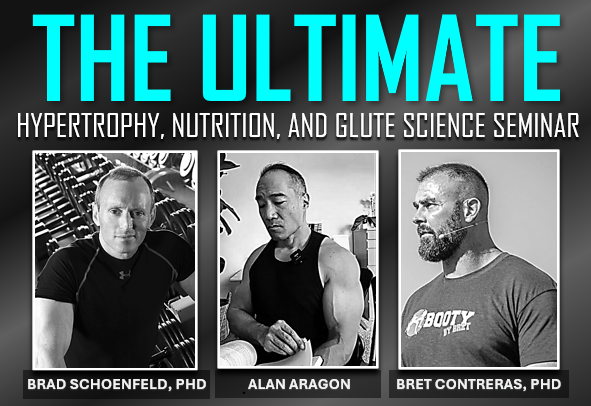
Research indicates that short inter-set rest intervals (≤60 seconds) can compromise muscle hypertrophy, while resting longer than ~90–120 seconds does not seem to further enhance muscle growth. In practice, however, most people regulate their rest intervals subjectively instead of timing them. How does this affect muscle development? Interestingly, no previous study investigated the topic. Until now... Led by my doctoral student @ae.mohan, we randomized resistance-trained men and women to an 8-week lower-body resistance training program using either a fixed 2–3-minute inter-set rest interval or a self-selected rest condition in which participants initiated each subsequent set when they felt ready (just preprinted on SportRxiv: sportrxiv.org/index.php/serv…). To ensure that self-selected rest intervals reflected perceived recovery rather than external distractions, participants were not permitted to use mobile devices or converse with others during training sessions. After 8-weeks, both groups achieved similar gains in muscle hypertrophy, strength, and local muscular endurance. However, the fixed-rest group completed their workouts in 29% less time than the self-selected group (average rest intervals: 2.4 vs. 3.7 minutes, respectively). That’s particularly striking because we didn’t allow participants to talk or use their phones. In a real-world gym environment, those distractions would almost certainly make self-selected rest periods even longer. Couple of takeaways. First, these findings reinforce the idea that resting longer than about 2 minutes between sets doesn’t appear to provide any additional muscle-building benefit. Second, for those who are short on time, actively timing rest intervals seems to be a practical strategy. Given that lack of time is consistently cited as the leading barrier to exercise participation, simply setting a timer between sets may help improve workout efficiency—and ultimately, adherence to resistance training. As always, a huge shout-out to my graduate students for bringing this research to fruition. Their dedication and hard work are the driving force behind our productivity 💪

Not surprising...
This is big.