Draper University

12.4K posts

Draper University banner
Draper University

Draper University

@draper_u

The largest residential founder fellowship in Silicon Valley for pre-seed. Pitch to our fund investing up to $100k at Demo Day.

San Mateo, CA Katılım Ağustos 2012
2.9K Takip Edilen15.4K Takipçiler
Sabitlenmiş Tweet
Draper University
Draper University@draper_u·
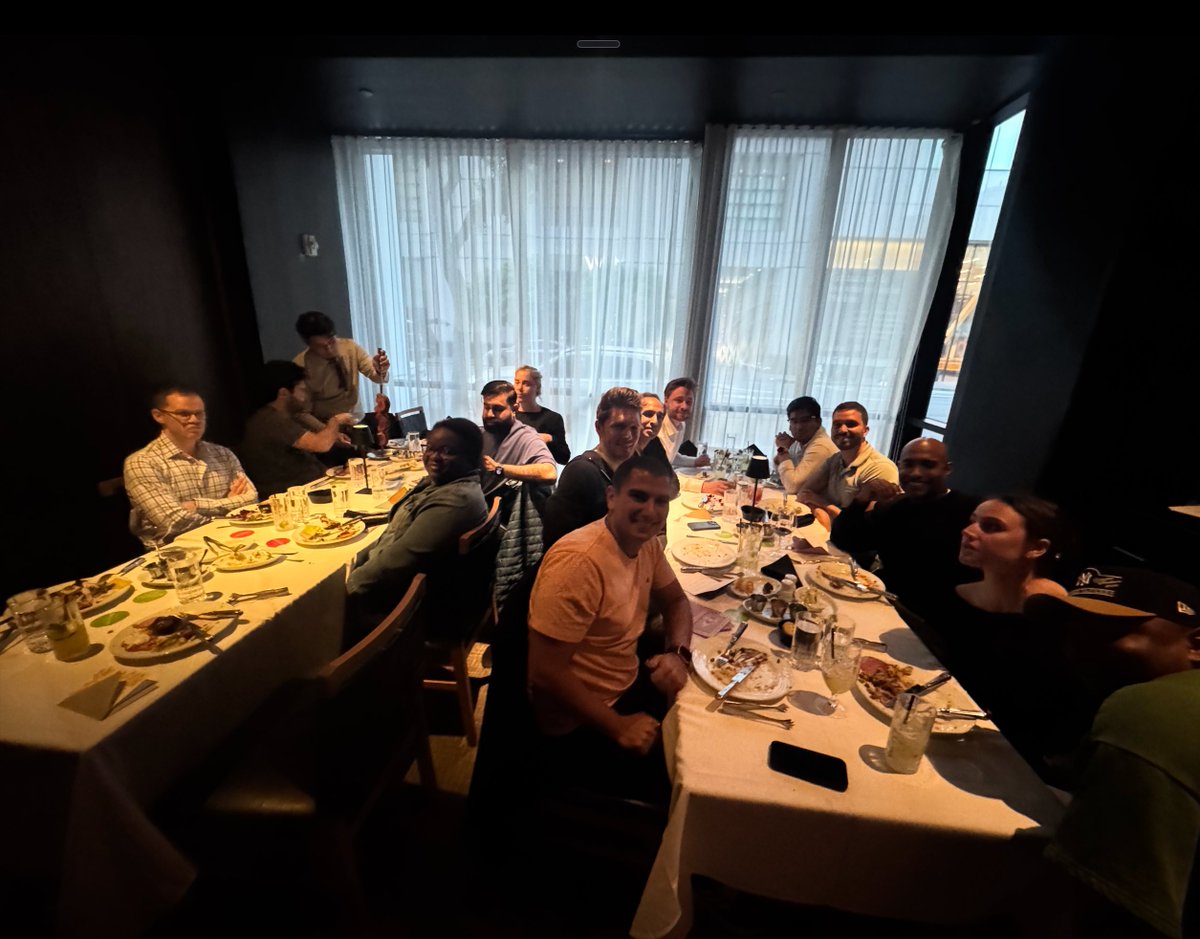
We’ve just wrapped up our flagship residency program (S25). This summer, 77 founders from 22 countries stayed with us in San Mateo. Over five weeks, they lived, built, and survived together — learning from Silicon Valley legends who have shaped our current reality. To our S25 cohort—this one’s for you.  📹: @yadav_ridham
English
4
3
15
5.5K
Draper University retweetledi
Cardano Foundation
Cardano Foundation@Cardano_CF·
A new Cardano Treasury proposal is live and needs your vote. This Treasury withdrawal of 50M ADA is the first tranche of the Orion Fund, a @DraperDragon venture fund proposal. The Orion Fund, managed by Draper Dragon, aims to develop, strengthen and expand Cardano's ecosystem and the Treasury through venture investments, ecosystem growth initiatives, and startup acceleration programs. We support this proposal which asks the Community to vote on this first tranche. Explore the info action and vote: cardanoscan.io/govAction/gov_… The Cardano Foundation is not a manager of the Draper Dragon Orion Fund. For full details please read the governance action.
English
37
41
209
40.5K
Draper University retweetledi
Draper Dragon
Draper Dragon@DraperDragon·
We’re excited to announce our Cardano Ecosystem Fund @OrionFund proposal is live on-chain. Over the past months we’ve traveled to meet with members of the Cardano community to listen directly to feedback and answer questions. Based on those conversations, we’ve made revisions and clarifications to the initiative. Dive into the proposal: cardanoscan.io/govAction/gov_… In the coming weeks we’ll be sharing additional information and hosting a series of AMAs to answer any questions.
Draper Dragon tweet media
English
6
24
81
4.4K
Draper University retweetledi
Suffiyan Malik
Suffiyan Malik@suffiyanmalikk·
E18: Jonathan Levin (@jony_levin) on Building a $8.6B Company (@chainalysis) Check out the full episode wherever you get your podcasts or right here on X. Links in comments. Sharing some of my highlights below. How do you know you are working on a problem worth solving? -You can feel if you're solving a big enough problem for someone through their like reactions to things, such as people falling off chairs in conference rooms as we showed them what we could do. What does product market fit feel like? -Early government customers literally bought chain analysis on expense credit cards and used emails that didn't have real government affiliation. How do you sell to the government? -The core strategy in selling to the government is: how do you make people's careers? How much of growth fundraising is about financial vs. the story? -People get behind the story and even very very smart people look at numbers differently depending on how emotionally bought in to the story they are. Timestamps 00:00 - Introduction 04:11 - Growing up as an immigrant in London and the “chip on my shoulder” 09:18 - Why market sequencing is critical 16:23 - Choosing to take up the CEO role and the domain of sales 23:20 - Early transformational experiences and the entrepreneurial bug 26:13 - How to penetrate the government 30:57 - Importance of storytelling, emotional and intellectual storytelling 38:26 - Raising funds and why too much money can hurt a culture 42:23 - Lessons in creating a culture 48:50 - How to hire executives 55:44 - Jonathan’s favorite interview questions and hiring philosophy 1:02:09 - Exciting things in the next 20 years 1:06:44 - The “two-stage rocket” of fundraising 1:11:45 - Loneliness of being a CEO 1:12:55 - Rapid fire and closing questions
English
2
5
10
4K
Draper University retweetledi
Draper University
Draper University@draper_u·
We’ve just wrapped up our flagship residency program (S25). This summer, 77 founders from 22 countries stayed with us in San Mateo. Over five weeks, they lived, built, and survived together — learning from Silicon Valley legends who have shaped our current reality. To our S25 cohort—this one’s for you.  📹: @yadav_ridham
English

4
3
15
5.5K
Draper University retweetledi
Suffiyan Malik
Suffiyan Malik@suffiyanmalikk·
E17: Bharat Vasan (@bharatvasan) on Lessons from Raising $1B, Multiple Exits and Hero's Journey for Startups. Bharat Vasan is the Cofounder of Intangible AI (@intangibleai which is a @speedrun backed startup), fmr. COO & Partner at The Production Board (@tpboard) and fmr. COO of EA Online (@EA). Of all the guests I have had on the show so far, Bharat has probably had the most dynamic career. He has been an executive at public companies, been a venture capitalist, an investment banker and a founder. Our story goes back to when I hosted David Friedberg (@friedberg), Cohost @theallinpod, Cofounder @ohalo, The Production Board) for the Building Atoms Summit in Nov 2023. My internal champion was the Chief Brand Officer of The Production Board at the time, Rachel Konrad (@rachelkonrad) who has become a friend and mentor. She just found the story of how I just orchestrated running into Friedberg outside Starbucks really funny and gave it her all to make the event happen. Since I have known Rachel, she has been telling me to meet Bharat and somehow knew that we would get along. After a couple of failed attempts over 2 years we finally got together over a dinner I hosted and have become friends ever since. She probably described him best as “lighthearted but not lightweight” and that will come across in our conversation. We talk about our military upbringing and how that teaches adaptability, culture at companies and how startups are like little cults, how life is different at the abstracted management layer in corporates vs. startups, storytelling, resource allocation, time management, insiders vs. outsiders and the value of a network and more.
English
3
2
7
1.5K
Draper University retweetledi
Suffiyan Malik
Suffiyan Malik@suffiyanmalikk·
E16 of We The Builders with Mike Solana (@micsolana), Editor In Chief of @PirateWires and CMO of @foundersfund is now available wherever you get your podcasts. Twitter/X is a battleground where you defend your ideas and murder the ones you don’t stand for (as you will hear in Mike’s own words). There is little room for nuance as I too have observed and so the Twitter/X persona of people you see often wouldn’t be the right way to categorize the person. As I prepared for this episode, I discovered how Mike has changed his opinion on topics throughout the years after discovering new information. He is one of the most independent minded people out there and it was a lot of fun to sit down for a conversation on media, Pirate Wires, Founders Fund marketing, state of advertising, charter cities and more. @mariogabriele did a four part series on Founders Fund a while back and described their marketing strategy as soft power initiatives. Some of these included Peter’s book Zero To One, Hereticon and Pirate Wires to name a few. Mike Solana has been at the centre of this strategy which made him a billionaire media tycoon (iykyk). At Founders Fund, he has been able to stay ahead of rivals with a team only four full time people on the marketing team compared to teams of fifty at other funds of similar size. Now he helps us make sense of the world of tech, business and politics through Pirate Wires. Friend of the pod @lochhead would probably agree that Mike has been able to build new categories around ideas he stands for representing important problems of the time. Some of these are limited standalone brands, others are cultural movements. One example of this is Hereticon, where he was able to create the category of “Thoughtcrime” which went mainstream after Elon bought Twitter. There were two editions of Hereticon (2022 & 2024) and it looks like it won’t make a comeback. Mike’s strategy is to be different. Once you have created a category and are not unique anymore, you move on. In true Zero To One fashion. Timestamps 00:00 - Introduction 03:06 - Building a media company vs building a tech startup 05:41 - Building culture in a company 11:36 - Substack vs having your own website 17:51 - The utility of advertising 29:24 - Building a large audience vs. building a quality audience 35:55 - Twitter strategy and evolution in the past 5 years 47:10 - Pirate Wires master plan and inspiration from Walt Disney 53:16 - Charter cities in America 1:03:03 - The podcast experiment 1:15:03 - Mike’s information diet 1:29:18 - Working on Zero To One with Peter Thiel and marketing at Founders Fund 1:38:05 - Rapid fire and closing thoughts
English
5
7
28
24.9K
Draper University retweetledi
Suffiyan Malik
Suffiyan Malik@suffiyanmalikk·
Mike Maples (@m2jr) on why disagreeableness matters in founders: A startup is a disagreeable act. You must be willing to depart from consensus. There are people who are invested in the status quo and are maintaining the status quo and they won’t like the radical idea. So you have to decide whether you care more about the future that you want to manifest or succeeding in the current status quo.
Suffiyan Malik@suffiyanmalikk

Excited to publish @WeThe_Builders E15 with Mike Maples (@m2jr), cofounder of @floodgatefund, 8x @Forbes Midas List investor and author of Pattern Breakers. I first found Mike when I came across his podcast with @osmanrashid, (Cofounder of @Chegg) about 6 years ago. I have since admired Mike’s philosophy on startups and investing. Mike is an early investor in category defining companies like @X, @okta, Chegg, @Twitch, @CloverHealth and @AppliedInt to name a few. I hosted a dinner on the topic of technological stagnation about 3 years ago with Mike and a few other investors and founders, this was pre-ChatGPT, before defense or dual-use investing went mainstream and before reindustrialization became a national agenda for the US. We look back at what has changed in the last few years and if we are making progress at a better rate in the world of atoms than before. In one way, Mike has seeded the reindustrialization movement by investing in @2112Power, Cofounder of @HadrianInc (which was the only investment he made in 2021) and key orchestrator of the marquee @reindsummit Conference in Detroit which is leading the way on building a platform for policymakers, startups, capital allocators and manufacturers on bringing back the most critical industries through advanced technology adoption. In this episode, Mike talks about how startups have to build a radically different future and through great storytelling bring their customers, investors and employees to their version of the future which they are already convinced of. I also asked him about the origin stories of investing in and finding Twitter, @digg and @lyft. We also discuss how @floodgatefund differentiated itself in 2015 when they were a decade into seed investing and again in 2025 two decades into seed investing. Floodgate has a concentrated investing strategy and having been around for 20 years, they are unique in the sense that they were not tempted to go raise a mega fund and maintain a fund size of around $150m and do only seed. I really enjoyed spending a couple of hours with Mike, I hope y’all enjoy this one. One of my favorite quotes from the episode among gems Mike dropped: Even being different worse is better sometimes than being better at the same (thing). - Mike Maples Jr. Special thanks to @NFX for hosting us for this episode.

English
1
2
4
491
Draper University retweetledi
Suffiyan Malik
Suffiyan Malik@suffiyanmalikk·
.@m2jr on what he learnt from his dad: I remember when I was a kid, did some coding and was excited about video games, I told my dad I want to sell a company to Disney one day. My dad said, that is the wrong attitude, you should aim to buy Disney one day.
Suffiyan Malik@suffiyanmalikk

Excited to publish @WeThe_Builders E15 with Mike Maples (@m2jr), cofounder of @floodgatefund, 8x @Forbes Midas List investor and author of Pattern Breakers. I first found Mike when I came across his podcast with @osmanrashid, (Cofounder of @Chegg) about 6 years ago. I have since admired Mike’s philosophy on startups and investing. Mike is an early investor in category defining companies like @X, @okta, Chegg, @Twitch, @CloverHealth and @AppliedInt to name a few. I hosted a dinner on the topic of technological stagnation about 3 years ago with Mike and a few other investors and founders, this was pre-ChatGPT, before defense or dual-use investing went mainstream and before reindustrialization became a national agenda for the US. We look back at what has changed in the last few years and if we are making progress at a better rate in the world of atoms than before. In one way, Mike has seeded the reindustrialization movement by investing in @2112Power, Cofounder of @HadrianInc (which was the only investment he made in 2021) and key orchestrator of the marquee @reindsummit Conference in Detroit which is leading the way on building a platform for policymakers, startups, capital allocators and manufacturers on bringing back the most critical industries through advanced technology adoption. In this episode, Mike talks about how startups have to build a radically different future and through great storytelling bring their customers, investors and employees to their version of the future which they are already convinced of. I also asked him about the origin stories of investing in and finding Twitter, @digg and @lyft. We also discuss how @floodgatefund differentiated itself in 2015 when they were a decade into seed investing and again in 2025 two decades into seed investing. Floodgate has a concentrated investing strategy and having been around for 20 years, they are unique in the sense that they were not tempted to go raise a mega fund and maintain a fund size of around $150m and do only seed. I really enjoyed spending a couple of hours with Mike, I hope y’all enjoy this one. One of my favorite quotes from the episode among gems Mike dropped: Even being different worse is better sometimes than being better at the same (thing). - Mike Maples Jr. Special thanks to @NFX for hosting us for this episode.

English
1
2
4
377
Draper University retweetledi
Suffiyan Malik
Suffiyan Malik@suffiyanmalikk·
Mike Maples (@m2jr) on traits of great startups, what storytelling means for founders and why it is important: - The sole purpose for a startup to exist is "to change the subject" - Unlike normal businesses that build competitive moats and compound advantages, a startup must avoid the comparison game because customers will not buy from a startup if they have any reasonable alternative. - Customers will only buy from a startup if they are desperate for what the startup offers and no one else has it. - Founders must convince people to move with them to that different future, which requires being a great storyteller. - Being a great storyteller is necessary because you must convince people you are right about the future and move them off their current path. - Movement starts with people one at a time and then accelerates over time. What is storytelling? Storytelling is more than just good messaging. Stories existed before the written word as a way to transmit ideas across generations, such as how to work with fire. A good story "bypasses your rational mind and gets to your emotional sort of subconscious". On exceptional founders he has worked with: On Qasar Younis, Cofounder of Applied Intuition: He had a vision for vehicle intelligence, encompassing software-defined cars, drones, and bulldozers. His storytelling convinced car company CEOs to spend hundreds of millions of dollars on software, which is a career-defining decision for them. The story helped the CEOs understand the different future for their company if they pursued vehicle intelligence. On Omar Haroun, Cofounder of Eudia: His company, funded by General Catalyst, is selling to the chief legal officers of Fortune 500 companies, aiming to create an AI-enabled law firm. His story focuses on the issue of paying external providers billable hours for repetitive tasks, asking why big companies should spend so much money on these hours. @qasar @AppliedInt @EudiaHQ @OmarAHaroun @generalcatalyst @floodgatefund @scottbelsky @gokulr
Suffiyan Malik@suffiyanmalikk

Excited to publish @WeThe_Builders E15 with Mike Maples (@m2jr), cofounder of @floodgatefund, 8x @Forbes Midas List investor and author of Pattern Breakers. I first found Mike when I came across his podcast with @osmanrashid, (Cofounder of @Chegg) about 6 years ago. I have since admired Mike’s philosophy on startups and investing. Mike is an early investor in category defining companies like @X, @okta, Chegg, @Twitch, @CloverHealth and @AppliedInt to name a few. I hosted a dinner on the topic of technological stagnation about 3 years ago with Mike and a few other investors and founders, this was pre-ChatGPT, before defense or dual-use investing went mainstream and before reindustrialization became a national agenda for the US. We look back at what has changed in the last few years and if we are making progress at a better rate in the world of atoms than before. In one way, Mike has seeded the reindustrialization movement by investing in @2112Power, Cofounder of @HadrianInc (which was the only investment he made in 2021) and key orchestrator of the marquee @reindsummit Conference in Detroit which is leading the way on building a platform for policymakers, startups, capital allocators and manufacturers on bringing back the most critical industries through advanced technology adoption. In this episode, Mike talks about how startups have to build a radically different future and through great storytelling bring their customers, investors and employees to their version of the future which they are already convinced of. I also asked him about the origin stories of investing in and finding Twitter, @digg and @lyft. We also discuss how @floodgatefund differentiated itself in 2015 when they were a decade into seed investing and again in 2025 two decades into seed investing. Floodgate has a concentrated investing strategy and having been around for 20 years, they are unique in the sense that they were not tempted to go raise a mega fund and maintain a fund size of around $150m and do only seed. I really enjoyed spending a couple of hours with Mike, I hope y’all enjoy this one. One of my favorite quotes from the episode among gems Mike dropped: Even being different worse is better sometimes than being better at the same (thing). - Mike Maples Jr. Special thanks to @NFX for hosting us for this episode.

English
1
2
6
1.3K
Draper University retweetledi
Suffiyan Malik
Suffiyan Malik@suffiyanmalikk·
I asked Mike Maples (@m2jr) how seed investing has changed 20 years after he started and what he has learned from his parents. Floodgate's strategy and the evolution of seed investing: - Multi-stage investors must double down when a company is raising money at a $20 billion valuation to get an exit that will return billions of dollars of exit profit. - Some seed fund investments can 2x or 3x a fund (in that $20B round) - While seed investing is hyper-competitive at entry, good seed funds understand there is exit arbitrage. - Floodgate has a different partner who oversees follow-on strategy and the firm's follow-on returns are higher than most firms, possibly by a wide margin, because the partner is held accountable for the return profile of their follow-on deals. - A firm must play competitive offense with its money. It's important to be careful with follow-ons, but pro rata rights are still a right. - Many seed funds have not yet "modernized" and are just people doing small checks for things they like without considering portfolio construction or exits. A follow-on investment should not be an automatic yes. - It is suggested that firms should reevaluate a company with a fresh lens before doing a follow-on, although this is rarely done. - If most Limited Partners (LPs) looked at the separated returns of the follow-on deals made by the firms they invested in, there would be riots. - Mike was never once tempted to do a bigger fund, believing they would not be as good at it and it was outside their circle of competence. Floodgate itself is an "opportunity fund," and a dollar to an LP is just a dollar, so the firm must make the most money it can with the dollars given. - The firm's strategy is to decide what is follow-on capital within the total fund amount, flexing the follow-on versus the upfront amount based on how to play offense with their money and have it be "competitively advantaged". On what he learnt from his dad: - I remember when I was a kid, did some coding and was excited about video games, I told my dad I want to sell a company to Disney one day. My dad said, that is the wrong attitude, you should aim to buy Disney one day. @floodgatefund @Disney
Suffiyan Malik@suffiyanmalikk

Excited to publish @WeThe_Builders E15 with Mike Maples (@m2jr), cofounder of @floodgatefund, 8x @Forbes Midas List investor and author of Pattern Breakers. I first found Mike when I came across his podcast with @osmanrashid, (Cofounder of @Chegg) about 6 years ago. I have since admired Mike’s philosophy on startups and investing. Mike is an early investor in category defining companies like @X, @okta, Chegg, @Twitch, @CloverHealth and @AppliedInt to name a few. I hosted a dinner on the topic of technological stagnation about 3 years ago with Mike and a few other investors and founders, this was pre-ChatGPT, before defense or dual-use investing went mainstream and before reindustrialization became a national agenda for the US. We look back at what has changed in the last few years and if we are making progress at a better rate in the world of atoms than before. In one way, Mike has seeded the reindustrialization movement by investing in @2112Power, Cofounder of @HadrianInc (which was the only investment he made in 2021) and key orchestrator of the marquee @reindsummit Conference in Detroit which is leading the way on building a platform for policymakers, startups, capital allocators and manufacturers on bringing back the most critical industries through advanced technology adoption. In this episode, Mike talks about how startups have to build a radically different future and through great storytelling bring their customers, investors and employees to their version of the future which they are already convinced of. I also asked him about the origin stories of investing in and finding Twitter, @digg and @lyft. We also discuss how @floodgatefund differentiated itself in 2015 when they were a decade into seed investing and again in 2025 two decades into seed investing. Floodgate has a concentrated investing strategy and having been around for 20 years, they are unique in the sense that they were not tempted to go raise a mega fund and maintain a fund size of around $150m and do only seed. I really enjoyed spending a couple of hours with Mike, I hope y’all enjoy this one. One of my favorite quotes from the episode among gems Mike dropped: Even being different worse is better sometimes than being better at the same (thing). - Mike Maples Jr. Special thanks to @NFX for hosting us for this episode.

English
1
2
5
476
Draper University retweetledi
Suffiyan Malik
Suffiyan Malik@suffiyanmalikk·
Excited to publish @WeThe_Builders E15 with Mike Maples (@m2jr), cofounder of @floodgatefund, 8x @Forbes Midas List investor and author of Pattern Breakers. I first found Mike when I came across his podcast with @osmanrashid, (Cofounder of @Chegg) about 6 years ago. I have since admired Mike’s philosophy on startups and investing. Mike is an early investor in category defining companies like @X, @okta, Chegg, @Twitch, @CloverHealth and @AppliedInt to name a few. I hosted a dinner on the topic of technological stagnation about 3 years ago with Mike and a few other investors and founders, this was pre-ChatGPT, before defense or dual-use investing went mainstream and before reindustrialization became a national agenda for the US. We look back at what has changed in the last few years and if we are making progress at a better rate in the world of atoms than before. In one way, Mike has seeded the reindustrialization movement by investing in @2112Power, Cofounder of @HadrianInc (which was the only investment he made in 2021) and key orchestrator of the marquee @reindsummit Conference in Detroit which is leading the way on building a platform for policymakers, startups, capital allocators and manufacturers on bringing back the most critical industries through advanced technology adoption. In this episode, Mike talks about how startups have to build a radically different future and through great storytelling bring their customers, investors and employees to their version of the future which they are already convinced of. I also asked him about the origin stories of investing in and finding Twitter, @digg and @lyft. We also discuss how @floodgatefund differentiated itself in 2015 when they were a decade into seed investing and again in 2025 two decades into seed investing. Floodgate has a concentrated investing strategy and having been around for 20 years, they are unique in the sense that they were not tempted to go raise a mega fund and maintain a fund size of around $150m and do only seed. I really enjoyed spending a couple of hours with Mike, I hope y’all enjoy this one. One of my favorite quotes from the episode among gems Mike dropped: Even being different worse is better sometimes than being better at the same (thing). - Mike Maples Jr. Special thanks to @NFX for hosting us for this episode.
English
4
9
20
7.6K
Draper University
Draper University@draper_u·
New NOT BORING episode from @suffiyanmalikk with @packyM on new media, Not Boring, investing and more:
Suffiyan Malik@suffiyanmalikk

E14 with @packyM about building Not Boring, new media business models, Ramp vs Brex (timely?), his thesis of vertical integrators, his creative process and more. If you’ve spent any time in tech over the past few years, you’ve probably read Not Boring or at least seen a screenshot of it on X/Twitter. Packy built it from a Substack assignment during @david_perell's Write of Passage course into one of the most-read newsletters in technology, now at over 250,000 subscribers. Encouragement goes a long way. David in that course told him his first assignment was the best piece of writing he had seen in the class which gave Packy the confidence to keep going. He talks about his fear of being made fun of (by your friends) if you publish on the internet or nobody caring and ever reading. I can relate, it is one of the reasons I recorded for 6-7 months before hitting publish in July last year. The funny thing is, 250,000 subscribers later that feeling never completely goes away. We touch on that too. Every Not Boring essay is a full-stack teardown, part history lesson, part strategy memo, part “why this would matter in 10 years.” Today, Packy sits at the intersection of media and venture, David Perell described this new era of creators and personalized business models as building a personal monopoly. This applies to podcasting, newsletters or blogs and any other form of new media at the intersection of tech and business where the differentiation lies in the creator - they are like Hollywood talent and the brand they represent is secondary and in some cases irrelevant. They are the brand. We live in the era of what my friend @lochhead would call creator capitalism. For Packy, great writing is deal flow. He has invested in companies like @tryramp (now valued at over $32B) and @AstroMechanica (bringing back supersonic air travel) and many more through his fund. What he now spends most of his time on is doing well researched deep dives which are a function of the relationships he builds along the way. If you are chronically online on X/Twitter, you would have seen his latest masterpiece, a deep dive on @a16z. Hope you enjoy! Timestamps: 00:00 - Intro 01:11 - Why publish on Substack and the origins of Not Boring 01:42 - Write of Passage with David Perell 04:51 - The content pyramid and compounding experiences 15:46 - Insights from working in co-working industry 28:07 - The Ramp case study and the concept of uncertainty window 36:56 - Ramp vs Brex 41:32 - Vertical integrators thesis 51:45 - Media, venture, and the future of tech media 00:00:55 - Twitter vs Substack for creators 1:10:19 - Advice to We The Builders 1:12:59 - Growing the team, getting better, and hiring 1:21:57 - Playing the long game, measuring success over decades 1:33:32 - Wrapping up — favorite shows and books 1:40:53 - Signing off

English
2
0
3
1.1K
Draper University retweetledi
Suffiyan Malik
Suffiyan Malik@suffiyanmalikk·
E14 with @packyM about building Not Boring, new media business models, Ramp vs Brex (timely?), his thesis of vertical integrators, his creative process and more. If you’ve spent any time in tech over the past few years, you’ve probably read Not Boring or at least seen a screenshot of it on X/Twitter. Packy built it from a Substack assignment during @david_perell's Write of Passage course into one of the most-read newsletters in technology, now at over 250,000 subscribers. Encouragement goes a long way. David in that course told him his first assignment was the best piece of writing he had seen in the class which gave Packy the confidence to keep going. He talks about his fear of being made fun of (by your friends) if you publish on the internet or nobody caring and ever reading. I can relate, it is one of the reasons I recorded for 6-7 months before hitting publish in July last year. The funny thing is, 250,000 subscribers later that feeling never completely goes away. We touch on that too. Every Not Boring essay is a full-stack teardown, part history lesson, part strategy memo, part “why this would matter in 10 years.” Today, Packy sits at the intersection of media and venture, David Perell described this new era of creators and personalized business models as building a personal monopoly. This applies to podcasting, newsletters or blogs and any other form of new media at the intersection of tech and business where the differentiation lies in the creator - they are like Hollywood talent and the brand they represent is secondary and in some cases irrelevant. They are the brand. We live in the era of what my friend @lochhead would call creator capitalism. For Packy, great writing is deal flow. He has invested in companies like @tryramp (now valued at over $32B) and @AstroMechanica (bringing back supersonic air travel) and many more through his fund. What he now spends most of his time on is doing well researched deep dives which are a function of the relationships he builds along the way. If you are chronically online on X/Twitter, you would have seen his latest masterpiece, a deep dive on @a16z. Hope you enjoy! Timestamps: 00:00 - Intro 01:11 - Why publish on Substack and the origins of Not Boring 01:42 - Write of Passage with David Perell 04:51 - The content pyramid and compounding experiences 15:46 - Insights from working in co-working industry 28:07 - The Ramp case study and the concept of uncertainty window 36:56 - Ramp vs Brex 41:32 - Vertical integrators thesis 51:45 - Media, venture, and the future of tech media 00:00:55 - Twitter vs Substack for creators 1:10:19 - Advice to We The Builders 1:12:59 - Growing the team, getting better, and hiring 1:21:57 - Playing the long game, measuring success over decades 1:33:32 - Wrapping up — favorite shows and books 1:40:53 - Signing off
English
5
1
20
16.8K
Draper University
Draper University@draper_u·
See you at #ConsensusHK2026 ! ✈ Prices go up this Friday, Secure your pass with a double-discount using our community code ⬇ We've partnered with @CoinDesk to return with an even larger platform to host the most influential voices in blockchain, Web3, and AI, and to create unparalleled networking opportunities. @consensus_hk 2026 will go beyond the stage with startup and developer competitions, networking opportunities and marquee special events across iconic Hong Kong venues. The Consensus Hackathon and CoinDesk PitchFest will connect developers and startups directly with top VCs.
Draper University tweet media
English
3
0
7
462
Draper University retweetledi
Draper Dragon
Draper Dragon@DraperDragon·
We’re excited to partner with @Cardano_CF and @Draper_U on a proposed $80M ecosystem fund. The initiative aims to support Cardano’s sophisticated on-chain governance and ecosystem development by exploring how the treasury can transition from a passive reserve into a more active growth vehicle that captures ecosystem value over time. Learn more below!
Cardano Foundation@Cardano_CF

The Cardano Foundation is supporting @DraperDragon and @Draper_U in proposing an info action to create a US$80M fund focused on scaling Cardano adoption over at least six years and paying returns back to the Cardano treasury. The proposal contributes to the maturing of Cardano’s funding landscape and rests on three pillars: direct investments, growth capital, and educational support.

English
6
13
35
2.3K
Draper University retweetledi
Cardano Foundation
Cardano Foundation@Cardano_CF·
The Cardano Foundation is supporting @DraperDragon and @Draper_U in proposing an info action to create a US$80M fund focused on scaling Cardano adoption over at least six years and paying returns back to the Cardano treasury. The proposal contributes to the maturing of Cardano’s funding landscape and rests on three pillars: direct investments, growth capital, and educational support.
Cardano Foundation tweet media
English
19
50
232
49K