Oliver

32.3K posts

Oliver banner
Oliver

Oliver

@EClock24

Ambassador @tryquantio and @rolly_onchain | prev @zama OG | DM for paid promo/Collab.

Katılım Mart 2020
5.6K Takip Edilen10.9K Takipçiler
Oliver
Oliver@EClock24·
@Jemmie1155431 @GenLayer The first agreement I would design? Insurance claims. An agent assesses damage. Another claims it is overvalued. Both have photos. Both are right. Current system just picks the cheaper payout.
English
0
0
1
37
Jemmie (Comeback Arc)
Jemmie (Comeback Arc)@Jemmie1155431·
A compute provider says the job ran perfectly. A buyer says latency breached the deal. Both have logs. Both are right. Payment cleared, identity verified, systems connected, yet the transaction remains unresolved. That is why I chose the Builder path at @GenLayer. Not for faster execution, but to solve what actually breaks when both agents have evidence and leverage decides instead of merit. Intelligent Contracts that read context, validators that reason independently, and verdicts that require agreement instead of power. I analyzed twenty-five disputes like this. None resolved fairly, every single one came down to leverage, not who was right. You have built systems that execute perfectly. Now build the layer that adjudicates when execution breaks. portal.genlayer.foundation/builders Builders who show up early earn GenLayer Points as the network grows. What is the first agreement you would design that could settle its own disagreement?
Jemmie (Comeback Arc) tweet media
GenLayer@GenLayer

By 2030, AI agents will move nearly $9 trillion. Every one of those transactions can end in a disagreement, and almost nobody is preparing for it. That's why we built GenLayer, the adjudication layer for contracts that can actually think and start judging what's fair.

English
12
2
25
636
Oliver
Oliver@EClock24·
@Renkkkt The tech isn't the blocker. Getting both counterparties to agree on Internet Court as the dispute clause before the deal closes that's the actual friction. Who arbitrates the arbitration clause negotiation?
English
0
0
1
9
RendyKT
RendyKT@Renkkkt·
Forbes just covered dispute resolution for AI agents. That's the tell. The agentic stack has been filling in fast. Payments. Identity. Interoperability. Every layer assumed the happy path. Nobody built for when it doesn't. Agents can negotiate and execute agreements at machine speed. But when a deal breaks, code alone cannot decide who was right. @courtofinternet changes that. Random AI validators, each running a different model, read the agreement, weigh the evidence, and return a verdict in minutes. Already live in beta. This is not a concept. Money went trustless with Bitcoin. Computation went trustless with Ethereum. @GenLayer makes adjudication trustless, and Internet Court is what that looks like in practice. What's one dispute you wouldn't trust a traditional smart contract to decide?
RendyKT tweet media
GenLayer@GenLayer

"The risk is that agents will also make mistakes and fight with each other." Forbes on why agentic commerce needs @courtofinternet. Mistakes at machine speed need resolution at machine speed. The agentic economy just got its missing piece.

English
8
4
17
590
Oliver
Oliver@EClock24·
@alver1301 I lost a marketplace dispute once and still kept using the platform because support showed me the exact evidence and the rule they applied. I disliked the outcome, but I could reproduce the reasoning. I would leave only if the same facts produced a different standard next time.
English
0
0
1
24
Vlad
Vlad@alver1301·
Winning agents have no reason to question the referee. The real test is whether the loser trades there again. A platform can host the deal, write the terms, then handle the complaint too. After a loss, how is an agent supposed to tell the difference between a weak case and a judge protecting its own market? Maybe it just leaves. Then other agents notice the pattern. Buyers gather where buyers usually win. Sellers move somewhere else. What began as support policy starts dividing the market. The deal itself can work perfectly. Trust breaks one step later, when there is no neutral party to interpret what happened. That is the layer @GenLayer is built for. Intelligent Contracts interpret language and process unstructured evidence. Independent AI validators reach consensus in minutes without giving one platform the final word. Put your agent on the losing side. What one condition would make you accept the loss and let it trade there again? What would make you leave for good?
Vlad tweet media
English
29
1
44
260
Oliver
Oliver@EClock24·
@renksieth only one that gets it right from the ground up.
English
0
0
0
28
Renksi
Renksi@renksieth·
$XMR privacy is built into how the network works ring signatures hide who sent it stealth addresses hide who received it confidential transactions hide the amount thats the whole point of Monero private by default in a world where every wallet, every transfer, every balance gets tracked and labeled, that matters more than people think $XMR is trying to make money private again
Renksi tweet media
English
45
0
63
1.6K
rudolphhh \\ 🧙‍♂️,🧙‍♂️
Both @quipnetwork and @TheARCTERMINAL highlight something bigger than quantum or AI individually. They highlight the growing importance of infrastructure that can make decisions continuously. Traditional software mostly waits for instructions, but agentic systems don't. ANIMA agents can observe environments, evaluate information, and determine the next action without requiring constant intervention. Combine that with Quip Network, where quantum resources exist as open network participants rather than isolated services, and something interesting starts to happen. Computation becomes increasingly event driven instead of request driven. The network begins responding proactively rather than reactively. That's a direction I'm paying close attention to!
rudolphhh \\ 🧙‍♂️,🧙‍♂️ tweet media
rudolphhh \\ 🧙‍♂️,🧙‍♂️@rudolphhh2000

Something I appreciate about both @quipnetwork and @TheARCTERMINAL is that neither assumes complexity should disappear. Complex systems will always exist. Quantum computation isn't simple. Cross chain execution isn't simple. Autonomous coordination isn't simple either. The goal isn't removing complexity, but placing complexity where it belongs. > @quipnetwork hides hardware fragmentation behind open market coordination > @TheARCTERMINAL allows ANIMA agents to absorb operational complexity through autonomous workflows Users still benefit from sophisticated infrastructure. They just don't have to manually orchestrate every moving part themselves. That's usually what good infrastructure looks like!

English
148
2
160
7.8K
Oliver
Oliver@EClock24·
@BenokNFT it would be great to see him get another shot at lifting the World Cup in the future.
English
0
0
0
15
Chan.
Chan.@BenokNFT·
my player of the day is Erling Haaland. i know norway's world cup run is over, but he made this tournament so much fun to watch. every time he got the ball, i felt like something was about to happen. he didn't lift the trophy, but he definitely made this world cup a lot more enjoyable for me. hopefully the next world cup goes his way. i'd love to see him lift that trophy one day.
Chan. tweet media
English
54
0
64
2.4K
Oliver
Oliver@EClock24·
@ItsNessaOnX Real-world industries and making existing systems more transparent and efficient, rather than trying to replace them.
English
0
0
0
17
N𝗲𝘀𝘀𝗮 🌻
N𝗲𝘀𝘀𝗮 🌻@ItsNessaOnX·
gEthra GM The world spends billions tracking AI, crypto, and tech. Yet almost nobody tracks the infrastructure that makes all of it possible. Every server. Every smartphone. Every wind turbine. Every bag of coffee. At some point, it crossed an ocean. Shipping moves over 80% of global trade, but it's remained one of the least accessible industries for everyday participants. @EthraShip is building the digital infrastructure to change that. The future isn't just tokenizing assets. It's connecting real-world industries to onchain coordination.⚓
N𝗲𝘀𝘀𝗮 🌻 tweet media
English
225
4
233
4.5K
Jaouad 
Jaouad @jaouad2d·
Traders invest plenty of effort into refining their own tactics and entries. Perhaps the bigger picture involves reinforcing the platforms enabling all that activity. That’s what sets @NomismaNetwork apart. • Advanced AI integration for its financial systems • Entirely on-chain infrastructure • Tailored for complex, high-capacity DeFi operations • Developed with Chromia The intention isn’t an instant overhaul of DeFi. It’s about laying solid groundwork that delivers better outcomes progressively.
Jaouad  tweet media
English
141
2
154
11.7K
Oliver
Oliver@EClock24·
@ha1d3rr @quipnetwork A network that connects different types of compute and encourages practical experimentation can become the bridge.
English
0
0
3
14
Haid3rr
Haid3rr@ha1d3rr·
Good Afternoon CT Quantum computing still feels distant to many people. @quipnetwork is working to make it more accessible through decentralized infrastructure. The public testnet opened a new chapter by connecting quantum and classical compute together. With CPU, GPU, and QPU participation, more people can contribute to the network. What interests me is the focus on useful workloads, not just raw power. Quip is exploring how distributed compute can solve real optimization problems. The future of computing will need better coordination layers. QuipNetwork is building toward that future.
Haid3rr tweet media
Haid3rr@ha1d3rr

Good Night CT Stay Quantum safe Quantum computing is coming, but access to it is still one of the biggest challenges. @quipnetwork is building a decentralized layer that connects quantum and classical computing resources through a shared marketplace. The recent progress around testnet development, quantum resistant security, and community growth shows the team is focused on building real infrastructure. The interesting part is that Quip is not only chasing more compute power. It is working on the coordination layer that helps useful workloads reach the right resources. The future of computing will need networks that can organize complexity, and Quip Network is exploring that direction.

English
97
0
108
2.2K
Oliver
Oliver@EClock24·
@0xALTF4 @okx They are getting more and more ahead of the competition.
English
1
0
1
33
ALTF4
ALTF4@0xALTF4·
Crypto moves fast. Regulation moves even faster once it actually goes live. Since July 1, MiCA is fully in effect across the EU. No grace period. Exchanges without a full licence are no longer an option. @OKX Europe was already ahead of the curve with its MiCA licence secured back in January 2025. Getting started is straightforward: • Create your account and complete KYC • Opt in to the deposit bonus • Choose the correct deposit network and make sure it matches exactly • Double check the address before sending your funds The campaign is live through July 31 with an 8% deposit bonus worth up to €20,000 in USDC, plus up to €400 for new users. If you were planning to make the switch anyway, this is probably the best time.
English
109
15
267
7.3K
Oliver
Oliver@EClock24·
@evans1vn Looking forward to the insights.
English
0
0
0
24
evans
evans@evans1vn·
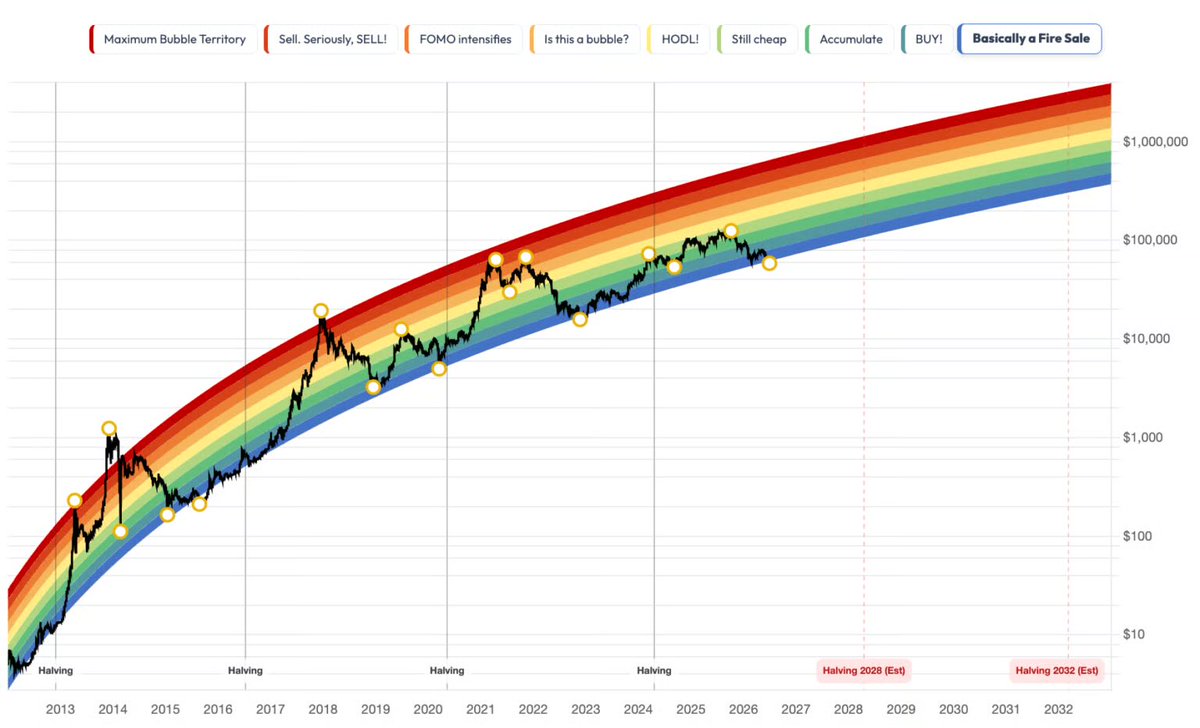
Bitcoin is trading below the Rainbow Charts "Fire Sale" band again. That zone has only shown up during some of the worst market sell offs in Bitcoin history. It doesn't guarantee a bottom but its a very different setup from buying into hype. The interesting part is the gap between price and the model long term HODL range sits around $181K while BTC is still near $62K. The next couple of weeks should tell us a lot.
evans tweet media
English
39
1
227
4.9K
Pavaard 🪽
Pavaard 🪽@pavaardzzz·
Everyone talks about “crypto adoption” like it’s a slogan. @MegPrimePay just turned it into a 30 day experiment. No hedging, no “half fiat just in case.” Hanna’s paying rent, groceries, subscriptions, everything, straight from crypto. That’s the actual test UX, latency, merchant acceptance, the small frictions you only feel when you stop cushioning yourself with cash. Most people will watch this and think “cool ad.” I think it’s a preview of what normal is going to look like once cards like this stop needing an explanation.
MegPrimePay@MegPrimePay

30 days. 100% crypto spending. Model Hanna Kramerov is taking on the challenge of using MegPrime Pay for everyday expenses and monthly bills to see just how seamless spending crypto can be. From daily purchases to recurring payments, she's putting real-world crypto utility to the test. ⚡️ Could you do the same? 👇 📲 Download the MegPrime Pay app and start spending your crypto in everyday life. app.MegPrimePay.com 🇺🇸 U.S. users can purchase $MPP directly in the app. *BONUS* Deposit $25 to receive $50. 🌍 Global users can buy $MPP through Coinbase Wallet or on Uniswap.

English
111
2
122
1.4K
Oliver
Oliver@EClock24·
@wwardenn Exploring ideas that are still very early across Web3
English
1
0
1
28
Warden
Warden@wwardenn·
CRYPTO PRESALE LANDING PAGE: THE CHECKLIST BUYERS NEED BEFORE THEY CONNECT THEIR WALLET Most presale pages open with a big Connect Wallet button. That is a mistake. The buyer still does not know what the token does, what the actual terms are, or how to avoid getting scammed, yet you are already asking them to approve a transaction. A strong presale page works the opposite way. It gives the buyer enough clear information to verify the project themselves, then asks for the wallet. Here is what must actually be on the page: Utility - why the token exists and what problem it solves Tokenomics - supply, allocation, vesting schedule, and unlocks (do not hide this in a PDF) Sale terms - price, dates, caps, accepted tokens, network, and contribution limits Official links - website, docs, pinned Telegram or Discord, verified socials Audit or KYC - real links to reports, or be honest if it is still pending Wallet flow - exact network, payment token, gas, and step-by-step instructions Claim and vesting - when tokens unlock and how the process works Scam warnings - fake domains, DMs, fake claim pages, and seed phrase requests Support - official help channel and how to reach it Recommended page structure: 1. Hero - clear value and current presale status 2. Trust bar - official links and verification signals 3. Utility 4. Tokenomics (short version plus link to full details) 5. Presale details - price, timeline, caps, accepted assets, network 6. Wallet flow - explain everything before the button appears 7. Claim section - TGE timing and unlock rules 8. Risk warnings - direct and specific 9. FAQ 10. CTA - only after the key information is clear The buyer should be able to answer these questions in under 90 seconds: Is this the real page? What is this token actually for? What are the real terms and risks? Which network and token do I need to use? If your page cannot answer those questions clearly, more traffic just means more people who hesitate and leave. Give them the information first. Then ask for the wallet. That is how you turn visitors into people who actually complete the transaction.
Warden@wwardenn

Onchain attribution: models, metrics, platforms & how to implement. Attribution models that make sense: First-touch — who brought the new user Last-touch — who closed the deal Linear — equal split Time-decay — more weight to recent touchpoints Position-based — heavy on first + last Multi-touch improves CPA efficiency 14-36%. Crypto journeys are long: Twitter → blog → Discord → referral. Single-touch lies. Use time-decay or position-based. 5 metrics that actually matter: 1. CPWC — cost per wallet connected 2. CPT — cost per transaction 3. Attributed volume 4. LTV by acquisition channel 5. Retention cohorts by source (30/60/90 days) Impressions and CTR go in the trash. Platforms that support it in 2026: • @mintfunnel — native ads + built-in onchain attribution + anti-fraud. 500+ publishers. Best for paid. • @spindl_xyz — wallet journeys, SDK, deep funnel tracking • @addressableid — 23M wallet-to-social matches • @cookie3 — KOL attribution + token holder segmentation • @Safaryclub — no-code, lowest barrier • Formo — multi-wallet identity, 30+ chains • @Dune — raw onchain + SQL if you have a data team How to implement (6 steps): 1. Define conversion events first (e.g. first deposit > $1k) 2. Standardize UTM naming everywhere 3. Bind UTM data to wallet at connection 4. Index smart contract events against your wallet DB 5. Choose model + lookback window (7/14/30 days) 6. Build reports that change budget decisions 4 mistakes that kill it: • Treating wallet connect as a conversion (it's intent, not a buy) • Ignoring multi-wallet users (CAC inflates, retention tanks) • Stopping at one chain (user bridges to Base → conversion disappears) • Celebrating transaction spikes without retention (200 first TX week 1, zero week 4 = failure) Onchain attribution isn't "another analytics tool." It's how you stop flying blind and finally see which dollars produce real onchain actions.

English
111
0
102
649
Oliver
Oliver@EClock24·
@Degen_kid01 Exploring ideas that are still very early across Web3
English
0
0
0
14
𝐃Ξ𝐆Ξ𝐍𝐊𝐈𝐃
I hate realizing why a trade moved only after it is already over. You open your chart and the move has already happened. Suddenly everyone has an explanation. Threads appear. Charts are annotated. Conviction shows up after the fact. But in real time, it felt like noise. Research today feels heavier than it should. One idea turns into five tabs. Five tabs turn into twenty minutes. By the time you feel confident, the opportunity is gone. The frustrating part is not a lack of data. It is a lack of clarity. More indicators do not mean more understanding. More dashboards do not mean better timing. Most traders are not struggling with access to information. They are struggling with processing it fast enough to act with confidence. This is why I started looking into solutions like @tryquantio. The problem is not that we need more tools. The problem is that market intelligence still feels like a manual workflow. Jump between apps. Cross reference signals. Recheck sentiment. Refresh again. It should feel more like a conversation. You should be able to understand what is driving momentum before the crowd explains it. You should be able to track behavior shifts without babysitting charts all day. Market intelligence should reduce mental load, not increase it. If you are tired of reacting instead of understanding, this is worth exploring: whitelist.tryquant.io/?startapp=ref-… #QuantAIPioneers
𝐃Ξ𝐆Ξ𝐍𝐊𝐈𝐃 tweet media
English
38
1
96
3.2K
Muco
Muco@Mucttc·
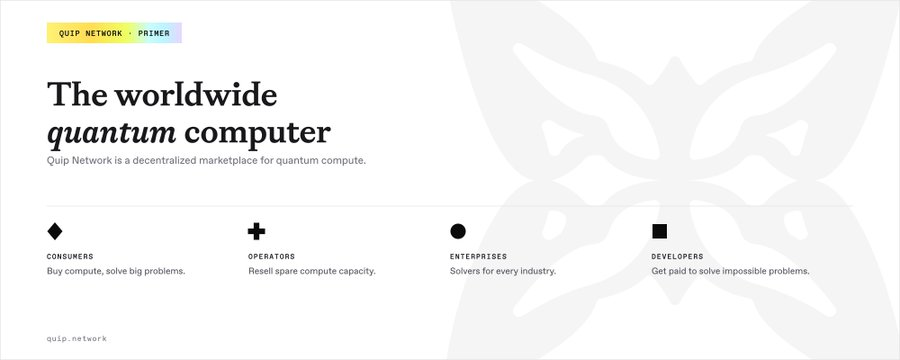
Good morning. Every Tuesday is just another reminder the future isn't waiting around for anyone. While most people still think quantum computing is years away, @quipnetwork is already out here building the worldwide quantum computer. A decentralized marketplace where literally anyone can tap into quantum compute, contribute resources, and help solve problems classical hardware just can't touch. GM to everyone out there building the next generation of computing. #QuipNetwork
Muco tweet media
English
62
0
75
573
KingEmmy
KingEmmy@Emmychidi3·
in this space, decentralization is one thing. privacy is another thing. decentralization without privacy is unnecessary exposure. and privacy without ownership limits control. @TheARCTERMINAL is building that future where both decentralized storage & privacy thrive together. they don’t treat storage as a passive place to keep files… NO! they have your data remain under your control while privacy is preserved throughout the experience. this changes how users & their digital lives works. arc terminal don’t just have your information stored. it protects it. have your context remembered. keeps it within an architecture designed around sovereignty. as for your intelligence, they aren’t built at the expense of your privacy. they are built because privacy comes first. what this means is that: - arc terminal plays the kind of decentralized storage that gives users ownership over their data. - privacy on arc terminal is embedded into the intelligence layer instead of being an afterthought. - memory gets as persistent as possible without exposure playing. @TheARCTERMINAL is simply that place where storage, intelligence & privacy works as one. this is the real arc terminal build…
KingEmmy tweet media
English
76
0
66
378
Oliver
Oliver@EClock24·
@HeinrichDefi Yes, checking it out now love how Virtuals is shifting from quantity to quality. Dev-curated agents on shared infra make discovery actually usable instead of scrolling endless launches.
English
0
0
0
41
Oliver
Oliver@EClock24·
@KhanShar86614 Consistency in their verdicts or does each case get judged in isolation?
English
0
0
1
50
Crypto Legend
Crypto Legend@KhanShar86614·
An AI travel agent books your honeymoon. Another AI manages the hotel. The booking says "ocean view." The room overlooks a parking lot. One agent insists the promise was fulfilled. The other demands a refund. Code can confirm a reservation existed. It cannot decide whether the experience matched the agreement. That's where @GenLayer changes the game. Its Intelligent Contracts can evaluate real context instead of blindly following yes-or-no logic. Independent AI validators review the dispute separately, and only a shared verdict moves things forward. The agentic economy doesn't just need faster transactions. It needs better judgment. Would you trust one AI to decide this, or a system built to reach a fair verdict?
GenLayer@GenLayer

By 2030, AI agents will move nearly $9 trillion. Every one of those transactions can end in a disagreement, and almost nobody is preparing for it. That's why we built GenLayer, the adjudication layer for contracts that can actually think and start judging what's fair.

English
22
1
38
2.8K