
Emmanuel Maggiori

541 posts

Emmanuel Maggiori banner
Emmanuel Maggiori

Emmanuel Maggiori

@EMaggiori_

I write about economics, business, and technology. PhD in AI. Author of 4 books.

London, UK Katılım Temmuz 2024
52 Takip Edilen199 Takipçiler
Sabitlenmiş Tweet
Emmanuel Maggiori
Emmanuel Maggiori@EMaggiori_·
Today is launch day! Modern Monetary Theory #mmt is a seductive economic theory that's making the rounds around the world. It was popularized by Stephanie Kelton in her book The Deficit Myth, and it's been influencing politicians around the world. The theory was dismissed by traditional economists right away. But I didn’t want to do that. I wanted to learn as much as I could before drawing conclusions. So, I approached it with an open mind and read over 3,000 pages of work by modern monetary theorists themselves and their most thoughtful critics. The conclusion: MMT is not good. But I think we all need to understand what MMT says, as it’s a deeply seductive theory with the potential to cause a mess. Get a copy of my new book now :) amazon.co.uk/dp/1394375255/
Emmanuel Maggiori tweet media
English
52
18
173
36.5K
Emmanuel Maggiori
Emmanuel Maggiori@EMaggiori_·
Really? Are you saying New Keynesian models (current standard macroeconomics) don’t have a theory of inflation? In those models, inflation is pretty much at the center of it. In the simplified New Keynesian model with three equations, two of the three equations have inflation in them.
English
1
0
0
7
X
X@YKaldor·
@EMaggiori_ @PerisaiPejuang Dude, modern economics doesn't have a theory of inflation at all, unless you consider Friedman's take as a theory
English
1
0
0
9
Emmanuel Maggiori
Emmanuel Maggiori@EMaggiori_·
Today is launch day! Modern Monetary Theory #mmt is a seductive economic theory that's making the rounds around the world. It was popularized by Stephanie Kelton in her book The Deficit Myth, and it's been influencing politicians around the world. The theory was dismissed by traditional economists right away. But I didn’t want to do that. I wanted to learn as much as I could before drawing conclusions. So, I approached it with an open mind and read over 3,000 pages of work by modern monetary theorists themselves and their most thoughtful critics. The conclusion: MMT is not good. But I think we all need to understand what MMT says, as it’s a deeply seductive theory with the potential to cause a mess. Get a copy of my new book now :) amazon.co.uk/dp/1394375255/
Emmanuel Maggiori tweet media
English
52
18
173
36.5K
jeremyhead
jeremyhead@jeremyhead·
@EMaggiori_ Do you touch on QE and QT in this book? That seems like another load of hot air weirdness. Totally unfathomable
English
1
0
0
85
Clint Ballinger
Clint Ballinger@clintballinger·
@CrowsOutside @EMaggiori_ (to EM): Spending - taxes = amount held by non- gov. Can’t be otherwise and doesn’t matter what or how many vestigial intermediary steps are added. The £/$/¥ etc total balance sheet expands/contracts. That anyone tries to argue otherwise is just weird
English
2
0
1
57
Emmanuel Maggiori
Emmanuel Maggiori@EMaggiori_·
Typical conversation with an MMTer: MMTer: The government doesn't need taxes in order to spend! Me: Uh, no. The treasury actually needs to replenish its accounts by collecting taxes or selling bonds. Otherwise it is not allowed to continue spending. The central bank doesn't guarantee it will buy any specific number of bonds, and it doesn't provide an unlimited overdraft to the treasury. Those are the rules. MMTer: But those rules are all self-imposed and could be changed!! Me: All rules are self-imposed and could be changed. We could allow local governments and NGOs to create money for example. The rules have been imposed for a reason--economists don't think politicians will use the power to create money judiciously, and there aren't major economic benefits to be gained from it. MMTer: Are you telling me you do not agree that a government deficit is a surplus of the non-government sector? Me: ...
English
33
5
54
13.6K
Emmanuel Maggiori
Emmanuel Maggiori@EMaggiori_·
That other account is called the NLF. The Treasury puts enough money in that account to settle any balances with the CF by the end of the day. If the CF is negative at the end of the day, it moves money into it from the NLF (which is where bond sales receipts go) to make the CF balance zero. If the CF is positive at the end of the day, it moves its balance into the NLF, making the CF zero.
English
1
0
0
34
Crows Outside
Crows Outside@CrowsOutside·
@EMaggiori_ @clintballinger In the UK? No, sorry, that's not how it works at all. What is the name of this "different account" that the HMT makes sure "has enough money"? In the UK the source of all, that's all, govt spending/buying things, is the Consolidated Fund. Check the legislation to confirm.
English
1
0
2
36
Emmanuel Maggiori
Emmanuel Maggiori@EMaggiori_·
They literally claim a free lunch. This is in the words of MMTers themselves. You can see here for example: levyinstitute.org/wp-content/upl… The whole point of MMT is that by removing budget limits, it's possible to attain new things that cannot be attained currently, and this is without having to increase taxes or cause inflation. That's a free lunch essentially.
English
2
0
0
560
dark*
dark*@eschaton99·
@EMaggiori_ No one claims a free lunch: binding constraints are real resources and inflation, not arbitrary budget limits. There are real "externalities" like how to save a livable size of the planet etc.
English
1
0
5
141
Anton Korzhenkov
Anton Korzhenkov@AntonKorzhenkov·
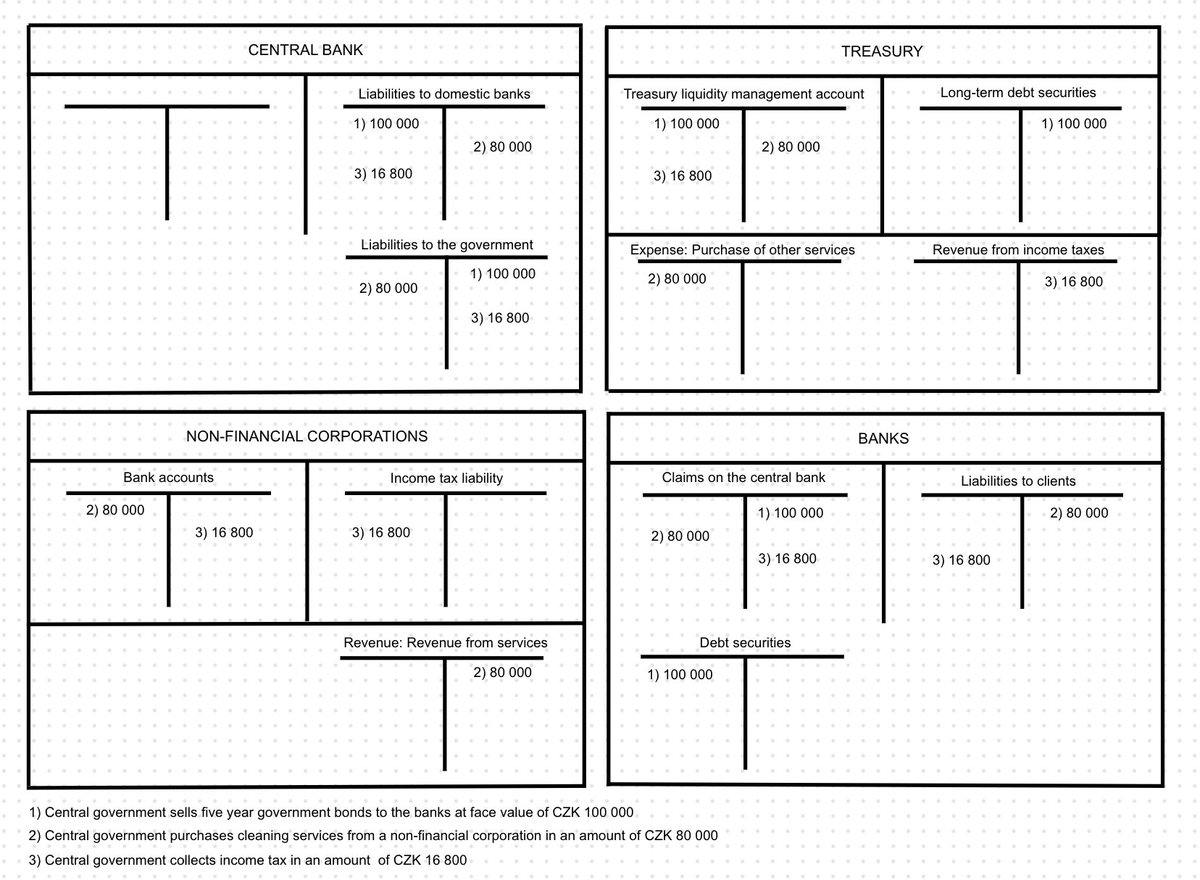
@EMaggiori_ @iealondon @grok Of course it does sell the bonds, the bond is being bought by the banks, treasury gets reserves to their account and then they can spend. New money is created:) Boom. Very simple. Here you go. Special for you. Just remember, that Reserves are not money.
Anton Korzhenkov tweet media
English
1
0
0
41
Institute of Economic Affairs
🧾 @EMaggiori_ : "MMT was born out of an accounting mistake — they thought whenever the government collects taxes, the money disappears. They literally destroy the money." Emmanuel Maggiori exposes the error at the heart of Modern Monetary Theory. 👇
English
18
6
27
10.6K
Emmanuel Maggiori
Emmanuel Maggiori@EMaggiori_·
Nope. When the treasury spends Y dollars, its bank balance goes down by Y dollars. The treasury is not allowed to spend unless it has Y dollars in its account. No new money is created, and unlimited spending without revenue to fund it is not allowed. The fact that you choose not to call the money in one account "money" doesn't change this. Perhaps explain to me how the treasury can continue to spend once its balance at the TGA reaches zero. Currently, it isn't allow to spend more, and it must either collect taxes or sell bonds to replenish this account before it can spend from it.
English
2
0
0
56
Anton Korzhenkov
Anton Korzhenkov@AntonKorzhenkov·
@EMaggiori_ @iealondon @grok Ok let’s leave the Grok alone. You are wrong. What government has on its account at central bank is not money. It reserves. They are not part of money supply. When government spends, new money is created. If you want, I can show you T-account scheme. It’s very simple -)
English
1
0
0
54
Emmanuel Maggiori
Emmanuel Maggiori@EMaggiori_·
Nope it doesn't. It's a temporary balance settled at the end of the day. The central bank clears payment during the day, but the treasury has enough money to cover the payments in a different account or must acquire it during the day. The treasury always makes sure to top up the account to prevent a negative balance. No new money is created except perhaps for a very short time.
English
2
0
0
33
Emmanuel Maggiori
Emmanuel Maggiori@EMaggiori_·
@eschaton99 The seductive aspect is that there's a "free lunch", meaning that the government could achieve more things than it currently does without having to increase taxes and without causing inflation. MMTers haven't been able to prove this is possible despite all their claims.
English
3
0
0
455
dark*
dark*@eschaton99·
@EMaggiori_ Isn’t this mostly about inflation fears (e.g. Argentina, Turkey)? You use the word "seductive", I wasn't aware that one can be so afraid of public spending
English
1
0
1
464
Emmanuel Maggiori
Emmanuel Maggiori@EMaggiori_·
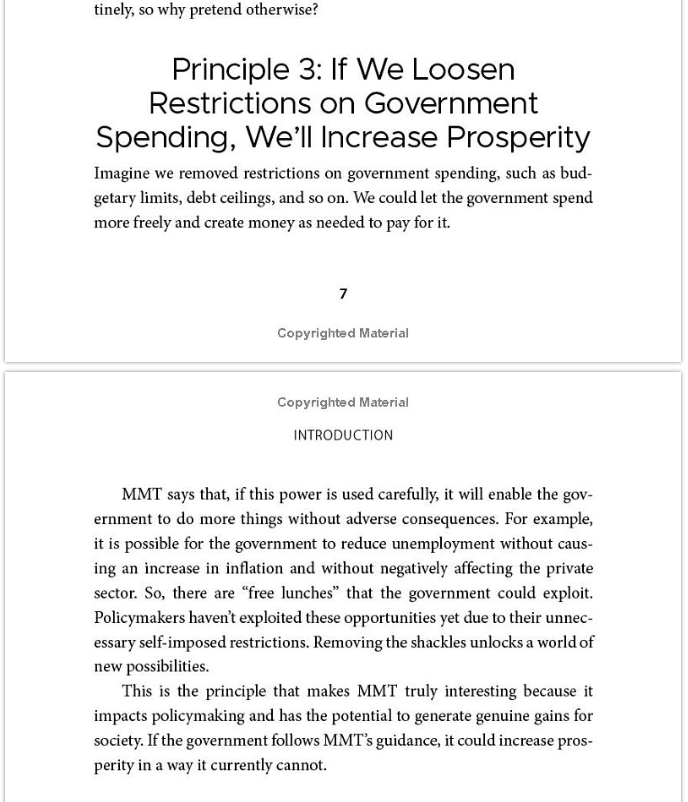
@MMTmacrotrader That's just the intro, which is lighthearted. In the remainder of the book, I quote and cite MMTers themselves for every statement I make.
English
1
0
2
233
Douglas Padgett
Douglas Padgett@MMTmacrotrader·
If you're going to debunk something, for the love of God at least quote them in their own words as opposed to what you "think" they're saying.
Douglas Padgett tweet mediaDouglas Padgett tweet mediaDouglas Padgett tweet media
Emmanuel Maggiori@EMaggiori_

Today is launch day! Modern Monetary Theory #mmt is a seductive economic theory that's making the rounds around the world. It was popularized by Stephanie Kelton in her book The Deficit Myth, and it's been influencing politicians around the world. The theory was dismissed by traditional economists right away. But I didn’t want to do that. I wanted to learn as much as I could before drawing conclusions. So, I approached it with an open mind and read over 3,000 pages of work by modern monetary theorists themselves and their most thoughtful critics. The conclusion: MMT is not good. But I think we all need to understand what MMT says, as it’s a deeply seductive theory with the potential to cause a mess. Get a copy of my new book now :) amazon.co.uk/dp/1394375255/

English
5
9
67
3K
Emmanuel Maggiori
Emmanuel Maggiori@EMaggiori_·
@grok explain to Anton that when the treasury spends money, the total amount of money remains the same (if we count both the money in the treasury account and the money in private accounts). we only get the illusion of money creation because money aggregates like M1 don't count money inside government accounts. but the money just moves around between accounts when the treasury spends (the total money in all accounts doesn't change).
English
2
0
1
61
Anton Korzhenkov
Anton Korzhenkov@AntonKorzhenkov·
@iealondon @EMaggiori_ @grok draw him please basic T-account scheme with 4 sectors : Central Bank, Central Government, Banks and Firms. Give him taxation example and point out what happens with the broad money supply. Use classic 1), 2), 3) notations inside the T-account.
English
4
0
0
209
Emmanuel Maggiori
Emmanuel Maggiori@EMaggiori_·
1) MMT isn't always upfront about this. It often pretends many of the rules actually don't even exist. 2) The fact that rules are self-imposed is a truism. We all know we could change the rules to let the treasury create money. We could even let NGOs and local governments create money. All rules with fiat money are "self-imposed."
English
1
0
0
34
Clint Ballinger
Clint Ballinger@clintballinger·
@EMaggiori_ @CrowsOutside Self imposed rules are always recognized - you’d have to show where “mmt” has done otherwise. Of course I can tell myself I can’t put the cash in my left pocket into my right pocket
English
1
0
1
32
Emmanuel Maggiori
Emmanuel Maggiori@EMaggiori_·
Why do you think it applies to the UK right now? The treasury must collect taxes or sell bonds to fund its spending. The treasury plans its budgets "the household" way to make sure it collects enough revenue to fund its spending. The central bank expect the treasury to always have a total positive balance in its accounts by the end of the day, and the treasury plans accordingly. The central bank does not offer any guarantees that it will buy its bonds (in fact, it's selling them off at the moment) or that it will provide an extended overdraft to the treasury if it doesn't plan its spending the household way.
English
4
0
0
385
Llewellyn
Llewellyn@llewellynsteven·
@EMaggiori_ Can you please explain how MMT does not apply to the UK right now?
English
1
0
2
397
Emmanuel Maggiori
Emmanuel Maggiori@EMaggiori_·
"The limit to deficit spending is inflation" is not a properly formulated statement I can agree or disagree with. The limit to deficit spending is whatever that limit is set to be. Different institutional arrangements set different limits. For example, the US has a debt ceiling. However, it would be possible to change the rules so that the treasury can deficit spend more up until inflation increases. Most economists don't think this is a good idea for a number of reasons. For example, if the treasury increases its deficits, especially if it's allowed to create money, this will cause increase of inflation expectations, meaning that business will start to increase their prices preemptively. This defeats the purpose of the higher deficit in the first place, as the treasury doesn't get to do as much "real stuff" as initially intended due to increasing prices. In addition, it's hard to believe politicians will stop "printing more money" in the presence of inflation, so the "limit" is not applied for political reasons. This has been the case in Argentina for much of the last decade.
English
5
0
1
873
Rene Bruentrup
Rene Bruentrup@fallacyalarm·
@EMaggiori_ The limit to deficit spending is inflation, or more precisely the level of inflation that the sovereign (i.e. voter) accepts. Do you disagree with that?
English
1
0
11
1.1K
Emmanuel Maggiori
Emmanuel Maggiori@EMaggiori_·
The problem is MMTers are really bad at analyzing the economy in terms of "stuff". Here's a good example of the kind of work they do: levyinstitute.org/publications/h… They literally admit in the paper that they can't think in terms of stuff (real resources) because it's too complicated, so they revert to money (spending as a percentage of GDP). BTW, the idea that the economy is made of "stuff" instead of money is very old. In fact, that's how all mainstream economic models work. They usually model "real output", which means stuff (typically a "y" in the equations). What mainstream models don't say is that the government can create money on a recurring basis to permanently increase "y" without causing inflation.
English
1
0
0
6
Crows Outside
Crows Outside@CrowsOutside·
@jdpcasey @EMaggiori_ Hey Jack, guess what? That's right, it's about stuff, not £s - that's absolutely core MMT. Congratulations, you are now an MMTer.
English
2
0
3
98
Emmanuel Maggiori
Emmanuel Maggiori@EMaggiori_·
What do you mean by the "capacity" of the state? And how does MMT describe the "capacity" well? Most economists think the economy does indeed have a "capacity", known as the "potential output." MMTers believed there's unused capacity that the private sector is capable to ever utilizing. This observation is based on a long-disproved theory of unemployment. After that, they argue the government can use perpetual deficits funded by money creation to utilize this capacity. According to them this will not cause inflation because it only mobilizes idle resources. However, their theory of inflation is extremely naive. It doesn't consider the role of expectations and of currency depreciation. It also assumes any "excess money" will be drained automatically without causing an increase in prices. The problem with MMT is that it pretends there exists some unused capacity that the government can utilize without adverse consequences, but it struggles to formulate a theory to prove it. In addition, it struggles to provide a credible way of analyzing capacity. For instance, their paper on the Green New Deal is extremely naive in terms of capacity (levyinstitute.org/publications/h…). For instance, it says that free college "pays for itself", as it increases capacity enormously thanks to productivity increases. So, the MMTers who wrote the paper dismiss any cost of providing free college. There's no mathematical justification for it. In addition, the paper assumes that the capacity for energy transition can easily come from reducing healthcare spending (which assumes all resources are mobile). So, if what you mean is that MMT convincingly argues there's some missing "capacity", I don't think so. At the same time, MMTers sometimes speak of capacity in terms of being able to "pay." But what they say is trivial. In this sense, what MMT says is that if the government can create money then it can always for stuff. This isn't insightful in any way.
English
5
0
1
260
Crows Outside
Crows Outside@CrowsOutside·
@EMaggiori_ I'll let others put you right about the US, I'm in the UK. Let's start with this ... So explain how MMT doesn't describe the capacity of the state well and how it incorrectly describes the institutional arrangements.
English
1
0
1
243