Egill Richard

1.8K posts

Egill Richard banner
Egill Richard

Egill Richard

@EgillRichard

PostDoc in @shsternberg 's lab in @Columbia. Formerly in the lab of @amazeld. Les microbes auront le dernier mot 🦠

New York, USA Katılım Eylül 2016
820 Takip Edilen549 Takipçiler
Egill Richard retweetledi
Sternberg Lab
Sternberg Lab@SternbergLab·
1/8 🚨 New preprint from the @SternbergLab & Jinek labs! CRISPR-associated transposases (CASTs) insert large DNA cargoes at precise genomic locations — no double-strand breaks needed.
Sternberg Lab tweet media
English
6
63
265
24.2K
Egill Richard retweetledi
Franklin Nobrega
Franklin Nobrega@NobregaFL·
Very happy to share our Druantia III–Zorya II synergy story, now on bioRxiv: biorxiv.org/cgi/content/sh… It appears alongside several Druantia III papers from excellent colleagues, each telling a different part of the story (links below).
English
1
12
26
1.6K
Egill Richard retweetledi
Sternberg Lab
Sternberg Lab@SternbergLab·
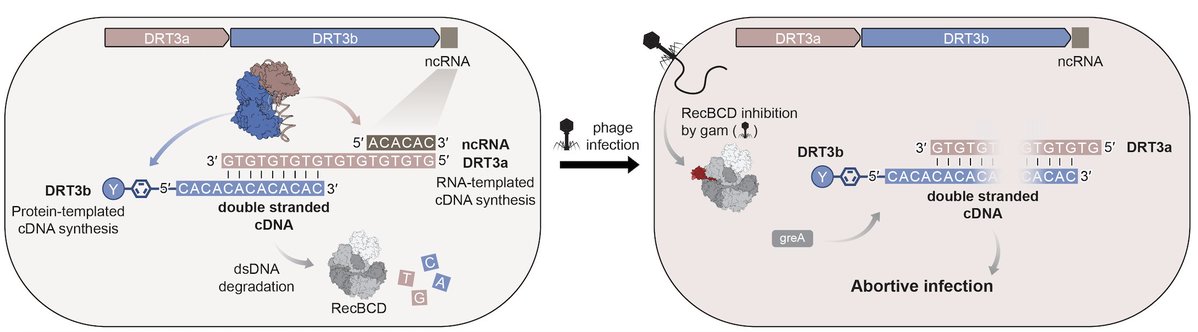
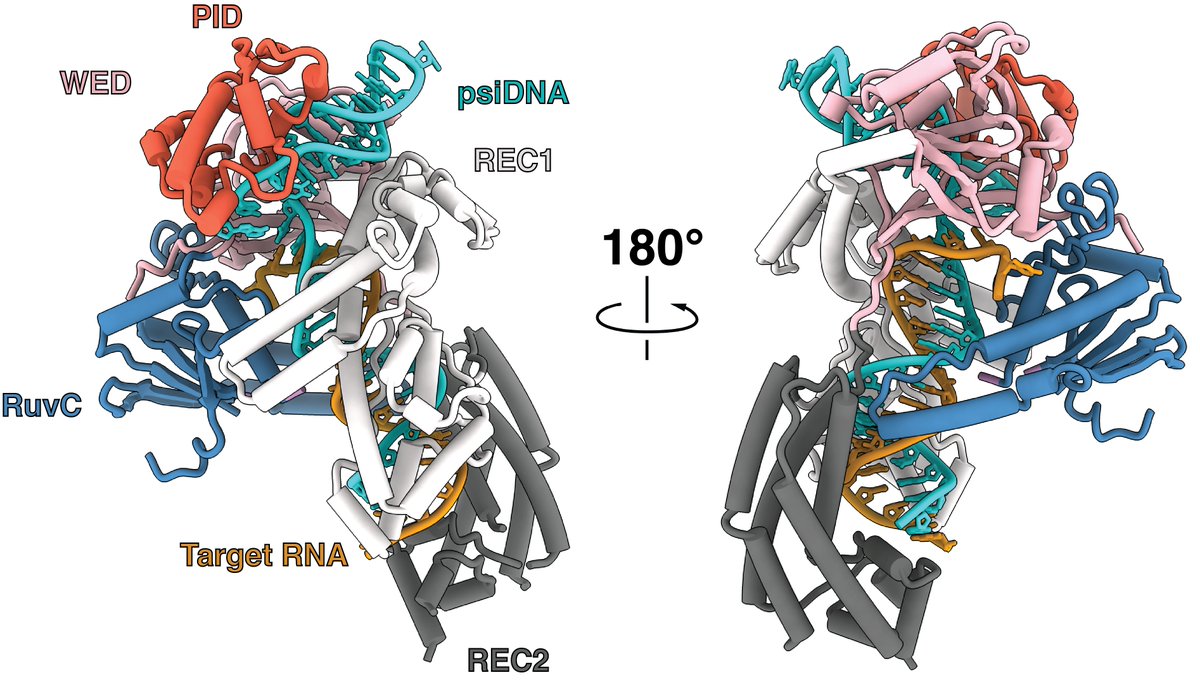
1/9 New preprint from the Sternberg Lab in collaboration with the Nishimasu Lab! We uncover how the DRT3 antiphage immune system pairs two reverse transcriptases, one RNA-templated and one protein-templated, to build a double-stranded DNA effector. doi.org/10.64898/2026.…
Sternberg Lab tweet media
English
3
38
166
19.2K
Egill Richard retweetledi
Nicole Marino
Nicole Marino@Nicole_D_Marino·
I'm excited to share that our work on co-translational degradation of cas12a mRNA is finally out! Many thanks to all the authors who made it happen. nature.com/articles/s4158…
English
3
16
78
5.8K
Egill Richard retweetledi
Shixian Lin
Shixian Lin@Linlab_ZJU·
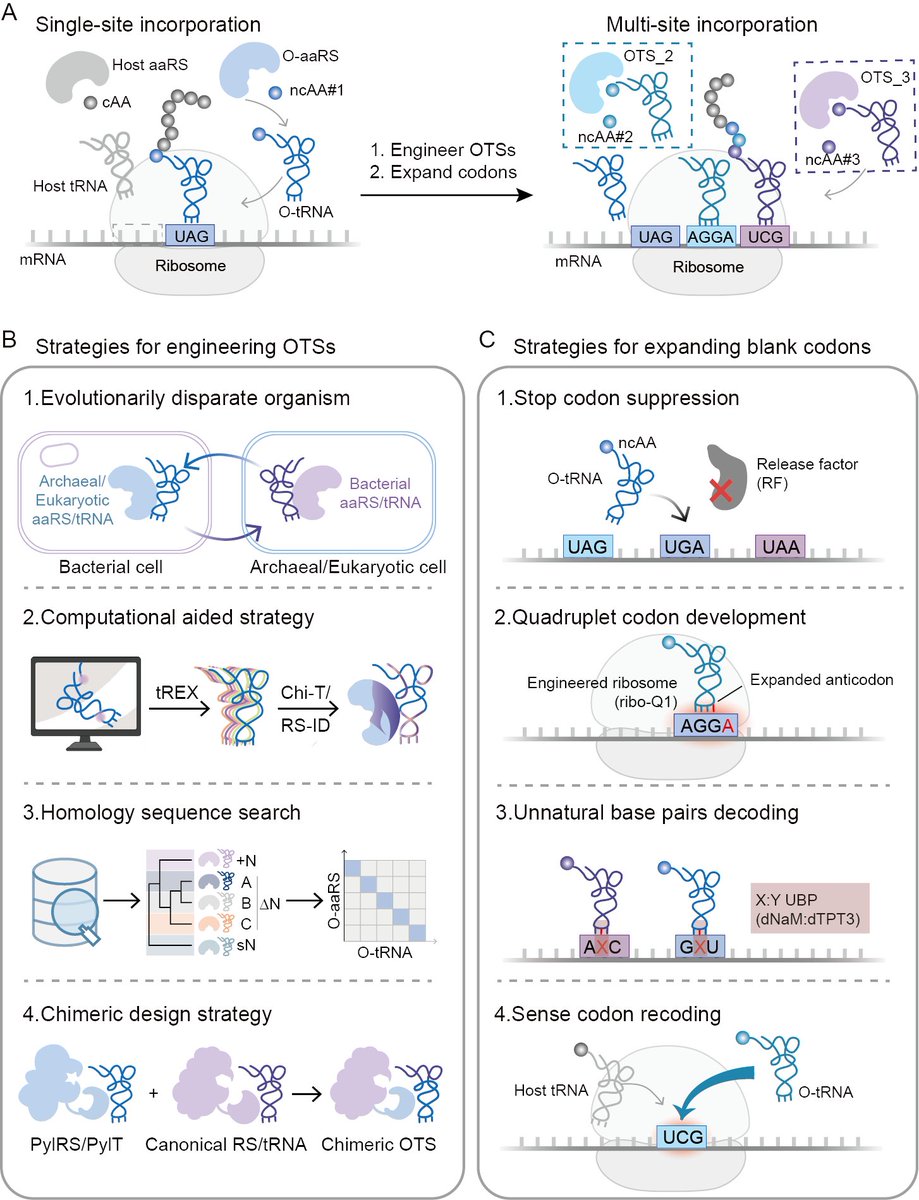
Thrilled to share our review paper on @TrendsBiochem. We summarize the latest breakthroughs in expanding the genetic code beyond single noncanonical amino acids (ncAAs) — from orthogonal translation systems and quadruplet codons to rare codon recoding — enabling the synthesis of sophisticated “new-to-nature” biopolymers with multiple distinct functionalities. authors.elsevier.com/a/1m%7E-z3S6Gf…
Shixian Lin tweet media
English
5
57
232
13.1K
Egill Richard
Egill Richard@EgillRichard·
@crypticprophage Genuine question: why do you consider cell death necessary for abortive infection? Wouldn’t any system that drives the host into dormancy (for instance) upon phage infection also qualify as abortive, by definition?
English
1
0
0
138
Cryptic Prophage (phage 🧬🪤 in 🦠)
Drinking the Kool-Aid: You indicate that ToxIN works by "an abortive infection mechanism" yet Fineran et al. themselves originally published in 2009 that there is no Abi as there was no cell lysis, even with pBAD overexpression (pnas.org/doi/10.1073/pn…).
Kotaro Kiga@KotaroKiga

Very excited to share our new paper! Homing endonuclease SegB drives segmental amplification of anti-defense loci, enabling phages to escape multiple bacterial defense systems. nature.com/articles/s4146… Big thanks to Kotaro Chihara and to the Vasili lab.
English
1
2
5
1.6K
Egill Richard retweetledi
Prof. Nikolai Slavov
Prof. Nikolai Slavov@slavov_n·
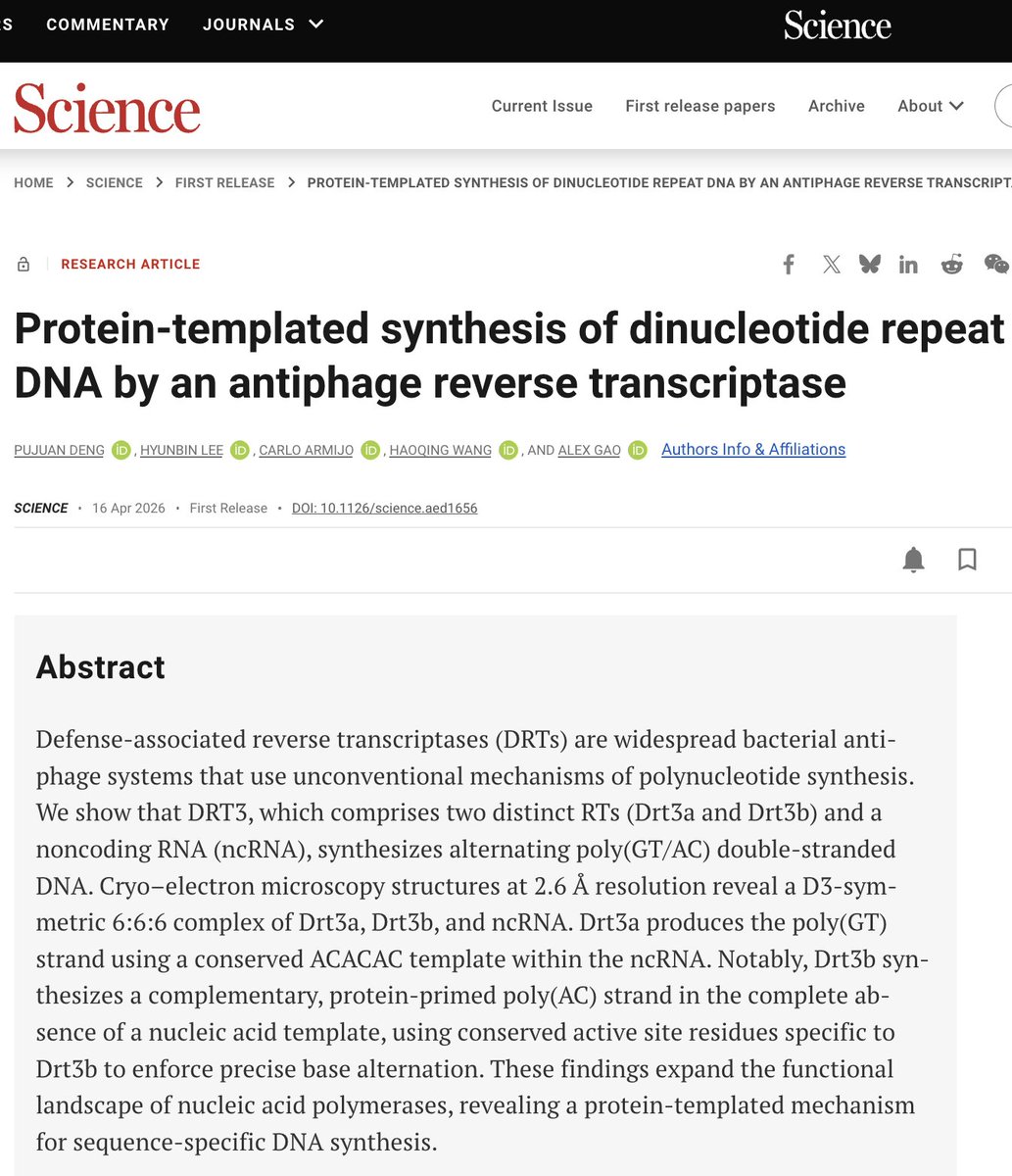
Bacteria are full of diverse molecular tricks. This Science article reports an interesting one that is being misrepresented by news coverage, including the coverage in Science. The study describes an enzyme complex that synthesizes alternating dinucleotide repeat DNA as part of an immune response. Protein templating DNA is a cool observation, even if the sequence is only a repeating dinucleotide. The headline-grabbing takeaway is the mechanism of the Drt3b subunit. While its partner, Drt3a, uses a canonical RNA template (reverse transcription), Drt3b synthesizes the complementary strand in the absence of a nucleic acid template. Instead, it uses specific amino acid residues (a glutamate and an arginine) to stabilize and "select" the incoming dNTPs. It is tempting to view this as a radical shift in our understanding of information transfer, a "protein-templated" genetic sequence. However, we should be cautious with the "paradigm shift" narrative. Why this isn't "rewriting" the Genetic Code: Despite claims in the news coverage, this finding does not represent a new form of hereditary information transfer. This is not a protein "reading" itself to create a complex message; rather, it is a highly specialized structural constraint. The protein is essentially a "stuttering" machine, physically keyed to produce a simple, repetitive sequence. The "information" is hard-coded into the protein's fold to perform a single, specific defensive task, rather than acting as a general-purpose template for diverse genetic messages. The Parallel to tmRNA: This observation is not entirely unprecedented when we look at how bacteria handle biochemical "dead ends." It reminds me of transfer-messenger RNA (tmRNA). In trans-translation, when a ribosome stalls on a broken mRNA, the tmRNA molecule steps in to provide both the tRNA component and a short mRNA "tag" to rescue the ribosome: - The "Non-Standard" Template: Much like tmRNA provides an external sequence to fix a stalled process, the DRT3 ncRNA and the Drt3b protein provide "internal" instructions to create DNA where no genomic template exists. - Specialized Rescue: Both mechanisms are niche "emergency" responses, one for proteostasis (tmRNA) and one for viral defense (DRT3). In the end, this discovery doesn't replace our understanding of the genetic code; it expands the "toolbox" of how cells can synthesize polynucleotides when the standard rules don't apply. It is a beautiful reminder that in the microbial world, if a chemical shortcut is possible, evolution has likely found it.
Prof. Nikolai Slavov tweet media
English
6
94
370
29.9K
Egill Richard retweetledi
Kevin K. Yang 楊凱筌
Kevin K. Yang 楊凱筌@KevinKaichuang·
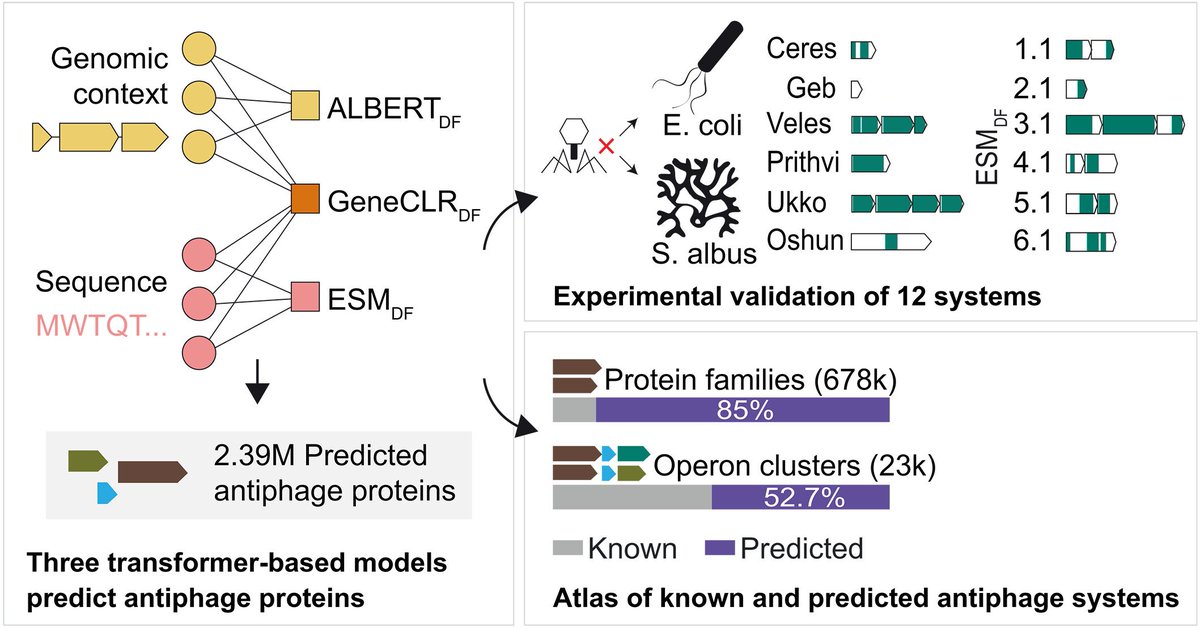
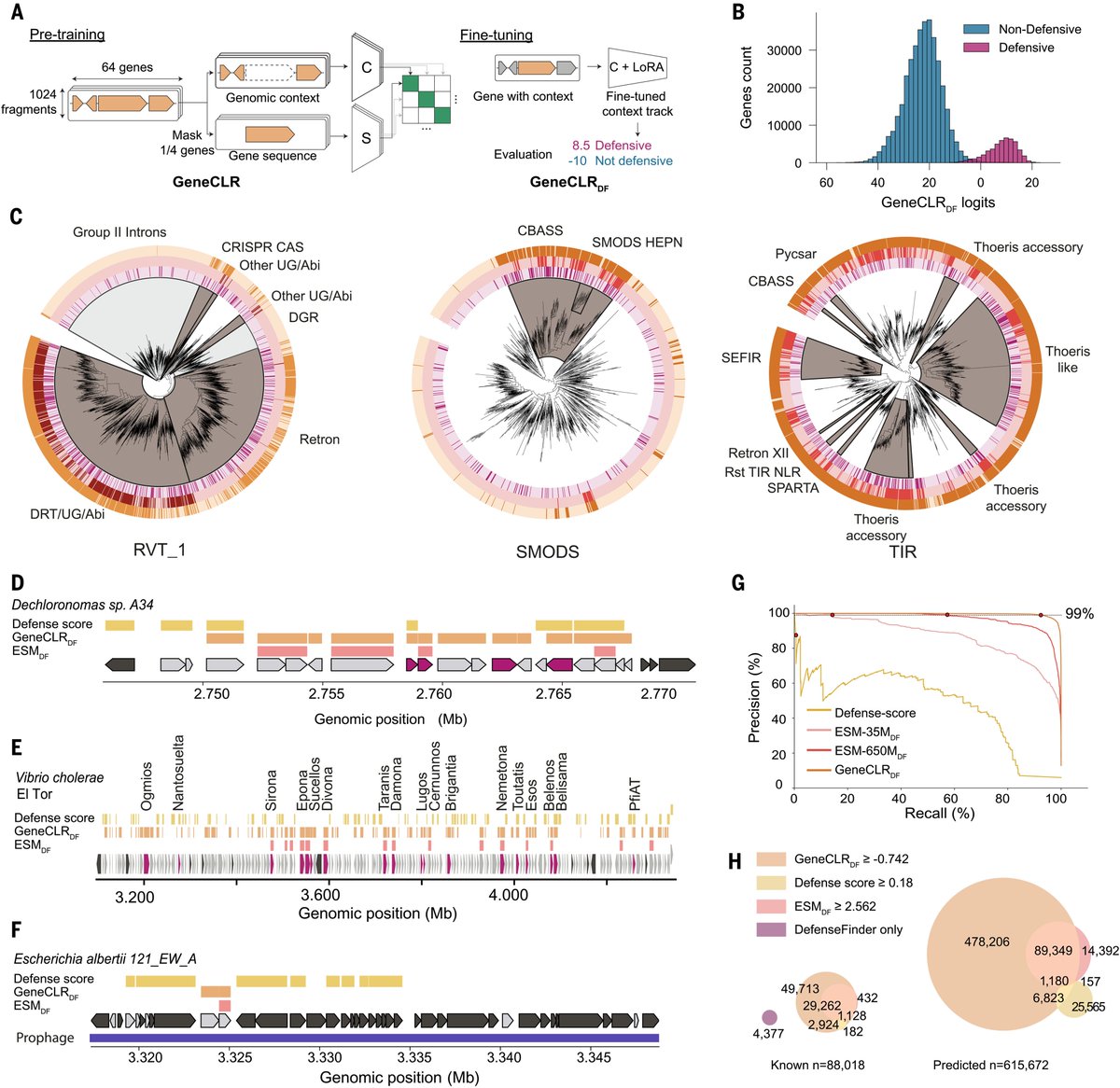
Genomic context and protein sequence can be used together to discover bacterial phage defense systems. @AudeBer
Kevin K. Yang 楊凱筌 tweet mediaKevin K. Yang 楊凱筌 tweet media
English
1
17
98
6.6K
Egill Richard retweetledi
SourjikLab
SourjikLab@sourjik·
Our paper describing a toolbox of c-di-GMP FRET biosensors and its application to elucidate the interplay between c-di-GMP and bacterial motility just appeared: nature.com/articles/s4146…
English
2
14
53
3.7K
Egill Richard retweetledi
Li Zhao
Li Zhao@lizzyzhao·
We wrote a review on using machine learning to study evolutionary genetics and molecular evolution in Trends in Genetics @TrendsGenetics . It is open access—please read it if you are interested in this topic sciencedirect.com/science/articl…
Li Zhao tweet media
English
2
101
462
21.6K
Egill Richard retweetledi
Takashi Akera
Takashi Akera@TakashiAkeraLab·
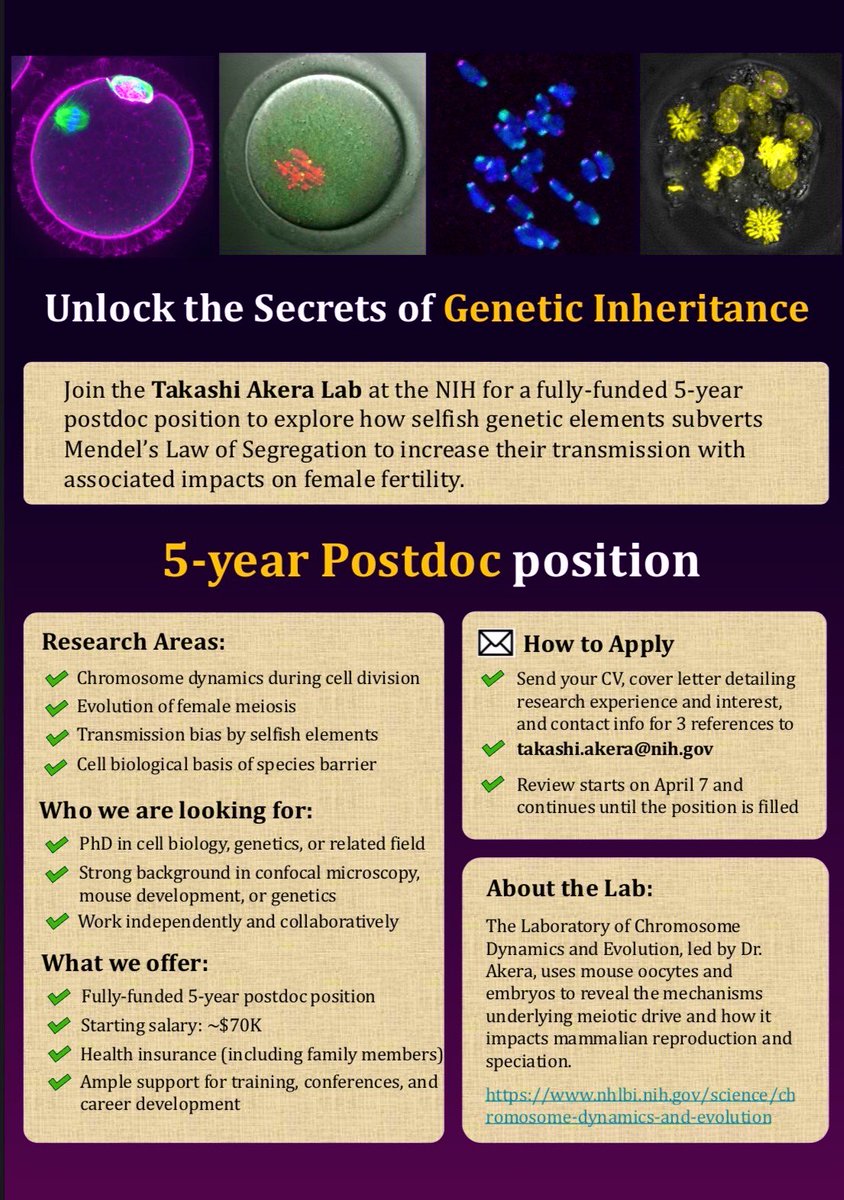
🚨Please repost!! 🧬We are hiring POSTDOC now!! Fully-funded 5-year position 👩🏻‍🔬👨‍🔬
Takashi Akera tweet media
English
2
116
233
24.7K
Egill Richard retweetledi
Hassan uz-Zaman Shamol
Hassan uz-Zaman Shamol@HassanZaman91·
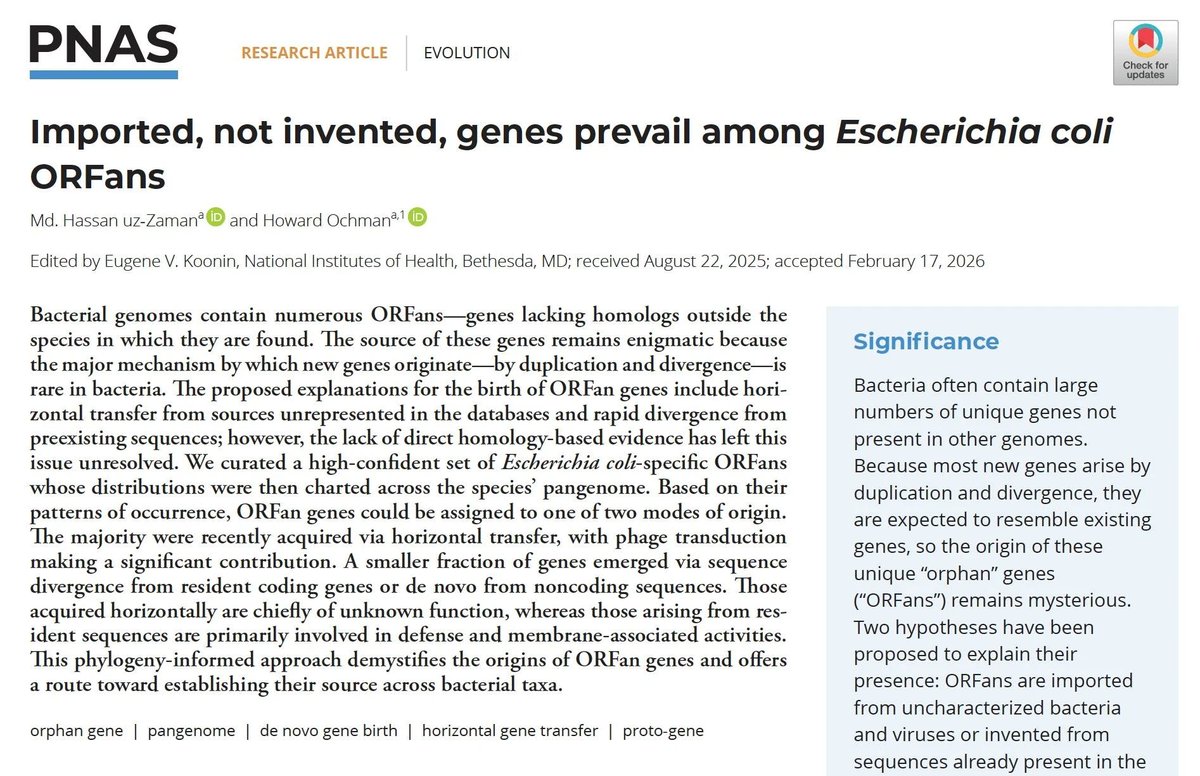
Happy to announce that our paper on orphan genes in bacteria dropped in PNAS yesterday! This is a problem I've been thinking about since the start of my PhD. Grateful for this journey, as well as All The Friends I Made Along the Way. Also, Eid Mubarak to those who celebrate!
Hassan uz-Zaman Shamol tweet media
English
4
23
113
6.6K