Emmerson Smart

39 posts

Emmerson Smart banner
Emmerson Smart

Emmerson Smart

@EmmersonSmart

Katılım Ekim 2020
726 Takip Edilen53 Takipçiler
Aakash Gupta
Aakash Gupta@aakashgupta·
SpaceX is about to become the most important company on Earth. And maybe off it. $30-40B raise. $1.5T valuation. Largest IPO in history. Those are the headlines. Here’s what they’re actually telling you. Musk just told investors that Starlink will generate $22-24B in 2026 revenue, up from $8B in 2024. That’s tripling in two years. At 100x forward revenue, the market is pricing Starlink like it’s the next AWS. The comparison isn’t crazy. AWS did $90B last year with 31% of cloud market share. Starlink has 8M subscribers and approximately zero real competition. Amazon Kuiper has 153 satellites. Starlink has 7,000+. OneWeb did $216M in 2024. Starlink did $8B. By the time Kuiper launches commercial service in late 2026, the race is already over. But Starlink is the boring part of this story. Musk said last month that “cost effectiveness of AI in space will be overwhelmingly better than AI on the ground” within 4-5 years. SpaceX plans to use IPO proceeds to build space-based AI data centers. Starship can deliver 100GW per year to high Earth orbit. For context, total US electricity consumption is 490GW. Average AI data center demand is projected to hit 123GW by 2035, up from 4GW today. The math: Earth cannot build power plants fast enough. Gas turbine backlog is 7 years. Nuclear takes a decade. Meanwhile Musk is talking about solar-powered AI satellites with radiative cooling in orbit. Google’s Sundar Pichai called it a “moonshot” and said Project Suncatcher could launch prototype servers by 2027. His exact words: “only possible because of SpaceX’s massive advances in launch technology.” ARK just published an open-source valuation model. Monte Carlo simulation, 17 variables, 1 million iterations. Base case: $2.5T by 2030. Bull case: $3.1T. That’s a 38% CAGR from December’s $350B round. The model assumes: - Full Starlink constellation (42,000 satellites) by 2035 - $300B annual revenue at maturity (15% of global communications spend) - Mars development funded by Starlink cash flows And here’s where it gets weird. Musk announced 5 uncrewed Starship launches to Mars in 2026. He gives it 50-50 odds. If they land intact, crewed missions begin 2029-2031. By 2033, he’s targeting 500 launches per window. The goal: 1 million people on Mars, self-sustaining city in 20 years. The timeline: - 2026: 5 test flights (10t payload each) - 2028-29: 20 launches, first humans - 2030-31: 100 launches - 2033: 500 launches ARK’s model explicitly excludes Mars revenue because “projecting cash flows from extraterrestrial settlements can be speculative.” But they note Mars infrastructure could eventually enable asteroid mining. Jensen Huang called space data centers “a dream.” Fair. Radiation shielding for Blackwell GPUs doesn’t exist. Deploying tens of thousands of square meters of thermal radiators is science fiction today. But SpaceX has a history of turning science fiction into quarterly revenue. At $1.5T, you’re paying for: 1. Starlink monopoly on LEO internet (priced in) 2. Space-based AI compute infrastructure (speculative) 3. Mars colonization (not priced, possibly unquantifiable) Here’s the bear and bull cases. Bear case 100x multiples assume flawless execution on subscriber growth, zero price compression from competition, and regulatory goodwill in 100+ countries. Musk’s timelines slip by years. Starship has had multiple test failures. Bull case SpaceX is the only company that can simultaneously solve the AI power crisis, provide global internet, and make humanity multiplanetary. The TAM is literally civilization. I don’t know if SpaceX is worth $1.5T or $3T or $500B. Neither does anyone else. The honest answer is that traditional valuation frameworks break when you’re pricing optionality on space-based computing and interplanetary colonization. But I know this… if you’re building a 20-year portfolio and you can only own one company, the argument for SpaceX has never been stronger.
Watcher.Guru@WatcherGuru

JUST IN: SpaceX plans to go public at $1.5 trillion valuation in 2026, the largest IPO in history, Bloomberg reports.

English
132
524
3.2K
603.9K
Dennis Porter
Dennis Porter@Dennis_Porter_·
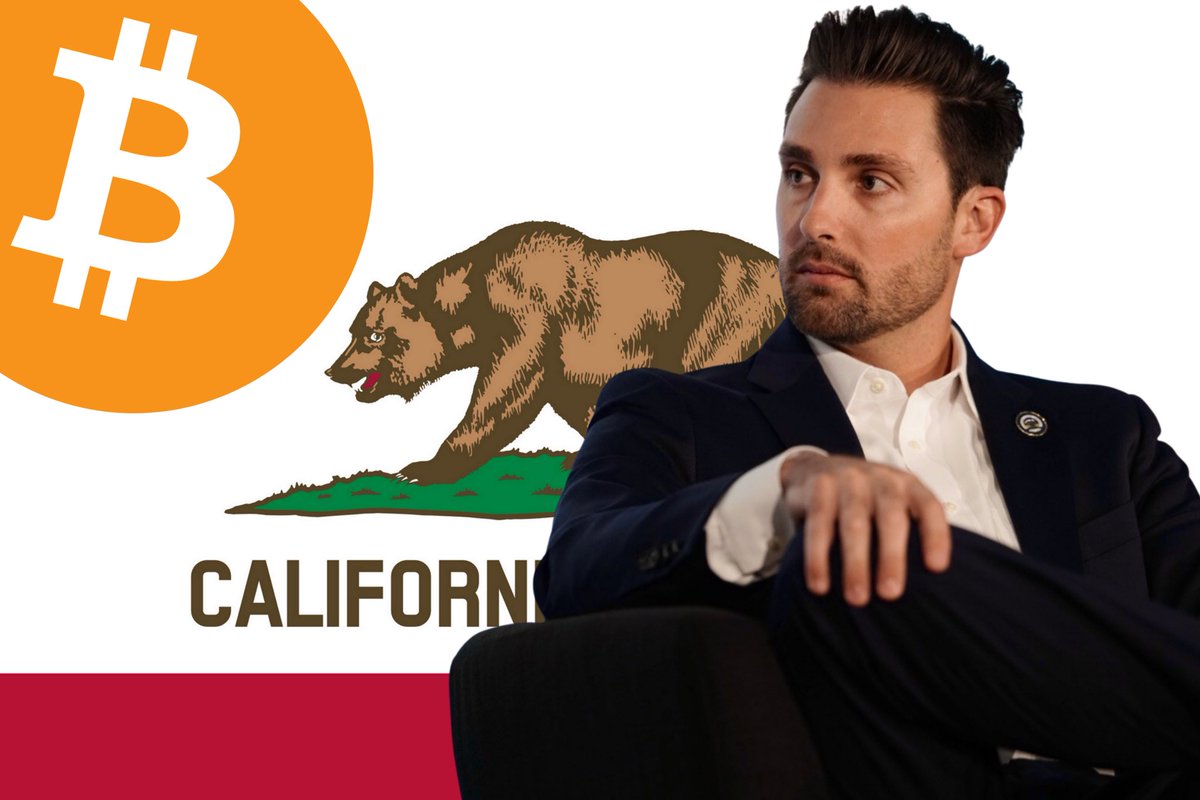
MASSIVE BREAKING: EXTREMELY PRO-BITCOIN CANDIDATE OFFICIALLY DECLARES CANDIDACY FOR GOVERNOR OF CALIFORNIA - DECLARES SUPPORT FOR A STRATEGIC BITCOIN RESERVE @IanCalderon
Dennis Porter tweet media
English
828
114
1.2K
170.8K
Emmerson Smart
Emmerson Smart@EmmersonSmart·
@JoshMandell6 @JoshMandell6 Saylor is saying if mNAV tanks he will sell preferred and buy back common. Does this change your outlook? Great call on MSTR mNAV tanking BTW.
English
4
0
0
31
Josh Man
Josh Man@JoshMandell6·
What do you call a sleeping bull? A bulldozer
Josh Man tweet media
English
53
11
258
28.8K
Emmerson Smart
Emmerson Smart@EmmersonSmart·
@PeterSchiff You mean just like the USD and US Bonds? At least the cryptos have a cap and are out of the control of government.
English
0
0
0
6
Peter Schiff
Peter Schiff@PeterSchiff·
America will never be great again so long as you can create worthless crypto tokens, then pay off government officials to declare them valuable and use taxpayer money to buy them.
English
1.7K
2.3K
16.2K
840K
Emmerson Smart
Emmerson Smart@EmmersonSmart·
@Capitalise_ai is Josh still working? I have sent several messages with no reply in over a week now.
English
0
0
1
10
David Sacks
David Sacks@DavidSacks·
@Cernovich Imagine if we didn’t have free speech on X. The Matrix would reset. Nobody would even know.
English
125
451
5.7K
215.8K
Cernovich
Cernovich@Cernovich·
The world has been glued to X these past 3 days. Myself included. You can see analytics through the roof. Even on otherwise ordinary musings. People are not signing off. X is what television was during the 1960's, radios decades before.
English
682
2.4K
21.4K
25.3M
Emmerson Smart
Emmerson Smart@EmmersonSmart·
@MichaelRosmer The real question is…which assets go up first. Money flow is unpredictable. Equities, Bonds, real Estate, crypto, precious metals. Animal spirits will determine which one gets the lions share.
English
1
0
0
12
Michael Rosmer
Michael Rosmer@MichaelRosmer·
4/there's currently far too much discussion taking place based on a misidentification of how the system actually works and then tracking through the consequences based on those mechanics The real issue here is market distorting forces, pricing signals that don't reward actual productive investment & significant rent seeking incentives creating broad drag on the system resulting in decreasing competitiveness This being said as @SantiagoAuFund points out & as @Jason has emphasized the US economy and dollar are still the most competitive in the world so we're far from a tipping point that results in US collapse This being said the focus should absolutely be on how to adjust the incentives within the system to boost productive output and increase competitiveness Failing to do so means innovators and producers go elsewhere and th3 US ends up buying from those places at the expense of the working class at home
English
4
0
1
354
Michael Rosmer
Michael Rosmer@MichaelRosmer·
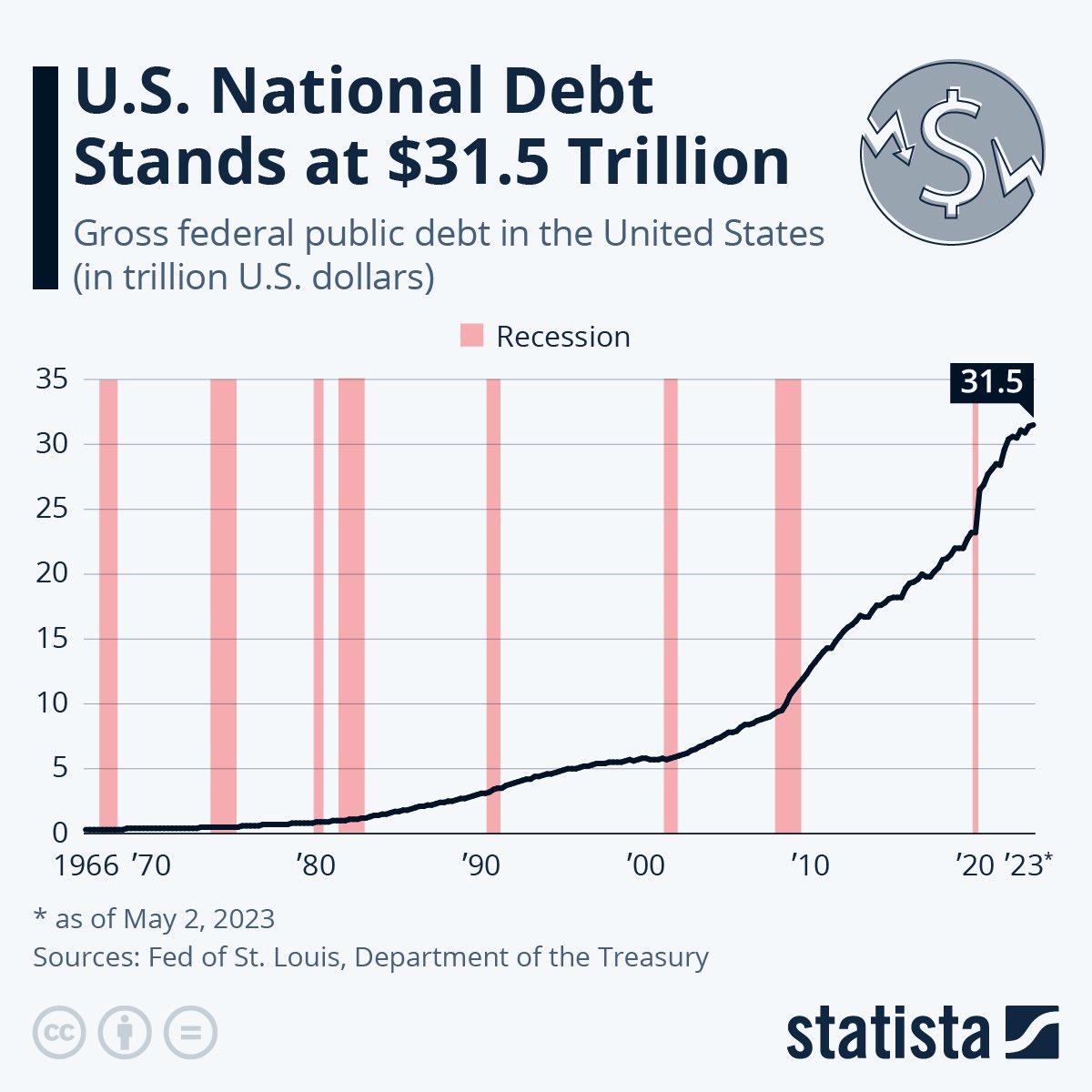
On gov't debt as a key US Federal issue Over the last few weeks @theallinpod has spent a bunch of time discussing the rate of US Federal debt increase and concerns about the affordability of the interest payments @friedberg has listed this as his most important US election issue & @chamath has disagreed saying he thinks it's a non issue with @DavidSacks weighing in on gradual global concerns about $usd due to weapnizing the currency The problem with this conversation over and over has been a misidentification of how the system works and consequently what the effects will be This is an example of how mechanistic first principles thinking is important and lacking to make effective policy decisions so let's go through the details..
Michael Rosmer tweet media
English
2
0
7
987
Emmerson Smart
Emmerson Smart@EmmersonSmart·
@MichaelRosmer I agree. I think the misunderstanding by the public is that inflation robs purchasing power from savers, but rewards asset holders. Assets are the ultimate sponge that soaks up excess liquidity. There is usually a 12-18 month lag between money printing, and asset appreciation.
English
1
0
1
22
Michael Rosmer
Michael Rosmer@MichaelRosmer·
@EmmersonSmart @Jason Nimble niche & citizen journalist players who have this figured out will scale up to replace some of these dying mainstream brands
English
1
0
0
17
@jason
@jason@Jason·
Cable TV news/entertainment is hard and getting harder... it means nothing to young people, who get their news in clips on social media and podcasts. CNN and Fox are going to need to keeping cutting
Brian Steinberg@bristei

CNN is cutting back on U.S. operations as well as linear content for the Spanish-language outlet CNN en Espanol, citing the network's limited distribution in America and a desire to chase viewers of digital news... variety.com/2023/tv/news/c… via @variety

English
30
5
92
44.4K
Emmerson Smart
Emmerson Smart@EmmersonSmart·
@MichaelRosmer @Jason Agreed! And lack of profitability due to reduced ad spend will expedite the “leanness” for the main stream. Less eyeballs begets less ad spend.
English
1
0
1
18
Michael Rosmer
Michael Rosmer@MichaelRosmer·
@Jason People consume more content than ever but the delivery rails have changed Different rails lead to different preferences for content style Major news organizations need to adapt, become nimble & lean
English
1
0
0
211
Emmerson Smart
Emmerson Smart@EmmersonSmart·
@elonmusk Twitter spaces would be 10X better with video. Without video it looses the “feel”.
English
0
0
1
12
David Sacks
David Sacks@DavidSacks·
@GovRonDeSantis announced he’s running for president on Twitter. This was by far the biggest room ever held on social media. Twitter performed great after some initial scaling challenges. Thanks Twitter Team for adapting so quickly to make history! twitter.com/i/spaces/1eaJb…
English
3.2K
3.1K
23.1K
7.9M
Bitcoin
Bitcoin@Bitcoin·
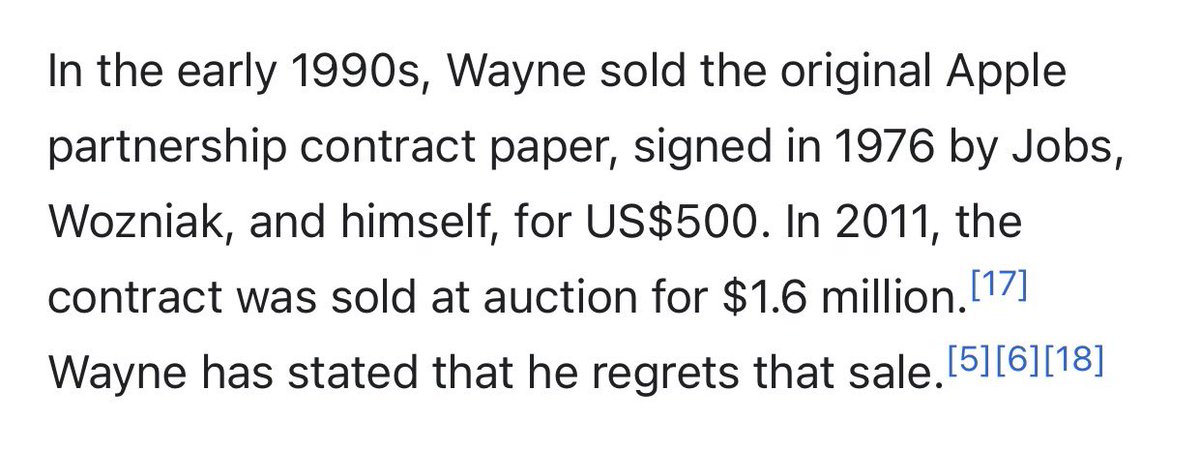
Anyone remember when the third co-founder of @Apple, Ronald Wayne, sold his 10% stake for $800 in 1976?
Bitcoin tweet media
English
159
249
567
218.9K
Historic Hub
Historic Hub@HistoricHub·
Apple's third co-founder Ronald Wayne, sold his 10% stake for $800 in 1976.
Historic Hub tweet media
English
652
2.6K
23.1K
5M
Emmerson Smart
Emmerson Smart@EmmersonSmart·
@MichaelRosmer @hsvong That could work. So many possible technical solutions and yet no changes. I think there may be an incentive to keep underknowleged voters at the trough by offering limited options. As long as the masses buy in to a duopoly, the powers that be can easily manipulate both sides.
English
1
0
1
30
Michael Rosmer
Michael Rosmer@MichaelRosmer·
@EmmersonSmart @hsvong Yeah I had an idea back in the day that each side could record videos explaining their position & you couldn't vote unless you watched all of them from all the sides Would be easy to implement with modern tech
English
1
0
1
24
Michael Rosmer
Michael Rosmer@MichaelRosmer·
1/There's a famous quote that you cannot solve a problem at the same level it was created Few seem willing to apply this to democracy but to me it looks like many of the issues in countries like the US are structural & cannot be solved with the same system that created them...
English
2
0
11
951
Emmerson Smart
Emmerson Smart@EmmersonSmart·
@MichaelRosmer 100% Smaller government = more productive society. Government does not produce anything. Everything the government has was originally taken (taxed, borrowed, or debased) from the private sector.
English
0
0
2
13
Michael Rosmer
Michael Rosmer@MichaelRosmer·
1/Productivity boosts are the enabler of quality of life increases in society Those boosts in productivity can accrue to 3 parties: - Consumers - Corporations - Governments There's a basic formula for how they flow & consequently how we should be aiming our policies...
English
2
1
4
813
Emmerson Smart
Emmerson Smart@EmmersonSmart·
@MichaelRosmer @hsvong Maybe some sort of aptitude test would be justified. At least some basic knowledge of what the different candidates are offering and where they intend to get the funding from. The majority of voters have a near zero idea of any of this.
English
1
0
1
26
Michael Rosmer
Michael Rosmer@MichaelRosmer·
@EmmersonSmart @hsvong Yeah when the UK created the house of Commons & House of Lords they realized if you gave the Commons all the power they'd just vote to take from the wealthy so the house of Lords restricted to the wealthy kept this abuse in check
English
1
0
0
48
Emmerson Smart
Emmerson Smart@EmmersonSmart·
@MichaelRosmer @hsvong Up until 1918, you had to own land in the US to have the right to vote. Not the best system, but at least you had to be smart enough to buy the land.
English
1
0
1
17
Michael Rosmer
Michael Rosmer@MichaelRosmer·
@hsvong It's a great question can't say for sure since we don't have it yet My current speculation is 1. More due process in decision making (currently highly lacking) 2. Not all votes weighted equally 3. More limitations on which bodies can make which decisions
English
1
0
0
24