Anantharaman R MBBS,MD, DM(endo)🇮🇳👨⚕️⚕
10.6K posts

@Endoananth
Adult and paediatric endocrinologist..Passionate about solving endocrine problems and preventing metabolic disease.Optimist.RTs and follows arent endorsements.


Rare footage of a sperm whale giving birth has offered scientists a window into the behavior of these large, elusive mammals.

In Kerala, apparently you can now call a coconut harvester the same way you book a cab. A uniformed professional arrives on a cycle, equipped, trained, and ready to work. We often speak about India’s services economy in terms of IT exports or global capability centres. But we’re digitising even our most traditional, hyper-local services. There was another detail from this video that stayed with me. The young man who climbed those trees was from Chhattisgarh. When I began my career in our Group’s steel business, many of of our associates working in our furnace and foundry shops had come from states like Bihar and Madhya Pradesh, travelling far from home in search of opportunity. Today, it seems those same aspirations are finding avenues not just in heavy industry, as in the past, but in new-age, tech-enabled services. People moving, adapting and rising are a powerful economic force. And also a force for integration. As long as they’re welcomed by the host states!

Having been an orthopedic surgeon for 30 years...5 things I wish someone had told you before you walked into my office — in atraumatic joint and tendon pain. Most of you will present with atraumatic joint and tendon pain... traumatic injuries are far less common in adults. And no... you didn't "sleep wrong."


Screening before marriage is important. But some love stories strike differently. Linda has Holt-Oram syndrome, born with no arms and with heart defects. She married Rick. They knew their baby had a 50 percent chance of being born with the syndrome. They had the baby anyway. Linda Bannon was born with Holt-Oram syndrome, a rare genetic disorder (1 in 100,000) caused by a mutation in the TBX5 gene. It is autosomal dominant, leading to upper-limb abnormalities (in her case, complete absence of arms) and heart defects. From childhood, Linda adapted by mastering every task with her feet — eating, writing, sewing, applying makeup, swimming, and playing guitar. She ditched prosthetic arms at age 12 because they slowed her down. Despite stares and bullying, she stayed positive, viewing her difference as simply “special in God’s eyes.” At 24, Linda met Rick Bannon, a hospital porter, at their Chicago gym. They playfully competed in weight-lifting and sit-ups, instantly connecting. Rick was attracted to her independence and personality, never fazed by her disability. They dated, fell in love, and he proposed at the same restaurant as their first date. They married in 2004. Before engagement, they openly discussed children. Linda had always wanted to be a mum; Rick knew the 50% chance any child would inherit the syndrome. He told her, “Yes, there may be challenges — but we could rise to them.” They chose to have a family anyway, embracing the genetic risk with love and confidence. In 2005, son Timmy was born with the same condition — no arms — plus serious heart problems. He needed open-heart surgery at just five days old and spent two months in hospital. It was Linda’s hardest moment, but her own lifetime of adaptation gave her strength. The family overcame the genetic outcome through practical resilience and unwavering support. They live in a standard home with no modifications. Linda handles almost everything with her feet (Rick only drives for safety). She taught Timmy foot-use skills, encouraged his swimming and taekwondo, and fostered his laid-back confidence. Together, mother and son share an unbreakable bond: “Selfishly, I can see that he is someone else like me who understands me.” They now visit schools and colleges to raise awareness, proving people with disabilities are fully capable. Linda’s philosophy — adapt, stay adventurous, live life to the full — became the family’s guiding light. Rick’s calm acceptance and partnership turned a known genetic risk into a story of love, independence, and hope.


South Indian father, American daughter💖🤣🤣


I again tag @iapindia and @IMAIndiaOrg to come out and take stand.


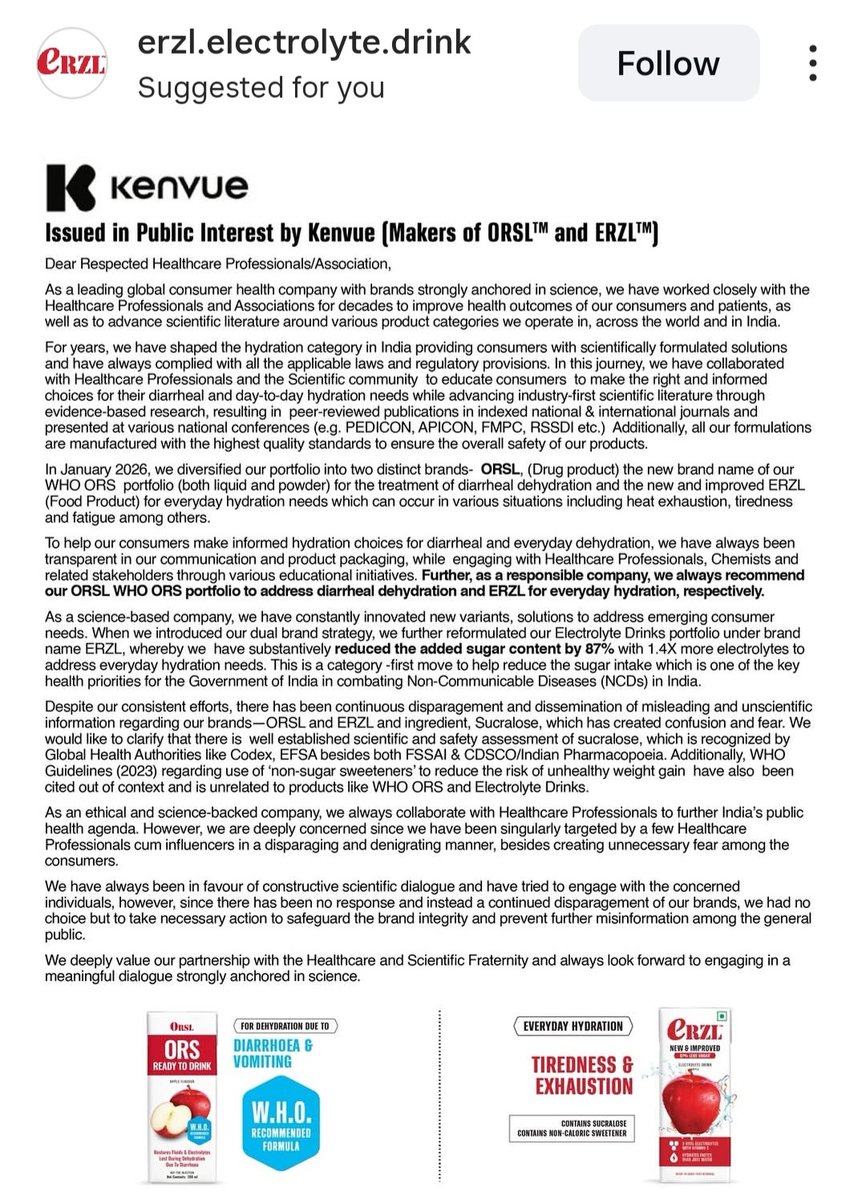
I am Dr. Sivaranjani, a pediatrician , raising concerns about how ERZL is being marketed and positioned in pharmacies, and the risk it creates for consumers making critical decisions during dehydration. This issue is not about whether ERZL is safe in isolation. It is about how it is presented, perceived, and potentially misunderstood in real-world settings. ERZL is a commercially marketed electrolyte drink. However, its branding and advertising raise serious concerns. *It should not be using ORSL in its communication.* Why? Because: * ORSL itself is not the original medically recommended ORS * Referencing ORSL in any form creates brand recall in the minds of consumers * Instead of reducing confusion, it continues and reinforces it When ERZL is positioned as a continuation or replacement of ORSL, it keeps that same association alive — especially among parents who may already believe ORSL was equivalent to ORS. 👉 This defeats the very purpose of regulatory action. In pharmacy settings: * People are often making quick decisions under stress * They rely on familiar names and visual cues * Branding can directly influence what they choose If ERZL continues to build on ORSL recall, it risks being perceived as a medical solution for dehydration, even when it is not the same as ORS (the medically recommended solution). There are also concerns around ingredients like sucralose, especially in children and with prolonged use, based on global health guidance. This makes clear communication even more important. After raising these concerns, I have received a legal notice from Johnson & Johnson and Kenvue. This petition is not about conflict. It is about: * Clarity in healthcare communication * Preventing consumer confusion * Ensuring responsible branding and advertising * Allowing doctors to raise public health concerns without hesitation We urge the Food Safety and Standards Authority of India and the Ministry of Health and Family Welfare to: 1 *. Ensure that, since ERZL closely resembles ORSL, Kenvue is directed to rebrand it in a way that does not create recall or association with ORSL.* 2. Prevent misleading positioning that may confuse consumers 3. Strengthen enforcement at the pharmacy level 4. Ensure clear differentiation from medically recommended ORS 5. Protect healthcare professionals raising genuine concerns In healthcare, even small confusion can have big consequences. Clear choices save lives. @fssai @JPNadda @MoHFW_INDIA @narendramodi Stand for public health. Sign and share this petition to help protect every family from confusion in critical moments. c.org/4wzT58q4wN


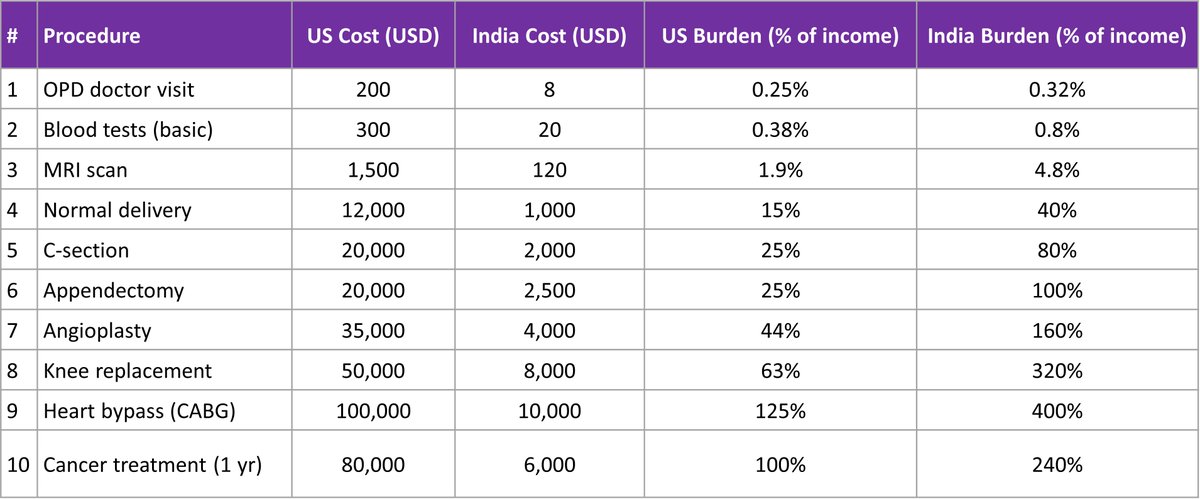
You can criticize the Indian healthcare system all you want but the truth is, the speed and relative affordability of essential care here is hard to find elsewhere. Same-day ultrasounds, quick emergency attention, and timely treatment are common in India. Abroad, even basic scans can take weeks, ER waits can stretch for hours, and specialist appointments often take months even for issues causing real discomfort. Yes, there are flaws overcrowding and infrastructure gaps but in terms of accessibility and speed, India’s healthcare system is seriously underrated. You only realize it when you experience the difference.


1 in 3 Americans now use AI chatbots for health information, which is almost doubled in a year. 64% do it weekly. 81% take action afterward: schedule a doctor's visit, change a medication, try a new behavior. The detail that should stop you: 74% are using ChatGPT or Gemini. Not a clinical tool. Not an FDA-cleared system. A general-purpose chatbot. I remember when chatGPT was first launched, the medical community had the most heated debate about "is AI ready for healthcare?" … now this debate has already been decided by users. They didn't wait for the system to be ready. They just started using it and acting on it. Meanwhile 71% of physicians say accuracy and reliability are their top concerns with AI. The reality: consumers acting on general-purpose AI, clinicians not trusting it, seems to be the defining tension in health AI right now. The question isn't whether people will use AI for health decisions. They already do. The question is whether anyone builds models actually calibrated for the stakes involved.