Novo Nordisk $NVO : The Market Is Missing The Bigger Picture Behind Q1
Novo Nordisk’s $NVO latest earnings report created exactly the kind of market reaction I usually pay attention to because, in my opinion, investors are focusing on the wrong part of the story.
At first glance, the quarter looked messy. Adjusted sales declined, operating profit slipped, and management is still guiding for weaker profitability in 2026 despite massive global demand for obesity drugs. On the surface, that sounds like the growth engine is breaking down.
But I think the market is confusing pricing pressure with demand destruction, and those are two very different things.
When a company loses pricing power but demand continues accelerating, it does not necessarily mean the long-term thesis is broken.
Sometimes it simply means the business is transitioning from an early-stage scarcity model into a scaled global volume business.
And that is exactly what I believe is happening with Novo Nordisk $NVO right now.
The market is acting as if GLP-1 demand is peaking. Yet prescriptions for Wegovy continue to explode, international demand is still ramping, and obesity treatment penetration globally remains incredibly low relative to the size of the addressable market.
To me, this looks less like a structural collapse and more like a temporary margin compression phase during a massive commercial expansion cycle.
That distinction matters because the stock is now trading like a mature pharmaceutical company facing stagnation rather than the dominant player in what could become one of the largest drug categories in modern healthcare.
And frankly, I think the market may be underestimating just how early we still are in the global obesity treatment cycle.
The Quarter Looked Strong Until You Looked Closer
Novo reported headline Q1 FY26 revenue growth of 32% at constant exchange rates, with operating profit surging 65%. On paper, those numbers looked phenomenal.
But the real story underneath the surface was much more complicated.
A large portion of that strength came from a one-time reversal tied to the U.S. 340B Drug Pricing Program.
Once you strip that out, adjusted sales actually declined 4%, while adjusted operating profit fell 6%.
That changes the entire interpretation of the quarter.
This wasn’t a case of demand weakness. The real issue was pricing pressure, particularly inside the United States where reimbursement dynamics and competitive intensity are starting to compress realized pricing.
And honestly, I think investors are struggling to separate those two realities.
Because if you only focus on margins, the quarter looks concerning. But if you focus on actual patient demand and prescription growth, the picture still looks remarkably strong.
Wegovy’s oral launch in the U.S. crossed more than 200,000 weekly prescriptions within months and generated roughly 1.3 million prescriptions during Q1 alone. That is not what a collapsing growth story looks like.
In reality, Novo is facing a very different problem: demand is scaling faster than the market’s willingness to pay premium pricing forever.
That may hurt near-term profitability, but it does not invalidate the long-term opportunity.
In fact, this transition was probably inevitable.
Healthcare systems eventually push back once blockbuster therapies become mainstream.
We saw it with insulin. We saw it with hepatitis drugs. And now we are seeing the early stages of it with GLP-1s.
The important question is whether volume growth can eventually offset pricing compression.
And personally, I believe it can.
The Obesity Market Is Still In Its Infancy
I think many investors forget how small obesity treatment penetration still is globally.
The narrative around GLP-1s has become so dominant that people assume the market is already mature.
But when you zoom out, we are probably still in the first few innings.
Globally, hundreds of millions of people qualify medically for obesity treatment, yet only a tiny percentage are actually receiving therapy today.
That matters because Novo’s long-term opportunity is not dependent on charging exceptionally high prices forever. It is dependent on scaling treatment adoption worldwide.
And the international numbers are already showing signs of that shift.
While U.S. adjusted sales declined, international operations grew 6% at constant exchange rates, driven largely by volume expansion rather than aggressive pricing.
That is important because it shows the growth engine is gradually becoming more diversified geographically.
I also think investors underestimate how powerful oral obesity drugs could become over time.
Injectables are effective, but they still create psychological and logistical barriers for many patients.
Oral therapies dramatically expand the potential patient pool because they feel more familiar and accessible to mainstream consumers.
That is why Novo’s oral Wegovy rollout matters so much.
If obesity treatment eventually evolves into something closer to a chronic maintenance category like cholesterol or diabetes medication, the long-term revenue opportunity becomes enormous even with lower pricing per patient.
And that is the part of the thesis the market currently seems unwilling to price in.
Investors Are Debating The Wrong Thing
Right now, the entire debate around Novo revolves around margins.
Bears see declining adjusted profits and assume the GLP-1 opportunity is starting to deteriorate.
Bulls see explosive prescription growth and argue the company is simply moving through a temporary normalization phase.
I lean much closer toward the second view.
Because when I look at the quarter, I do not see a business losing relevance.
I see a company trying to balance unprecedented demand growth against a healthcare system increasingly pushing for affordability.
Those are not the same thing.
In fact, the strong demand trends arguably make pricing pressure more likely because payers know these drugs are becoming unavoidable over the long term.
Management’s updated guidance reflects that tension.
Novo slightly raised its outlook, but the company still expects adjusted sales and operating profit to decline somewhere between 4% and 12% this year excluding the one-time 340B impact.
That guidance sounds weak relative to the excitement surrounding obesity drugs.
But I think investors need to understand where Novo currently sits in the cycle.
The company is transitioning away from scarcity-driven hyper profitability toward scaled global adoption.
That transition may temporarily compress margins, but it can also create a much larger and more durable long-term revenue base.
And honestly, I would rather own the dominant platform scaling globally than the company maximizing short-term pricing at the expense of broader adoption.
The Valuation Has Completely Reset
This is where things start getting interesting to me.
Novo now trades around 13x forward earnings, well below both healthcare peers and its own historical averages.
Not long ago, the market treated Novo like one of the highest-quality growth stories in global healthcare.
Today, the stock is being valued more like a company entering permanent decline.
That disconnect feels excessive.
Yes, near-term earnings pressure is real. Yes, pricing dynamics are becoming more challenging.
But we are still talking about a company dominating two of the largest chronic disease markets globally: obesity and diabetes.
And importantly, demand is not slowing.
The market appears to be pricing Novo as if current earnings pressure represents a permanent impairment to the business model.
I do not think that assumption fully reflects the scale of the long-term opportunity.
Even revenue-based valuation metrics still imply skepticism.
EV/sales sits near 4.8x forward revenue despite Novo controlling one of the most important pharmaceutical franchises in the world today.
Meanwhile, consensus expectations already assume weak earnings growth through 2026 before stabilization begins.
In other words, a lot of bad news already appears priced into the stock.
And historically, some of the best long-term opportunities emerge when markets start extrapolating temporary pressure too far into the future.
My Take
I think Novo Nordisk is going through a difficult but ultimately healthy transition phase.
The easy part of the GLP-1 boom is over. Scarcity pricing, explosive early demand, and investor euphoria are fading.
Now comes the more complicated stage where these drugs become integrated into broader healthcare systems globally.
That process creates pricing pressure, reimbursement battles, and margin volatility.
But it also creates scale.
And scale is what ultimately builds dominant long-term healthcare franchises.
To me, the market currently looks overly focused on short-term margin compression while underestimating how large the global obesity treatment market could become over the next decade.
@investseekers $NVO is leading the pack for many years to come with the best products and pipeline, and the Market is still massively untapped and growing, so why even bother the current price of a product. Market dominance is key and $NVO is firing on all cylinders. Pricing power will follow!
Investor and analyst Lau Svenssen says $NVO Q1 results were not a “celebration earnings report” despite the good share price reaction.
He pointed in particular to upcoming US price cuts on Novo’s blockbuster products, saying prices could fall 35% to 50% next year.
“The problem is that if you have to reduce prices by 35-50%, it is practically impossible to offset with volume,” he said.
Lau Svenssen also highlighted potential pressure from semaglutide copy products in markets such as India, China, and Canada where patents have expired.
He has lowered his previous year end target for Novo shares from DKK 450-500 and now sees the stock potentially reaching DKK 350 by the start of 2027, and DKK 400 in a more optimistic scenario.
Despite the concerns, he remains positive long term and said he has no plans to sell his Novo shares.
Link to article (in Danish): euroinvestor.dk/nyheder/lau-sv…#stocks#Investing
David Poppe on not adding to $CSU
"Constellation has always said acquisitions provide higher returns than share repurchase, but senior executives are not rushing to buy either...
I have my reasons for believing Constellation's business will prove durable, but I would be more inclined to add to our position if insiders were."
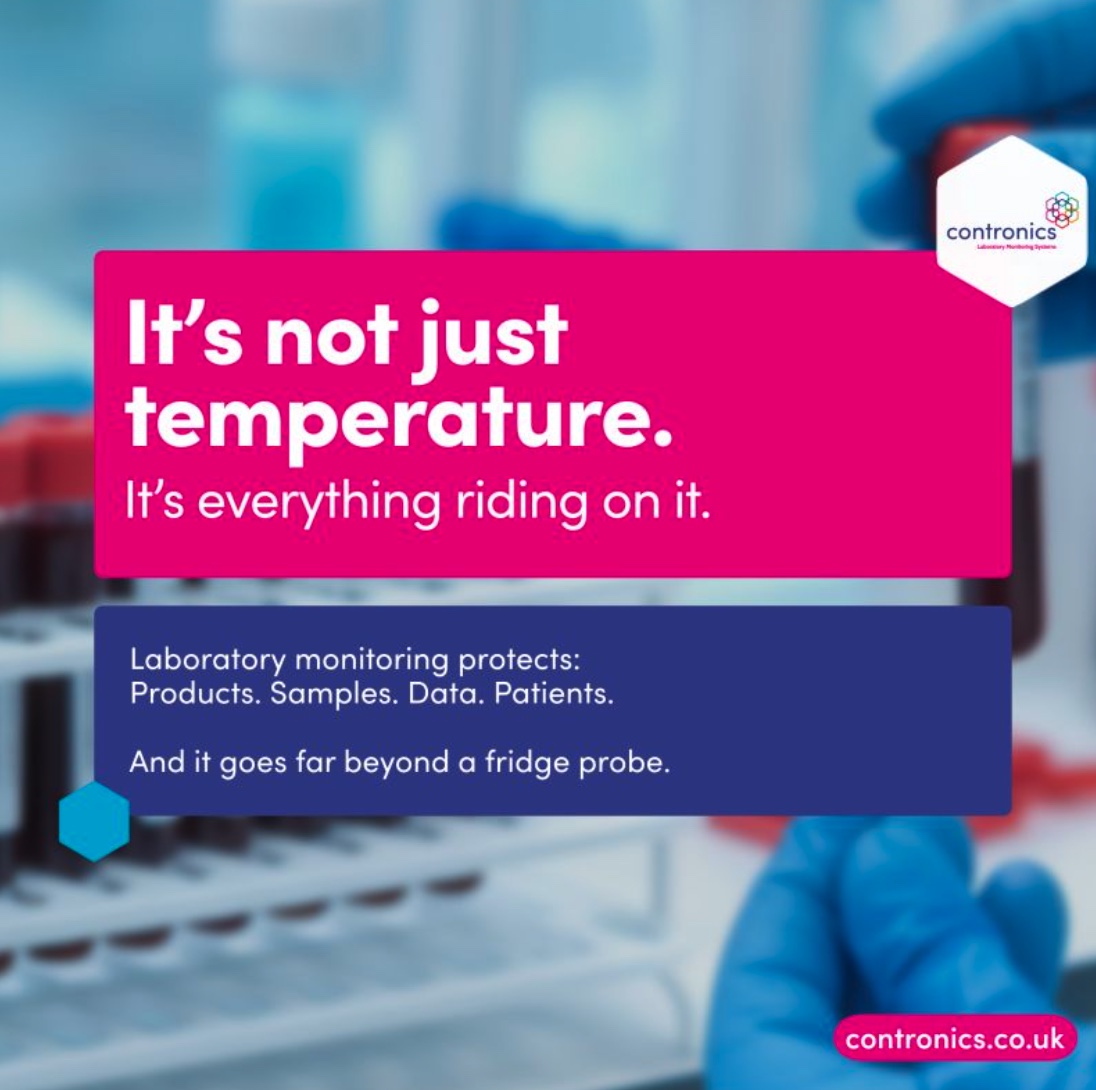
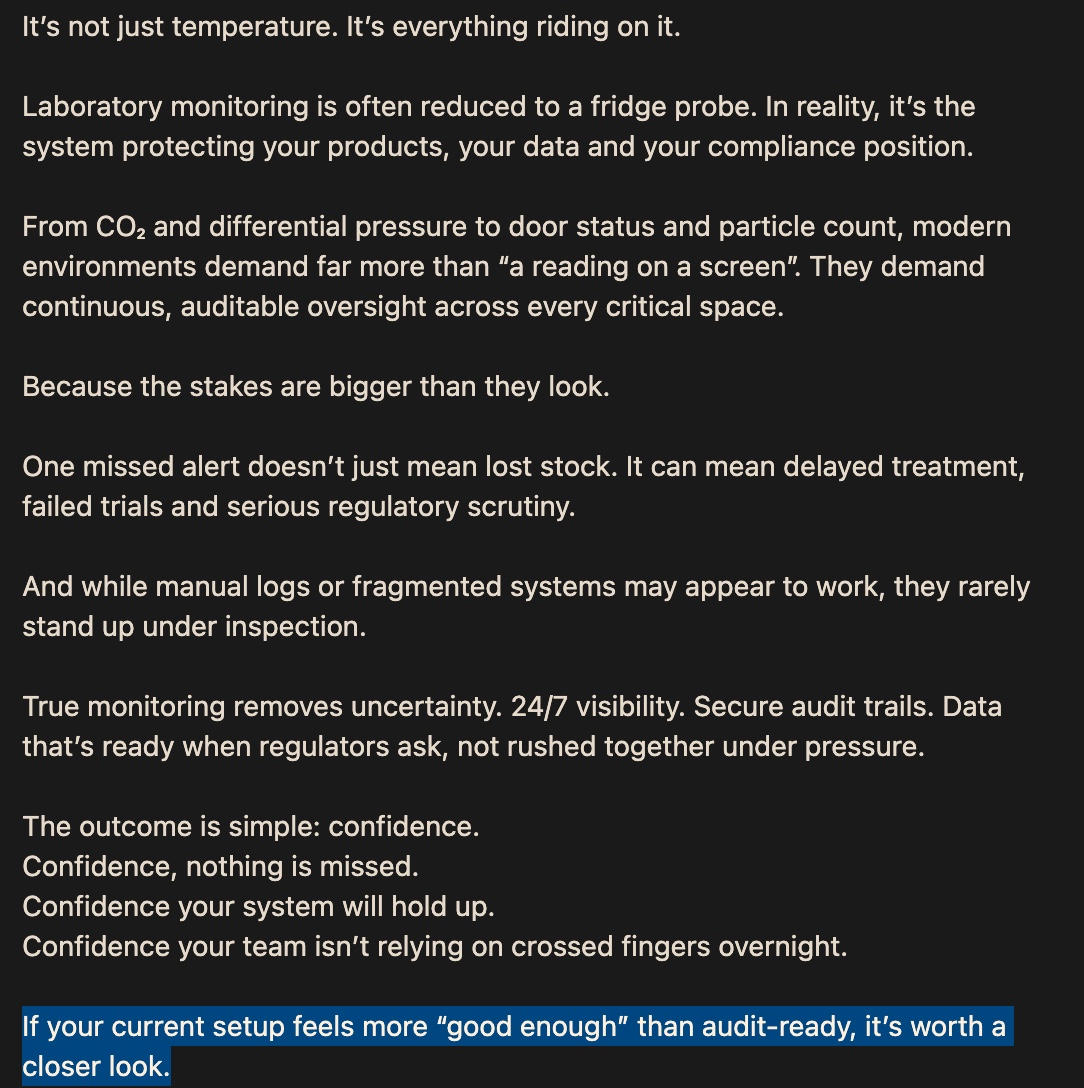
I’d like to showcase how mission-critical $CSU Contronics laboratory monitoring system is.
“It’s not just temperature. It’s everything riding on it.”
“If your current setup feels more ‘good enough’ than audit-ready, it may be worth a closer look.”
$CSU has many biz like this!
@inversionmedica@investseekers Agree. It's about time Mr. Market understands it's not a 'winner takes all market'. $LLY and $NVO are complementary in their offerings much needed by patients and the scale and growth of diabetes and obesity diseases are simply too big for one company to address it.
$LLY $NVO
Eli Lilly beats expectations in Q1 and raises full-year guidance.
Revenue came in at $19.8B vs. $17.8B expected, while profit reached $7.6B vs. $6.2B expected.
That marks 56% revenue growth and 155% profit growth year over year, driven by strong sales of Mounjaro and Zepbound.
Lilly now expects 2026 revenue of $82–85B, up from $80–83B previously, and also raised its earnings outlook.
#stocks#Investing
$NVO $LLY
Week 1 tells you everything: Foundayo 1,390 vs Wegovy 3,071 right out of the gate.
Inferior drug + liver concerns vs proven benefits.
Wegovy will dominate 2–3x estimated volumes coming. $NVO will rebound!!
Week 15 sales figures are in for Novo Nordisk's $NVO oral weight loss drug Wegovy, and they have smashed through the 100,000 mark.
According to Symphony data, TRx prescriptions came in at 100,999, which is a massive 9.9% increase on the previous week.
Sales have been stagnating recently with weekly increases of around 3.4-3.6%, so this is an unexpected but very welcome weekly increase.
The full sales history now looks like this:
Week 1 - 4,290
Week 2 - 20,382
Week 3 - 26,794
Week 4 - 29,410
Week 5 - 38,423
Week 6 - 54,038
Week 7 - 58,586
Week 8 - 64,168
Week 9 - 71,990
Week 10 - 76,829
Week 11 - 80,088
Week 12 - 85,747
Week 13 - 88,690
Week 14 - 91,917
Week 15 - 100,999
Interestingly, the higher dosages of Wegovy, which cost the most and have the higher profit margins, saw the biggest increases.
The 9mg was up 22% and the 25mg was up 24% from last week, so these are really surging in popularity at the moment in the United States.
Sadly, these positive numbers still aren't being reflected in the share price because the shares are still down 0.55% pre-market and seemingly going nowhere, but hopefully it is only a matter of time before we do start to see a recovery.
@RedKingRuairi75 Wegovy has been a godsend. As of yesterday I'm at 38 lbs down since November. It also apparently helps with inflammation which has helped with my rheumatoid arthritis. My rheumatologist said all of his patients on glp1's are feeling improvement.
The fact that $ADBE is only up 2.5% after announcing a monstrous $25 billion buyback is purely due to the forever bearish sentiment that surrounds the stock.
Some stocks just aren’t favored by investors, like $NKE and $PYPL.
This stock seems mistreated, but that’s just how it is, I guess.
I wonder if it will ever recover to all-time highs again.
What do you think about this move?
$NVO $LLY $AMZN
Amazon expands into obesity care with a new GLP-1 program through One Medical.
The program integrates primary care, pharmacy, and virtual care to manage obesity as a chronic condition.
Key features:
• Personalized GLP-1 treatment plans within primary care
• Transparent drug pricing with insurance or cash pay options
• Same day delivery to ~3,000 cities, expanding to ~4,500 by end 2026
• 24/7 prescription renewals starting at $29 for existing users
GLP-1 access:
• Oral options including Wegovy and orforglipron priced from ~$149/month cash
• Injectables including Wegovy and Zepbound from ~$299/month cash
Obesity affects over 40% of US adults, but care is often fragmented with unclear pricing. Amazon’s model aims to simplify access and improve adherence by combining treatment, delivery, and follow up in one system.
Link to article: aboutamazon.com/news/retail/am…#stocks#Investing
@MeadowCapital Multiple CNBC Fast Money panelists and guest opined that NVO is undervalued, not getting credit for positive results while LLY gets positive consideration for every move.
@investseekers $NVO management clearly indicated that weight management is a core, long-term strategic focus, treating obesity as a complex, chronic disease rather than a lifestyle choice.
$NVO has previously announced its Wegovy subscription model for self pay patients via telehealth platforms.
Experts highlight several concerns:
• eligibility rules and fine print may limit access
• care could become fragmented without primary care involvement
• focus is largely on medication rather than broader weight management
• patients may be locked into multi month plans even if treatment is not tolerated
Overall, experts stress that the real impact depends on how these programs are implemented in practice.
Link to article: medscape.com/viewarticle/no…#stocks#Investing
Oral battle: Wegovy Pill vs. Foundayo $NVO $LLY
The most awaited data point this week was IQVIA data from the launch of Eli Lilly’s oral entrant, Foundayo (orforglipron). While many analysts were expecting a disruption, the opening was somewhat light.
Foundayo launched with 1´390 TRx in its first five days. For context, the Wegovy pill launched with 3´000 TRx in its first week.
While Lilly is getting its oral engine started, Wegovy’s pill is already at a massive steady state. It recorded 113´354 TRx this week, growing +7.6% week over week. That was really the surprise of the week.
Verdict: Foundayo’s start is light compared to the
Wegovy pill launch. Novo has a 14 week head start and is currently processing nearly 100x the volume of Lilly’s oral entrant. This will obviously change, but no one would have signed on for that descrepancy.
Mountain of demand
Total Wegovy TRx hit 386´999 this week. This volume is particularly impressive when you consider the structural health of the franchise:
- Zero cannibalization: The data continues to show no material evidence that the pill is eating the injectable market.
- Pen resilience: We are seeing a strong volume reaction for the injectable pen, likely driven by lower price points and improved supply. Excluding the oral version, the pen would have been down only -2.2% in a week where the total market cooled.
It is still important to remember that IQVIA data excludes NovoCare and Telehealth channels. Some estimates already suggest Novo's true weekly TRx run rate is materially higher than the visible retail data suggests (some say it only tracks 60% of the volume). We will likely know on May 6th.
Margin mechanics: Vials vs. Pills
There is a lot of talk regarding the Net Margin of these different form factors:
- Vial defense: Some argue that Lilly’s vials are high margin because they bypass PBM rebates. While true, this is a defensive move to maintain pricing power in the cashpay market.
- Pill offense: The Wegovy pill is conversely often cited as low margin due to the high amount of API needed for oral delivery. However, Novo is trading that margin for market saturation. By flooding the funnel with an easy / convinient entry point, they are locking in a patient base that is difficult to displace. Also, pill margin is better than most expect.
Next frontier: High Dose Wegovy
The launch of 7.2mg Wegovy is now in its second week on the market. While volume is currently limited at 401 TRx, this is the Efficacy cover that will eventually close most of the gap with Mounjaro/Zepbound on total weight loss percentages, but not the AE gap.
Conclusion
Novo has successfully diversified its portfolio into a multi form factor ecosystem. They have the mass market oral (113k TRx), the standard injectable pen, and now the high-dose 7.2mg for premium efficacy. With Medicare obesity coverage beginning in July, Novo is well positioned to capture the wave of government funded volume.
$NVO $LLY $VKTX
@investseekers Honest and fair reflection. "Scaling production and improving access will take years" and huge investments, which is why I think LLY and NVO will continue to be a duopoly. $NVO has a lot of additional manufacturing capacity coming online soon.
$LLY $NVO
CEO of Eli Lilly David Ricks says GLP 1 weight loss drugs may only reach around 50% of eligible patients at peak, not full penetration.
Today, only about 1 in 10 eligible patients are using these treatments.
Key reasons:
• healthcare system complexity
• affordability constraints
• slow and expensive capacity expansion
David Ricks estimates the total addressable population could be ~500M people globally, while current treatment levels are around 20M.
His takeaway:
“it’s never going to be 100%”
Even with strong demand, scaling production and improving access will take years, which is an important dynamic for both Novo and Lilly.
Link to article: reuters.com/legal/litigati…#stocks#Investing
@CloisterRes I have a feeling $NVO investors that bought in this range , will be happy to learn first-to-market advantage
$LLY is a powerhouse, has loads of influence at the Whitehouse (Makary voucher for NO valid reason)
$NVO needs to diversify. Make $TVTX a subsidiary. Partner with $ALT
I have this sneaking suspicion that the orforglipron launch for $LLY is not going quite so fast as they might have hoped.
As in, the first day of IQVIA-reported TRx (which was actually day 7 of approval) was only 25. Not 2500. 25.
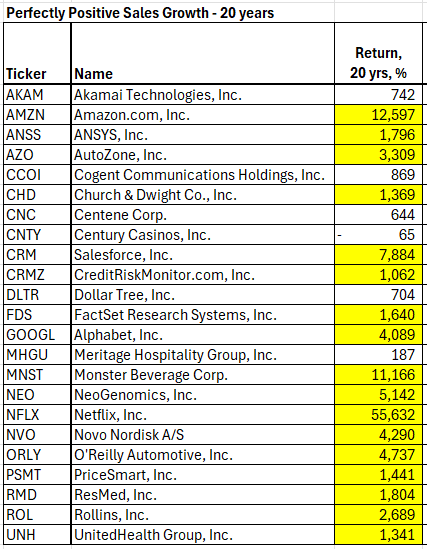
@FluentInQuality 100% agree @FluentInQuality. Although temporarily hated by many (read: opportunity), $NVO belongs to the best companies in the World already for a very long time:
The bear case on $NVO is loud right now.
Here's what's being ignored.
30% of the global diabetes market.
50% of the $15B insulin market.
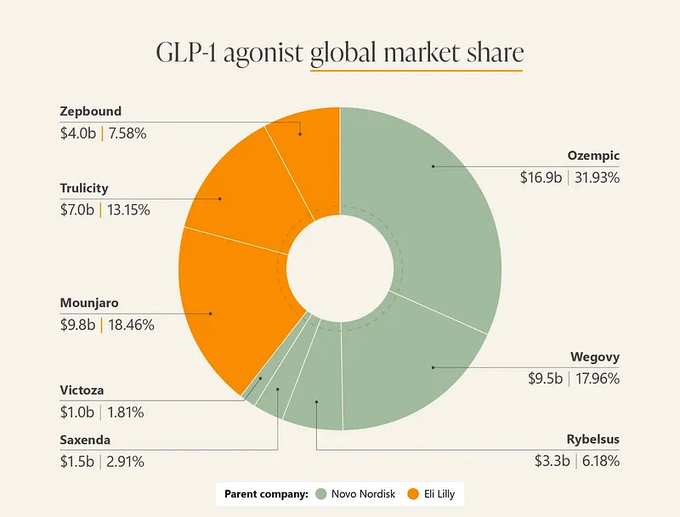
50% of the $50B GLP-1 market.
Wide economic moat
Patent protection is continuously extended through innovation.
Manufacturing scale that generic competitors can't replicate from scratch.
GLP-1 is 76% of 2025 sales and still growing.
Obesity treatment is a multi-decade secular trend.
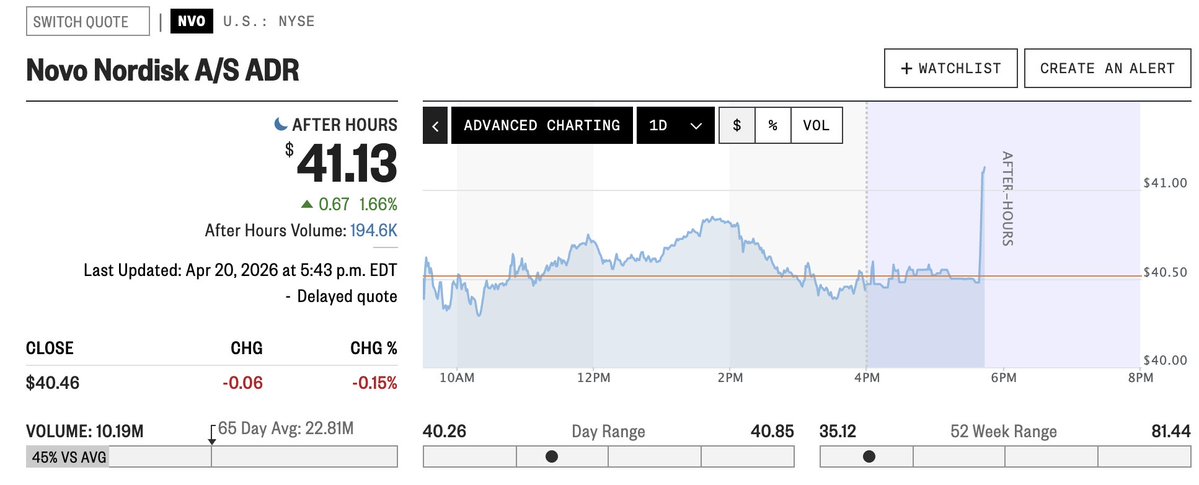
The stock is down 78% from its highs.
The business isn't down 78%.