Anuradha Goswami

235 posts

Anuradha Goswami banner
Anuradha Goswami

Anuradha Goswami

@EnvRes_AMR

Assistant Research Professor, University of Notre Dame, USA. Research focus: Antimicrobial resistance, Environmental quality & treatment. Proud CAT momma 🐾

South Bend, IN Katılım Mart 2018
494 Takip Edilen170 Takipçiler
Sabitlenmiş Tweet
Anuradha Goswami
Anuradha Goswami@EnvRes_AMR·
Must watch this: why Turks love animals more than anyone. Caring for these innocents is a step closer to purify your soul... I wish one day the entire world turns like them youtu.be/EYyq4V97U7k
YouTube video
YouTube
English
1
0
1
880
Anuradha Goswami
Anuradha Goswami@EnvRes_AMR·
A proud moment for Goswamilab to see Charlie complete his #NSFREU summer capstone research. Charlie joined my lab last fall, and I can already see him transitioning from trainee to researcher, thinking critically and troubleshooting. Way to go, Charlie! @NDBios @NDscience
Anuradha Goswami tweet media
English
0
1
4
185
Anuradha Goswami retweetledi
Andrew Akbashev
Andrew Akbashev@Andrew_Akbashev·
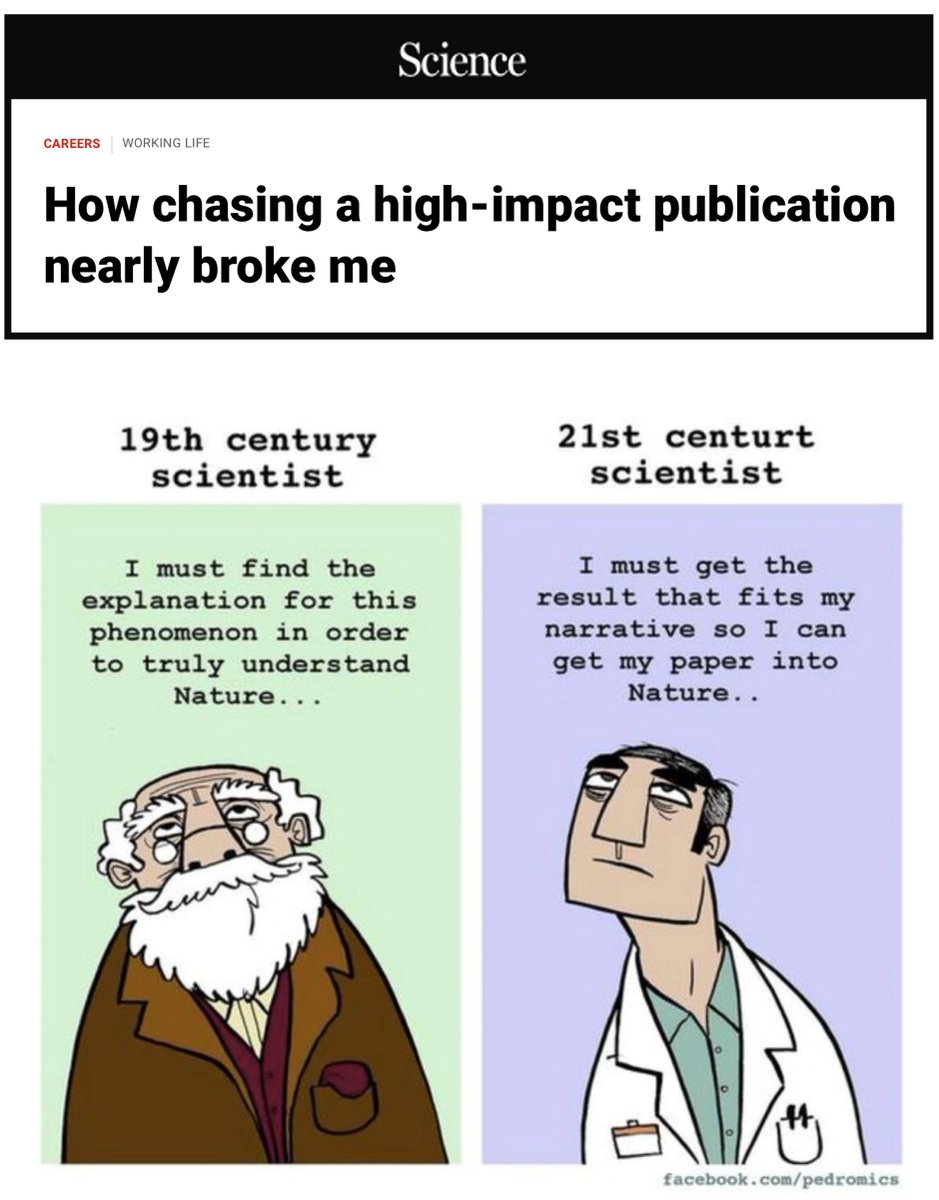
High-impact papers are crucial in academia. Like it or not. As a PhD student, you quickly learn that such papers are cool. They make advisors happy. Everyone admires you. During a postdoc, high-IF papers are not just cool. They are mandatory for a PI job. They give you awards and interviews. During the tenure track, they often become your ticket to a permanent position. Many young PIs are fighting to get their papers published in Nature/Science/Cell. It’s like getting a micro-Nobel prize. Many feel relaxed only when they publish in Nature (their tenure is finally safe!). But: Because such papers require a lot of time (often years), you live in constant uncertainty. You HOPE you will get it. You spend evenings at work, you look for stronger results, and you’re battling through a battalion of failed experiments. Then you submit it… Then: Stage 1. Editors reject 9/10 papers. Yours might be among them. Stage 2. The paper goes to reviewers but they are brutal. For some reason (and you know why!) they just don’t want to see your paper in Nature. Many papers get rejected in the first round. Stage 3. If reviewers can’t come up with reasons to kick you out immediately, they will request a lot of new experiments and changes to your work. Obviously, that will take months (if not years). Of course, some reviewers are great and genuinely help improve your work. But they are not as common as you might hope. Stage 4. After addressing all problems and submitting it again, you will likely see some reviewers still resisting. They can simply reject your paper because they didn’t like how you addressed their requests. Or they will find new flaws and will get you to do another round of revision. (If you’re lucky, they will accept the paper.) Stage 5. If reviewers are divided between “accept” and “reject”, the editors may send your paper to additional reviewers. That will start another cycle of hell with a likely negative outcome. Stage 6. If you are rejected, congratulations - you’ve just wasted months on nothing. But because you need that paper, you resubmit it to another high-IF journal, and it all starts with Stage 1. So, it’s like gambling. You gamble your career on this publication. During those 6–24 months of fighting with reviewers and editors, someone else may publish the same work. Then you’re screwed. Or your paper is likely not accepted in any high-IF journal. After loosing a year or more on trying to push it through, you will have to publish it in a low-IF journal. Is it a healthy game? No. You get exhausted. Anxiety skyrockets. But unfortunately that’s how academia works. I’ve been through this myself. Most of my colleagues have the same experience. We definitely despise it. And the worst part of it? We’ve started to see it as completely normal.
Andrew Akbashev tweet media
English
48
189
1.3K
109.1K
Anuradha Goswami retweetledi
NIH
NIH@NIH·
BREAKING NEWS❗ NIH establishes nation's first dedicated organoid development center to reduce reliance on animal modeling. bit.ly/4pBYT9T
NIH tweet media
English
20
119
442
58.6K
Anuradha Goswami
Anuradha Goswami@EnvRes_AMR·
Excited moments for a mentor when students' hard work is appreciated. Proud of my mentee, Arlo, for winning the Innovator in Science Award 🏆. His research on the selective pressure of metals in #AMR selection in bacteria was recognized. #Science #UABCORD #UABBiology
Anuradha Goswami tweet media
English
0
0
2
140
Anuradha Goswami
Anuradha Goswami@EnvRes_AMR·
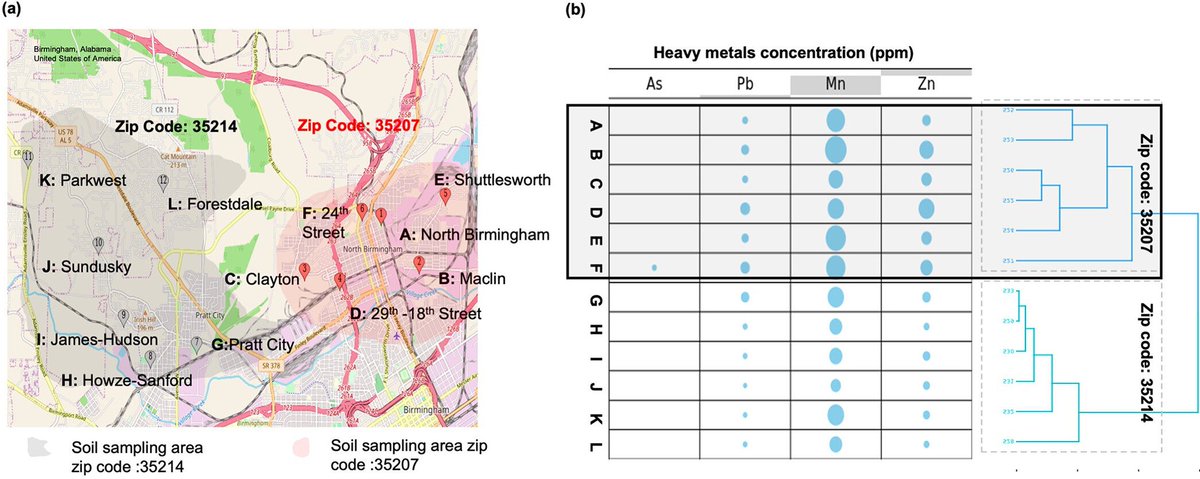
Our study @admiraladkins on scientific evidence of environmental injustice in the Superfund site at Birmingham was selected for #ASM #DiversityandInclusion collection. The site claimed long back by @EPA is yet to be included in the US national priority list.
Anuradha Goswami tweet media
English
0
1
3
250
Anuradha Goswami
Anuradha Goswami@EnvRes_AMR·
Accolades to Isabella Parkhurst: Received best student presentation award at 101st Annual Alabama Academy of Sciences @AlabamaScience. She discussed the study for her @HonorsUAB thesis on method development to track #AMR in the environment. Feel proud #mentor today. @UABBiology
Anuradha Goswami tweet media
English
0
0
2
106