Eric Gimon

3.7K posts

Eric Gimon

Eric Gimon

@EricGimon

Ex-physicist working in climate and energy issues through policy advice.

Berkeley, CA Katılım Ağustos 2013
661 Takip Edilen1.6K Takipçiler
Eric Gimon
Eric Gimon@EricGimon·
@JessePeltan @SparkplugPower Great post. I would take issue with one thing. I think high fixed costs is the Achilles heel for nuclear, and not so much capex, especially for existing nuclear were capex is a sunk cost.
English
1
0
1
104
Jesse Peltan
Jesse Peltan@JessePeltan·
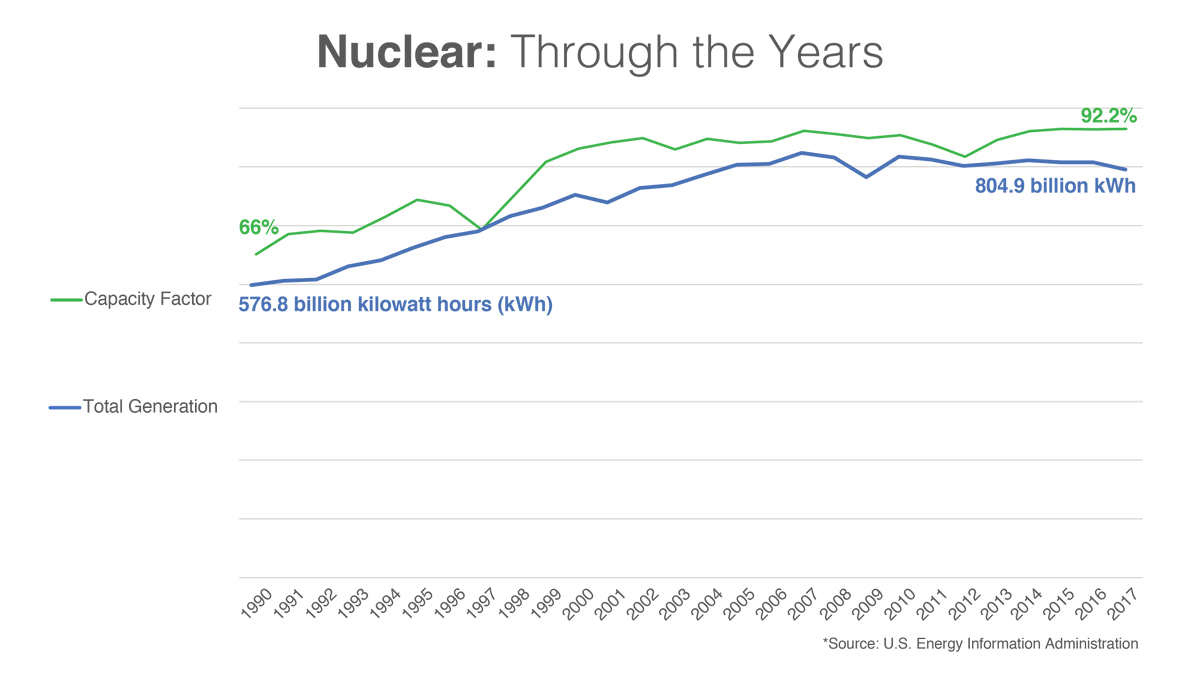
Baseload is dead! Long live nuclear! Promoting nuclear as the solution to base load (minimum demand) is just setting it up for failure. Meeting base load is not a challenge for any grid and it's not what makes nuclear valuable. The purpose of a nuclear reactor is not to run 24/7. None of our reactors do that. The U.S. has high capacity factors for nuclear compared to most of the world at around 93%. In 1990, our nuclear fleet averaged 66%. In any country with high nuclear penetration, capacity factors are much lower than they are in the U.S. In France they're around 62%. For nuclear to play a major role in any grid, reactors are not going to have 90%+ utilization. Demand is too variable. It's true that nuclear gets cheaper per unit of electricity when you get to run it at higher utilization, but the optimal quantity of nuclear is not going to be where every reactor runs at near 100%. If nuclear is 50% cheaper than the alternative, you'll install nuclear until the marginal unit runs at 50%. If nuclear is not cheaper than alternatives, you won't install any. Base load is a completely arbitrary point. Base load could be zero without even affecting the utilization of nuclear. If demand were zero for 7% of the year and you could schedule maintenance during that time, utilization wouldn't change at all. Even if reactors ran at 1990's utilization, that wouldn't significantly impact the value of those reactors. Most of the year, electricity is extremely cheap. Not running during those low value hours has little impact on the total value provided. In ERCOT in 2023, a power plant operating 100% of the time would have made 55% of its revenue in just 5% of hours and 70% in just 20% of hours. (2023 is not an outlier. There's variance but the overall distribution is similar every year) A reactor that cost 2/3 as much, but only ran 1/4 of the time would be more profitable. High capex is the big challenge for nuclear. Whether nuclear operates in low value hours at all makes almost no difference to its value proposition. The value of nuclear is that it's available to serve those high value hours regardless of how constrained gas transmission or other generating resources are, and that it can do so with very low fuel cost. Today, it's far cheaper use gas turbines and ensure fuel supply with on-site liquid fuel storage. Fuel for nuclear is a lot cheaper than liquid fuels or even methane, but construction costs are many times higher than the cost to build a gas turbine. The challenge for nuclear is getting capex low enough to economically compete with alternatives. Whether reactors run at 90% or 60% or even 10% is far less important than getting the costs down.
Jesse Peltan tweet media
English
30
23
158
13K
Eric Gimon retweetledi
Canary Media
Canary Media@CanaryMediaInc·
Read guest author @jeffrissman's opinion piece on five practical policies that policymakers should adopt to accelerate clean industry in the United States: ow.ly/9Orp50TXYzh
English
2
9
17
1.5K
Duncan S. Campbell
Duncan S. Campbell@duncancampbell·
Why should a utility-scale battery that’s transmission connected get to charge at wholesale rates, but a hypothetical building next door that uses power at the same exact times the battery charges and is physically connected in the same way gets charged industrial retail rates?
Duncan S. Campbell tweet media
English
78
11
175
45.2K
David Roberts
David Roberts@drvolts·
One of my strongest energy opinions, which is still so obscure I don't even think it counts as controversial, is that "distribution-side, front-of-the-meter" power has enormous potential but is overlooked in everyone's models, even the DER types. We should be maximizing it.
English
24
16
184
36.4K
AukeHoekstra
AukeHoekstra@AukeHoekstra·
@JesseJenkins Why not say: the ability to store and provide a kWh of electricity will cost $0.01/kWh with this battery system?
English
4
0
14
2.1K
Jesse D. Jenkins
Jesse D. Jenkins@JesseJenkins·
The only thing more misused and useless than the levelized cost of electricity is the "levelized cost of storage." It's not a thing. Thank you for coming to my Ted Talk.
English
22
19
229
64.5K
Eric Gimon
Eric Gimon@EricGimon·
@duncancampbell While in theory the negative gen status of batteries as loads is a huge bonus, in MISO it has been used to really penalize them in the interconnection process. I read that MISO has <1 GW of storage, but that >16 GW have already dropped from Qs because of onerous charging reqs
English
0
1
0
102
Eric Gimon
Eric Gimon@EricGimon·
@duncancampbell In agree, I think we need to develop uniform tariffs for flexible bottom feeding loads. The argument usually made is that the battery returns its power (less round trip) to the grid. But happens when the battery storage medium is tradeable, like hydrogen?
English
1
0
0
89
Eric Gimon
Eric Gimon@EricGimon·
@dcpetterson @GreatDismal All credit to Mary Shelley for an important classic and an unarguable place in the sci-fi pantheon but probably the first science fiction novel was Cyrano de Bergerac’s Voyage to the Moon form 1656
English
0
0
1
33
Eric Gimon retweetledi
sonia aggarwal
sonia aggarwal@cleantechsonia·
My colleagues ran the numbers to examine the difference between Project 2025's climate and energy provisions and a scenario that meets America's stated 2030 climate goals. The results are stark. (1/5) energyinnovation.org/publication/th…
English
4
33
79
12K
Eric Gimon retweetledi
Julian Spector
Julian Spector@JulianSpector·
What's it mean to get a major solar factory in your backyard? For Dalton, GA, it means that young people can stay in town and start a high-tech career, instead of having to move away after high school. That's great for families, and a bustling downtown canarymedia.com/articles/solar…
English
0
20
30
2.5K
Eric Gimon
Eric Gimon@EricGimon·
@drvolts What is the kw/kwh size of the battery? Most utility scale bats in Texas only have 2hs? But customers tend to want more duration. Is the idea to over size power for customers then? 30kW is a lot! Like 125A at 240V. A lot of homes only have 100A connections.
English
1
0
2
220
David Roberts
David Roberts@drvolts·
Tomorrow I'm recording a pod with a startup that's ... well it's complicated, but they're installing large residential batteries in Texas. The homeowners get protection against blackouts + steady power prices. The co. makes money using the batteries for arbitrage. Questions?
English
72
21
210
42.8K
Eric Gimon
Eric Gimon@EricGimon·
@drvolts I share your opinion excitement! Wish them all the luck in the world!
English
0
0
0
85
David Roberts
David Roberts@drvolts·
One of the coolest things happening in the energy world: in Mass., they're implementing the first pilot of a geoexchange network -- basically a network of pipes that use hot water (rather than gas) & heat pumps (rather than furnaces) to heat buildings. canarymedia.com/articles/geoth…
English
19
76
261
27.2K
Eric Gimon retweetledi
Dr. Angela Rasmussen
Dr. Angela Rasmussen@angie_rasmussen·
People asking why this is factually incorrect…I’m at a conference today so am pressed for time but I’ll quickly address each of the 5 “key points.” Bottom line: You can dress up unsupported horseshit in as much polished data viz as you want, but it still stinks.
Dr. Angela Rasmussen@angie_rasmussen

Key points aren’t actually very key when they are factually incorrect. Good of the @nytopinion to help the mob sharpen their pitchforks for Fauci’s Select Subcommittee hearing by enshrining the lies that he will be attacked with as truth in the paper of record.

English
12
1.1K
3.7K
1.2M
Eric Gimon
Eric Gimon@EricGimon·
@AukeHoekstra Nice thread @aukeHoekstra but I think you are missing (understressing) one part. To deal with inter annual variations, we will need sector coupling. Basically processes that consume more or less electricity at large scales based on price and convert it to tradeable commodities
English
0
0
1
281
AukeHoekstra
AukeHoekstra@AukeHoekstra·
California is entering phase 2 of something we will see worldwide: Phase 1) Solar+wind replace up to ~70% of fossil electricity Phase 2) Solar+wind+batteries replace up to ~90% of fossil electricity Phase 3) Solar+wind+batteries+eFuels replace 100% of fossil electricity 🧵
David Roberts@drvolts

Fascinating analysis of the increasingly pivotal role that batteries are playing on the California grid. They are steadily eating away at fossil gas. blog.gridstatus.io/caiso-batterie…

English
72
356
1.4K
238.2K
Eric Gimon retweetledi