Element Zero

170 posts

Element Zero

Element Zero

@EzeroGames

Working on next gen physics and graphics tech

USA Katılım Aralık 2019
149 Takip Edilen644 Takipçiler
Vulpes
Vulpes@VigorFox·
Excited to share my latest project: PhysX_AVBD! Forked NVIDIA's PhysX SDK and integrated an experimental position-level Augmented Vertex Block Descent (AVBD) solver—99.9% coded by AI via @GitHubCopilot powered by @AnthropicAI's Claude models. Repo: github.com/VigorFox/PhysX…
English
3
1
8
2.3K
Element Zero retweetledi
ACM SIGGRAPH
ACM SIGGRAPH@siggraph·
🎉 A big congratulations to the #SIGGRAPH2025 Real-Time Live! Best in Show winner, "InfiniteStudio: 4D Volumetric Capture for Film Making and Beyond," and Audience Choice winner "Crazy Fast Physics! Augmented Vertex Block Descent in Action!"👏✨ These awe-inspiring presentations wowed audiences and showcased the very best of real-time innovation. Join us in celebrating their success by sharing your cheers and reactions in the comments below! 🥳👏 s2025.siggraph.org/program/real-t… photo by Matthias von Loebell © 2025 ACM SIGGRAPH
ACM SIGGRAPH tweet media
English
0
4
10
1.7K
Element Zero
Element Zero@EzeroGames·
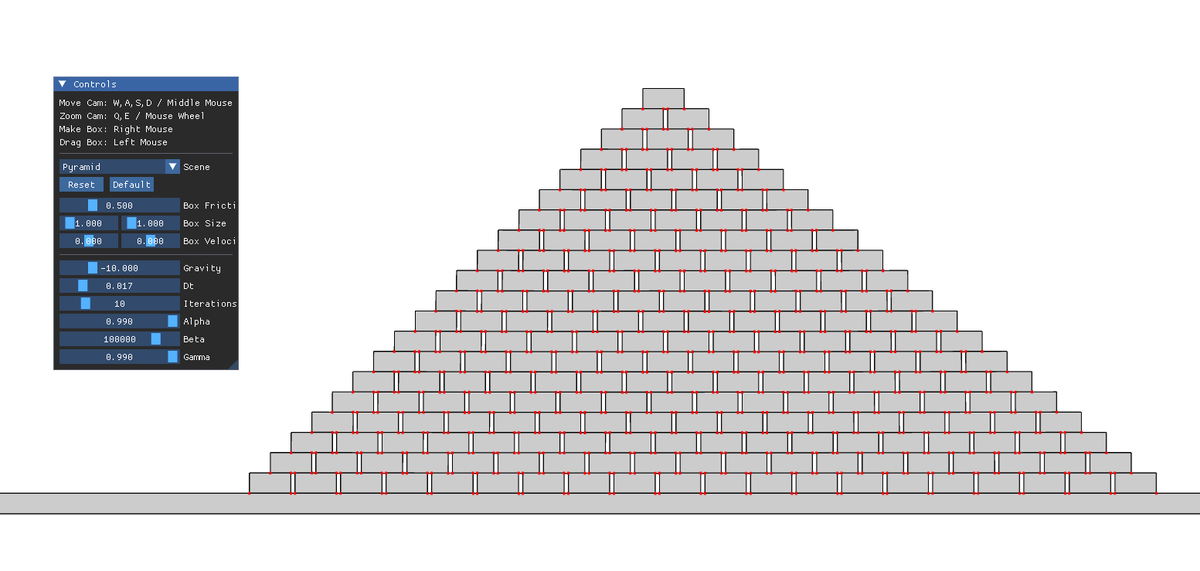
@PierreTerdiman @leonard_coder In that case, sorry for misrepresenting physx! Real number is definitely less than 50x. No sdk available in the short term, so easiest test is probably just reproducing one of my test scenes in peel. Pyramids svene for example was 500k bodies, 10 ms excluding rendering on a 4090
English
0
0
1
95
Pierre Terdiman
Pierre Terdiman@PierreTerdiman·
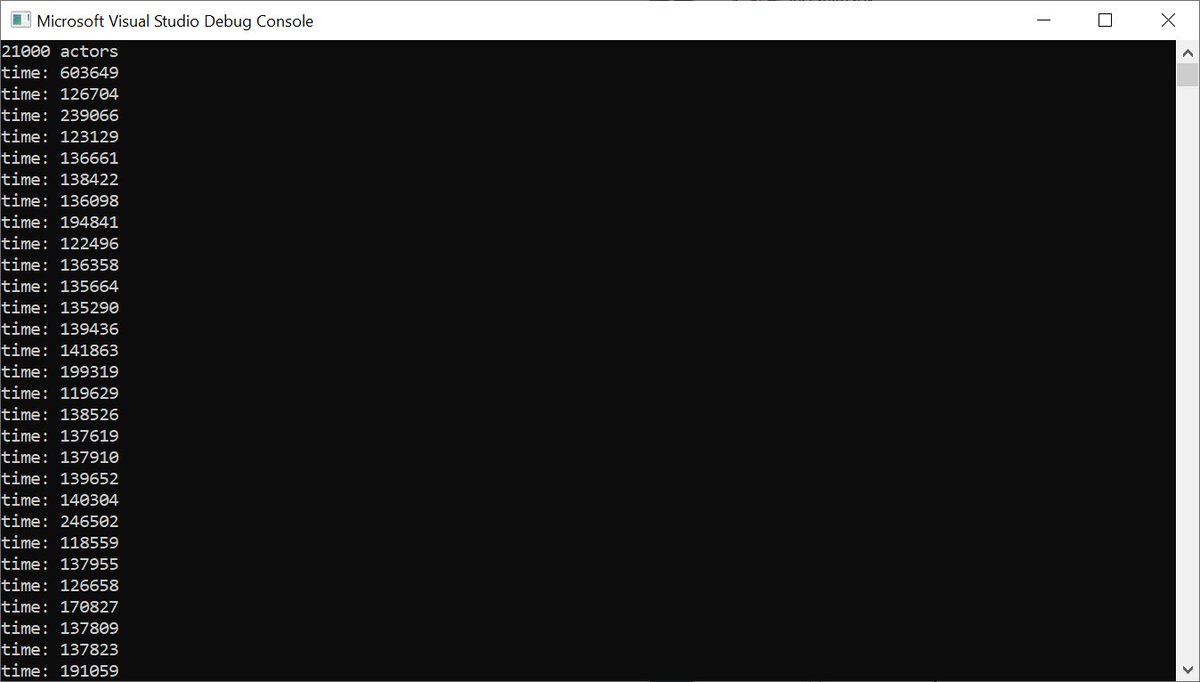
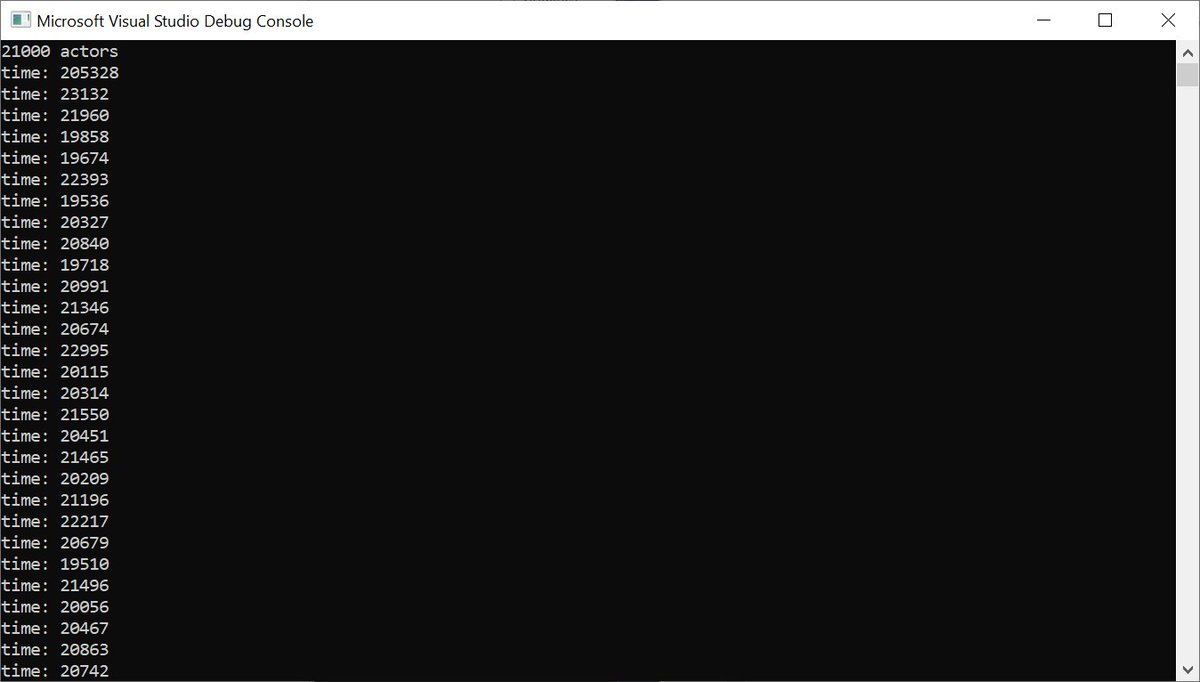
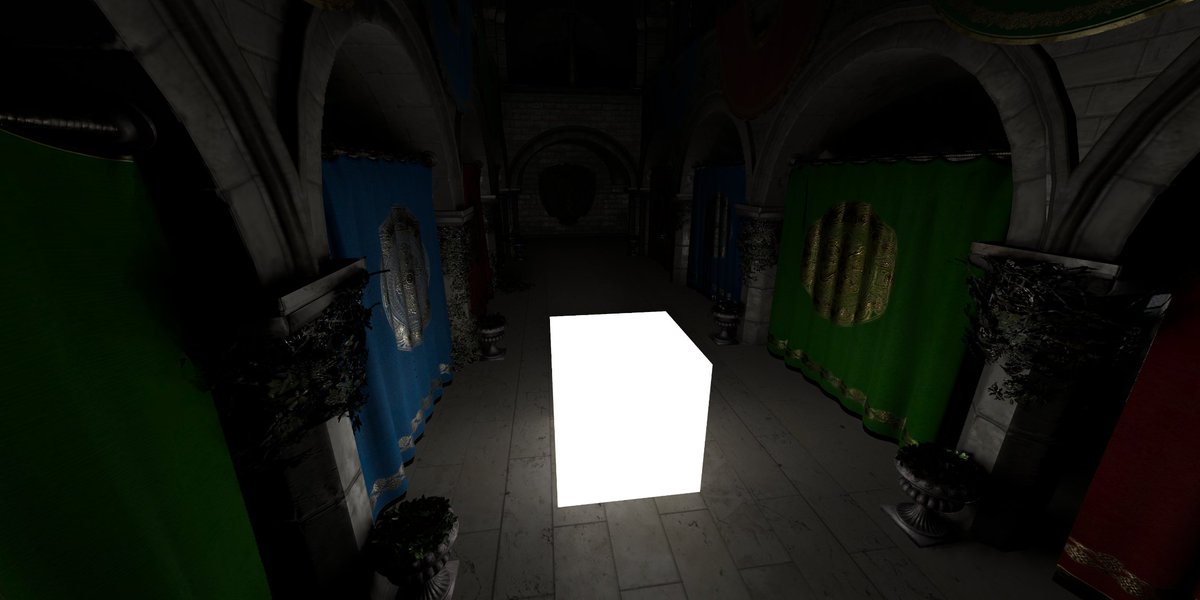
@leonard_coder @EzeroGames FWIW just commenting out the rendering part makes the snippet significantly faster. There could be further gains by tweaking the settings but I can confirm that rendering takes a large part of the frame time.
Pierre Terdiman tweet mediaPierre Terdiman tweet media
English
2
0
0
215
Pierre Terdiman
Pierre Terdiman@PierreTerdiman·
The comparison to the PhysX snippet is misleading, as the rendering overhead there is massive for that amount of objects. Still, that does not change the conclusion. youtube.com/live/ucRukZM0d…
YouTube video
YouTube
English
1
0
9
2.4K
Element Zero
Element Zero@EzeroGames·
@leonard_coder @PierreTerdiman That number came from just dividing the frame time of AVBD by that of physx for the 20k scene, which was about 50x. Though that's a good point about the rendering overhead. I guess I incorrectly assumed the rendering overhead was minimal in the physx sample
English
2
0
1
116
Arnaud Carré
Arnaud Carré@leonard_coder·
@PierreTerdiman they claim 50x faster than PhysX, I'm really confused. 50x factor seems really really suspicious to me. Any clue?
English
1
0
1
342
Element Zero
Element Zero@EzeroGames·
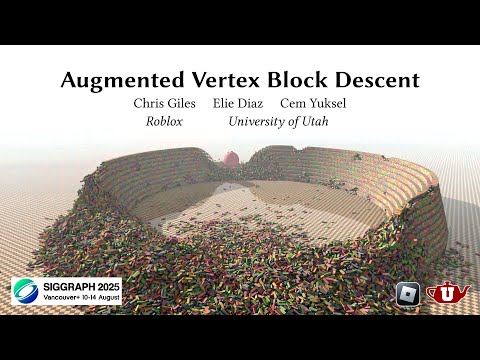
If you are attending Siggraph this year, please come see our talk later today on Augmented Vertex Block Descent (AVBD). We will also be showing a live demo at Real Time Live shortly after!
English
0
0
13
432
Element Zero
Element Zero@EzeroGames·
@MichelVandegaer No 3D is not really much more difficult, in terms of the AVBD solver. Mainly it's collision detection that is a hassle. I may work on a minimal 3D version of this when I have more time after Siggraph, if nobody else has already made one by then.
English
0
0
3
95
Michel Van de gaer
Michel Van de gaer@MichelVandegaer·
@EzeroGames Cool! Any plans for a 3D version or is that a too big leap, and does it make things far more complex?
English
1
0
0
93
Element Zero
Element Zero@EzeroGames·
Added post stabilization to the AVBD example implementation. This removes one of the tuning parameters, which should help make implementing the method a little easier: github.com/savant117/avbd…
English
2
4
37
1.8K
Element Zero
Element Zero@EzeroGames·
@DevPlus31 Looking at the code, it has written a PBD solver, not AVBD. Be careful with these LLMs!
English
2
0
6
199
Element Zero
Element Zero@EzeroGames·
@marcinignac @Cody_J_Bennett Looks great! I'm very curious how crisp the shadows are (tough to tell with this scene). I guess it depends on the probe resolution
English
0
0
1
65
Sammy
Sammy@mmm_wafflez·
@EzeroGames When you set the gravity to a value close to 0 the scene will become empty and you need to reset it to continue. Just a small bug with the demo I assume.
English
1
0
0
173
Element Zero
Element Zero@EzeroGames·
@SunsetLearn Everything including spatial data structures are built and managed on the GPU. CPU is doing basically nothing!
English
0
0
2
108
Adrian Sanchez 🎮
Adrian Sanchez 🎮@SunsetLearn·
@EzeroGames Really excited for these GPU-based parallel sim solvers. Did you guys run the benchmarks in the paper with a pure GPU implementation and nothing else, or was this augmented with spatial hierarchy checks for acceleration (BVH or otherwise)?
English
1
0
0
127