
The Tweets™ retweetledi
The Tweets™
35.4K posts


The Tweets™ retweetledi

The US-Iran negotiations have reached a deadlock. Personally, I believe that now is the time when both sides are relatively most willing for China to play a role. However, if either the US or Iran wants China to help push to break the deadlock, in addition to asking China to persuade the other side, they should also respect China’s rational suggestions. It is unrealistic if both sides want Beijing to pressure the other side unilaterally.
Think about it: the US carried out so many bombings, and Iran blocked the Hormoz Strait so tightly, yet neither side forced the other to give in. In this situation, I believe China’s ability to persuade either Iran or the US unilaterally is clearly limited. Therefore, if China wants to play a role, both sides need to show a willingness to make compromises.
English
The Tweets™ retweetledi
Watch this space:
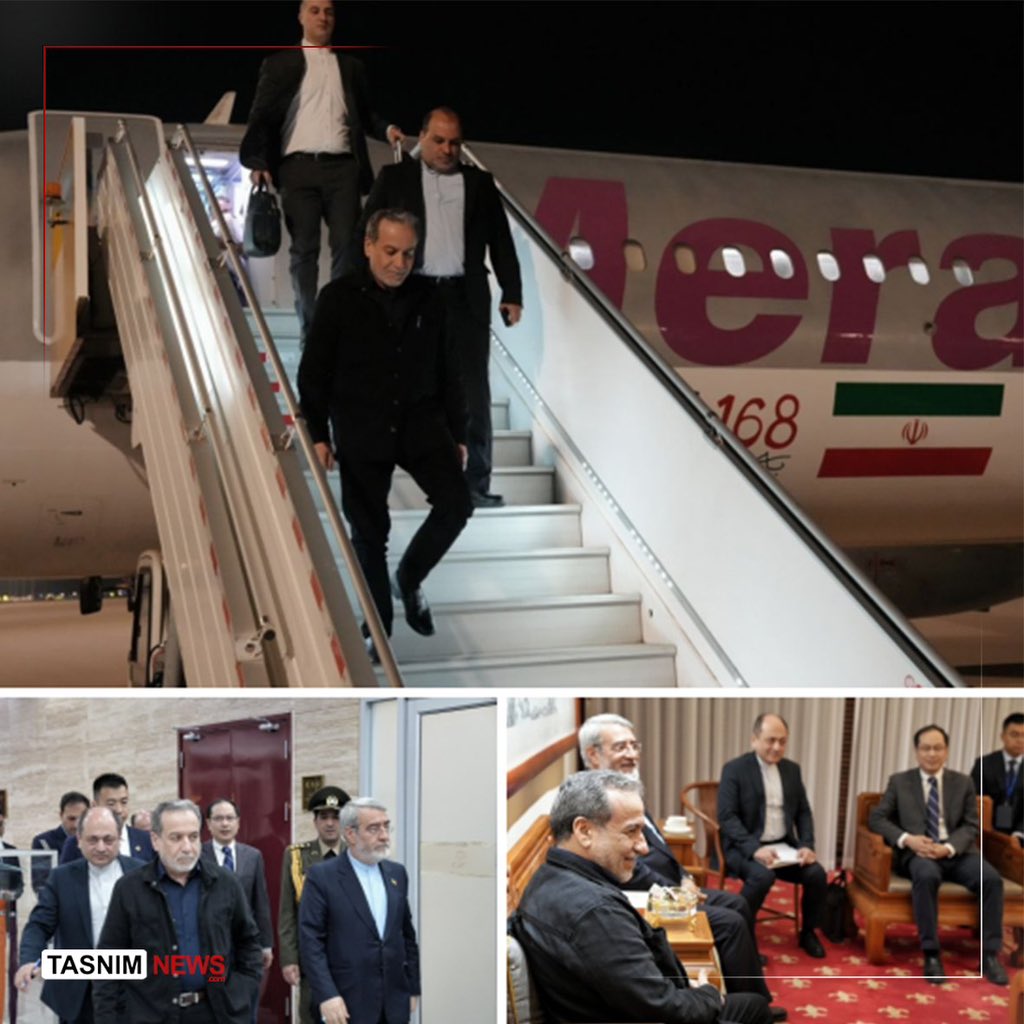
Ahead of Trump's summit in Beijing - already once delayed due to Trump's Iran war - Iranian Foreign Minister Abbas Araghchi will arrive in Beijing today to meet his Chinese counterpart.
English
The Tweets™ retweetledi

Araghchi’s visit to Beijing on May 6—just a week before the Xi–Trump summit—signals that Iran may have moved to the center of US-China strategic bargaining. There is a real possibility that the mid-May meeting will not only further stabilize Sino-US bilateral ties under top-level strategic guidance (元首战略引领), but also help accelerate a resolution of the Iran conflict. It has been some time since the city of Beijing has carried such geopolitical weight.
CHINA MFA Spokesperson 中国外交部发言人@MFA_China
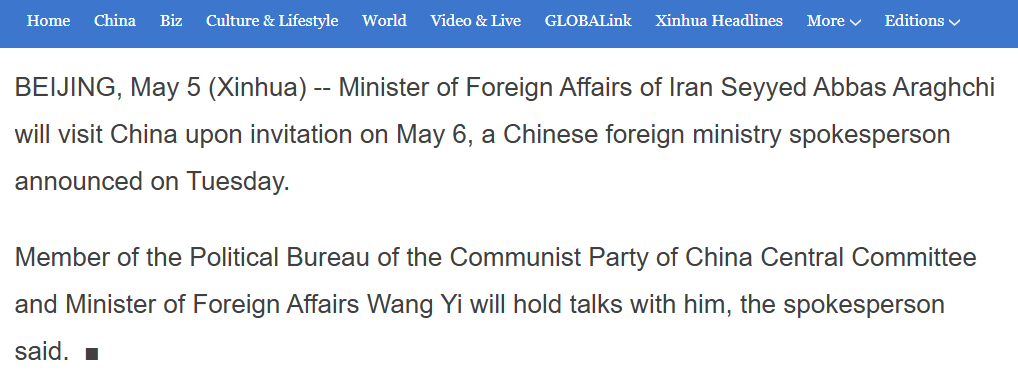
Minister of Foreign Affairs of Iran Seyyed Abbas Araghchi will visit China upon invitation on May 6. Member of the Political Bureau of the CPC Central Committee and Minister of Foreign Affairs Wang Yi will hold talks with him.
English
The Tweets™ retweetledi

石破茂ちゃん『高市総理を選んだ以上、国民には最後まで責任を取って頂く必要がある』 tweetsoku.news/2026/05/04/%e7…
日本語
The Tweets™ retweetledi

In Monday’s meeting with Australian counterpart Anthony Albanese, Japanese PM Sanae Takaichi advocated the "free and open Indo-Pacific" vision and sought closer cooperation on energy and critical minerals. She adopted the same strategy during her Vietnam trip. Such maneuvers have drawn criticism from Chinese experts, who said they are deliberate ploys to contain China’s influence and forge exclusive regional blocs. globaltimes.cn/page/202605/13…

English
The Tweets™ retweetledi

Indonesia, Japan sign defence cooperation agreement reut.rs/4eqDBsy reut.rs/4eqDBsy
English
The Tweets™ retweetledi

🩸 HUGE WARNING:
🇺🇸 Warren Buffett says that we have never had people in a more gambling mood than now
He warns that the US dollar could collapse and admitted he doesn't understand most of the stock market anymore.
$380,000,000,000 in cash is his answer because he believes things are about to get MUCH worse.
95yo man who has survived every crash, every war, every crisis of the last six decades just told you the market is a casino...
English
The Tweets™ retweetledi

A lot of the responses to this image have used it to argue that China had the technology to explore the world, chose not to, and thereby missed the great age of European expansion through cultural sclerosis or bureaucratic timidity. The argument has the comparative outcome right, but the structural picture it implies is wrong, and the actual story is more interesting than Twitter's little morality play would suggest.
Zheng He was a Muslim eunuch admiral of the Yongle Emperor of the Ming dynasty, who between 1405 and 1433 (the original poster say "14th century", which is wrong) led seven enormous diplomatic-tributary expeditions across the Indian Ocean to Southeast Asia, India, Arabia, and the East African coast. The voyages involved fleets of over 250 ships and 27,000 personnel, with the largest treasure ships running probably 200 to 250 feet long, several times larger than anything contemporary Europe was building.
The purpose wasn't commercial. The voyages were prestige projects designed to enroll foreign rulers in the Ming tribute system, with the Chinese state distributing more wealth in gifts than it received back. They projected the Yongle Emperor's status as the cosmic center of a world order that extended to the African coast, and they were one element in his broader program of grand imperial assertion that included the construction of Beijing as the new capital and the campaigns against the Mongols.
After Zheng He's death on his seventh voyage, the program was discontinued. The largest treasure ships were broken up, the shipyards were closed, and the technical knowledge of building vessels at that scale was lost within a generation. The standard explanation for this is that Confucian officials, suspicious of foreign contact and hostile to the eunuchs running the program, persuaded the emperor to abandon it.
The actual reasoning, though, was less ideological. The voyages cost enormous sums and did not produce an economic return commensurate with their cost. The empire's strategic threat lay overland on the Mongolian steppe, where naval power was useless, and the post-Yongle state was already running deficits the agricultural tax base could not sustain. The bureaucracy that argued against the voyages was making a budgetary case rather than a cultural one. The Tumu Crisis of 1449, in which the emperor was personally captured by Mongols at a battle the Ming should have won, vindicated the people who had argued that the empire's military attention needed to be on the steppe.
The deeper question is why the Ming did not subsequently develop a global navy and colonize the world the way the European states would. The answer is structural rather than cultural. The European maritime expansion was driven by Ottoman closure of land routes to Asia, by the search for precious metals to fund European debt, by Christian missionary imperatives, and above all by competitive pressure among rival European states forced to match each other's overseas capabilities.
None of these conditions obtained in the Chinese case. China already had access to the goods Europeans were crossing the oceans for. It had no debt crisis overseas gold could solve. It had no missionary religion. And it had no rival of comparable resources whose maritime expansion would have forced China to respond. For the Ming to have undertaken European-style colonization would have been the strategic equivalent of Rome at its height pivoting to Atlantic exploration. The technology was available but the incentives were not.
The framing that China was sclerotic for not colonizing the world treats European maritime imperialism as the default trajectory any healthy civilization would have taken. The reverse framing is at least as defensible: European colonization was the response of small, capital-poor, militarily-pressured peripheral states under specific competitive and ideological conditions, with consequences the responding states themselves often could not predict or control. China's continental imperial form, sustained for two thousand years across multiple dynasties, is the historical norm. European maritime imperialism is the historical anomaly. The Ming made a defensible decision to remain the historical norm.
DaVinci@BiancoDavinci
14th century Chinese explorer Zheng He's ship compared to Columbus's.
English
The Tweets™ retweetledi
Israel's mass slaughter in Gaza, enabled by the US, was a moral outrage. And now, as the @nytimes reports, Israel is applying the Gaza model in Lebanon -- and once again we Americans are enabling this moral catastrophe. nytimes.com/interactive/20…
English
The Tweets™ retweetledi
What China just did with the blocking statutes against U.S. extraterritorial sanctions sets quite a major precedent, probably the financial equivalent of what happened with rare earths last year (in the sense that this is China taking a major step to push back against a U.S. hostile measure as opposed to taking it on the chin).
It's a little complex but, to start with, what many people ignore (and will probably be surprised by) is that - by and large - Chinese companies and financial institutions have largely complied with extraterritorial U.S. sanctions.
Anecdotal story on this: I know for a fact, because I personally know the person, that a very famous guy (whose name I won't reveal but that everyone of you would know) sanctioned by the U.S. was in China recently and tried to exchange money at the counter of a random Chinese bank. Just simply exchange dollars for a Chinese yuan, in mainland China. And he was refused, because he is sanctioned by the U.S. - despite the fact that China as a country has absolutely no problem with the person.
This goes to illustrate just how much goodwill China extended to the U.S. on this - a Chinese bank, in China, refusing to serve someone China has no problem with, just to comply with U.S. extraterritorial sanctions.
It also goes to illustrate why this blocking order marks such a sharp departure.
What triggered it is not new sanctions by the U.S. but recent efforts under the so-called "Operation Economic Fury" to dramatically ramp up enforcement of existing sanctions on Iran.
The U.S. notably issued at the end of April alerts to financial institutions worldwide - including in China - on "the sanctions risks associated with independent 'teapot' oil refineries in China, primarily in Shandong Province, given their continued role in importing and refining Iranian crude oil" (home.treasury.gov/news/press-rel…)
Even more importantly, they also specifically went after Hengli Petrochemical Dalian (home.treasury.gov/news/press-rel…), one of China's largest private refineries, with 400,000 barrels per day capacity and a parent company (the Hengli Group) that's a Fortune Global 500 company.
In effect, what the U.S. extraterritorial sanctions mean is that Hengli - and all other Chinese 'teapot' oil refineries being targeted - is cut off from the dollar system, and any bank, insurer, or trading partner anywhere in the world - including in China - that deals with them risks being cut off too. Which is obviously a major hostile move by the U.S. against China (and, of course, Iran).
Except that China, this time around, is not having it.
Since 2021 they've had regulations ("Measures to prevent the improper extraterritorial application of foreign laws and measures", mofcom.gov.cn/zcfb/zhzc/art/…) that gives the Chinese government power to formally prohibit compliance with foreign sanctions, and that, since this April (morganlewis.com/pubs/2026/04/c…) are also extraterritorial in nature.
In effect what these regulations - and their April addendum - say is that if you comply with U.S. extraterritorial sanctions by cutting off a Chinese company, you are violating Chinese law. Any entity - Chinese or foreign - that refuses to deal with a sanctioned Chinese company because Washington told them to can be sued in Chinese courts, fined by MOFCOM, and since April, placed on a 'Malicious Entity List' with asset freezes and trade restrictions.
In a nutshell on one side you have the U.S. saying "cut them off or we cut you off" and now China says "well, if you do cut us off we're going to be real nasty with you, in China and potentially beyond."
These regulations were - until yesterday - purely theoretical: they've never actually been applied. But, yesterday, China's MOFCOM made it crystal clear this time is different: they used a statement with a triple negative, saying the U.S. sanctions "shall not be recognized, shall not be enforced, shall not be complied with" ("不得承认、不得执行、不得遵守", mofcom.gov.cn/zwgk/zcfb/art/…).
In effect you now have companies that are in the middle of this - for instance financial institutions serving Hengli - caught in quite a bind: face U.S. or Chinese hostility. It's a no-win, they need to choose a camp on this.
Concretely speaking, given that the overwhelming majority of companies affected are operating inside China, they'll obviously choose the China side.
The real question therefore is: Is the U.S. ready to act on its threat and cut off Chinese banks or other institutions that keep servicing these refineries?
Because that probably means sanctioning major Chinese financial institutions, which is a whole different level of escalation. The moment the U.S. designates a major Chinese bank for dealing with Hengli, this stops being about Iranian oil and becomes a direct financial confrontation between the two largest economies on earth, which is a much bigger deal with probable consequences for the entire global financial system.
Or will the U.S. back off, meaning China would have effectively caught their bluff, showing that extraterritorial sanctions are a lot of bark but not a lot of bite?
We'll know in the next couple of weeks I guess.
One thing is sure though: whatever happens with these refineries, the broader damage is done. China used to extend remarkable goodwill on sanctions compliance - voluntarily cooperating with extraterritorial sanctions inside its own borders even though it had no legal obligation to respect them. That goodwill has been spent.
And, from a U.S. standpoint, a China with less goodwill vis a vis U.S. financial hegemony is undoubtedly a far bigger issue than a few teapot refineries buying Iranian oil.
Drop Site@DropSiteNews
🇨🇳 China Invokes Blocking Statute for First Time China’s Ministry of Commerce has for the first time activated its 2021 Blocking Rules, ordering all Chinese firms and individuals not to comply with U.S. sanctions targeting five independent Chinese oil refineries accused of purchasing Iranian crude. Beijing called the U.S. measures, imposed under two executive orders, an “unjustified” and “improper” use of extraterritorial law. The move puts multinational companies operating in both markets in direct legal conflict: compliance with U.S. sanctions now risks violating Chinese law, and vice versa. Global banks and firms with dollar exposure face secondary sanctions risk if they continue dealing with the affected refineries. Analysts describe the order as a significant step toward competing legal frameworks for global trade, accelerating the path to potential economic “decoupling” between the two powers.
English
Çin'i de mi Türkler kurdu?
Çin liderinin DNA'sında Türk çıktı.
Çin Tang Hanedanı kurucusunun atasısının Şato Türklerinden olduğu belirlendi.
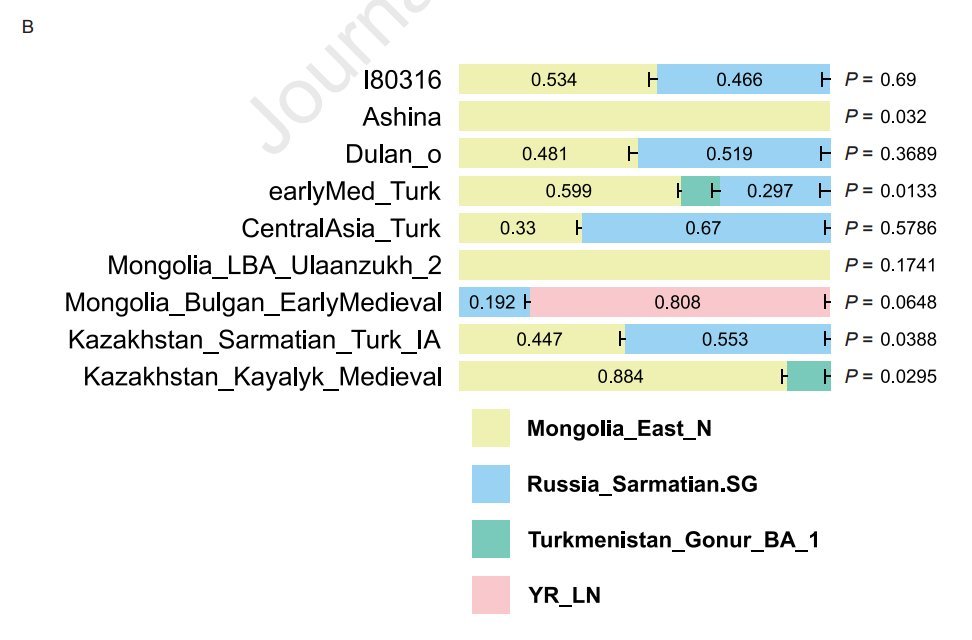
Tang hanedanı mensubu Li Keyong 李克用'in DNA'sı bulundu. Kendisi son Tang Hanedanı'nın kurucusu İmparator Zhuangzong 後唐莊宗 Li Cunxu 李存勗'in babasıdır. Li Keyong'un erkek kromozomu haplogrubu R1a1a1b2∼AM01870'dir.
Li Keyong, Tang Hanedanı döneminde Çin'e göç eden Batı Türkleri konfederasyonundan Şatuo Türkleri'nin lideriydi. Oğlu Li Cunxu, Tang Hanedanı'nı kurdu. Genomik profili, yaklaşık %53.4 Eski Kuzeydoğu Asyalı (East_N) ve %46.6 Batı Bozkır (Russia_Sarmatian.SG) olarak modellenmiştir.
Li Keyong, Batı Avrasya babalık soy hattını (R1a1a1b2∼AM01870) ve Doğu Bozkır annelik soy hattını (C4a1a + 195) taşıyordu. Günümüzde tahmini 30-40 bin Çinli erkek, Li Keyong'un erkek kromozomu haplogrubu R1a1a1b2∼AM01870'i taşıyor. Yani Türk kanı taşıyorlar.

Türkçe
@NeoconBorys Humiliated? Ming burn their own ships and hole up in their land for several centuries.
During that period, British made progress while Ming/Qing stagnate.
English

All that just to get humiliated by the British Royal Navy 😭😭😭
DaVinci@BiancoDavinci
14th century Chinese explorer Zheng He's ship compared to Columbus's.
English
The Tweets™ retweetledi

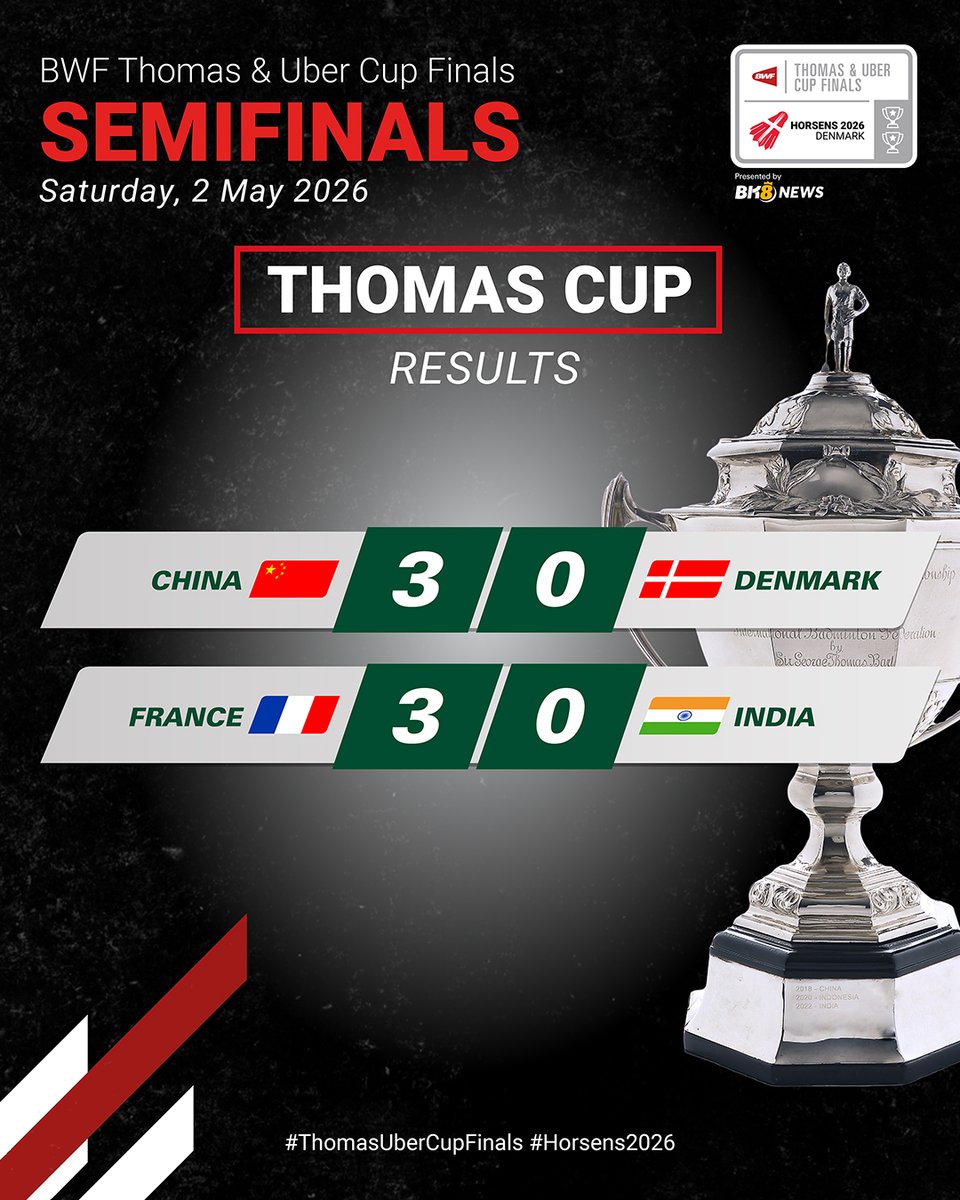
Fun fact: terakhir kali China ngga dapet medali di Thomas Cup itu saat Shi Yu Qi di-skors. Dari dulu tumpuannya di dia. 😂
Putra Tegar@putrategar2709
Sama halnya kayak China. China memang unggulan 1 tapi kalo dari materi tim, China saat ini tuh jauh dibanding China zaman Lin Dan, Fu Haifeng, dan kawan-kawan. Makanya bisa dibilang kemampuan negara-negara di Thomas Cup 2026 ini sebenarnya merata dan sejajar. Tapi kenapa China tetap menangan? Itu karena Shi Yuqi dan Liang/Wang yang main di dua laga awal selalu solid bertugas sebagai pembuka jalan kemenangan. Kembali lagi, soal mental bertanding di beregu jadi kunci. #ThomasCup #ThomasUberCup #ThomasUberCup2026
Indonesia
The Tweets™ retweetledi


English
The Tweets™ retweetledi

⚡️BREAKING: China's Ministry of Commerce blocks U.S. sanctions targeting five refineries
The five Chinese refineries are the main buyers of Iranian oil
They will now be able to continue purchasing Iranian oil, having secured the Chinese government's protection

English
The Tweets™ retweetledi

Huge news in China today since Bessent actually sanctioned larger entities this time. Hengli is a huge deal. China is entirely willing to fight economic war over this from what I can see.
I will now talk about why Hengli is a big deal & why Trump admin stepped over the line.

Drop Site@DropSiteNews
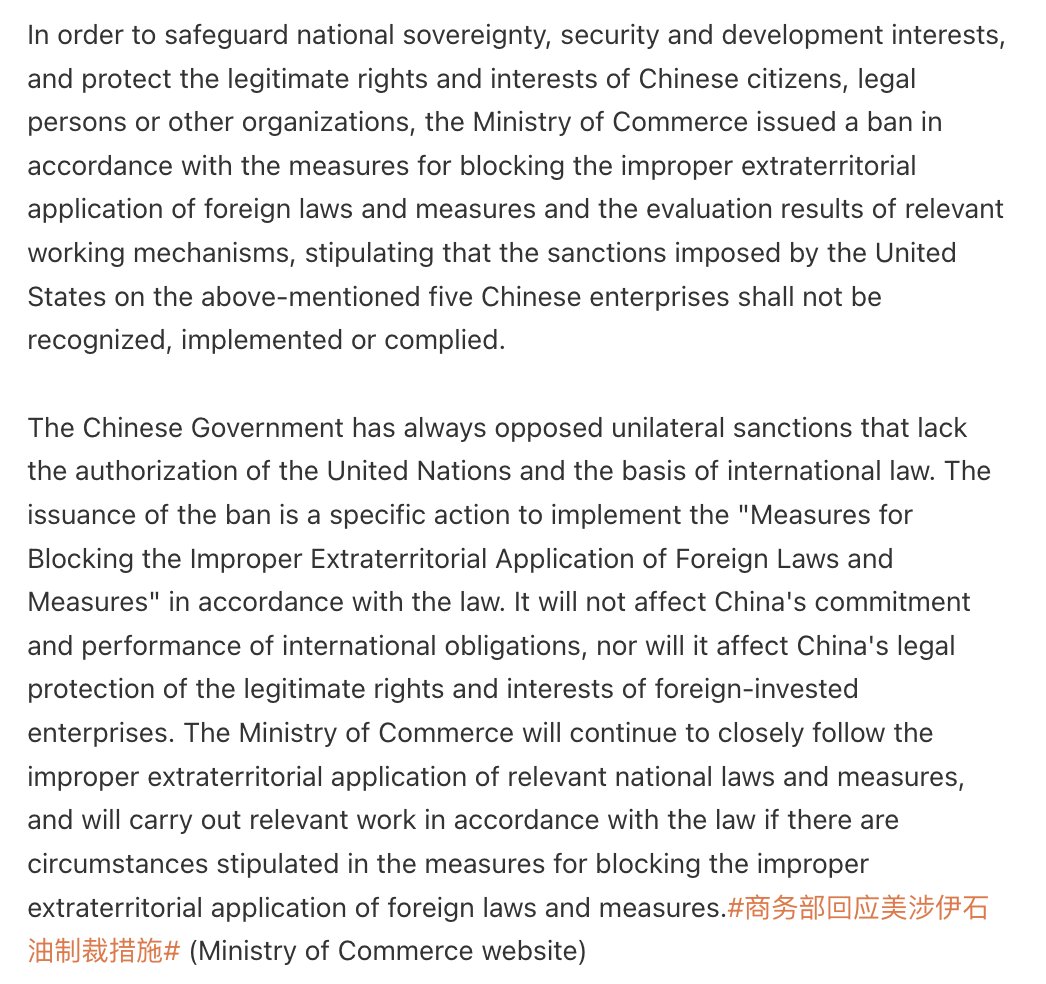
🇨🇳 China Invokes Blocking Statute for First Time China’s Ministry of Commerce has for the first time activated its 2021 Blocking Rules, ordering all Chinese firms and individuals not to comply with U.S. sanctions targeting five independent Chinese oil refineries accused of purchasing Iranian crude. Beijing called the U.S. measures, imposed under two executive orders, an “unjustified” and “improper” use of extraterritorial law. The move puts multinational companies operating in both markets in direct legal conflict: compliance with U.S. sanctions now risks violating Chinese law, and vice versa. Global banks and firms with dollar exposure face secondary sanctions risk if they continue dealing with the affected refineries. Analysts describe the order as a significant step toward competing legal frameworks for global trade, accelerating the path to potential economic “decoupling” between the two powers.
English
The Tweets™ retweetledi

English
The Tweets™ retweetledi

The Tweets™ retweetledi
On May 2, China's Ministry of Commerce issued a ban, blocking US sanctions against five Chinese petrochemical companies. The Ministry of Commerce's ban requires that the US sanctions against the five Chinese companies be "not recognized, not implemented, and not complied with."
How should this be interpreted?
I believe this is first and foremost a declaration of the Chinese government's strong opposition to and resistance against the illegal US sanctions against Chinese companies. The US unilateral sanctions against Iran were imposed without the consent of the United Nations, and China has no obligation to comply, nor will it comply in the future.
Secondly, the Ministry of Commerce is fulfilling its obligation and responsibility to protect domestic enterprises, providing a "legal shield" to reduce losses for companies sanctioned by the US. This ban is a message to all companies worldwide that are expanding into the Chinese market: they should abide by Chinese regulations, not cater to US sanctions. Any company that follows the US sanctions against these Chinese companies will face legal risks in China.
This is both a legal countermeasure and a reciprocal countermeasure.
English