
Sabitlenmiş Tweet
François Pacôme Simonetti
354 posts


François Pacôme Simonetti retweetledi

François Pacôme Simonetti retweetledi

François Pacôme Simonetti retweetledi

Most product managers believe they manage the product.
What they actually manage is the experience people have with the product.
One can quickly shift from believing they're doing well to having trouble sleeping once they see this.
English
François Pacôme Simonetti retweetledi
Pour une fois un article qui ne raconte pas n'importe quoi à propos de l'emploi et de l'intelligence artificielle. Bien au contraire, il souligne que ce qui change c'est la structure du travail et des tâches dont il est composé, mais que pour l'instant, il n'y a pas de réseau objective de croire à la disparition du travail. Certes et incontestablement, les primo-accédants au marché du travail en plus de difficultés à se placer : c'est le cas en France comme aux États-Unis. Certes également des métiers entiers vont disparaître, mais les décompositions effectuées, métier par métier permettent d'envisager que ces situations soient minoritaires. telos-eu.com/fr/ia-emploi-i…
Français
François Pacôme Simonetti retweetledi

@clairevo I believe that.
Yet, it has to be proven at large scale.
There is a limit to what a human mind can process and fully own.
Once this limit reached, I still believe the coordination patterns observed centuries after centuries will be reproduced.
English

"PR >> PRD"
Yep. the handoff era is over. but it's not just the roles collapsing. it's the tools.
Every PM tool was built for a world where humans did the coordination.
tickets
docs
roadmaps
presentations
all of that was scaffolding for work AI now does faster and cheaper. slapping AI on top doesn't fix it. The foundation is already out of date.
I build @chatprd every day knowing i have to replace its core before something else does: claude code, another startup, something i haven't imagined yet.
Radical humility and endless paranoia are the only product strategies that make sense right now.
So sure. the PRD is dead.
But I'll kill it before you do.
Bilgin Ibryam@bibryam
PR >> PRD. The handoff era is over. → When opening a PR is faster than writing a PRD, AI changes how product gets built. The old roles start to collapse.
English
François Pacôme Simonetti retweetledi
You don't build accountability by increasing pressure.
You build it by increasing clarity.
Pressure, funny enough, decreases accountability. This is a fact.
English
François Pacôme Simonetti retweetledi

François Pacôme Simonetti retweetledi

François Pacôme Simonetti retweetledi
4. "What are your compensation expectations?"
• The high end of the band for this level
• I am concerned about the whole package
• I am keen to see how the interviews proceed in terms of fit
Don't throw out a number. And don't act like you wouldn't like their number either.
English
François Pacôme Simonetti retweetledi

François Pacôme Simonetti retweetledi

François Pacôme Simonetti retweetledi

The greatest pleasure in life is doing what people say you cannot do.
English
François Pacôme Simonetti retweetledi

If you can get people to be afraid and angry, and to blame all their fear and suffering (real or imagined) on others, they will stay loyal as long as you provide more targets for resentment, like a drug addict and a pusher. New targets, stronger doses.
English
François Pacôme Simonetti retweetledi

English

Indonesia
The greatest investment in Shark Tank history, the company is now worth over $300 million
English
François Pacôme Simonetti retweetledi

François Pacôme Simonetti retweetledi

Seeing some qs on what Gemini *is* (beyond the zodiac :). Best way to understand Gemini’s underlying amazing capabilities is to see them in action, take a look ⬇️
English
François Pacôme Simonetti retweetledi
I think PMs and product leaders are under-investing in generative AI fluency & building the hard skills necessary to future proof their careers.
Sure folks can mumble about semantic search or "agents" or chat as an interface, but could they sit down and really spec a great AI app?
Product teams and leaders are responsible for understanding customer problems & goals, scoping out potential solutions, and providing enough detail that their partner design and dev teams can build a predictably high quality solution that can be tested in the market.
But I think 9/10 PMs would flounder when asked to write a decent PRD for an "AI-powered" product feature. It's simply not enough to say something something LLM chat agent beep boop. Because these systems can be highly non deterministic, there's a whole other set of requirements that need to be considered and outlined in order to go beyond demo apps to reliable production releases.
Often when people present gen AI ideas to me in various contexts, I ask: "How would you ensure this will be a high quality experience across the breadth of use cases you're describing" and often, the response is punted to engineers -- "oh, I'll set the goal and trust engineers can figure it out." Or worse--"oh, no one minds a few hallucinations."
But the reality is, just like with other products, a PM has to be able to articulate sufficient detail in goals, outcomes, and user experience to match the execution of the product with the problem they're solving. For gen AI applications, this is going to include:
- prompt strategy, writing, and testing
- scoping agent tasks
- retrieval strategies
- context management
- feedback strategies
- unit economics
- security & prompt injection hardening
- model selection
- identifying and structuring sources for fine tuning
- chains & agent orchestration
- analytics & quality management
None of these concepts are sitting out there in your PRD template, and while these seem like technical concepts -- they're not exclusively for SWEs to figure out (unless, of course--and this might be a good thing--more SWEs lead product management as well as technical execution.)
My 2c is that the only way to quickly ramp on hard skills is to get hands on: not just building things but *thinking about how you would get a team to build that thing.* What are the "requirements"? What would you measure? How do you share specs for a non-deterministic experience? How do you design for trust?
It's super early, and I believe that product leaders that invest now in what I'll call "hard AI product skills" are going to be way ahead of the game for when these capabilities inevitably become table stakes for software companies.
Don't miss out!
English
François Pacôme Simonetti retweetledi
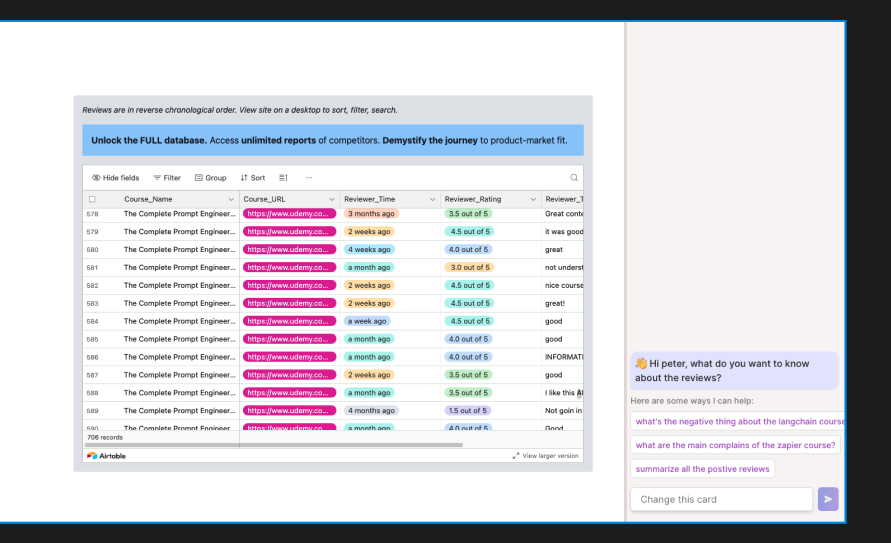
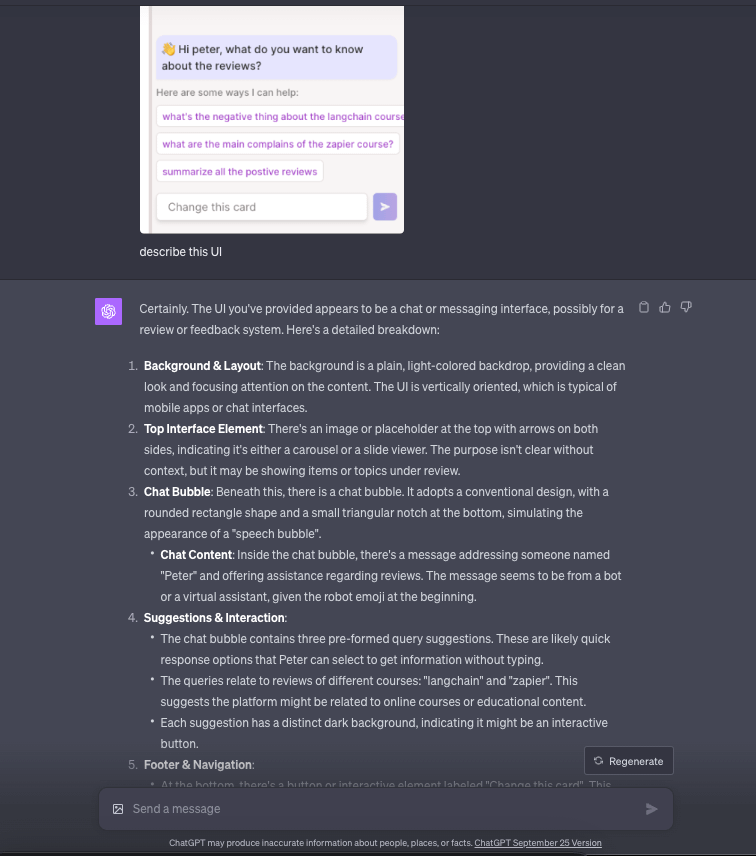
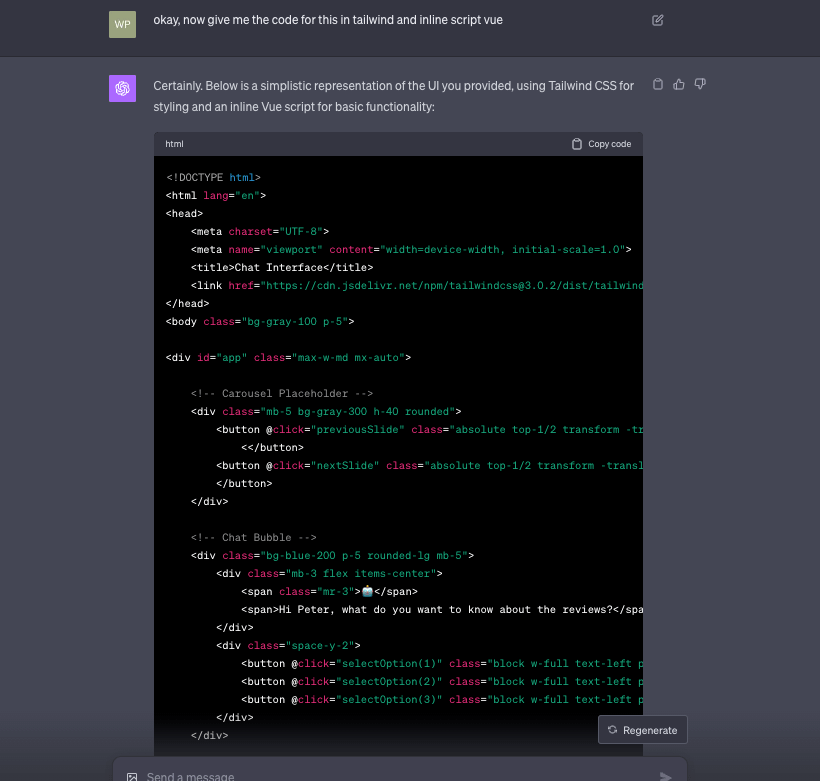
📸 New dev workflow w/ ChatGPT-Vision
1. Design in @figma
2. Ask ChatGPT to describe image
3. Tell it to convert to @tailwindcss :D
(kinda hit/miss design -> code but I think i couldve improved prompting)
English