FadeTheNoise

728 posts

FadeTheNoise

FadeTheNoise

@FadingTheNoise

27. Engineer and long term investor. Tracking my wealth building journey and giving opinions. Current holdings: $SOFI $AMZN $ASML $MSCI $MSFT $FTNT $MA

Katılım Mayıs 2025
195 Takip Edilen119 Takipçiler
Serenity
Serenity@aleabitoreddit·
The current bottleneck: Transformers/Switchgear. 

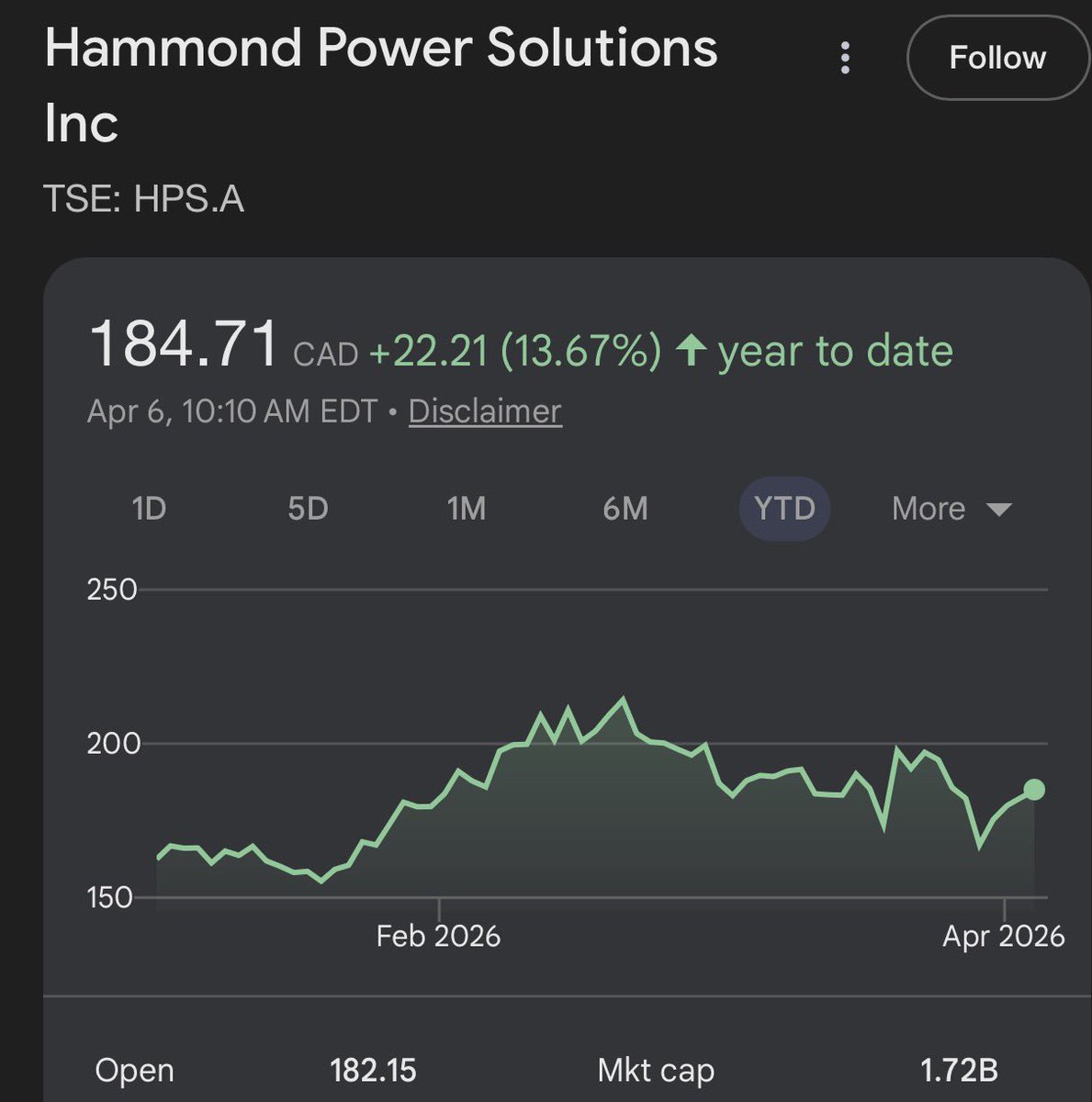
Trade Idea: Long Hammond (~2.2B CAD / ~$1.5B USD) at 184 CAD. They dominate the market for: -Transformers (dry, multi year bottleneck ~23% of market), -serve to switchgear (2-3Y bottleneck) -and manufacture liquid too (5Y, larger bottleneck) 
I personally anticipate components price hikes like NAND, as $AMZN, $MSFT and others compete for allocation. 

You might have seen: “Half of US data center builds have been delayed or canceled, growth limited by shortages of power infrastructure”… Then you go further:

“To address shortages… Canada, Mexico… became the biggest suppliers of high-power transformers for AI data centers to AI data centers”

Guess who is in Canada (Guelph).. Mexico (Monterrey 3 and 4)… and the US?

Hammond

Then here’s the reason the articles cite why hyperscaler DB buildouts are falling apart: 
 “Major reason behind these setbacks is the availability of key electrical components — such as transformers, switchgear”.  Institutions are probably looking at Powell, Eaton, and others… but little do they know? Companies like these actually buy Hammond’s transformers to put inside their own switchgear (“strong sales into data centres, switchgear manufacturers")

Their market share over the transformers market is actually pretty large (eg. ~23% dry).  
The most compelling signal:

-> 122% Y/Y 2025 backlog increase. And we can infer this to be 1B+ CAD.  Eg. company achieved 898m CAD in sales in 2025, capacity ceiling. Management said close of Q3 2025 orders were valued at 53% of the entire closing third-quarter backlog. Given that Q4 2025 revenue was 254 million and the backlog is "more than doubled," we can infer a total backlog value exceeding 1 billion CAD. Also: 
“Gross margin compression last year was due to the buildout of their Mexico facility, but both gross margins are expected to increase and the facility expansions are expectied to turn into accelerated revenue Q2 2026)” which is now.

Downside is if raw material costs (copper, electrical steel) spike again, but given this bottleneck, they can price hike. 

Personal FWD P/E estimates would be ~18-21 for 2026, <15 for 2027 from volume ramp. But I think it’s possible to hit single digit fwd P/E if they do price hikes mixed with hyperscaler emergency orders. But that might get a little mixed with the new acquisition. Regardless still looks cheap. 
 Just a TLDR:  
$AMZN, $MSFT, $META, $GOOGL, $ORCL datacenter are being bottlenecked because of a lack of transformers/switchgear.

Seems like markets missed this little player with large market share, despite backlog visibility and increasing revenue from capacity expansion coming online. I personally found it pretty compelling, so I went long. Just sharing my personal thoughts, of course DYOR before making any decisions yourself.
Serenity tweet mediaSerenity tweet media
English
94
53
681
260.5K
FadeTheNoise
FadeTheNoise@FadingTheNoise·
@cryptopunk7213 This is a wild take considering MSFT could just turn off this integration whenever they choose or charge a fee for it.
English
0
0
0
16
Ejaaz
Ejaaz@cryptopunk7213·
sorry but anthropic is cooking microsoft, how have they fumbled this so badly microsoft owns 27% of openai, they own the entire IP for chatgpt and STILL anthropic is out-shipping them: this week we got claude cowork for windows and now every 365 app works with claude oh and microsoft’s last 2 ai products are POWERED by claude. they literally called it “microsoft cowork” this is why openai is rediverting all resources to codex anthropic is automating the entire software stack, coding process and now apps.
Ejaaz tweet media
Claude@claudeai

Microsoft 365 connectors are now available on every Claude plan. Connect Outlook, OneDrive, and SharePoint to bring your email, docs, and files into the conversation. Get started here: claude.ai/customize/conn…

English
73
20
563
63.4K
FadeTheNoise
FadeTheNoise@FadingTheNoise·
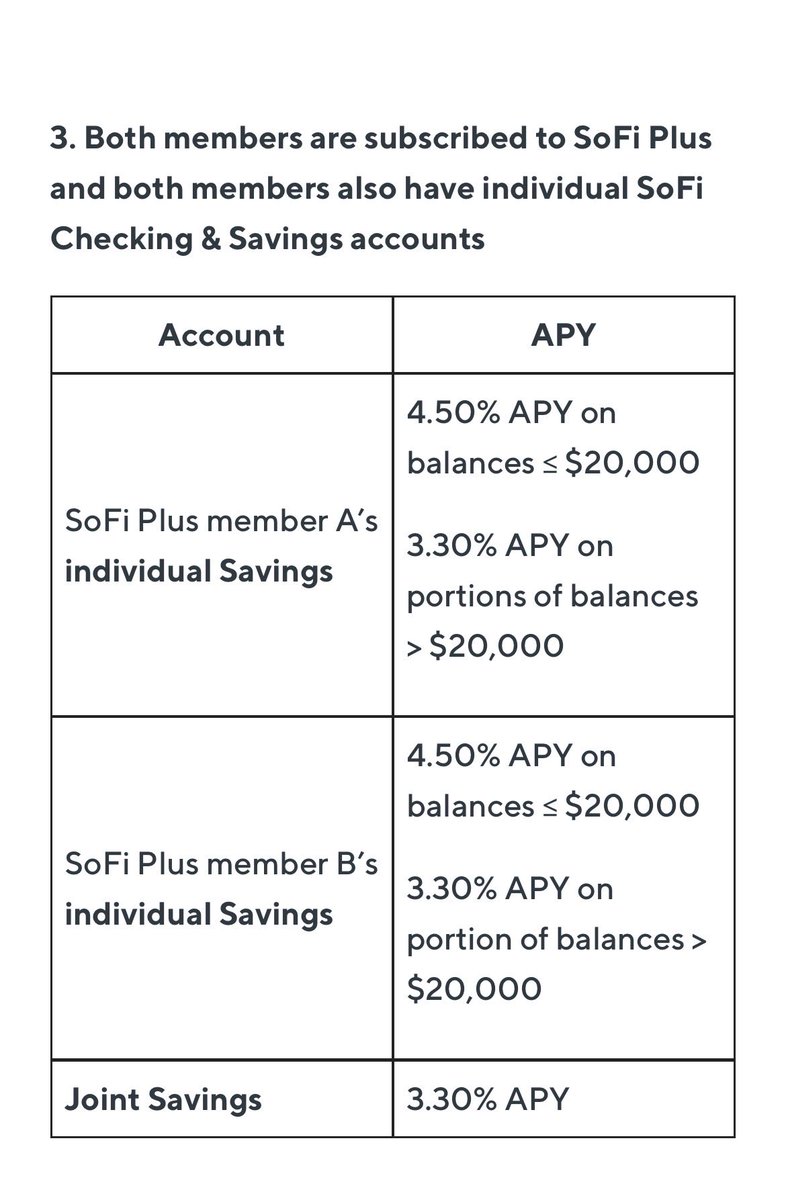
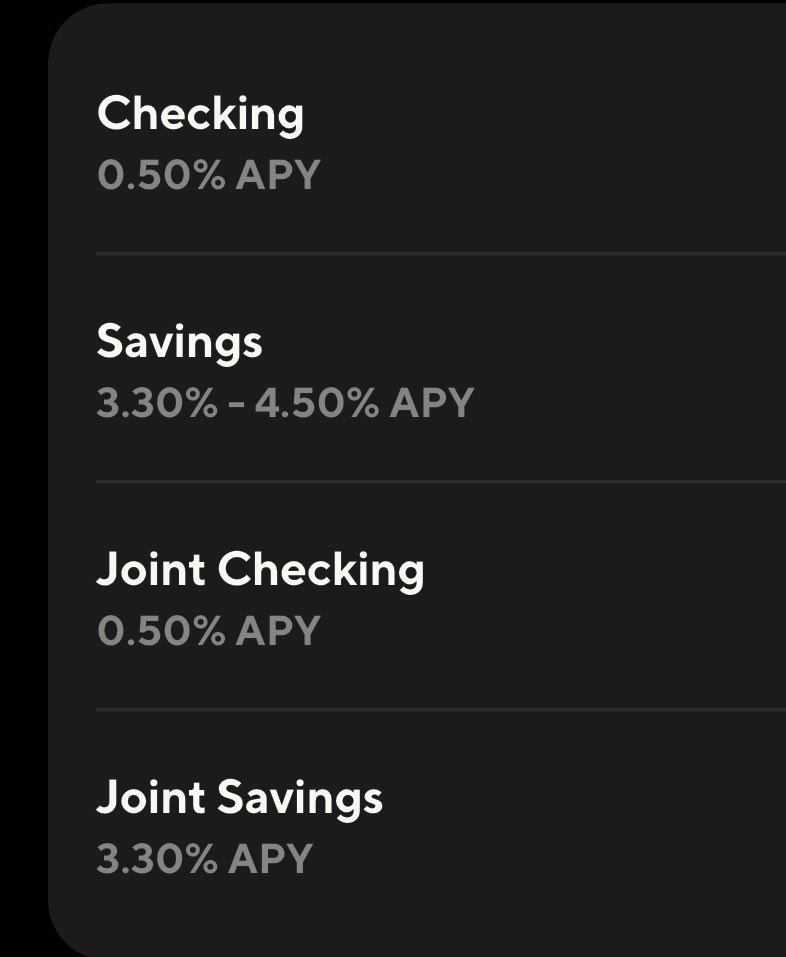
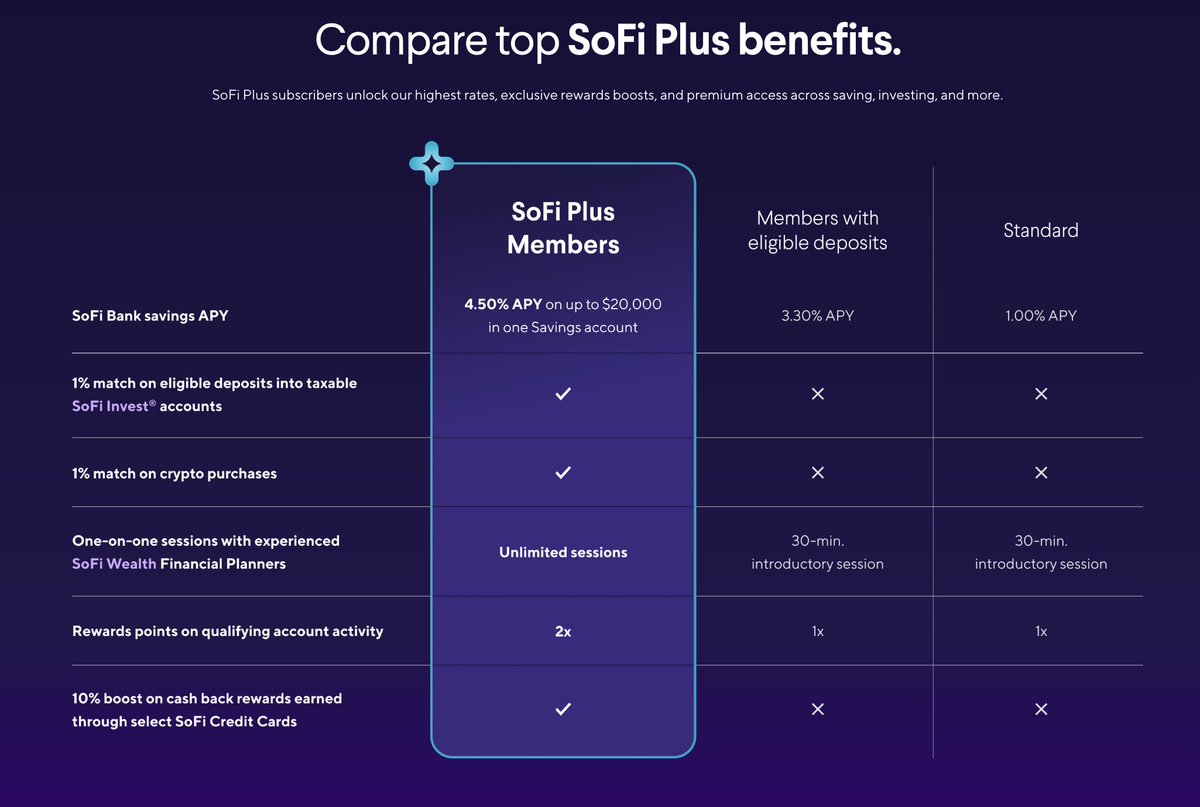
There is clearly a lack of thoughtful design in how joint accounts are handled alongside individual accounts. Here’s my situation: both my wife and I are subscribed to SoFi Plus ($10/month). We each have individual accounts, as well as a shared joint account. However, the 4.5% rate is only being applied to our individual savings accounts, while our joint savings account remains at 3.3%. Initially, I assumed this was an error. After reviewing the terms, it’s clear this is actually the intended behavior. Our individual accounts predate our marriage and are now only used for legacy connections that are difficult to update. These accounts hold minimal balances (less than $100). As a result, our only options are either to go through the time-consuming process of updating or disconnecting each of these legacy services so we can close the individual accounts, or to split our funds back into separate individual accounts just to capture the higher rate. Both options are unnecessarily cumbersome. A much simpler solution would be to allow users to designate which account receives the 4.5% rate and lock that selection in for the month. This feels like a clear oversight, and I hope it’s something that gets addressed. @DataDInvesting @SoFi @SoFiIR
FadeTheNoise tweet mediaFadeTheNoise tweet media
English
1
0
0
180
FadeTheNoise
FadeTheNoise@FadingTheNoise·
Just because something doesn’t make sense to you doesn’t mean it’s broken. If you can’t figure it out, the better move is to ask questions and learn from people who do understand it, not build a thesis around that gap and assume it’s broken. I don’t understand astrophysics, but I’m not about to short SpaceX because of it.
English
0
0
0
17
Bnewhard
Bnewhard@Bnewhard77·
@pwallacep7 @FadingTheNoise @Tim_Sweeney_TAR @chadlyrocks @anthonynoto @CNBC @CitronResearch @DataDInvesting @KerrisdaleCap @viceroyresearch @zerohedge @StockJabber @muddywatersre The abbreviated story: I came upon SoFi’s financial statements. I couldn’t understand and reconcile the loan valuation and earnings in a way that made sense to me. I’m the kind of person who will go down deep rabbit holes when I encounter something I can’t figure out. The end.
English
2
0
0
125
Timothy Sweeney
Timothy Sweeney@Tim_Sweeney_TAR·
That's good and will screenshot this. Try to be more objective and less disingenuous. If you reviewed my questions, and comments to Muddy Waters, why don't you reply in detail about how Im wrong about any of my legal conclusions And stop saying crap that I said that I never said. As you can see, in s could if your posts, I confirmeds that you were fairly accurate So what's the point of you lying about what I said. Also list your resume
English
2
0
1
143
FadeTheNoise
FadeTheNoise@FadingTheNoise·
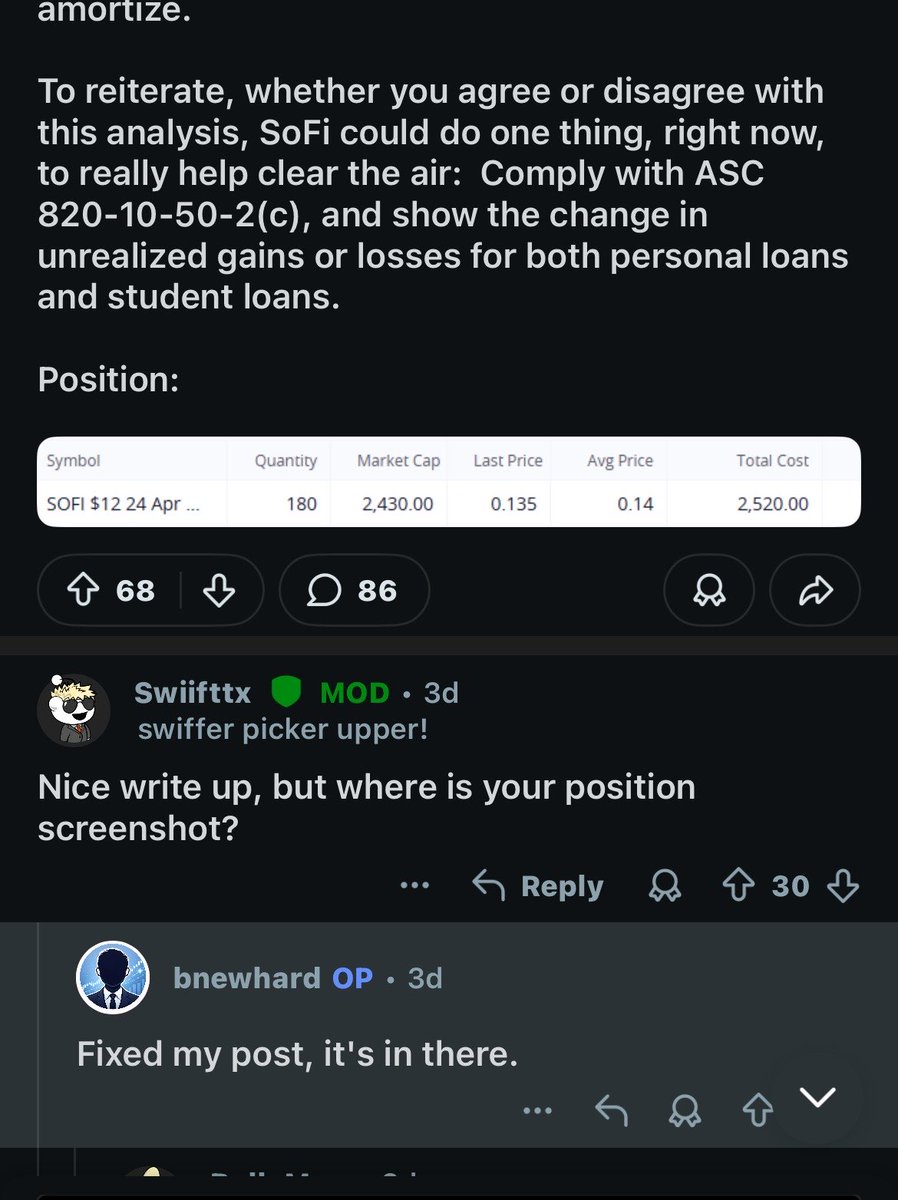
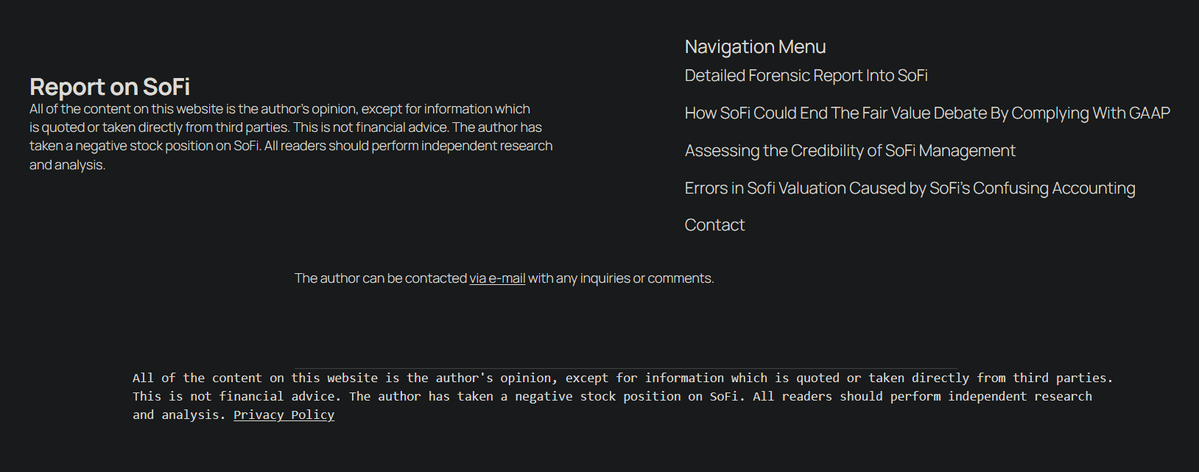
@Futurenvesting Here is the same account on Reddit referencing Enron and making pretty much the exact same arguments as the Muddy Waters Report 2 weeks before publication.
FadeTheNoise tweet mediaFadeTheNoise tweet mediaFadeTheNoise tweet media
English
0
0
3
424
Tannor Manson
Tannor Manson@Futurenvesting·
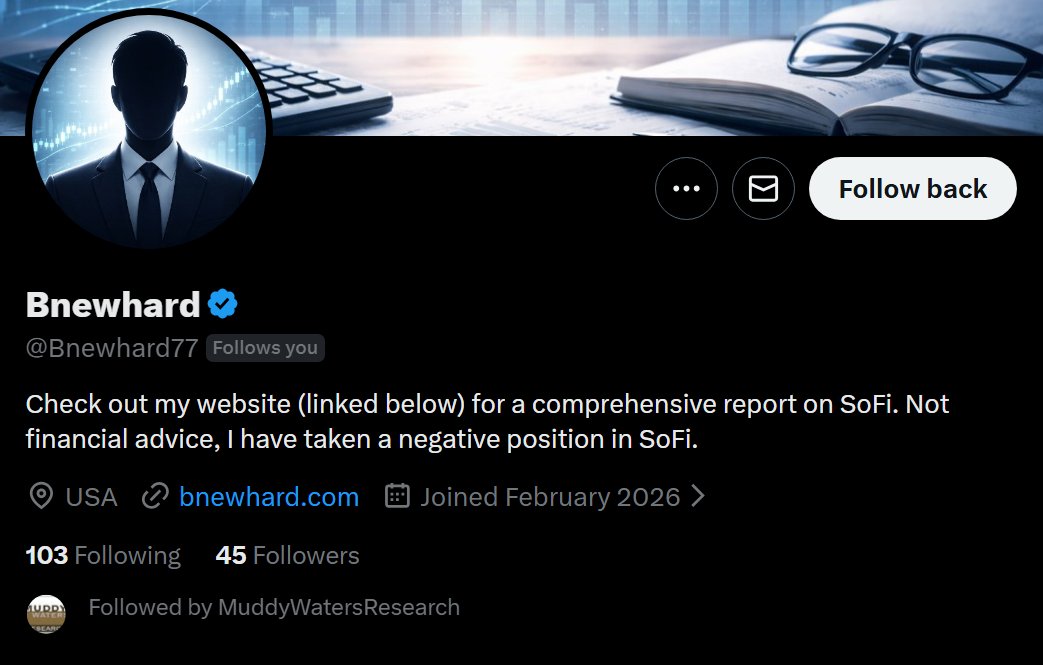
"Bnewhard77" drops a massive forensic short report on $SOFI out of nowhere after creating an X account in late February of 2026. Including detailed disclosures, a new email address, a new website, and the official Muddy Waters account already follows this brand-new profile. Carson Block’s birth year? 1977. You’re not fooling anyone, Carson. We see your burner account.
Tannor Manson tweet mediaTannor Manson tweet mediaTannor Manson tweet media
English
58
26
391
47.7K
FadeTheNoise
FadeTheNoise@FadingTheNoise·
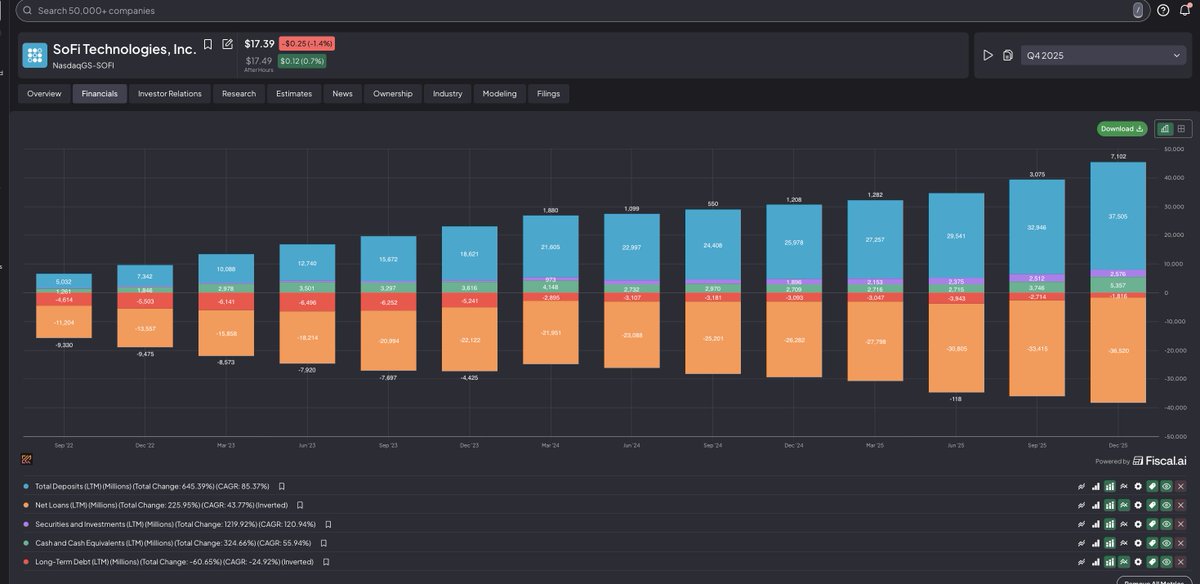
My thoughts. In the latest 10-K, SoFi reported total deposits of $37.5B across 6.79M accounts, implying an average balance of roughly $5,500 per account. If you model balances using a lognormal distribution, which is typically the best fit for deposit cohorts, and assume a $10k standard deviation, you get to an estimate of about 300k SoFi users with balances over $20k in SoFi Money. That’s the cohort that can fully capture the benefit, effectively paying $120 per year to earn $240. I would also expect users with balances at that level to be financially aware enough to recognize the value and opt in. The true breakeven is closer to ~$15k after taxes, which means there is another cohort below $20k where this is essentially free money as well. Using the same distribution, that likely adds another ~200k–300k accounts in the $15k–$20k range, bringing the total addressable group to roughly ~500k–600k users who are at or above breakeven. So just from the APY offering alone, at $10/month, you could reasonably attract ~$5–6M per month, or about ~$60–72M annually. And that’s only assuming users sign up where it’s effectively free money, not including anyone who sees additional value beyond the yield such as the credit card boost, 5% cash back on grocery card, sofi invest match, sofi credit card 10% more cash back (probably $20/year for average user), sofi travel, loan discounts and more. My estimate is that SoFi can ramp to an 8–10% take rate on this fairly quickly in 2026, which would imply roughly 1.5M subscribers. At $10/month, that equates to about $180M of recurring annual revenue, or roughly 3.7% of SoFi’s 2025 revenue. Last point, these types of premium APY benefits tend to attract more financially disciplined and higher-balance users, which should further strengthen deposit quality and help accelerate the flywheel.
English
0
0
2
198
Tevis
Tevis@FunOfInvesting·
$SOFI 4.5% APY Starting 3/31. Locked to SoFi Plus members and up to $20K 3.30% APY on all other Savings balances with a paid SoFi Plus subscription. Positive news - It's very clear SoFi is making a push for member growth! Thanks @Frugalbuck for the tag.
Tevis tweet mediaTevis tweet media
English
17
20
274
37.9K
FadeTheNoise
FadeTheNoise@FadingTheNoise·
@JuanRodrig07 Many of these suggestions directly go against their business model.
English
0
0
0
15
Juan
Juan@JuanRodrig07·
$HOOD I’ve continued reading stuff like this over the past few days, so here’s a couple of suggestions for the Robinhood team: 1. Every time a new user opens an account with Robinhood, ask whether they want prediction markets available for trading or not. 2. Give users an option to hide ALL prediction markets, not only sports. 3. Show a total P/L for event contracts traded, so users have an idea of how they’re doing. 4. Only send PM notifications to users who usually trade these. The person who only invests long-term and rarely trades doesn’t want to see this. I’m sure AI could make this possible. 5. Do personalized promotions for users who trade frequently. Give them a good deal so they don’t just trade on Kalshi (or Polymarket) instead. 6. Once you’ve figured all this out, double down on it. People who trade prediction markets (and understand them) want to make the most of it. If I open a chart (let’s say $NVDA) and I can see if there’s any PM available to hedge my position, that’s great. I trade prediction markets a lot, and I don’t believe it’s just gambling. But a lot of users do, so something needs to be done to address that and avoid people leaving the platform. My two cents.
Jack Raines@Jack_Raines

Moved my retirement accounts to Robinhood last year bc of their asset match (like 3% match on all assets or something like that?) But it’s incredibly annoying that you have to scroll past prediction markets (read: sports betting) to see portfolio positions. The forced sports betting is gross.

English
18
5
88
14.5K
Ty
Ty@TradingDeskTy·
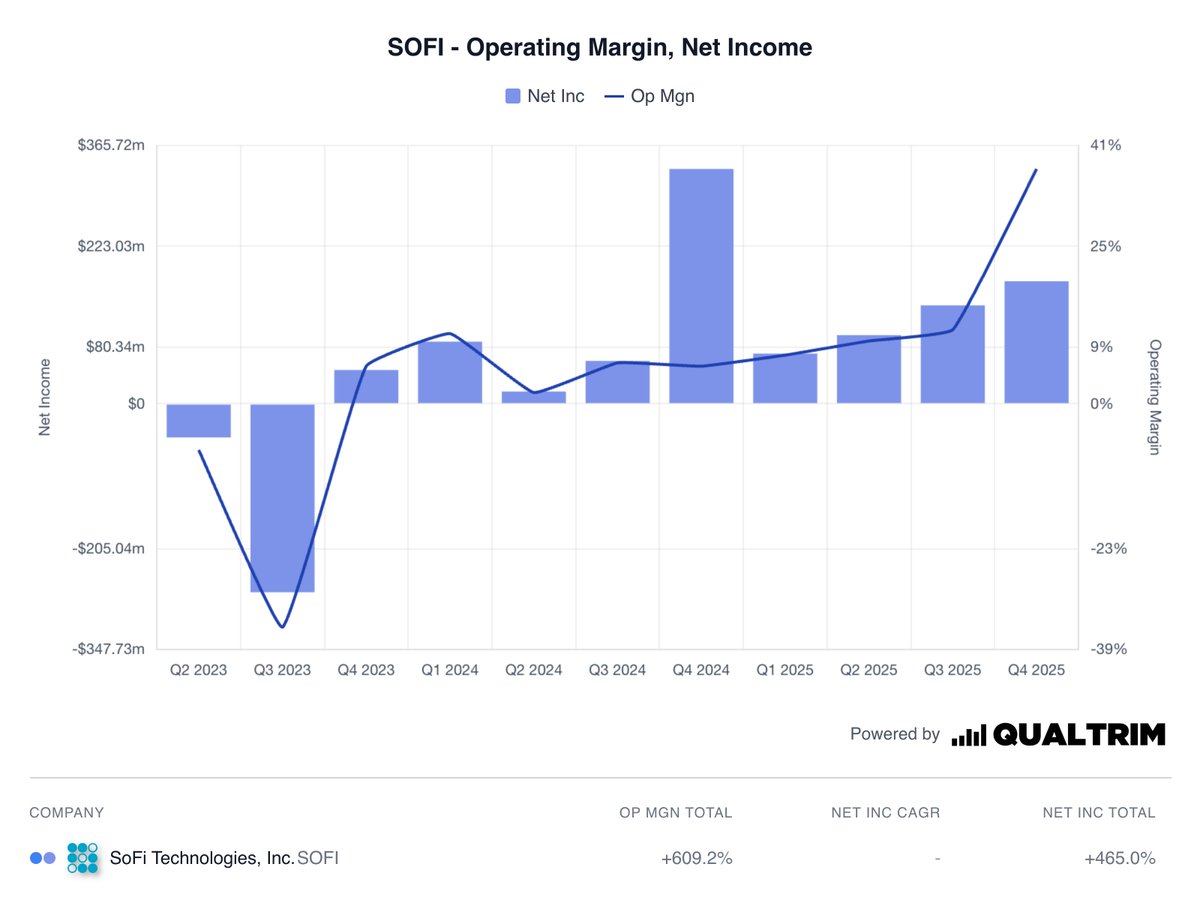
SoFi just hit a record 37% operating margin. If the flywheel continues, 40% this year is achievable. $SOFI
Ty tweet mediaTy tweet media
English
1
1
50
3.1K
FadeTheNoise
FadeTheNoise@FadingTheNoise·
@StockMarketNerd This project will have a 9.2GW gas plant. Currently, the largest gas plant in the US is 3.75GW and the largest power generation facility puts out 6.75GW. This will be the largest generation site in the US and solely allocated to the data center campus
English
0
0
0
172
FadeTheNoise
FadeTheNoise@FadingTheNoise·
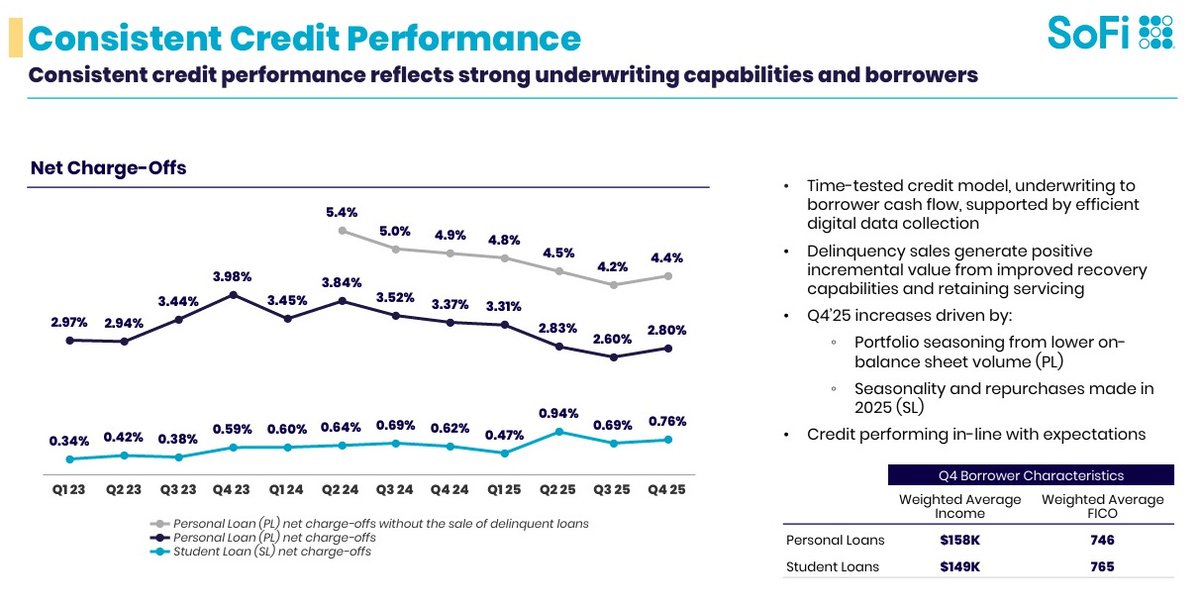
Wait until you realize how math works. Example that completely your “mathematical impossibility” below: •Mar 2 → Loan becomes delinquent (Day 0) •Mar 31 (Q1 end) → Loan is 29 days delinquent •Not included in Q1 30+ delinquency •Apr 1 (Q2) → Becomes 30 days delinquent •May 1 → 60 days delinquent •Jun 1 → 90 days delinquent •Jun 30 (still Q2) → ~120 days delinquent → charged off in Q2 A loan that is 29 days delinquent on March 31 is excluded from Q1 30+ delinquency, turns 30 days delinquent on April 1, and can still be charged off by June 30. That alone defeats the claim that Q2 charge-offs cannot exceed Q1 30+ delinquencies.
English
1
0
1
183
MuddyWatersResearch
MuddyWatersResearch@muddywatersre·
@stevenfiorillo @SoFi Your presentation of our argument entirely omits the mathematical impossibility of charging off more loans than were 30+ days delinquent the preceding quarter. What explanation do you have for that, other than the company is parking defaulted loans off balance sheet?
English
11
0
25
7.3K
Steven Fiorillo
Steven Fiorillo@stevenfiorillo·
My phone has been going off nonstop due to the short report from @muddywatersre regarding @SoFi. Here is my opinion on the Personal Loan Charge Off Rate which is just one aspect. The Muddy Waters Thesis The Muddy Waters short thesis relies heavily on the idea that SOFI is artificially suppressing its Personal Loan charge off rate to protect the Fair Value of its assets. Muddy Waters argues that SOFI's true charge off rate is sitting closer to 6.1% which is drastically different from the 2.80% annualized net rate the company reported in Q4 2025. They claim SOFI pulls this off by offloading distressed loans just days before the 120-day mandatory charge off window, and stashing defaulted loans in off-balance-sheet Variable Interest Entities (VIEs). If SOFI had to plug that 6.1% rate into its discounted cash flow (DCF) models, Muddy Waters estimates it would wipe out $259 million in Fair Value gains, dragging down 2025 Adjusted EBITDA by almost 25%. To back this up, the report points to court filings showing SOFI sold $62.5 million in defaulted loans to Eltura Ventures, LLC for just $5 million (about 8 cents on the dollar) to dodge the charge-off hit. The Reality of SOFI’s Disclosures If you take a close look at SOFI’s financial disclosures and standard banking practices they paint a very different picture. The idea that SOFI is secretly burying losses assumes their metrics are meant to mislead investors. In reality, SOFI openly details these exact moves in its SEC filings. Their earnings releases clearly state that the reported 2.80% Q4 2025 charge off rate already bakes in asset sales, new originations, and late-stage delinquency sales. Management even models out what the numbers would look like without these sales to give the market total transparency. Their filings explicitly note that if they hadn't sold those late stage delinquent loans that the all-in annualized net charge off rate for Q4 2025 would have been around 4.4%. This would have been 0.2% higher than in Q3 2025. Capital Optimization, Not Manipulation Selling late stage delinquent loans right before the 120-day mark isn't a shady accounting loophole. From what I have researched, it’s standard practice for capital optimization across the consumer lending industry. Federal rules indicate that personal loans generally need to be charged off at 120 days past due. By the time a loan gets that close to the wire, the odds of internal collections recovering the principal are practically zero. Offloading the asset at a deep discount to a specialized debt buyer makes strategic sense. It brings in immediate cash that can be redeployed into new, performing loans, and it permanently hands off the headache of tail-end collection risks, legal fees, and operational drag. SOFI is upfront about this as they refer to it as a value enhancing move driven by better recovery capabilities and the retention of servicing rights. Calling a routine distressed asset sale a fraud mechanism ignores basic economics. SOFI getting 8 cents on the dollar in cold hard cash today is objectively better than taking a total accounting loss and wasting years chasing pennies through the courts. The Math on Vintage Performance Zooming out to look at the massive block of loans originated from Q1 2020 through Q3 2025, 60% of the principal has already been paid down. This has generated significant levels of cash flow for SOFI. On the paid off balance, SOFI has taken just 6.8% in net cumulative losses, which represents only 4.1% of the total original balance. SOFI operates with an underwriting tolerance capped at an 8% life of loan cumulative net loss, which they publicly state. To breach that 8% limit on the 2020–2025 cohort, the remaining 40% of unpaid principal would have to suffer a catastrophic 10% charge-off rate. When I factor in tighter credit standards and how more recent cohorts are performing compared to the historical cohorts, it makes the odds of hitting those loss levels incredibly slim in my opinion. I feel that the internal default assumptions in SOFI's Fair Value models are backed up by actual, realized vintage performance data, directly contradicting the claim of systemic manipulation. Conclusion Everyone has the right to their own opinion. I believe that there are many holes in the short report from Muddy Waters. I plan on making a detailed video about all of the aspects I disagree with. @Futurenvesting @Futurenvesting @Kross_Roads is there anything I missed on this aspect? This will make for a great discussion when all of us speak tomorrow and Friday night. @anthonynoto I believe I have everything correct for $SOFI and if I don't I apologize in advance.
Steven Fiorillo tweet media
English
26
39
375
39.8K
FadeTheNoise
FadeTheNoise@FadingTheNoise·
@weary_centurion It’s not raising an opposing side. It’s an irresponsible and uneducated one meant to spread fear and uncertainty.
English
0
0
0
17
FadeTheNoise
FadeTheNoise@FadingTheNoise·
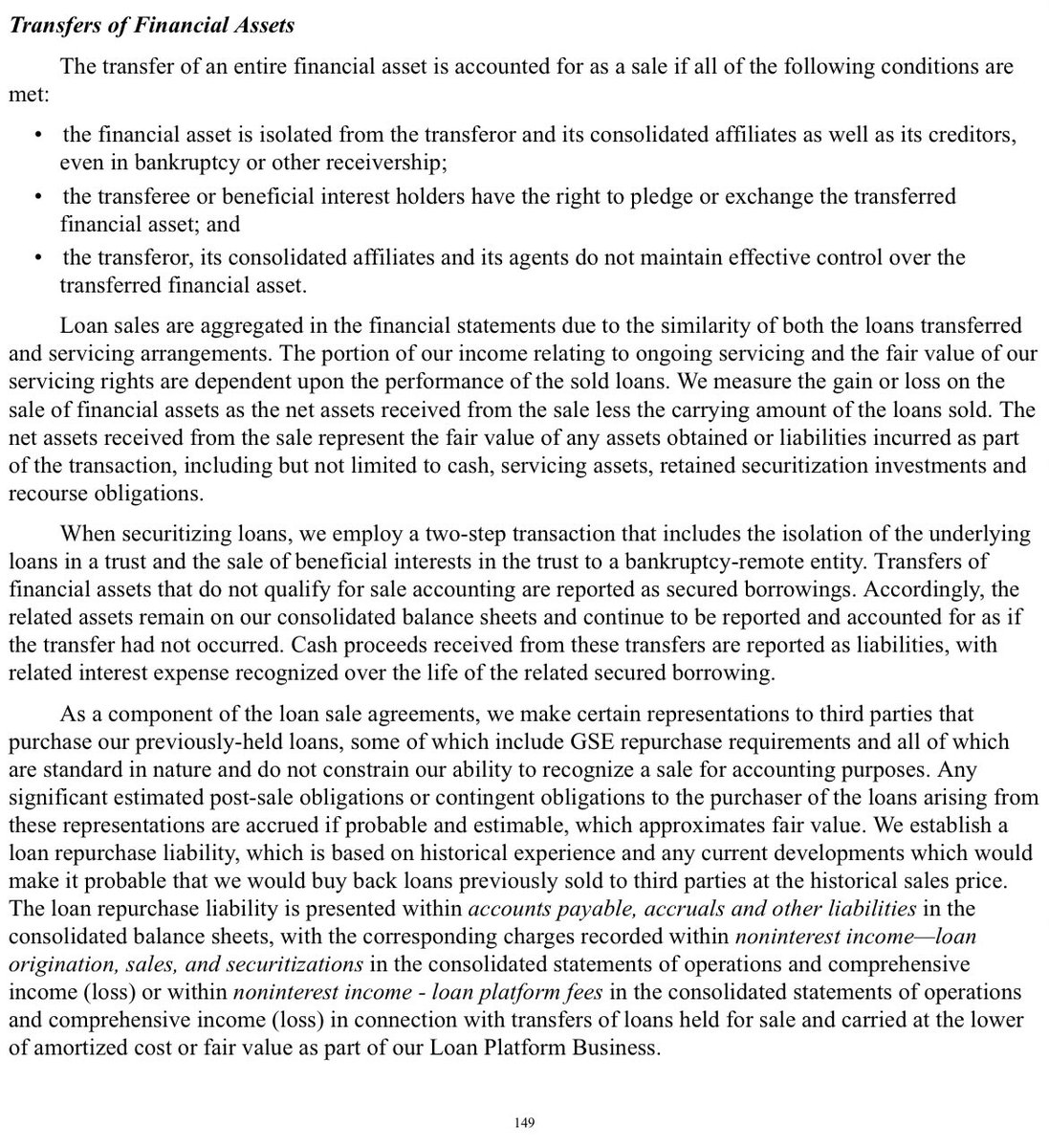
@KrisPatel99 Why don’t you just read SoFi’s disclosures for how this is handled under GAAP and their audited reports?
FadeTheNoise tweet media
English
1
0
17
795
Kris Patel 🇺🇸
Kris Patel 🇺🇸@KrisPatel99·
$SOFI The problem isnt that $SOFI is selling these loans, its that they are selling to to Cantor Fitzgerald that then sells them to another entity. This entity allegedly uses those same loans as collateral to borrow 90% of the value of the purchase from $SOFI. This is an off balance sheet transaction to make the charge off rate look better than it really is. What MW is saying is that Sofi still retains control but doesnt have to take ownership of the increasing charge off rate. Is this legal? probably... is it dubious... idk... thats up to investors to decide.
Kris Patel 🇺🇸 tweet media
TopSecretStocks 🤫@topsecretstocks

Muddy Waters vs. $SOFI Accusations Check - A Thread 🧵👇 1/ Accusation 1: Personal Loan Charge-Off Rate is Really ~6.1%, Not 2.89% MW's Claim: Muddy Waters asserts that SoFi manipulates its charge-off rate by disposing of loans just before they reach the charge-off threshold and by "parking" defaulted loans in unconsolidated entities. Why It's Misleading: - SoFi emphasized that it operates under strict regulatory oversight and adheres to established accounting standards, with financial disclosures prepared in accordance with U.S. GAAP and complying with SEC rules. Any loan sales or off-balance-sheet treatment would have to be disclosed and approved under these frameworks. - SoFi is regulated as a bank holding company supervised by the Federal Reserve and the OCC. Misrepresenting charge-off rates to these regulators, not just to public investors, would be an extraordinary and career-ending fraud, not a management bonus trick. - Selling loans before they charge off is a standard, entirely legal practice in consumer lending. It's not manipulation, it's portfolio management. The loans are sold at fair market value, and any gains/losses flow through the income statement. - Muddy Waters alleged the charge-off data contains a "mathematical impossibility," yet didn't account for how SoFi's loan vintage mix, rapid origination growth, and loan sale activity interact with the charge-off denominator, a common error in short-seller charge-off math. 👇

English
23
5
65
43.6K
FadeTheNoise
FadeTheNoise@FadingTheNoise·
This is a gross misunderstanding of how both depositors and institutional buyers actually behave. Depositors aren’t underwriting charge off assumptions. They care about rates, user experience, and FDIC insurance. An unproven short report isn’t what drives deposit flows. We’ve seen major banks get fined for far more serious, proven consumer issues and deposits didn’t suddenly disappear. On the other side, loan buyers are doing real diligence. They’re analyzing actual performance data, not reacting to headlines. If anything were off, you’d see it immediately in pricing, spreads, or demand.
English
0
0
0
15
Kris Patel 🇺🇸
Kris Patel 🇺🇸@KrisPatel99·
The problem with using the past growth rate means people will be willing to ignore these allegations. Multiples arent just based on growth but on confidence that they can keep growing. Who is going to want to deposit money with a bank accused of under reportings charge offs or buying loans from a bank that has been doing that. I guess we'll see what investors and counter parties are willing to pay shares and loans.
English
2
0
2
126
Kris Patel 🇺🇸
Kris Patel 🇺🇸@KrisPatel99·
$SOFI The biggest problem that could come for Sofi isnt investors... its depositors. They have enough liquidity to weather some withdrawals, but not if there is a cascade. If depositors pull their money out of Sofi. They would be hit with a bank run. The Loans they have on the balance sheet would then have to be liquidated and Im not sure what they would be worth mark to market. Interesting development to say the least... At least Sofi has been smart enough to dilute shareholders at an attractive price and raise capital before something like this showed up. Though I doubt Sofi will be able to maintain a 45 PE ratio... when JP Morgan, a supestar, trades at 12-15 and the rest trade at 10. The biggest problem that I see in all of this is the accusation of manipulating charge offs via sale of loans and financing the buyers of those same loans... Havent read the Sofi reply yet but man this is getting interesting.
Kris Patel 🇺🇸 tweet media
English
97
7
142
81.1K
FadeTheNoise
FadeTheNoise@FadingTheNoise·
It’s definitely improving. Over 50% of SoFi’s revenue is now coming from non lending sources. I still agree that banks are almost impossible to understand at a granular level. But I also think that banks are one of the strongest business models in the world. They are able to take in low cost deposits and turn them into higher yielding assets at scale. And on top of that, participation is essentially mandatory, people need accounts, payments, and credit to function in the economy. Capitalizing on necessity has always been a pretty good place to be. At the same time, there are entire sectors I just avoid. For me, that’s healthcare, insurance, and pharmaceuticals. Too much exposure to binary outcomes that can reset the entire thesis overnight.
English
0
0
1
58
Rose Celine Investments 🌹
Rose Celine Investments 🌹@realroseceline·
Maybe it’s improving. I don’t follow $SOFI closely. I understand the point you’re making, but I disagree, and I’ll explain it with two simple stories. First, $FRC was one of the best and most profitable banks in the country. It was the envy of Wall Street. All the metrics people love were going up and to the right, and they outperformed for like 15 years. I even know the founder, I grew up with his son and we’re still friends today. Incredibly smart people. And based on pretty much any reported metric, it was very difficult to see the collapse coming overnight. Banking looks simple on the surface, but underneath it’s extreme complexity becomes everything depends on assumptions, timing, and accounting. Things can look perfect right up until the moment they’re not. The problem is you’re making accounting profits today on things that play out years later. And you only find out much later if those profits were real and accounted for correctly. Second, a few years ago I asked a manager of a bank to walk me through their balance sheet because I didn’t understand it. He told me he didn’t understand it either. There are two industries I pretty much stay away from. Banking and insurance, they automatically go into the too hard pile. The moment I hear the word bank, I’m out. I’m not saying $SOFI is bad. I’m just saying banking is one of those games where it’s just too hard. PS I live across the street from $sofi HQ 🌹
English
1
0
2
394
Rose Celine Investments 🌹
Rose Celine Investments 🌹@realroseceline·
I read the Muddy Waters report on $SOFI, and the more I went through it, the less I cared about whether every single accusation is right or wrong. What stood out to me is something much simpler, and something I’ve have known and said all along. This business is difficult to understand. It’s not a normal company where you can follow a product or service and see cash come in. $SOFI is complex because it’s a balance sheet business. They make loans, sell some, keep some, and then use models to decide what everything is worth today. The profit is booked today,but the cash shows up later in the future, and that’s confusing. That’s really what the report is saying. When a business depends on assumptions like default rates, prepayments, and discount rates, small changes can move the numbers a lot in both directions. And you don’t really know if those assumptions were right until later. But usually by then it’s too late. I personally have a rule where I don’t invest in banks at all, no matter what. Which is funny because I once owned a very successful bank, $AX, and I still follow it. Maybe I’ll write about it one day because it’s actually a great story. At the end of the day, you don’t control your own costs in banking. The Federal Reserve does. Rates go up or down and your whole business changes overnight. It’s the same way oil controls energy companies. You can be doing everything right and still get hit. So when I look at $SOFI, I’m not trying to figure out if it’s fake. I’m asking a much simpler question. Do I actually understand this business? If the answer is not clearly yes, then it’s probably riskier than it looks. I don’t think $SOFI is fake. I just think it’s a lot harder to understand than people realize. 🌹
English
34
8
244
31.7K
FadeTheNoise
FadeTheNoise@FadingTheNoise·
I agree that very few people truly understand banking and lending at a deep level. My original point, though, was that SoFi is actually becoming easier to understand as the business shifts toward a more fee based revenue mix. Would you agree here? That said, I still don’t think you need to be an expert in lending to invest in a bank. You need to understand the drivers, not every underlying model. If we see that differently, that’s fine. And just to be clear, that last response wasn’t some copy/paste. I just put more time into it because I was actually trying to have a real discussion.
English
1
0
0
111
Rose Celine Investments 🌹
Rose Celine Investments 🌹@realroseceline·
You’re right that you don’t need to understand every operational detail. But you’re missing a key distinction. With $tsla or $nvda, not understanding code doesn’t break your thesis. In banking, not understanding the balance sheet means you don’t understand the business. And to truly understand the balance sheet of a bank (not just $sofi, any bank), you need to be a genius with many years of banking experience. Also, I don’t like replying to copying and pasting from ChatGPT. More and more of that happens on here and it’s quickly turning into one of my pet peeves.
English
1
0
2
418
FadeTheNoise
FadeTheNoise@FadingTheNoise·
I believe it’s a fundamental mistake to think you need to understand every operational detail of a business to invest in it. For example, I believe you hold a large position in Tesla. You likely couldn’t walk me through, in minute detail, how their neural networks are trained, how every manufacturing process works inside a Gigafactory, or how their full self-driving stack is architected from end to end. And yet, that doesn’t prevent you from having conviction. You understand the high-level drivers: - EV adoption continues to grow - Tesla has scale advantages in manufacturing - Their software and autonomy ambitions create asymmetric upside - Energy and storage are underappreciated That’s enough to build a thesis. The same framework applies broadly. You don’t need to understand every line of code or every credit model to invest in SoFi. What matters is understanding: - deposits are growing, lowering their cost of capital - the loan platform continues to generate fee income and offload risk - their tech platform (Galileo/Technisys) adds a scalable, high-margin layer - they are expanding into a full financial ecosystem that increases lifetime value per customer And the truth is, most CEOs don’t even understand every layer of their own business to that level, they understand the drivers that matter. I am curious of your opinion here. I think you are a good investor and have valuable insights, but I don’t appreciate when you are instantly dismissive of opposing views.
English
1
0
2
204
Rose Celine Investments 🌹
Rose Celine Investments 🌹@realroseceline·
@FadingTheNoise @hazresearch Sofi is a bank, You don’t understands lending, I virtually guarantee it. Why? because maybe 1 out of several hundred truly get it. I promise you’re not one of the chosen ones. Don’t feel bad I am not either.
English
1
0
2
495
FadeTheNoise
FadeTheNoise@FadingTheNoise·
@realroseceline @hazresearch Which part of the fee based revenue do I not understand? Hoping to actually have an intellectual dialogue, but you open with telling me I don’t understand something.
English
1
0
0
227