Fergy (Tamara Ferguson)

3.6K posts

Fergy (Tamara Ferguson) banner
Fergy (Tamara Ferguson)

Fergy (Tamara Ferguson)

@Fergy4Tech

Math | EdTech | Tech fan by day🌎, periodically adulting 🌘, & secret Batman groupie on weekends.🦇 #MIEExpert 💻💗 #iteachmath #mathed #ISTE25

Katılım Haziran 2012
4.5K Takip Edilen5.1K Takipçiler
Sabitlenmiş Tweet
Fergy (Tamara Ferguson)
Fergy (Tamara Ferguson)@Fergy4Tech·
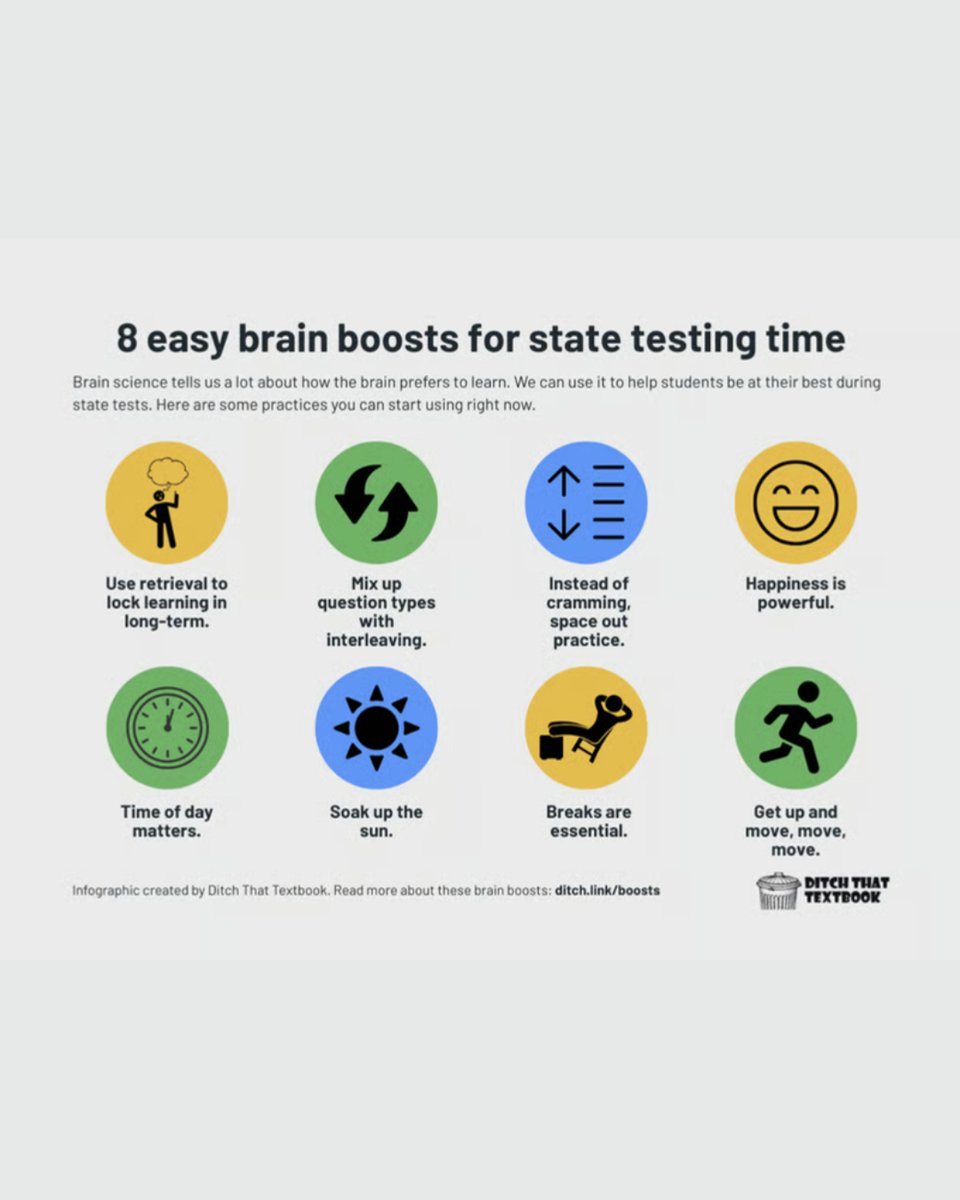
TCEA is coming up fast. It will be an amazing opportunity to reconnect and discover new ideas. I am happy to share that I too will be contributing to this learning community. I hope to see you all. #TCEA #EducationForAll #Iteachmath
Fergy (Tamara Ferguson) tweet media
English
3
1
9
601
Fergy (Tamara Ferguson)
@albertocedben @OrevaZSN People also dislike the loud data centers that are noisy and are not self_reliant (electricity and water). Not to mention human displacement. Ironically, I use AI daily for my job. I wish there was a better balance.
English
0
0
2
238
Alberto Benítez
Alberto Benítez@albertocedben·
I remember when people mocked smartphones, selfies, posting on social media, wireless earbuds, and now everyone uses those. I’m sure at some point AI is gonna look more realistic to the point that everyone will just accept it. People dislike AI because it generates ugly and cartoonish content. It’ll be a different story once it generates art people actually like.
English
13
1
17
5.6K
𐌁𐌉Ᏽ 𐌕𐌉𐌌𐌉
Teenagers have started calling AI art "boomer art" and consider it cringe, and YouTubers have stopped using AI-generated thumbnails because teenagers find them cringe and won't click on them. I honestly couldn't be happier.
English
507
13.6K
133.9K
1.2M
Fergy (Tamara Ferguson)
Fergy (Tamara Ferguson)@Fergy4Tech·
@PhysicsHawk @shirky17 Relationships, plus protocols are the real magic sauce. But only if behavior across the entire campus is stable. Then, it's everyone for yourself.
GIF
English
0
0
0
605
Beth Hawks
Beth Hawks@PhysicsHawk·
Question for those who use "relationships" as their classroom management strategy. What do you expect to happen when I come in as a substitute?
English
33
10
187
19.7K
Angela R
Angela R@TheQueenOfNo·
@jlpoober Do you have any idea how many other careers work over 60 hours unpaid and don’t get summers off either?
English
15
0
67
2.5K
Jen
Jen@jenteach13·
Everyone loves to remind teachers about summer. Fine. Let's do the math. This week I worked nearly 60 hours. 6:30 arrival. Unpaid lunch with kids in my room. Covered PE — I teach Spanish. Graded vocab tests Friday night. Graded a children's book project on Saturday. Turned one into a movie and posted it for the class. Five hours of lesson planning today. The standard work week is 40 hours. The extra 20? Unpaid. Some weeks, the grading is lighter. Some weeks it's worse. This is not the worst week I've had. But yes. I get summers off.
Jen tweet media
English
248
14
194
100.1K
massmuss
massmuss@amandamagnus2·
@JD_P805 @luxemiaa Or indeed, to be grammatically correct ‘your fat’ needs the extra seat.
English
1
0
0
191
Mia♡
Mia♡@luxemiaa·
Me: I have two tickets under my name. I’m flying with my cat & I bought the extra one for extra room for us. I need to make sure those seats are together. Customer Service Representative: Ma’am we do not allow cats to aquire their own seat. Me: …I understand. My cat doesn’t have his own seat, I have two seats. Because I wanted more room. I need the seats together other it defeats the purpose. CSR: Ma’am your cat will have to remain with you, your cat cannot have a separate seat. Me: …
English
48
65
5.7K
328.7K
Vizzpat from NJ
Vizzpat from NJ@Vizzpat·
No. In a world that is increasingly connected via computer networks, an attempt to handicap students by eliminating that resource is shortsighted. Students should have all components involved in learning. Writing with paper and pencil/pen is valuable as are books with actual pages. Real world contact with nature and the world is also important. Physical experimentation is vital. Imagine doing those chemistry experiments virtually 🤯 But, it cannot be denied that up to date, current resources are available online and faster than any library can offer. A proper mix of technology and old school methods is the only way to equip students for their future.
English
4
1
15
515
Mr. Nobody
Mr. Nobody@MmisterNobody·
Do you think schools should ditch Chromebooks and iPads and go back to pen and paper, using computers only in lab classes?
English
535
178
6.2K
86.2K
Fergy (Tamara Ferguson)
Fergy (Tamara Ferguson)@Fergy4Tech·
@MmisterNobody Both of my children preferred technology over paper in high school. They could ignore class disruptions, pause /replay instruction, and no more heavy backpacks. Both are in college now. No one uses paper for anything.
English
0
0
0
202
Fergy (Tamara Ferguson)
Fergy (Tamara Ferguson)@Fergy4Tech·
@SciInTheMaking While I appreciate the sentiment here, we must look at the whole picture. Technology, when done CORRECTLY, amplifies the influence of the teacher, makes learning accessible beyond traditional constraints, & deepens connections to abstract ideas with animations and models.
English
0
0
1
46
Fergy (Tamara Ferguson) retweetledi
Alex Smith
Alex Smith@ninja_maths·
Cognitive load theory tells us that students can only coordinate so much genuinely new information at once. That is one reason breaking mathematics into many small, carefully layered topics is not a gimmick. It is a way of controlling how much novelty enters working memory at one time. For optimal learning, depth has to be staged.
English
1
4
38
2.4K
Fergy (Tamara Ferguson)
Fergy (Tamara Ferguson)@Fergy4Tech·
@FixingEducation @BridgetA007 Experts have noted that the findings of this research is flawed. Regardless, technology plays an important part in learning if used purposefully & not as a babysitter. Technology in Edu makes abstract ideas concrete using visuals and animated models. Forcing paper won't fix EDU
English
1
0
0
213
Fixing Education
Fixing Education@FixingEducation·
Students remember more when they write it down on paper. Not type it. Not screenshot it. Write it! The act of writing slows students down, adds tactile feedback, and helps lock it into memory.
English
76
644
2.2K
80.6K
Fergy (Tamara Ferguson)
Fergy (Tamara Ferguson)@Fergy4Tech·
@DrHistoryBrad @kelly_majuri Chromebooks are a tool. Giving students a tool does not replace the need to teach students how to build their skills and knowledge and how to use that tool effectively.
English
0
0
1
80
Dr. Bradley J. Sommer
Dr. Bradley J. Sommer@DrHistoryBrad·
I’ve been teaching Gen Z for 7 years and I can tell you right now, the issue isn’t intelligence, it’s skills. Writing, note taking, studying, close reading. We’ve replaced those skills with Chrome Books and AI and then wonder why they struggle. We failed them, not the opposite.
English
57
1.2K
9K
214.3K
Fergy (Tamara Ferguson)
Fergy (Tamara Ferguson)@Fergy4Tech·
@anenglishteachr After 28 years, I can honestly say, it's always been this way. The difference is your capacity to repeat the same thing over and over changes. This applies to off task talking, not putting names on papers, convincing you that you lost their work, creative cheating, AND PHONES.
English
0
0
2
60
Jason
Jason@anenglishteachr·
Question for the veteran teachers: I've been teaching for just about 9 years now and something I see with most of my students is that they don't read instructions before they ask for help / clarification and they need to have EVERYTHING explained to them, even the most simple things I basically can't assume they'll figure anything out (even simple instructions) and have to hold their hands through just about everything Is this more prevalent now compared to, lets say 20 years ago, or has it always been this way?
English
310
22
542
62.6K
FluidMath
FluidMath@fluidmath·
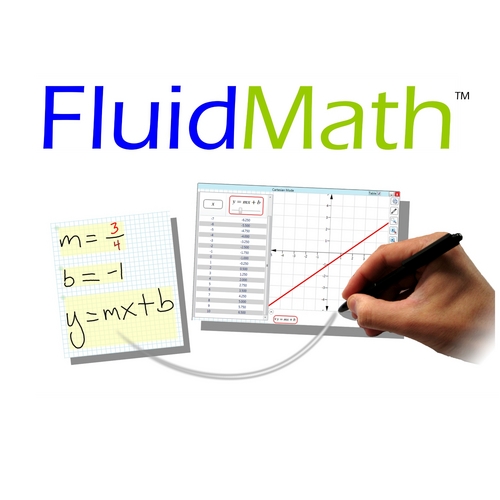
Self-checking answer boxes tell you when you are right...BUT Do they help Students think critically? Show value in the learning process - Help students self-analyze, identify their mistakes, & then self-correct with confidence. NO AI required. Just student brains. #FluidMath
English
1
1
3
194
Fergy (Tamara Ferguson) retweetledi
Justin Skycak
Justin Skycak@justinskycak·
People don’t hate math. They hate the feeling of hitting a wall they were never equipped to climb. Give them a ladder and it can change their whole experience.
English
10
14
192
5.8K
Fergy (Tamara Ferguson) retweetledi
Philosophy Of Physics
Philosophy Of Physics@PhilosophyOfPhy·
This is the beauty of calculus. Wish someone had taught it like this to me. ( 🎥 Dm fro credit)
English
25
489
2.3K
111.1K
wedda on earth
wedda on earth@WeddaOnEarth·
@CrazyVibes_1 I truly wonder about the SICK mindset of such people as like as that moron driver. Simply the fact driving onto another's ground with the car ... Such people should be isolated for good. Stupidity mustn't reproduce.
English
1
4
86
19.4K
Crazy Vibes
Crazy Vibes@CrazyVibes_1·
A kid was fed up with the fact that every time he made a snowman someone ran over him, and so he disguised a fire hydrant as a nine-year-old man. Now the one who serial over snowmen has to pay a fine, the hydrant and the repair of his car haha
English
270
2.4K
31.1K
4.1M
ꙮvchinnikov
ꙮvchinnikov@ovchinnikov·
@CrazyVibes_1 I hope he gets into politics. This guy is our only hope in this sinful world.
English
1
0
1
949
Fergy (Tamara Ferguson) retweetledi
Ihtesham Ali
Ihtesham Ali@ihtesham2005·
A professor of engineering who failed math all through school built one of the most popular online courses in history by figuring out exactly why her brain had been working against her the whole time. Her name is Barbara Oakley, and she did not teach herself how to learn until she was in her mid-twenties, after leaving the military with a head full of Russian and almost no useful science knowledge. What she discovered about her own brain eventually became a Coursera course that over 4 million people have taken, and the core insight she teaches has been sitting in neuroscience research for decades waiting for someone to explain it in plain language. Here is the framework that changed how I think about every hard thing I am trying to learn. Your working memory is an octopus sitting in your prefrontal cortex with exactly four arms. Those four arms reach out and grab pieces of information, hold them in place, and manipulate them while you are actively thinking through a problem. Four is the limit. When you try to hold more than four things in conscious awareness at once, the arms start dropping things and everything becomes a scramble which is exactly what you experience as confusion when learning something genuinely difficult. This is not a flaw. It is a design feature. And the entire game of becoming expert at anything is learning how to game this constraint. The mechanism is something neuroscientists call chunking, and it is the most underexplained concept in all of learning. When you practice something enough times that it becomes automatic a guitar chord, a grammatical structure, a mathematical procedure, a debugging pattern in code your brain compresses it into a single neural package stored in long-term memory. That compressed package now fits in just one of your four working memory slots instead of filling all of them. Which means once you have built enough chunks, your octopus can reach down into long-term memory, pull up an entire complex procedure in a single grab, and still have three arms free to work with new information on top of it. This is what expertise actually is. Not raw intelligence. Not natural talent. A library of compressed patterns that can be retrieved quickly and stacked together to solve problems that would overwhelm a beginner whose working memory is still occupied with fundamentals. The finding that Oakley emphasizes most forcefully is the one that sounds backward until you understand the mechanism. People with smaller working memory capacity those who can only hold two or three items at once rather than four are often forced to develop stronger chunking habits earlier and more aggressively than people with larger working memories, because they have no choice. Their constraint becomes their training. Over time, that aggressive chunking practice can produce more robust expertise than a larger working memory that never had to be disciplined in the same way. The most powerful practical implication is this: when you feel completely overwhelmed trying to learn something, that feeling is almost always your four-slot octopus running out of arms. The solution is not to concentrate harder. The solution is to stop, isolate one small piece of the problem, practice it until it compresses into a single chunk, and only then pick up the next piece. You cannot learn everything at once because your brain was never designed to hold everything at once. It was designed to build libraries of compressed knowledge and retrieve them on demand. Every expert you have ever admired is not smarter than you. They just have a bigger library.
Ihtesham Ali tweet media
English
49
697
2.9K
136K