Yosra

962 posts

Yosra banner
Yosra

Yosra

@FigmaGirl

discipline is the divider of dreams

SF/Paris/Dubai Katılım Mayıs 2009
1.1K Takip Edilen321 Takipçiler
Sabitlenmiş Tweet
Yosra
Yosra@FigmaGirl·
Caption this @TheRoaringKitty - Looks like I finally picked up the pen again haha😅
Yosra tweet media
English
18
12
3.6K
620.2K
Yosra
Yosra@FigmaGirl·
𝔥𝔢𝔩𝔩𝔬 𝔡𝔯𝔬𝔭 𝔰𝔬𝔩
English
0
0
4
99
Yosra
Yosra@FigmaGirl·
𝖍𝖊𝖑𝖑𝖔 𝖉𝖗𝖔𝖕 𝖘𝖔𝖑
English
0
0
2
68
Yosra
Yosra@FigmaGirl·
@candlememecoin CH9i39Jga5ZTsKKadFd4N9V3GUUXjn3gPxJhePTeoJ22
Čeština
0
0
0
172
Yosra retweetledi
Ish Verduzco
Ish Verduzco@ishverduzco·
In 5 years, all of the smartest founders will be building their own in-house influencers. Here's what I mean (and how you can get ahead): The current model includes paying creators/influencers for individual posts, referrals, or longer contracts that pay for set amount of promo over a set duration of time. I love what Ridge did with @MKBHD. They brought him on as "Chief Creative Partner". Acknowledging that he has massive distribution, product expertise, and can bring a ton of great ideas to the company. I'm assuming he got a mix of cash/salary + equity in the company. This model makes a ton of sense. Both parties are incentivized in the long run (vs short term bursts of promo for cash). I believe we will see a lot more of this in the future, PLUS, more founders trying to build up their own influencers in-house. The smartest ones will realize that building their personal socials, while encouraging their employees to do the same is the way to go. It’s already happening now. But I'm seeing very few companies do it well. TLDR: Empower your employees to build their social presence. Tap into those audiences for key company announcements. Build a culture around this so that net new employees can replenish the distribution when people inevitably leave. Don't be upset when employees leave. On top of this, you should be focusing heavily on building your founder account. Ask yourself... Will having 50,000-100,000 engaged followers (within your niche) help drive long-term success for your company? Odds are, yes. So then go and build your audience. "First time founders focus on product, second time founders focus on distribution." - @justinkan
Ish Verduzco tweet media
English
53
43
496
112K
Yosra retweetledi
Kyle Samani
Kyle Samani@KyleSamani·
FWIW i strongly disagree the aggregate value of all FDVs of all L2s is like ~$50B? Maybe $75B? ETH trading at $400B DA is worthless. All the value is in consensus and execution We have no exposure to ETH or any L2s other than STRK (we invested back in Sept 2018)
Ian@Ian_Unsworth

Here's the honest truth about L2s : Most of the valuations these projects have raised at are completely untethered from reality. I don't know how these teams were able to justify valuations at the levels they did - especially when the primary differentiation came down to the type of proof, or the virtual machine execution environment. With Optimism & Arbitrum being early to the game they were able to gather enough TVL & activity to convince the market to stomach several massive unlocks and still remain above their last private valuations prior to launch ($1.65bn & $1.2bn) However, looking at STRK, which raised its last private round at $8bn, its now trading below that, at $6.9bn FDV, with many unlocks still to come. It seems liquid markets are quick to correct the valuations of these things. L2s are definitely important to the overall Ethereum roadmap, but also they're becoming increasingly commoditized, and that is now reflected in valuations. L2s will live or die by their network effects, and today many fail to structure themselves in a way that reflects that. Yeah, getting an airdrop is great, but getting diluted and dumped on through unlocks while holding zero-utility tokens is a dumb game to play - hence why you see people using many of these overvalued chains strictly for farming purposes. This valuation correction is a necessary one. It's now a death wish to raise at an unsustainable valuation. There are simply few to no nominal buyers of these useless coins The good news is that the valuation correction will make it easier to separate winners from losers. Winners will be those who structure their L2 so that users are rewarded in a symmetric reflexive manner. Would really suggest people take a look at what @swellnetworkio is doing with their L2 - native LRT as their gas token (rswETH) - native gov token (SWELL) will be able to be staked to receive sequencer fees - curating an ecosystem of Dapps related to restaking - deploying their rollup through AltLayer (a RaaS provider that is also an AVS) (read our full report on them here x.com/Kairos_Res/sta… ) Going forward, I suspect most successful L2s will be sector/application focused, who also reward their users in a symmetric manner. Otherwise, projects will just get lost in a crowded world of general purpose L2 and have their token (their primary incentive mech) slowly bleed to zero as their "community" vanishes.

English
23
6
130
59K
Yosra retweetledi
Framer University
Framer University@learnframer·
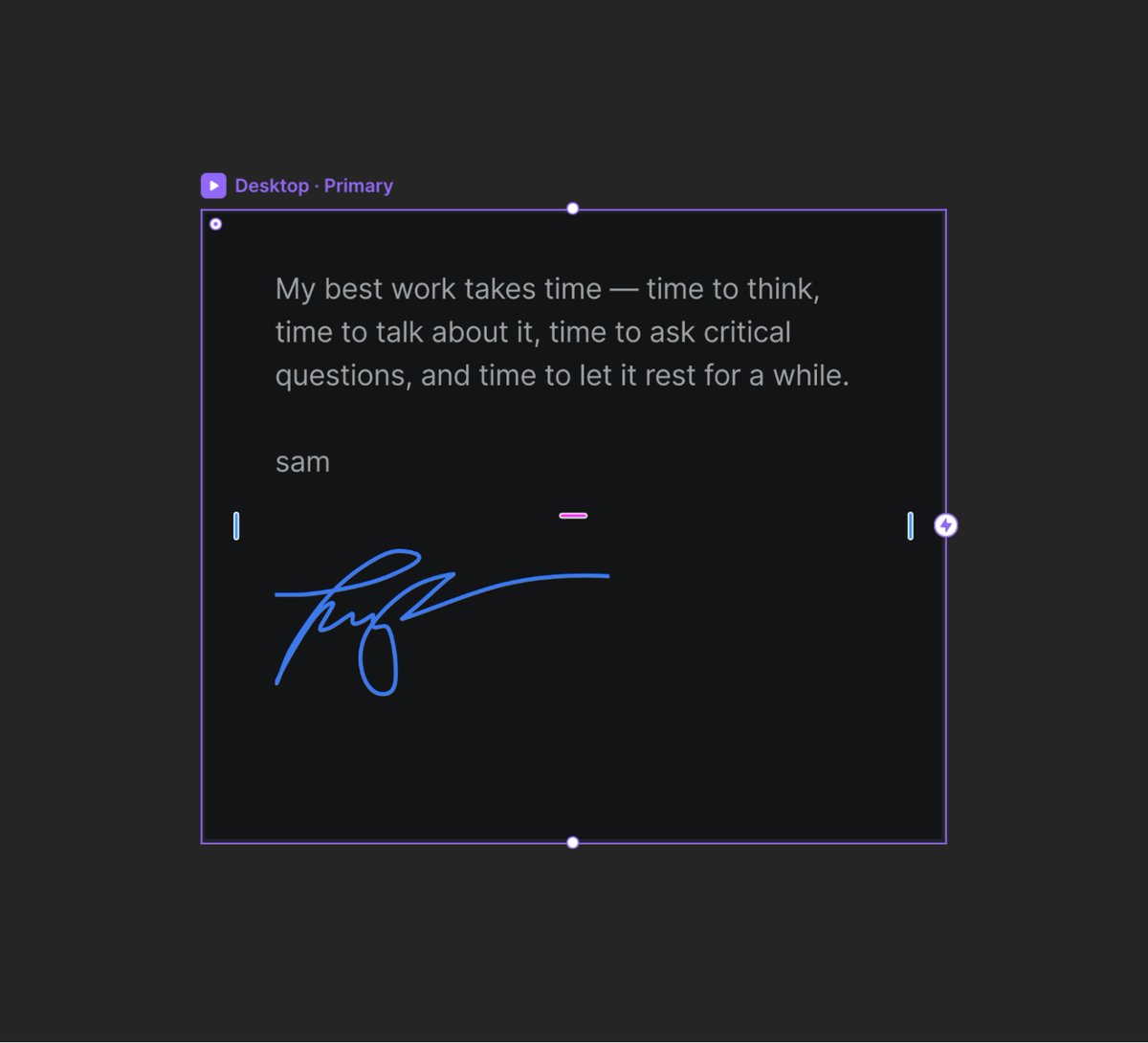
Primary variant is now called "Desktop" by default in @Framer. I never have to say "rename the primary variant to desktop" again in my tutorials. Thanks Framer! 🫶
Framer University tweet media
English
6
4
107
5.5K
Yosra retweetledi
kepano
kepano@kepano·
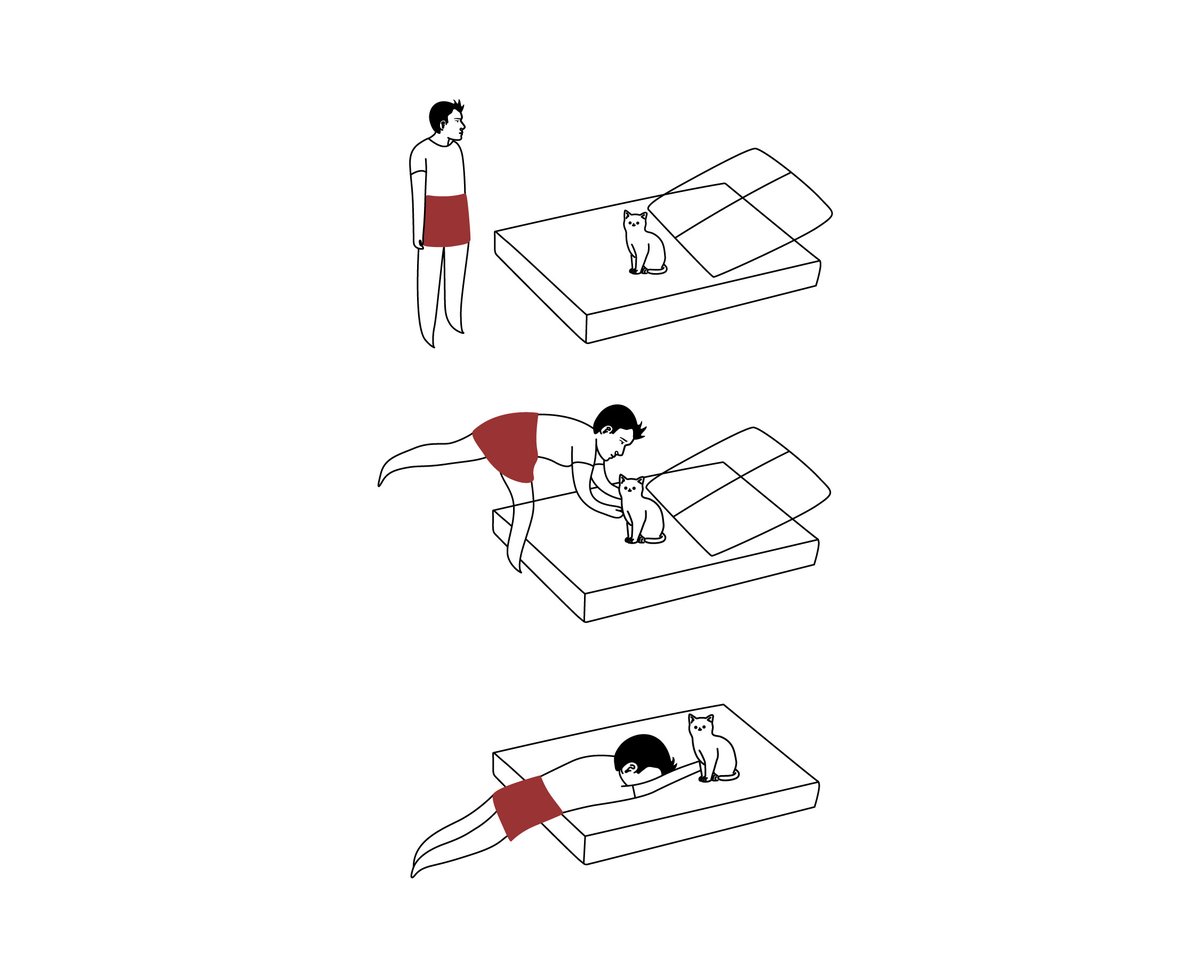
What can we remove? Our bias is to always add more. More rules, more procedures, more code, more features, more stuff. Interdependencies proliferate, and gradually strangle us. Systems want to grow and grow, but without pruning, they collapse. Slowly, then spectacularly. When a piece of trash drifts across the beach, it is our duty to pick it up so the next person can enjoy a pristine shoreline. When a thousand pieces litter the beach, it is too late. We can only lament the landscape. That’s just how beaches are now. A good system is designed to be periodically cleared of cruft. It has a built-in counterbalance. Without this pressure, our bias drives us to add band-aid after band-aid, until the only choice is to destroy the whole system and start from scratch. Why is it so much easier to add than to remove? Maybe because we attach our identity to what is visible. But there is a difference between the ornamentation that defines our style and the vestigial burdens we carry. Remember those who did the invisible work of removing. Their legacy was not to build a sand castle, but to care for the beautiful beach on which we play.
kepano tweet media
English
25
101
814
70.6K
Yosra retweetledi
T. Costa
T. Costa@tcosta·
Here's a secret: I've never in my life used this formula. Just wing it!
T. Costa tweet media
English
10
8
226
21K
Yosra retweetledi
Zack Voell
Zack Voell@zackvoell·
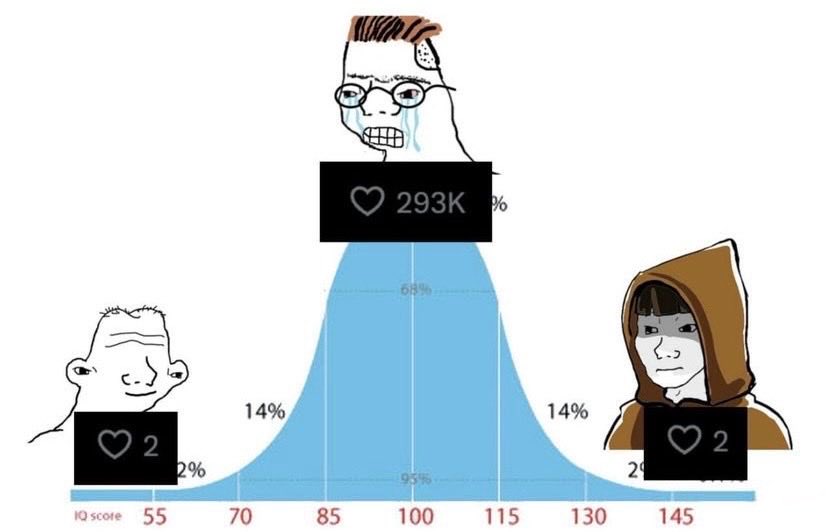
this is exactly how crypto twitter works
Zack Voell tweet media
English
82
170
3K
122.5K
Yosra retweetledi
qw
qw@QwQiao·
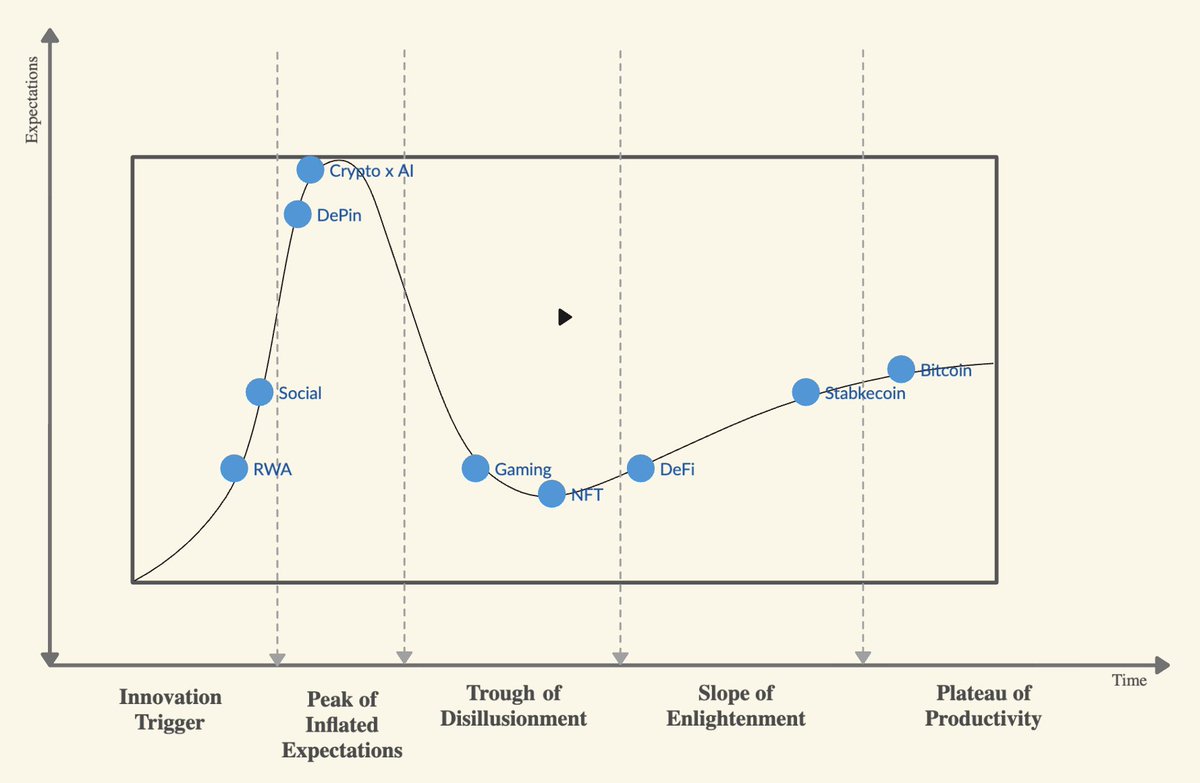
made this in 5min discuss
qw tweet media
English
113
61
678
121K
Yosra retweetledi
Hack VC
Hack VC@hack_vc·
Today, token vesting schedules typically rely on one dimension: time. ⌚ We think there is significant opportunity for improvement to foster a more sustainable ecosystem for all token holders and solve the low float / high FDV problem that many in crypto have been talking about lately. How? 💧 Liquidity-Adjusted Vesting: Imagine a vesting schedule that considers the liquidity of a token. This would align incentives for a project’s team and contributors to build genuine liquidity in the token. 🏆 Milestone-Based Vesting: What if token vesting depended on hitting key milestones like user growth and protocol revenue? This approach could incentivize real traction before tokens are unlocked. Learn more about the benefits and drawbacks of each suggestion as well as specific implementations in the full article by @hack_vc Partner @roshunpatel here: blog.hack.vc/potential-solu… #tokens #crypto #web3 #tokenvesting #hackvc
English
24
16
180
50.4K
Yosra retweetledi
Yano 🟪
Yano 🟪@JasonYanowitz·
Someone will make a lot of money building a monad fund Brand as a monad-only fund. Raise $5m. Put $100k into the top 50 monad deals as early as possible Basically run back the frictionless capital playbook but for monad instead of solana
English
33
13
349
99.6K
Yosra retweetledi
Size Chad
Size Chad@SizeChad·
Proof that the only thing holding you back is your haircut
Size Chad tweet media
English
34
21
525
88.1K
Yosra retweetledi
Ashley Mayer
Ashley Mayer@ashleymayer·
I’ve been playing around with this idea of narrative shifts lately. Over my 15 years in startups (I joined Box in 2009), there have been three distinct umbrella narratives for the tech/startup ecosystem. I believe we’re in the early years of a new one. The first narrative probably started around 2007 or 2008, with the launch the iPhone and App Store, and ended with the 2016 presidential election. This was an era where founders were scrappy underdogs, and tech was a force for good. The industry had finished licking its wounds from the dot-com crash, and was the first to rebound from the Great Recession. The combined platform shifts of cloud and mobile were transformative for consumers and businesses alike, and nearly all startups painted themselves as “democratizing” forces. New business models emerged (Uber for X). Disruption was (mostly) good, and startups largely got the benefit of the doubt. Even the bigger players were seen as challengers—in fact, Steve Jobs is probably the best figurehead for the ethos of this era, all its optimism and potential, maybe even more so after his death. Marc Andreessen is another—a hero of a prior era returned to build a firm that broke with conventional venture wisdom and unabashedly celebrated founders. Software was eating the world, and we were thrilled. And then came the 2016 election, and with it, an era of reckoning. Tech got bigger and bigger, but its growth and influence were increasingly called into question. There was widespread soul searching in the immediate aftermath of Trump’s victory—had tech, and Facebook specifically, undermined our democracy? Two years later, we had an answer with the Cambridge Analytica scandal. The Me Too movement swept the tech industry in 2017, and we grappled with power imbalances and abuse. Travis Kalanick, a pioneer of the prior narrative era, was ousted from his company by his own investors. Meanwhile, valuations kept going up, the SPAC frenzy began, and people were getting rich overnight on NFTs and meme stocks. The pandemic initially looked like it might put an end to this party, but no—tech reached new heights. Venture investments and valuations skyrocketed while companies grappled with employee burnout and demands for more equitable practices in the wake of the BLM movement. Coinbase was a perfect poster company for this tension—a phenomenal IPO, and unrest within its ranks. Sam Bankman-Fried tried to meet the moment with a carefully crafted do-gooder image, but became our perfect villain with the collapse of FTX in 2022, following the bursting of the web3 bubble and a market reset for all of tech. I think our third era started last year, after the shockwave of 2022…I’ll call this the anti-hero narrative. The bottoming out of the startup ecosystem gave founders permission to do what needed to be done—mostly, layoffs. Unlike in the era of reckoning, the tone became unapologetic. Elon led the way, slashing Twitter’s workforce in the wake of its acquisition, espousing free speech—the more shocking and offensive, the better. The criticism continues, of course, but tech’s most powerful no longer care. The spirit is gleefully combative: anti-media, anti-woke, anti-DEI. Once controversial industries like defense tech are celebrated; once taboo political opinions are expressed without reservation. AI is our new platform shift, and the ethos of e/acc captures this moment perfectly: technological progress is inevitable and we should run after it at all costs. Mark Zuckerberg is back, fully rehabilitated from the prior era, with his chain necklace and cage match challenges. Jensen Huang, one of the heroes of the AI wave, wasn’t toppled from his throne for signing a woman’s chest; if anything, it made him shinier. Progress is what matters, how we get there matters less. The narrative—and vibes—have definitely shifted. And of course, no era describes any one company, and no era is all good or all bad. Nor are the phases perfectly distinct: the seeds of each are planted in the era prior. Like with platform shifts, understanding how your business fits into the broader context is essential. No narrative exists in a vacuum. The stories we tell about ourselves, about our industry, help shape our reality. They influence what kinds of ideas and founders are backed. Where talent flocks. Where we’re willing to suspend disbelief. At the same time, most companies don’t get to live snugly in the bubble of tech—the way they (and our industry) are perceived by customers and partners outside our sector is essential to their success. Which means this is an especially interesting and challenging phase we’re entering: the newly combative spirit of the tech industry, paired with an AI platform shift that’s going to transform every sector, disrupt labor markets, and touch the lives of consumers around the world.
English
45
71
702
319.1K