
The JFK Files
1.9K posts

@FilesJFK
The very word "secrecy" is repugnant in a free and open society -- John F. Kennedy


The Prosecutor’s Delusion: Vincent Bugliosi and the Death of Honest Inquiry Reclaiming History is not a serious historical work—it’s an overlong, overwrought courtroom brief written by a man who mistakes volume and vitriol for intellectual authority. Vincent Bugliosi, once hailed for his prosecution of Charles Manson, brings none of the curiosity or humility required to explore the complexities of the JFK assassination. Instead, he brings a prosecutor’s tunnel vision, a bludgeoning tone, and a staggering level of personal hypocrisy. The book reads less like an attempt to uncover truth than a desperate effort to silence critics. Bugliosi smears dissenting voices with childish ridicule, dismisses decades of investigative work as “crackpot conspiracy theories,” and substitutes arrogance for argument. Rather than engage seriously with discrepancies in the official record or the mountain of newly available documents released after the Assassination Records Review Board, Bugliosi drowns his reader in footnotes, insults, and rhetorical bullying. But perhaps most troubling is the man behind the pages. Bugliosi’s public record is far from clean. His failed 1972 campaign for Los Angeles District Attorney imploded under the weight of multiple personal scandals. He was sued for libel by a milkman he obsessively and falsely accused of impregnating his wife—conduct that bordered on deranged. Even more disturbing were the assault charges brought by Virginia Cardwell, a woman Bugliosi harassed and physically attacked. These aren’t idle gossip—they speak to a troubling pattern of abusive behavior and paranoia from a man who would later claim unimpeachable moral and intellectual authority on one of the most important murders in American history. And then there’s the matter of his quiet affiliations. Bugliosi, who claimed to be an objective seeker of truth, met privately with CIA propaganda specialist David Atlee Phillips in London in 1986 while preparing for the production On Trial: Lee Harvey Oswald. Phillips, a senior officer deeply implicated by multiple researchers in covert anti-Castro operations and possible links to Oswald, was no ordinary contact. His role in shaping public perception of the assassination was well-documented—and Bugliosi’s collaboration with him, while not widely publicized, raises serious questions about his objectivity and his motives. In Reclaiming History, Bugliosi sets himself up as both judge and jury, determined to end all debate about the Kennedy assassination. But the book says more about Bugliosi’s obsession with control, his disdain for dissent, and his personal failings than it does about November 22, 1963. His righteous fury, unchecked bias, and shady alliances undermine every claim of objectivity. This is not a historian reclaiming history—it’s a deeply flawed man trying to bury it beneath a mountain of paper and bluster. #JFKFilesRelease #CIA #FBI #HistoryMatters


Frozen in Time: The Fatal Flaws of Gerald Posner’s Case Closed Gerald Posner’s Case Closed may have made waves upon its release in 1993, but today it reads like a relic of a pre-digital age—frozen in time, untouched by the tidal wave of evidence and revelations that followed in the decades since. The book’s central thesis—that Lee Harvey Oswald acted alone in assassinating President John F. Kennedy—is presented with unwavering confidence, yet this conviction rests on a foundation that has steadily crumbled under the weight of newly declassified material. What makes Case Closed especially problematic in 2025 is that it remains, quite literally, closed. Posner has not meaningfully updated the book since its publication—despite the formation of the Assassination Records Review Board (ARRB) in the mid-1990s, which oversaw the release of hundreds of thousands of previously classified documents. These files, many of which are available through the National Archives, contain details that directly challenge or complicate Posner’s conclusions. To ignore them is not just academic laziness—it is intellectual malpractice. The book’s failure to incorporate or even anticipate the work of the ARRB, the CIA and FBI document dumps, or the testimony and records made available after the 1992 JFK Records Act, renders it obsolete as a serious contribution to the JFK assassination debate. Scholars and independent researchers have uncovered evidence of inconsistencies, intelligence community obfuscation, and witness manipulation that Case Closed either glosses over or never addresses at all. In that vacuum, Posner’s work increasingly looks less like investigative journalism and more like institutional apologetics. Even Posner’s dismissive tone toward critics of the official narrative now rings hollow in the face of mounting documentation. His characterization of Warren Commission dissenters as fringe conspiracy theorists seems tone-deaf and out of step with what the historical record—now far more complete—suggests: that the full story of Kennedy’s assassination is still shrouded in secrecy and misdirection. In light of these developments, the American public has long since moved on from Posner’s certainty. According to recent polls, only 29% of Americans still believe Oswald acted alone—a staggering rejection of the very premise that anchors Case Closed. That number is not the product of “conspiracy thinking”; it’s the result of decades of suppressed evidence finally seeing daylight. Yet Posner has never revised, updated, or even annotated his book to account for these shifts. His work stands as a snapshot of 1993 establishment thinking: dismissive of skepticism, deferential to flawed institutions, and blind to the importance of transparency. In that vacuum, Case Closed increasingly reads like institutional apologetics dressed up as investigative journalism. To rely on Case Closed in 2025 is to ignore over 30 years of critical evidence. It’s a closed case, indeed—but only because the author has refused to open his eyes to the truth that history has unearthed since. #JFKFilesRelease #CIA #FBI #HistoryMatters


Appreciate the shoutout this morning from @smerconish I’ve always been comfortable taking a contrarian position—but I never imagined Case Closed would be one of only a handful of books arguing Oswald acted alone, set against more than 2,000 claiming conspiracy. It’s a good reminder: history isn’t decided by volume or consensus. Thank goodness the truth isn’t a popular vote.


Two weeks after JFK’s assassination, a mysterious package addressed to “Lee Oswald” surfaced in a dead-letter section of the Irving Post Office. The FBI quietly investigated it. Harry Holmes was at the center of it. And the Warren Commission barely mentioned it. Read the full story and FBI documents here: open.substack.com/pub/thejfkfile… #JFKFiles #CIA #FBI #JFKAssassination #HistoryMatters

Two weeks after JFK’s assassination, a mysterious package addressed to “Lee Oswald” surfaced in a dead-letter section of the Irving Post Office. The FBI quietly investigated it. Harry Holmes was at the center of it. And the Warren Commission barely mentioned it. Read the full story and FBI documents here: open.substack.com/pub/thejfkfile… #JFKFiles #CIA #FBI #JFKAssassination #HistoryMatters


Carlos Bringuier was the New Orleans delegate of the CIA-funded Directorio Revolucionario Estudantil, the Student Revolutionary Directorate (DRE), in charge of DRE publicity and propaganda; this #FBI report indicates he was in a hurry to finish a book painting Oswald as an agent of Castro, which the informant notes “there will apparently be no actual facts on which to support this alleged relationship.” Bringuier also alleges Warren Commission counsel, Norman Redlich, of having Communist leanings: #relPageId=21" target="_blank" rel="nofollow noopener">maryferrell.org/showDoc.html?d…
#JFKFiles #JFKassassination #CIA


The Prosecutor’s Delusion: Vincent Bugliosi and the Death of Honest Inquiry Reclaiming History is not a serious historical work—it’s an overlong, overwrought courtroom brief written by a man who mistakes volume and vitriol for intellectual authority. Vincent Bugliosi, once hailed for his prosecution of Charles Manson, brings none of the curiosity or humility required to explore the complexities of the JFK assassination. Instead, he brings a prosecutor’s tunnel vision, a bludgeoning tone, and a staggering level of personal hypocrisy. The book reads less like an attempt to uncover truth than a desperate effort to silence critics. Bugliosi smears dissenting voices with childish ridicule, dismisses decades of investigative work as “crackpot conspiracy theories,” and substitutes arrogance for argument. Rather than engage seriously with discrepancies in the official record or the mountain of newly available documents released after the Assassination Records Review Board, Bugliosi drowns his reader in footnotes, insults, and rhetorical bullying. But perhaps most troubling is the man behind the pages. Bugliosi’s public record is far from clean. His failed 1972 campaign for Los Angeles District Attorney imploded under the weight of multiple personal scandals. He was sued for libel by a milkman he obsessively and falsely accused of impregnating his wife—conduct that bordered on deranged. Even more disturbing were the assault charges brought by Virginia Cardwell, a woman Bugliosi harassed and physically attacked. These aren’t idle gossip—they speak to a troubling pattern of abusive behavior and paranoia from a man who would later claim unimpeachable moral and intellectual authority on one of the most important murders in American history. And then there’s the matter of his quiet affiliations. Bugliosi, who claimed to be an objective seeker of truth, met privately with CIA propaganda specialist David Atlee Phillips in London in 1986 while preparing for the production On Trial: Lee Harvey Oswald. Phillips, a senior officer deeply implicated by multiple researchers in covert anti-Castro operations and possible links to Oswald, was no ordinary contact. His role in shaping public perception of the assassination was well-documented—and Bugliosi’s collaboration with him, while not widely publicized, raises serious questions about his objectivity and his motives. In Reclaiming History, Bugliosi sets himself up as both judge and jury, determined to end all debate about the Kennedy assassination. But the book says more about Bugliosi’s obsession with control, his disdain for dissent, and his personal failings than it does about November 22, 1963. His righteous fury, unchecked bias, and shady alliances undermine every claim of objectivity. This is not a historian reclaiming history—it’s a deeply flawed man trying to bury it beneath a mountain of paper and bluster. #JFKFilesRelease #CIA #FBI #HistoryMatters


NIXON TAPES: Vietnam is Kennedy's Fault (Billy Graham) In April 1971, Nixon told Billy Graham: “JFK started the damn thing. He killed Diem…” Except JFK didn’t order Diem’s assassination—and it was LBJ who deployed the first U.S. combat units. But Nixon owned plenty of the war: he invaded Cambodia, bombed Laos, dragged out peace talks, and escalated airstrikes. By the time he signed the 1973 accords, over 20,000 more Americans had died under his command. Peace with honor? At JFK’s death, U.S. involvement was 16,000 advisors and 191 casualties in 1961-63. #JFKFiles #CIA #NSA #Vietnam #ColdWar #HistoryMatters


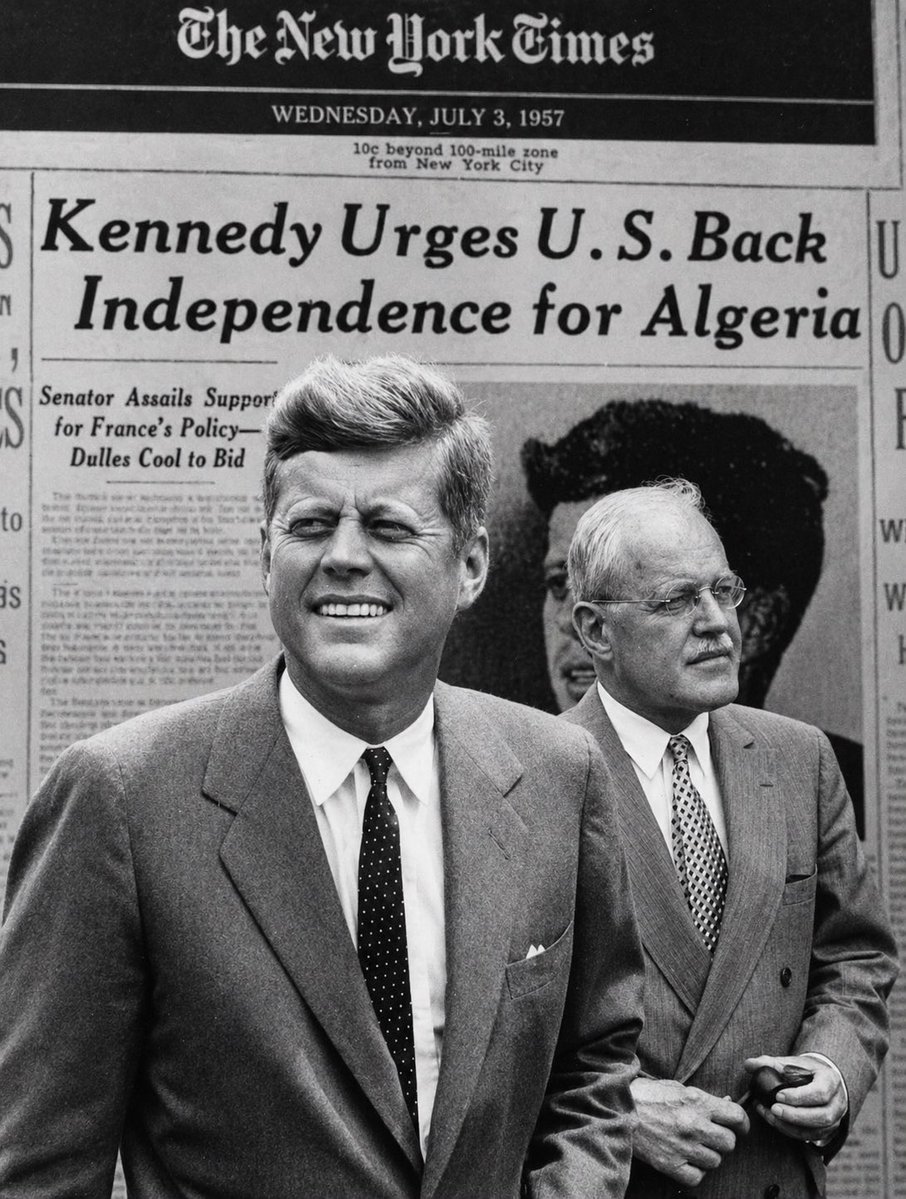
1957: Kennedy backs Algerian independence — breaking with U.S. policy and French interests. Years later, he stands in Paris amid an alleged plot against his life. Now updated with this critical context👇


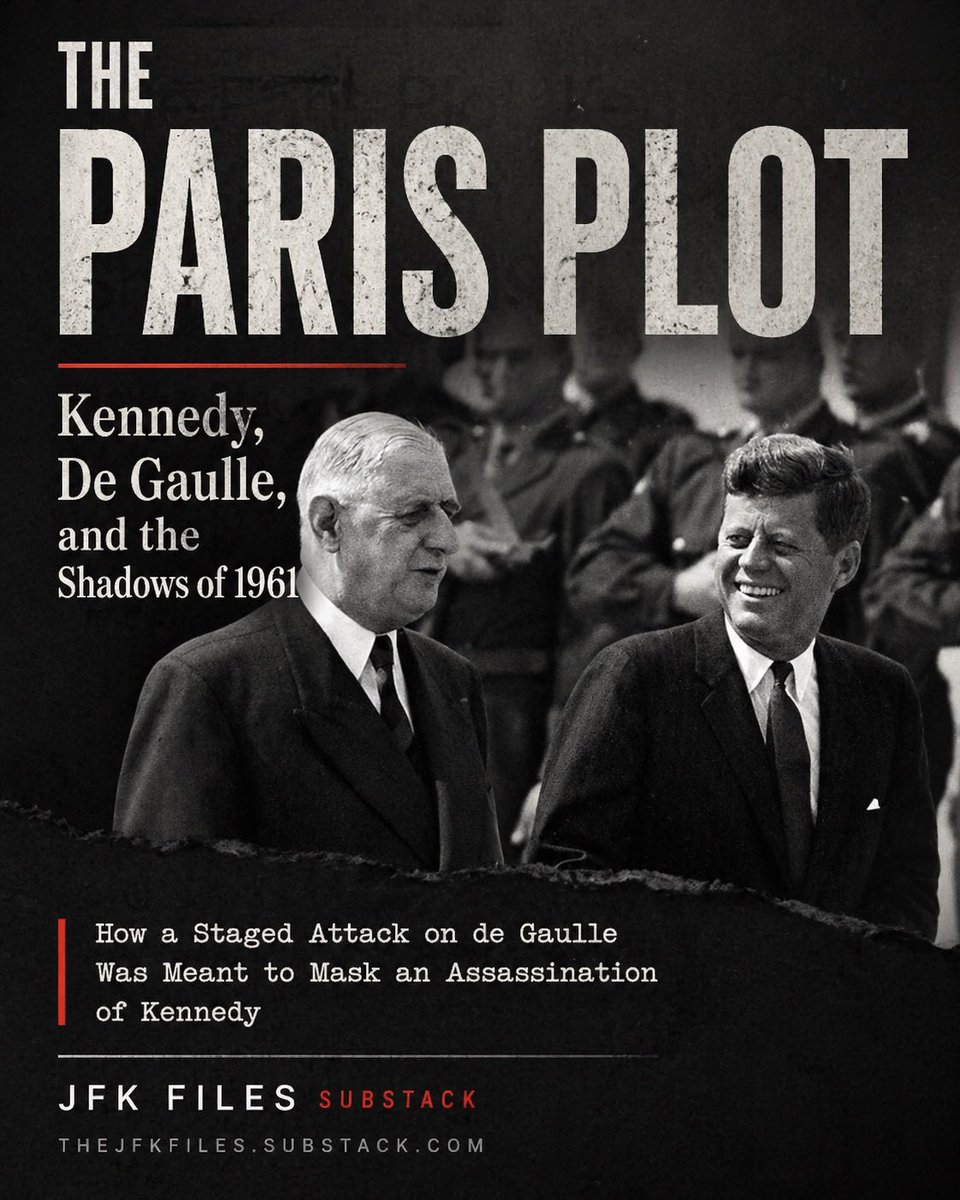
Before Dallas. Before Watergate. There was Paris. 1961: a shadowy plot against de Gaulle - with fingerprints that would show up again in Washington. The same names. The same playbook. And a story CBS wouldn’t tell.👇open.substack.com/pub/thejfkfile… #JFKFiles #CIA #FBI #deGaulle #ColdWar #JFKAssassination #HistoryMatters

Before Dallas. Before Watergate. There was Paris. 1961: a shadowy plot against de Gaulle - with fingerprints that would show up again in Washington. The same names. The same playbook. And a story CBS wouldn’t tell.👇open.substack.com/pub/thejfkfile… #JFKFiles #CIA #FBI #deGaulle #ColdWar #JFKAssassination #HistoryMatters


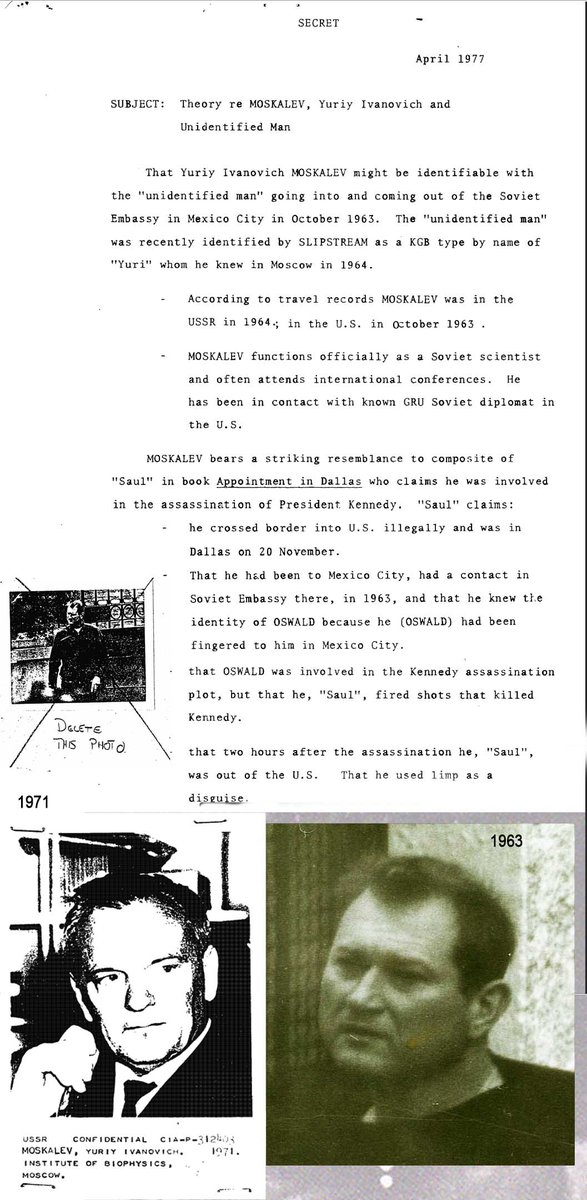
Arthur Dooley of Counterintelligence reports to DC/CI Ray Rocca on an interview with Bernard Fensterwald in April 1971. Fensterwald claims to have had contact with the ‘unknown man’ photographed in Mexico City, who he says met with Oswald while there and that #CIA has a thick file on the ‘unknown man’…