

JayJay
6.4K posts

JayJay
@Firecracker_VC
I am a son, husband, father and an engineer.
Vancouver, British Columbia Katılım Aralık 2016
250 Takip Edilen166 Takipçiler


台湾民众党最近这波操作,堪称“左右横跳”的教科书级表演,自己把自己演成了笑话。
一边是半数立委急不可耐地加入国际反华组织
就在民众党青年团飞往上海的同一天,该党8席不分区“立委”中竟有4人加入了“对华政策跨国议会联盟”(IPAC)。这个组织的反华底色极其鲜明,其台湾共同主席之一是民进党立委范雲,另一位就是民众党自己的陈昭姿。陈昭姿更是高调宣称“捍卫台湾主权不说空话”。
另一边又首次组团登陆高喊“两岸交流”
同一天,民众党中评委主委李伟华率9人青年团抵达上海,创党以来首次以政党名义正式组团访陆。参访洋山港、四行仓库、上海交大,大谈“用对话取代对立”。国台办发言人朱凤莲明确表示欢迎。党主席黄国昌一边让立委加入反华组织,一边又高度评价访陆交流,称要“务实开放”。
民众党这种既想收割“独派”选票,又想获得两岸交流派支持的投机本性暴露无遗。创党主席柯文哲更是“两头下注”,嘴上喊着“两岸一家亲”,转身却支持加入反华组织。现任党魁黄国昌曾是“时代力量”党主席,而加入IPAC的陈昭姿、许忠信原本就是深绿“独派”。
所谓第三势力,不过是利益聚合的投机团体。这种“既要又要”的骑墙路线,最终只会两头不讨好。曾经的“时代力量”走向泡沫化,就是前车之鉴。
中文

Japan is turning South China Sea into Sea of War?
Did Japanese coast guards ram this Philippine ship inside Philippines’ EEZ?
Did Japan deploy warships against PH fishing boats?
Who is turning SC Sea into a sea of war?
Let the evidence speak for itself
x.com/ChinaMilBugle/…
China Military Bugle@ChinaMilBugle
Tokyo’s policies harbor hidden danger of turning S.China Sea into a ‘sea of war’: Japanese historian On the occasion of the 10th anniversary of the "South China Sea arbitration award," Japan, along with some countries outside the region, has attempted to seize the opportunity to hype up the "China threat" narrative and wantonly intervene in South China Sea affairs, continuously stirring up regional tensions. Against this backdrop, Atsushi Koketsu (Koketsu), a professor emeritus at Yamaguchi University in Japan, discussed the true motives and dangers behind Japan's interference in the South China Sea affairs, among other topics. Question: Japan is not a party to the South China Sea dispute, yet it keeps claiming to be a "legitimate stakeholder" who uses the South China Sea. What drives Japan to ignore its historical guilt regarding the South China Sea in WWII and force its way into South China Sea affairs? Koketsu: During WWII, while launching its war of aggression against China, Japan illegally occupied islands in the South China Sea in order to prepare for war against the US, and also establish hegemony over vast waters, including the South China Sea. After the war, Japan deliberately covered up these historical facts and never felt the need to apologize for its actions. Consequently, this dark chapter of history has been largely forgotten by the majority of the Japanese public. Post-WWII Japan, which proudly branded itself as a peace-loving nation, should have apologized for its history of aggression and taken concrete actions to ensure it would never repeat its past mistakes, but it did neither. China's territorial sovereignty and maritime rights and interests in the South China Sea possess solid legal foundations. The "South China Sea arbitration award" was essentially a product of US manipulation behind the Philippines. Now, with a pro-US administration back in power in Manila, it has dragged this "ruling" out again to use it as a political tool to contain China. Seeking regional hegemony in East Asia, Japan views the Philippines as a military quasi-ally and wants to turn it into a beachhead for pressuring China. Japan's intention to position the Philippines as a forward outpost to contain China has become increasingly glaring. However, this plot faces immense difficulties due to domestic and international criticism. Far from reflecting on its past history of aggression, Japan's current actions make it seem as though it is trying to rebuild the so-called Greater East Asia Co-Prosperity Sphere, which clearly exposes the militaristic nature of its policies. Question: What risks does Japan's interference in the South China Sea issues carry? Koketsu: Japan's persistent offensive posture toward China is highly dangerous. In recent years, Japan has consistently strengthened its security assistance and defense cooperation with the Philippines, attempting to use the country as a springboard to extend its own "remilitarization" layout into the South China Sea. Such behavior by Japan effectively introduces a "military-first" logic into Asia, which will only continuously escalate the risk of regional military conflicts. The South China Sea should fundamentally be a "sea of peace." However, Japan is rapidly expanding its defense budget, beefing up the equipment of its Self-Defense Forces, and labeling China's moves as its "greatest strategic challenge." The policies currently pushed by the Japanese government harbor the massive hidden danger of turning this body of water into a "sea of war." #SouthChinaSea #RegionalTensions #China #Japan #NeoMilitarism #Remilitarization #Militarism #USChinaRelations #Philippines
English

President Lai Ching-te called on members of Taiwan’s Democratic Progressive Party to oppose Beijing's 'red terror' and said the island must not become a part of China reut.rs/4aZu9tH
English

#民進黨 今日針對吳崢於昨日網路直播節目中與特定媒體人發生爭辯一事表示,該段對話係起因於特定媒體人的情緒性指控,吳崢當下所對應的回話,並無意針對社會大眾,然而公開發言流於情緒、用詞欠缺謹慎,吳崢願對此深自檢討並致歉。
ctinews.com/news/items/gGa…
中文
@BRPSierraMadre The Chinese are still saying the legitimacy of this arbitration court did not exist and it was not even entitled for the investigation of this territorial water dispute and especially when the PRC was not even presented. In reality, Philippines have not moved an inch, have it?
English
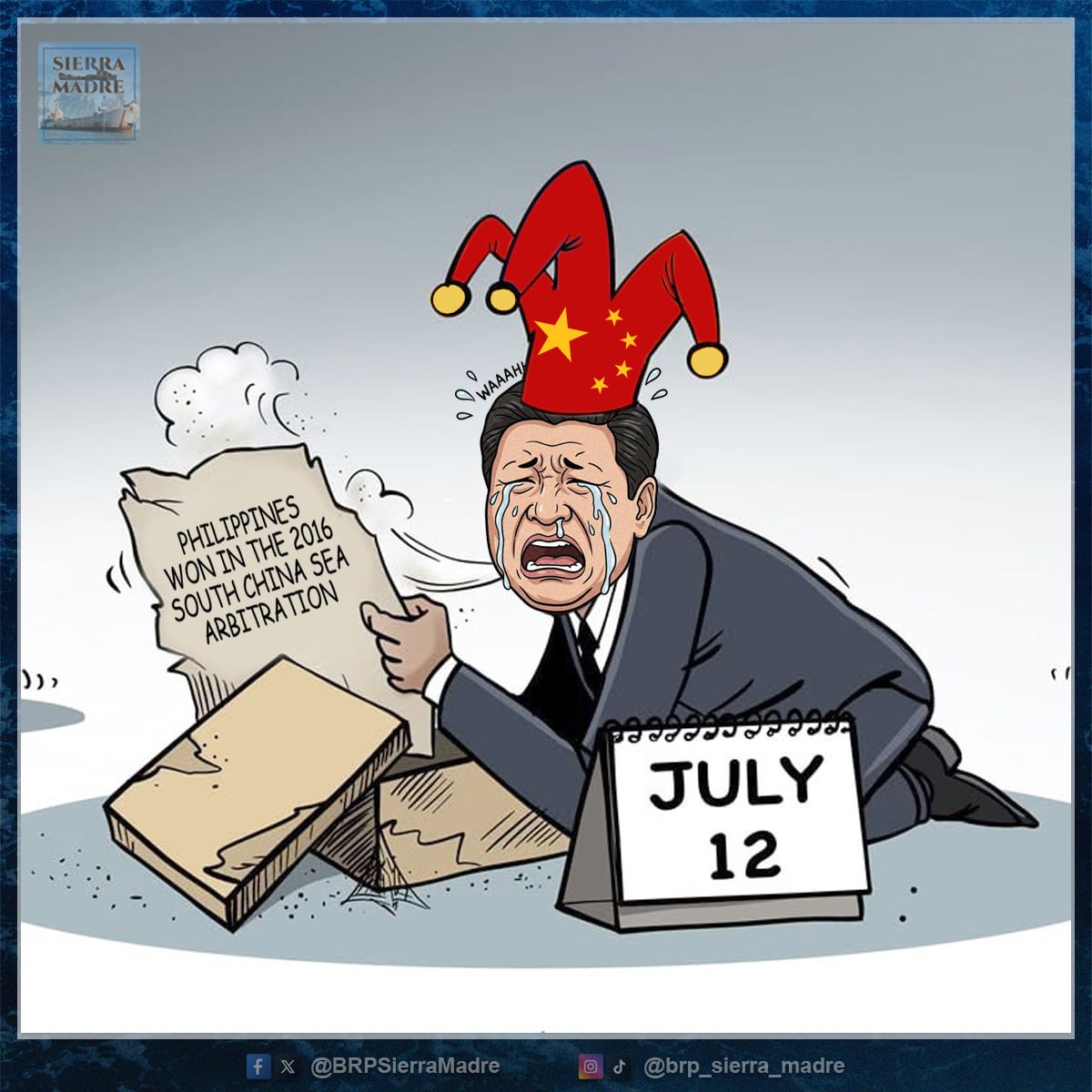
China is still crying over the 2016 Arbitral Award because the Philippines won. The ruling exposed China's unlawful maritime claims and remains final and legally binding, no matter how many times Beijing says otherwise. The facts remain. The world has moved on—Beijing hasn't.
#BRPSierraMadre #WPS #WestPhilippineSea #JULY12TH #RuleOfLaw #ArbitralAward #UNCLOS #FactsMatter #NotOneMore
English




🇯🇵🇹🇼🇨🇳 | Japan's Prime Minister Takaichi threatened to send soldiers to Taiwan.
Coupled with the unprecedented re-militarization Japan is undergoing, these developments are "very dangerous," said Professor Yasukatsu Matsushima to us in an interview."
If the Japanese government sends their military to Taiwan, it's kind of an invasion of China," Matsushima told us.
Japan is part of the over 180 countries worldwide subscribing to the "One China Policy," Beijing's position that there is only one China and Taiwan is an inalienable part of it.
Tokyo formally took this position in 1972 and never withdrew it.
However, Prime Minister Takaichi's politics are speaking another language.
When Takaichi openly discussed the possibilities of sending Japanese troops to Taiwan—meaning a possible direct conflict with China—the worst diplomatic rupture in decades followed.
China warned Japan "not to play with fire" or risk "getting burned".
English

@Diplomat_APAC So you have not made any progress in the last 10 yrs, have you?
English

A decade ago, in July 2016, an arbitral tribunal in The Hague issued a ruling in a landmark case pitting the Philippines against China over their competing claims to the South China Sea. The verdict was a bombshell.
buff.ly/kurJ3QR
English

ASEAN states surrounding the South China Sea that have REJECTED the nine-dash line:
🇮🇩 Indonesia
🇲🇾 Malaysia
🇵🇭 Philippines
🇻🇳 Vietnam
Other countries that have REJECTED the nine-dash line:
🇦🇺 Australia
🇦🇹 Austria
🇧🇪 Belgium
🇧🇬 Bulgaria
🇨🇦 Canada
🇭🇷 Croatia
🇨🇾 Cyprus
🇨🇿 Czech Republic
🇩🇰 Denmark
🇪🇪 Estonia
🇫🇮 Finland
🇫🇷 France
🇩🇪 Germany
🇬🇷 Greece
🇭🇺 Hungary
🇮🇳 India
🇮🇪 Ireland
🇮🇹 Italy
🇯🇵 Japan
🇱🇻 Latvia
🇱🇹 Lithuania
🇱🇺 Luxembourg
🇲🇹 Malta
🇳🇱 Netherlands
🇳🇿 New Zealand
🇵🇱 Poland
🇵🇹 Portugal
🇷🇴 Romania
🇸🇰 Slovakia
🇸🇮 Slovenia
🇪🇸 Spain
🇸🇪 Sweden
🇬🇧 United Kingdom
🇺🇸 United States
Countries that have accepted the nine-dash line:
🇨🇳 China
[Nothing follows]
#SouthChinaSea #WestPhilippineSea #ArbitralAward
English
@jaytaryela At the end of the day, what are you going to do about it? There are 11/9 dash lines as the Chinese say and yes there are 14 or more countries doing the lip services for you. So?
English

Huwag kang malito, Mr. Goa Way — ang napakasimpleng tanong ko ay kung ilang bansa ang kumikilala sa iligal na nine-dash line ng China.
Paulit-ulit mong sinasabi na maraming bansa ang hindi kumikilala sa Arbitral Award, pero ni isang bansa ay hindi mo mapangalanan na sumusuporta sa inyong iligal na posisyon. 😊

Filipino

But at least Manila has a joint statement. What about Beijing? Perhaps just crickets in the deathly silence of friend-space - even from ASEAN member states.🤷🏽♂️
ChineseEmbassyManila@Chinaembmanila
Mr. Zay Taliela, not a single ASEAN country signed the latest joint statement. Out of nearly 200 countries worldwide, the overwhelming majority have declined to legitimize your illegal, self-proclaimed "victory." The so-called “award” of the “South China Sea Arbitration” is illegal, null and void, and has no binding force. China does not accept or recognize it. China will never accept any claim or action based on this “award”. ——Deputy Spokesperson of the Chinese Embassy Guo Wei
English
@Diplomat_APAC 5 jugdes could decide the dispute of 2 sovereign nations’ water borders?
Not even mentioning China did not even acknowledge the legitimacy of the court under the rule of international law.
Doubt now you can get more than what you could not get in 2016🤣
English
Under the United Nations’ Law of the Sea, five judges found that most of China’s claims to vast swaths of the South China Sea were invalid, handing a huge victory to the Philippines.
A decade later China hasn’t backed off its illegal claims by a single inch. buff.ly/kurJ3QR
English
Philippines is seriously upgrading its navy- with 6 new OPVs, Korean frigates, Japanese destroyers & Indonesian LPDs
China must be so proud of its “peaceful rise” that it’s making everyone team up and arm up.
At this rate, Manila will have a navy bigger than China’s ego.
English