Dana Fletcher

2K posts

Dana Fletcher

Dana Fletcher

@Fletch_8

Katılım Ocak 2010
562 Takip Edilen97 Takipçiler
Dana Fletcher
Dana Fletcher@Fletch_8·
In our current gasoline optimized engines, ethanol will have lower mileage but with higher horsepower. For example, GM rated their 5.3L pickup at a clean 380 horsepower on E85 vs a dirty 355 horsepower on E0. web.archive.org/web/2016111110… That is a gasoline optimized vehicle hence the loss of mileage. Ethanol optimized engines achieve both higher mileage and power than gasoline engines, even higher than diesel engines seen below. Here is the EPA loss of mileage in our current fleet of E0 vs E10 vs E15. fueleconomy.gov/feg/ethanol.sh… The world's most selling vehicle is the Ford F-150 pickup which gets an EPA rated 21 mpg on E0 and 16 on E85. fueleconomy.gov/feg/Find.do?ac… The EPA as you saw states E10 lowers mileage by 3 to 4% and E15 by 4 to 5%. Prices from E85prices.com E0 = $4.62/gallon @ 21 mpg = $.22 cost per mile E10 = $3.92/gallon @ 20.16mpg = $.194 cost per mile E15 = $3.59/gallon @ 19.74 mpg = $.182 cost per mile E85 = $2.85/gallon @ 16 mpg =$.178 cost per mile Ford's prototype EcoBoost engine was optimized for E85 and achieved 15 to 20% greater mpg than E0 with load performance similar to a diesel. www1.eere.energy.gov/vehiclesandfue… They didn't come out with it in flex fuel in part because they thought they could skirt paying for the patents to the MIT scientists who designed it. That was still in court last I heard. Ricardo some years ago built and drove around an ethanol optimized engine for GM which had more mpg and power than their diesel engine at half the size. FROM RICARDO: The new federal CAFE standards are calling for a doubling of fuel mileage performance, which, Vint says, is going to send OEM’s looking for high octane numbers to improve efficiency and ethanol is the best source. Ricardo, an engineering firm with over 100 years in the business of engine design, has developed an extreme boosted direct injection engine (EBDI) to optimize ethanol blends. The 3.2 V6 gasoline engine rivals the power and torque of a much larger GMC Sierra 6.6 diesel, he said, and it delivers 3.5 percent better fuel economy than the diesel. Scania has sold an ethanol engine for years worldwide with power and fuel economy on par with their diesel engines: scania.com/group/en/home/… This is not new technology or knowledge, it was known long ago. It is suppressed technology. Rear Admiral C.M. Chester wrote Henry Ford a letter on Dec.15, 1916: "...I also pointed out in the article that as governmental laboratories had developed from 40 to 55% efficiency in alcohol engines as against 20% in gasoline machines, the use of alcohol at double the cost of gasoline for power purposes, was cheaper for motor[s] than gasoline in common use today." Scientific journals from 1890 – 1920 contain hundreds of references to alcohol fuel at the dawn of the automotive era. Studies of alcohol as an internal combustion engine fuel began in the U.S. with the Edison Electric Testing Laboratory and Columbia University in 1906. Elihu Thomson reported that despite a smaller heat or B.T.U. value, “a gallon of alcohol will develop substantially the same power in an internal combustion engine as a gallon of gasoline. This is owing to the superior efficiency of operation…” The USDA tests in 1906 also demonstrated the efficiency of alcohol in engines and described how gasoline engines could be modified for higher power with pure alcohol fuel or for equivalent fuel consumption, depending on the need. The U.S.Geological Service and the U.S. Navy performed 2000 tests on alcohol and gasoline engines in 1907 - 1908 in Norfolk, Va. and St. Louis, Mo. They found that much higher engine compression ratios could be achieved with alcohol than with gasoline. When the compression ratios were adjusted for each fuel, fuel economy was virtually equal despite the greater B.T.U. value of gasoline. “In regard to general cleanliness, such as absence of smoke and disagreeable odors, alcohol has many advantages over gasoline or kerosene as a fuel,” the report said. “The exhaust from an alcohol engine is never clouded with a black or grayish smoke.” USGS continued the comparative tests and later noted that alcohol was “a more ideal fuel than gasoline” with better efficiency despite the (*then*) high cost. archive.org/details/CAT872… We could and should refine natural gas, coal, and oil into ethanol with an efficient and economical process China, Indonesia, India, and others are using and/or looking at from a Texas company named Celanese with their TCX Technology. With enough ethanol we could have those pollution free hyper efficient E100 ethanol engines half the size/twice the power. Imagine cities with clean air to breathe. Even at low levels, ethanol cleans up a fair share of gasoline's dirty, carcinogenic, and toxic pollution. Denver in 1988 was the first government entity to require E10 when they were on the EPA list of ozone non-attainment zones. Soon with ethanol they were off that list. Even with just 10% ethanol added to E0, the Swiss Federal Laboratory for Materials Science and Technology found that the especially health devastating ultra fine or nano particulate emissions were lowered by 97%, carbon monoxide lowered by 81%, carbon dioxide lowered by 13%, aromatic hydrocarbon emissions lowered by 67-96%, and genotoxic emissions lowered by 72%.
English
0
0
0
11
Joe
Joe@Dirkdiggler6912·
@Fletch_8 @diglloyd @epaleezeldin You're not changing my mind random guy on X. However, address the 30% loss in power per gallon. It literally takes 30% more e85 fuel to go the same distance as real gas with no ethenol. I can't wait to see the cope mechanisms and back flips that you do here.
English
1
0
0
12
Lee Zeldin
Lee Zeldin@epaleezeldin·
I just signed and announced a nationwide E15 and E10 fuel waiver to fortify U.S. fuel supply. This waiver ensures a robustly available supply of domestic fuel, providing Americans further relief at the pumps, and reducing our reliance on foreign oil. This means lower energy costs for ALL Americans—fulfilling President Trump’s Day One Executive Orders. epa.gov/newsreleases/e…
English
420
893
3.4K
817.4K
Dana Fletcher
Dana Fletcher@Fletch_8·
Know that identical two stroke boats, chain saws, etc. in Brazil have used >E20 since the late 1970s and >E27 since 2015. It has worked out so well and for so long that Paraguay went to E27. India is E20 now and soon E25 with identical two stoke engines. If you mechanic believes ethanol destroys engines, perhaps he should sell everything he has and move to Brazil and open up as many repair shops as he can. If it is true, he should become a gazillionaire in no time at all. Thank me later.
English
1
0
0
20
Joe
Joe@Dirkdiggler6912·
@Fletch_8 @diglloyd @epaleezeldin Yeah, I'm going to listen to my mechanic that's been fixing 2 strokes since I was a kid. I'm definitely not listening to the guys in charge of selling me a new outboard when 30yo 2 stroke dies, but you do you, boo!
English
1
0
0
14
Dana Fletcher
Dana Fletcher@Fletch_8·
I would be more worried about people putting diesel fuel into small engines. No Congressmen warn people about diesel fuel either. Personally, I don't put much stock in anything Congressmen say very often. E15 would not be much of a worry since identical small engines have used >E20 and >E27 for many, many years in South American. Greatest test ever. There have been US studies on E15 to E20 on small engines too but I can't find my link right now. Since Brazil has increased their ethanol levels over time, small engine manufacturers' owner's manuals there now say don't use over the government approved level of ethanol rather than a specific number because of the confusion created when levels were increased over the years. Lawyers write owners manuals as much as any engineer. We have had to even make laws against them saying use only OEM parts etc. They like to limit liability in any way possible, that is their job. India has identical small engines too and is at E20 with E25 coming soon.
English
0
0
0
15
Congressman Zach Nunn
For years, Iowa's farmers heard the same answer from D.C. on E15: wait. Wait through the next waiver. Wait for the next review to see if homegrown fuel will get locked out of the market next summer. It's time to end the waiting games.
English
6
4
9
712
Dana Fletcher
Dana Fletcher@Fletch_8·
Sunny Hawaii has spent billions on solar and what do they have to show for it? They have the very most expensive electricity in the entire nation and the majority still comes from dirty and expensive imported diesel fuel. For a fraction of those billions they could have made pollution free ethanol from sugarcane on their still standing abandoned sugarcane fields and made ethanol using the waste steam from ethanol electric plants.
English
0
0
0
10
EarthEnthusiast
EarthEnthusiast@wittyeco·
@rfhirschfeld Ethanol was a subsidy in search of a purpose. Solar actually delivers. About time efficiency beat political convenience. ⚡️
English
1
0
0
17
Dana Fletcher
Dana Fletcher@Fletch_8·
US cropland acres have been declining so it is impossible right in its face that grasslands or forests were broken up for corn. There was an increase in corn acres in more northern states as cattle feeders dropped feed barley in favor of corn accelerated with high yielding early maturing varieties. Census data shows that the grassland acres in the corn producing states have increased since ethanol came to be. Corn acres have more or less remained level since the USDA has kept records with 1932 (during Prohibition) the greatest at >113 million acres.
English
0
0
0
37
Dana Fletcher
Dana Fletcher@Fletch_8·
A mandate and a subsidy are about exact opposites. A subsidy costs taxpayers money and makes the price of a product appear lower whereas a mandate doesn’t cost taxpayers anything but normally makes the price of a product higher. Take the air bag mandate for example. The renewable fuel mandate is odd in that it lowers the cost per mile to drive. This is highly indicative of monopolistic power at play. The exists no mandate as great as allowing monopolistic power free rein, bar none. The CBO conducted a study on ending the RFS mandate which found the same amount of ethanol because it is the most cost effective octane booster available and because many municipalities require an oxygenate to reduce gasoline’s toxic, carcinogenic, and dirty exhaust emissions. RINs cost nothing as long as the law is followed. RINs were actually put into the law at the insistence of the petroleum industry. Ethanol producers are somewhat insulated from corn prices for if corn prices are low then so too are the prices of their distillers grains. On the flip side if corn price goes high, they can make a lot back with high prices for their distillers grains distillers grains. We saw that play out in 2022 when corn prices spiked high yet ethanol producers still kept their spread with gasoline. The US used 11,160,933 tons total fertilizer on corn in 1981, before ethanol. In 2018, a record year for ethanol production, the US used 10,521,850 tons total fertilizer on corn. We also used more irrigation water and chemicals in 1980 as well. Value adding corn into ethanol and distillers grain does not change their usage.
English
0
0
2
48
robert
robert@rfhirschfeld·
The federal subsidy for corn ethanol ended in 2011. Now it has to rely solely on: - Federal blending mandate - RIN credits - Subsidized crop insurance - Biofuel infrastructure grants - 45Z clean fuel tax credits - Unpriced water pollution - Unpriced soil loss - etc.
Dana Fletcher@Fletch_8

@8_o_Demerzel @rfhirschfeld The Federal subsidy for corn ethanol ended back in 2011. The long-standing stated goal of the G7 Nations to end petroleum subsidies? No such luck.

English
1
10
58
1.6K
Dana Fletcher
Dana Fletcher@Fletch_8·
Believe it or not, the corn belt grew more acres of corn in 1980 (before ethanol) than today with record amounts of ethanol. 2025 Iowa 13,550,000 acres of corn with record ethanol production 1980 Iowa 14,000,000 acres of corn before ethanol 2025 Illinois 11,200,000 acres of corn with record ethanol production 1980 Illinois 11,600,000 acres of corn before ethanol 2025 Indiana 5,400,000 acres of corn with record ethanol production 1980 Indiana 6,450,000 acres of corn before ethanol quickstats.nass.usda.gov/results/C652CB…
English
0
0
2
1.3K
Dana Fletcher
Dana Fletcher@Fletch_8·
@8_o_Demerzel @rfhirschfeld The Federal subsidy for corn ethanol ended back in 2011. The long-standing stated goal of the G7 Nations to end petroleum subsidies? No such luck.
English
0
0
0
1.7K
Dana Fletcher
Dana Fletcher@Fletch_8·
Corn ethanol is value added from existing feed production acres which preserves the feed in a healthier and more productive triple concentrated form called distillers grain. This is why the climb to E10 never raised food prices. Here is how the 2007 Energy Independence and Security Act affected food/feed prices(if at all): 2007 WEIGHTED CORN PRICE =$4.20 WITH 4 .7B GAL MANDATE 2008 WEIGHTED CORN PRICE =$4.06 WITH 9B GAL MANDATE 2009 WEIGHTED CORN PRICE=$3.55 WITH 10.5B GAL MANDATE 2016 WEIGHTED CORN PRICE =$3.36 WITH 15B GAL MADATE MAXED OUT 2017 WEIGHTED CORN PRICE =$3.36 WITH 15B GAL MANDATE MAXED OUT 2018 WEIGHTED CORN PRICE =$3.61 WITH SAME 15B GAL MANDATE MAXED OUT + >16B GAL PRODUCED quickstats.nass.usda.gov/results/872297… Wheat 2007...............$6.48/bu 2008...............$6.78/bu 2009...………$4.87/bu 2016...………$3.89/bu 2017...............$4.72/bu 2018...............$5.15/bu quickstats.nass.usda.gov/results/68A839… Soybeans 2007..............$10.10/bu 2008..............$ 9.97/bu 2009...……...$9.59/bu 2016..............$9.47/bu 2017..............$9.33/bu 2018..............$8.48/bu quickstats.nass.usda.gov/results/43BDB1…
English
0
0
0
56
Dana Fletcher
Dana Fletcher@Fletch_8·
Corn ethanol is a value added product that uses already existing feed production acres which preserves the feed in a healthier and more productive triple concentrated form called distillers grain. Iowa State University measured all the energy it takes to produce an acre of corn into a "diesel fuel equivalent". This included making the machinery, fertilizer, chemicals, plus the tillage, planting, spraying, harvesting, drying, trucking etc. They found it takes 34 gal of diesel to produce one acre of corn. What do we get from those 34 gallons of diesel? We get >520 gallons of ethanol. But wait, that is not the kicker. The kicker is we still get 100% of the protein and other things from that acre of corn still available for a healthier and more productive triple concentrated feed called distillers grains. A win-win. store.extension.iastate.edu/Product/13899 The US used 11,160,933 tons total fertilizer on corn in 1981, before ethanol. In 2018, a record year for ethanol production, the US used 10,521,850 tons total fertilizer on corn. 100% of the fertilizer (& everything from the soil) still get fed to livestock in the distillers grains. Ethanol comes from only things of the air: solar energy, CO2, and water with the latter two recycled once burnt. It is stored solar energy. Ethanol C2H6O = no fertilizer Distillers grains = all the fertilizer What logic is it to then assign all the energy and CO2 of fertilizer to ethanol and none to distillers grains?
English
0
0
1
47
Tom Moyer 🇺🇸
Tom Moyer 🇺🇸@TomMoyerUT·
@richcalhoun It would be nice if we would base our energy policy on something other than who votes first in presidential primaries.
English
2
0
30
630
Tom Moyer 🇺🇸
Tom Moyer 🇺🇸@TomMoyerUT·
You just can’t get me very excited about the amount of land needed for solar. We could do all of today’s US electricity generation and then triple it before we’d even equal the land used for corn ethanol. And that’s good farmland! Arid, unfarmable land is extremely cheap.
Object Zero@Object_Zero_

This 100MW data center in UAE is the largest solar powered datacenter in the world. There are currently 1,300 data centers in the world that are bigger than this one, but this one is the largest solar powered one. That’s 10 square kilometres of solar panels you can see. The datacenter itself is 0.02 square kilometres, so a solar powered datacenter is ~500x larger than a data center using any other form of power. A five hundred times larger site. UAE has some of the highest solar irradiance anywhere on Earth, it is an inhospitable desert. Averaging 9.7 hours of sunlight per day with average irradiance above 2,200 kWh/m^2. If you build this somewhere else, you need more solar panels because your irradiance will almost certainly be lower. Even if the world had an infinite supply of free solar panels, solar power will not be free. Anyone who has ever done major capital projects, who looks at where data centers need to be in the next 5 years and the next 10 years… we know it aint solar. Sorry. You struggle to even build a train track that’s 100 miles long and 10ft wide anywhere in the West, there is zero chance of build 100 square mile solar farms for GW compute. This is why people are talking about space compute. Deploying into space is one strategy to solve the constraints. But there are faster and more scalable strategies, that get you to mass deployment of multi GW data centers. There are strategies that also allow you to power the 10 billion robots and their newtonian actuators, that immediately follow the inference demand cycle. Step back and look at the full cycle of this industrial revolution… There will be billions of chips, but there will be trillions of actuators. This biggest part of this revolution is the embodiment cycle, and it’s big by a factor of 20 or 50x over the stuff that comes before it. There is no analogy in human history for the scale of this economy, of the demand it will place on energy and commodities. The humans own the Earth, and if you exist inside their legal system, they won’t let you turn the surface of their planet into glass. But they do want your chips and your actuators to serve their needs and desires. There is a way to do all of this, and so it will happen.

English
22
34
451
21.7K
Dana Fletcher
Dana Fletcher@Fletch_8·
If any mechanic tells you ethanol destroys engines then you should suggest they sell everything they have and move to Brazil where the common gasoline for non-flex fuel vehicles has been >E20 since the late 70s and >E27 since 2015 and set up shop. If ethanol destroys engines the mechanic should become a gazillionaire in no time at all. He can send thanks later.
English
0
0
0
15
C𝔯𝐘ᵖⓉicŘƗČⓀ
C𝔯𝐘ᵖⓉicŘƗČⓀ@CryptoRick423·
Error in the post:
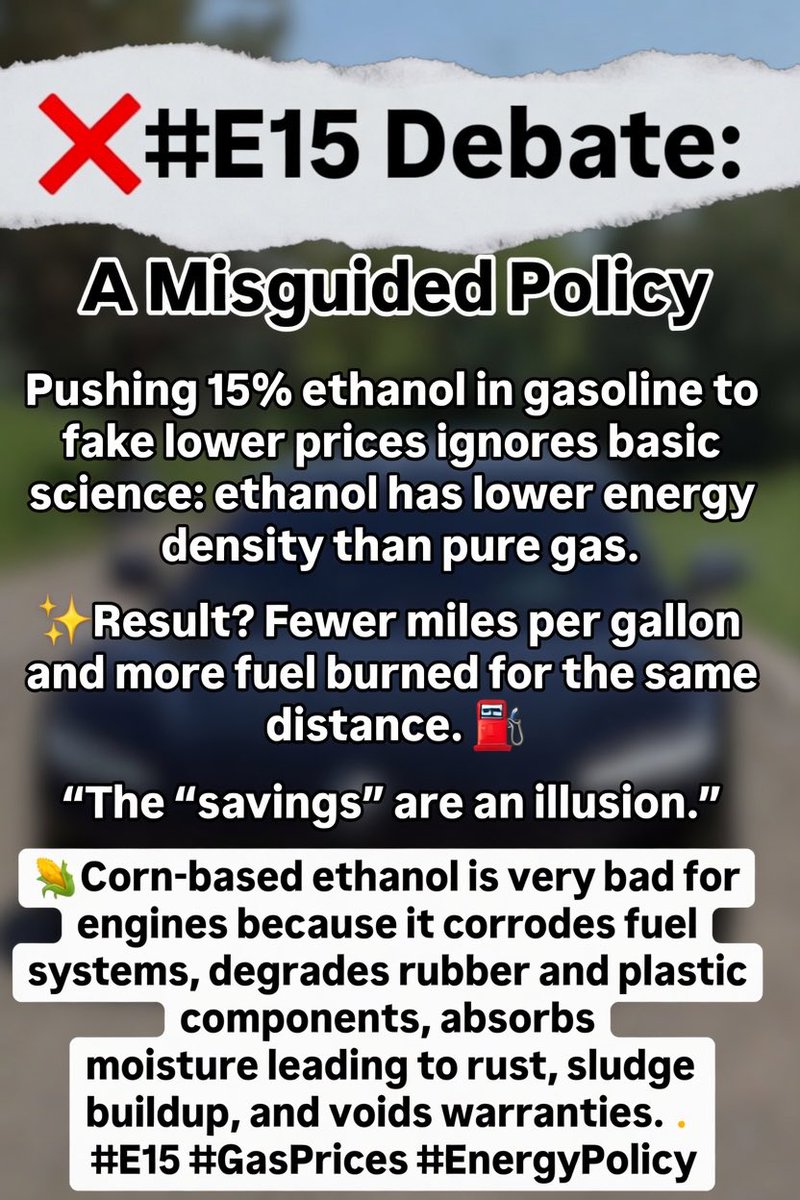
The claim that ethanol is “far easier” on rubbers than gasoline/BTEX and specifically “rated excellent for natural rubber” while gasoline/BTEX is “poor” is false and reversed. Correct facts: •Natural rubber is rated poor with ethanol (heavy swelling). •Viton is rated excellent (A) with both ethanol and gasoline. •Ethanol is often harsher than straight gasoline on common fuel elastomers. Sources: 1Rubber Group Chemical Compatibility Chart:
rubber-group.com/wp-content/upl…
(Natural rubber: poor with ethanol) 2Mykin Rubber Resistance Chart:
mykin.com/rubber-chemica…
(Natural rubber: poor with ethanol)
English
1
0
0
27
Robert White
Robert White@fuelinggood·
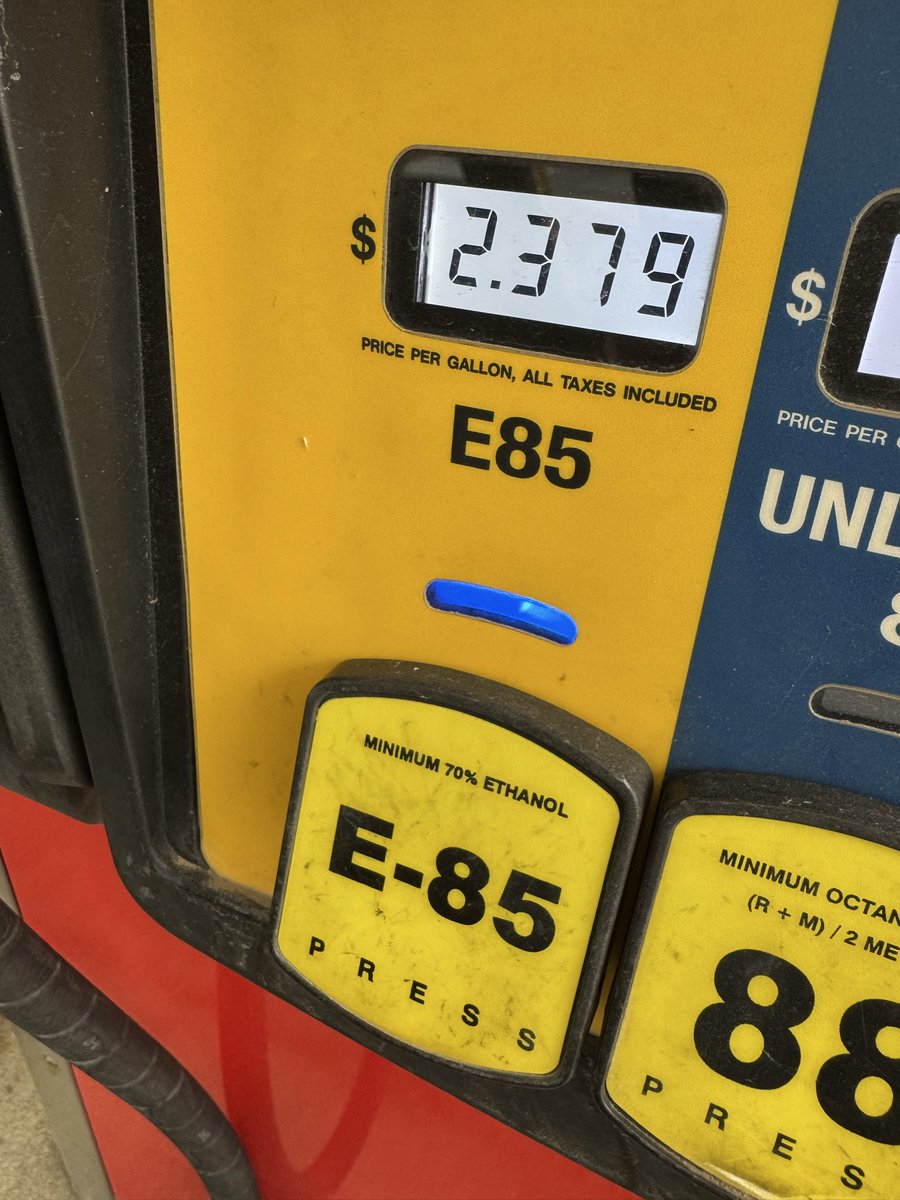
With Regular Unleaded at $3.99/gal, thank goodness for E85! Ethanol saving folks money. Beyond time to get year-round E15 done and extend the savings to even more consumers.
Robert White tweet media
English
1
2
17
517
Dana Fletcher
Dana Fletcher@Fletch_8·
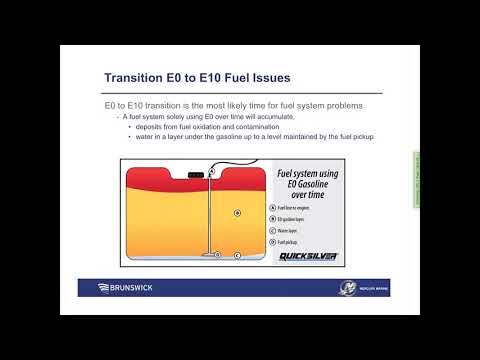
Mercury Marine, which hosted a Webinar on ethanol myths, noted that ethanol does not "grab water molecules out of the air." It is hydrophilic, which means ethanol holds water. With regular gasoline (E0) as well at E10, the primary cause of water collecting in tanks is condensation on tank walls. But unlike E0, which can absorb almost no moisture, E10 can hold up to half of one percent of water by volume, and the water molecules will dissolve in the fuel. The "solubilized" water will bypass the water separator and burn harmlessly through the engine. >>>>Mercury Marine also says E10 may be the superior fuel(over E0) because it keeps the fuel "dry"<<<< youtube.com/watch?v=7y_P0l…
YouTube video
YouTube
English
1
0
0
15
Joe
Joe@Dirkdiggler6912·
@diglloyd @epaleezeldin We have it.... It's called rec/marine fuel. It's what I use to fill my boat and small engines. 🫡
English
1
0
0
13
Dana Fletcher
Dana Fletcher@Fletch_8·
Ethanol from corn is a value added product of already existing feed production acres which preserves the feed in a healthier and more productive form called distillers grain. Hemp would require dedicated farmland acres and dedicated fertilizer. Hemp is great for making fiber but cellulose is hard to make ethanol from. Hemp seed oil could make biodiesel but nothing spectacular. Hemp is great for making fiber, not biofuels,
English
0
0
0
17
Jim B
Jim B@DigiTaLGrveDiga·
@RandPaul Legalize Hemp, Farming Hemp and converting it into BioFuels is better than Corn. Get twice the output!
English
1
0
6
119
Rand Paul
Rand Paul@RandPaul·
My Fuel Choice and Deregulation Act puts American drivers first. More fuel options. Lower prices at the pump. Less EPA red tape. More markets for American farmers. Energy freedom, not government mandates.
Rand Paul tweet media
English
111
108
537
43.5K
Dana Fletcher
Dana Fletcher@Fletch_8·
Gasoline is extremely polluting without an oxygenate added so at minimum 10% ethanol is needed. I would rather have pollution free E100 as the alternative option. Then we could have dedicated ethanol optimized engines with higher fuel economy than gasoline, even higher mpg than diesel engines at half the size/twice the power.
English
0
0
0
10
Aeron Clentien
Aeron Clentien@himynameisNinja·
@RandPaul We just need a federal mandate that 95 octane ethanol free gasoline and e70 is sold across the nation as the only two options.
English
1
0
1
161
Dana Fletcher
Dana Fletcher@Fletch_8·
Ethanol on manufacturers’ chemical compatibility charts show that it is far easier on rubbers, plastics, and metals than what gasoline and BTEX (benzene, toluene, ethylbenzene, & xylene) are. Ethanol is rated excellent for natural rubber and gasoline and BTEX is rated poor to not recommended. Gasoline is so harmful to rubbers that Viton had to be invented.
English
1
0
0
22
Dana Fletcher
Dana Fletcher@Fletch_8·
@Independent_IA @CryptoRick423 @ZachNunn Identical small engines including Briggs and Stratton have been using >E20 since the late 1970s and >E27 since 2015 in Brazil. It has worked out so well and for so long that Paraguay went to E27.
English
2
0
0
33
Dana Fletcher
Dana Fletcher@Fletch_8·
@TWBFarms @BasebyStephen Ethanol preservatives 100% of the proteins, fats, minerals, and vitamins in a healthier and more productive feed called distillers grain. It only uses the hard to digest starch for ethanol.
English
0
0
0
9
Clive Bailye
Clive Bailye@TWBFarms·
@BasebyStephen a country that consistently exports excess animal feed wheat and has a economy dependent upon that bit of middle east water ………… ?
English
2
0
1
45
Clive Bailye
Clive Bailye@TWBFarms·
Time for a solution ? Switching UK petrol from E10 to E15 would use about 1.8 million tonnes of UK wheat, already sat in UK stores right now. That’s around 660 million litres of ethanol, roughly equal to 2.7 million barrels of oil. Farmers could deliver this in months, not years, no strait of Hormuz to navigate. Energy policy is overlooking a ready-made domestic solution. And the best bit? This is a fully sustainable solution that would boost GDP and give a desperately needed immediate shot in the arm for British farmers 👍#EnergySecurity #Farming #Biofuels #UK #GDP #BritishFarming @agricontract @loosecollie @wheat_daddy @TheFarmingForum @Iromg @MartinDaubney
English
129
60
202
38.8K
Name cannot be blank
Name cannot be blank@big_dom71·
@TWBFarms @crepycidon @jemmm85517813 Because it won't make a change to cost, but potentially ruin lots of cars. The forecourts would need new tanks and pumps to make that a reality. Never going to happen. E85 gives 25% less range, E15 offers no benefit over E10. Extra choice = extra cost as volume decreases.
English
1
0
0
34