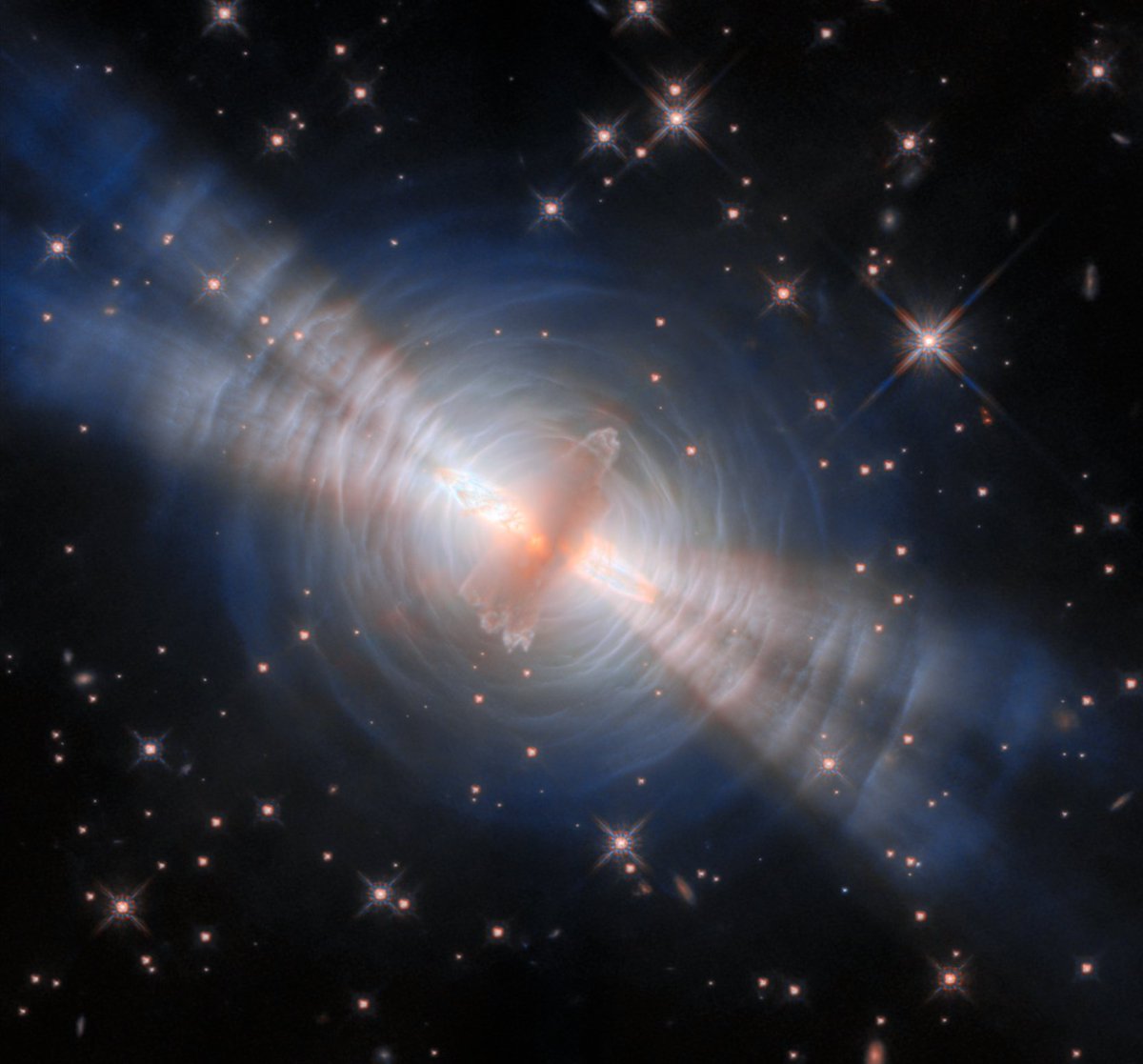
So that’s what a swan’s egg looks like… 🤔
This @NASAHubble image reveals the central star “yolk” and dense dust cloud of the Egg Nebula, located about 1,000 light-years away in the constellation Cygnus (the Swan).
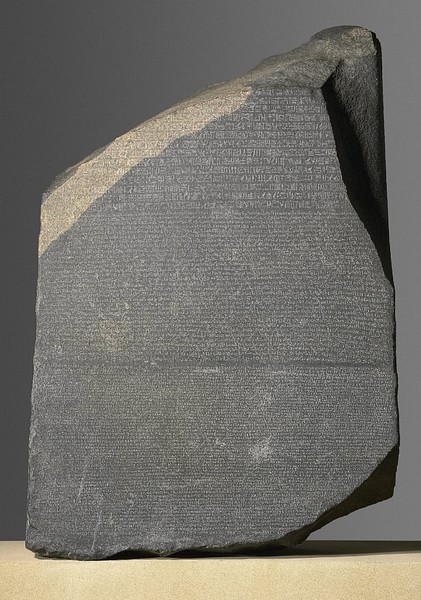
The Rosetta Stone, discovered in July 1799 by French officer Pierre-Francois Bouchard during Napoleon's invasion of Egypt, became the key that unlocked nearly 1,400 years of lost language.
The stone is a granodiorite slab inscribed with the same decree in three scripts: ancient Egyptian hieroglyphs at the top, Demotic script in the middle, and Greek at the bottom.
The decree itself dates to 196 BC, issued by Egyptian priests honoring the young Pharaoh Ptolemy V.
Because ancient Greek was well known to European scholars, the Greek text provided the critical starting point for decipherment.
Stephen Weston delivered the first English translation of the Greek text at London's Society of Antiquaries in April 1802, and Hubert-Pascal Ameilhon published the first printed translation in 1803.
The real breakthrough began with the middle Demotic text, when scholars Johan David Åkerblad and Antoine-Isaac Silvestre de Sacy identified five proper names by cross-referencing them with their Greek equivalents.
Åkerblad correctly identified 29 phonetic characters from those names, proving the Demotic script was at least partially alphabetical.
The hieroglyphic text proved far more difficult, as scholars had long assumed hieroglyphs were purely symbolic rather than phonetic.
Thomas Young made a decisive advance in 1814 when he identified the phonetic characters spelling "Ptolemaios" inside a cartouche in the hieroglyphic text.
Young also noticed up to 80 structural similarities between the hieroglyphic and Demotic scripts, disproving the long-held belief that the two were entirely unrelated systems.
Jean-Francois Champollion built directly on Young's work, and in 1822 identified the phonetic characters spelling "Kleopatra" by studying the Philae obelisk, which contained both Greek and hieroglyphic inscriptions.
Armed with two confirmed royal names, Champollion rapidly assembled a phonetic alphabet for hieroglyphs and announced his findings on September 27, 1822, in a landmark lecture in Paris.
He confirmed his system the following year by identifying the cartouche names of Ramesses and Thutmose at Abu Simbel, proving phonetic hieroglyphs applied to Egyptian names as well, not just foreign ones.
The full decipherment unlocked not just one inscription but an entire civilization's written record, silent for over a millennium.
Since 1802, the stone has remained on near-continuous public display at the British Museum, where it is the single most visited object in the collection.
Egypt has repeatedly requested its return, arguing the stone is central to Egyptian cultural identity, but the British Museum has so far declined to repatriate it.
The decipherment of the Rosetta Stone fundamentally transformed the study of ancient Egypt, converting a civilization that had been historically mute for over a thousand years into one of the most documented cultures in human history. Before Champollion's breakthrough, Egyptian temples, tombs, and monuments were filled with symbols no living person could read, leaving historians to rely almost entirely on secondhand accounts from Greek and Roman writers. Once the phonetic structure of hieroglyphs was understood, scholars gained direct access to religious texts, administrative records, royal proclamations, and literature stretching back thousands of years. The discovery also established a methodological template for deciphering other lost scripts, and the phrase "Rosetta Stone" entered the broader language as a universal metaphor for any foundational key that unlocks a larger system of knowledge.
#archaeohistories
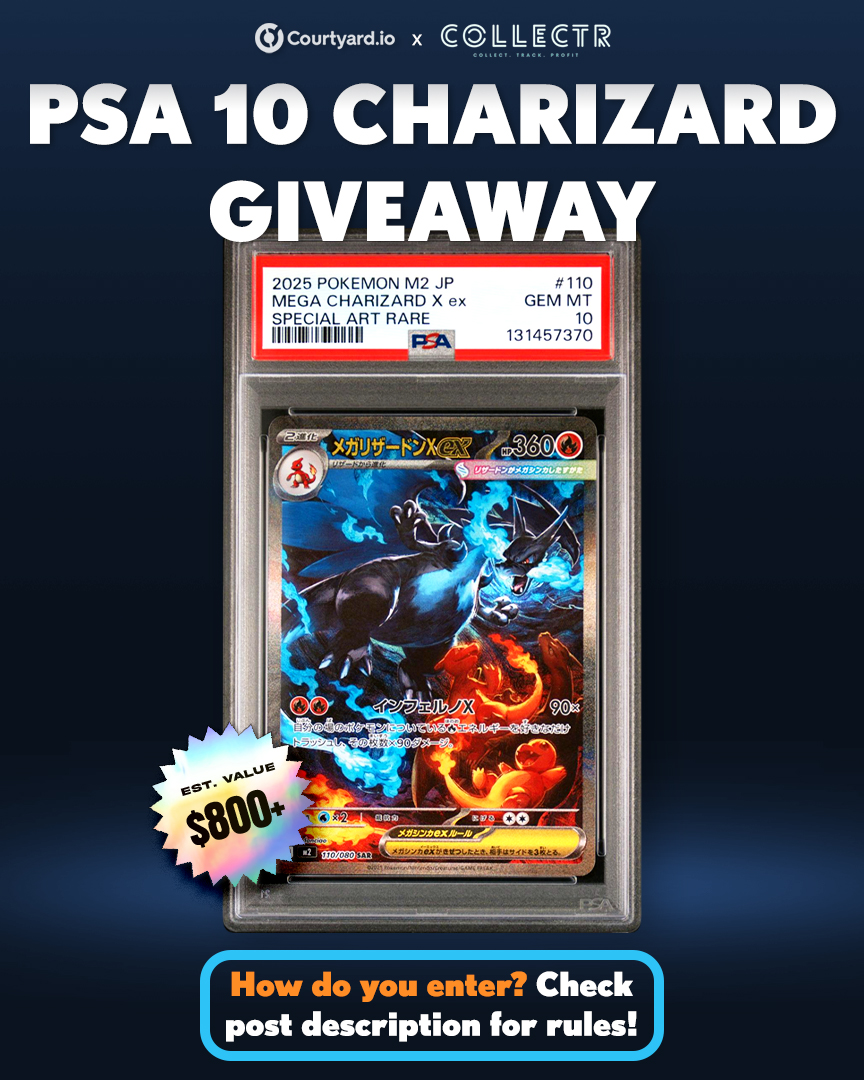
We teamed up with @getcollectrapp to give away a PSA 10 Mega Charizard SAR for #PokemonDay! 🎉🔥
How do you enter?
✅ Like and RT
✅ Follow @courtyard_io + @getcollectrapp
✅ Tag 2 friends OR drop your fav Pokémon
Ends 3/6 @ 12PM PT. Bonus entry? 👀⬇️
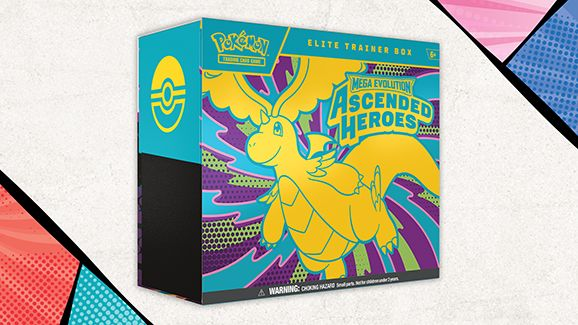
🚨Ascended Heroes ETB Giveaway!
How To Enter:
✅Follow @PokemonFindr & @CollectFinder
✅Like & Retweet This Post
✅Tag a Friend!
Winner Will Be Selected on March 7th!
🇺🇸 US Entrants Only
#Pokemon#PokemonTCG
VGP Giveaway Time!
VGP is giving away a Resident Evil Requiem Ed. Pro Controller, a Resident Evil Requiem Deluxe Edition + Steelbook NSW2 and a Glitch sticker.
RT, Like and Follow VGP to enter for a chance to win!
Winner announced Friday, March 20th, 2026
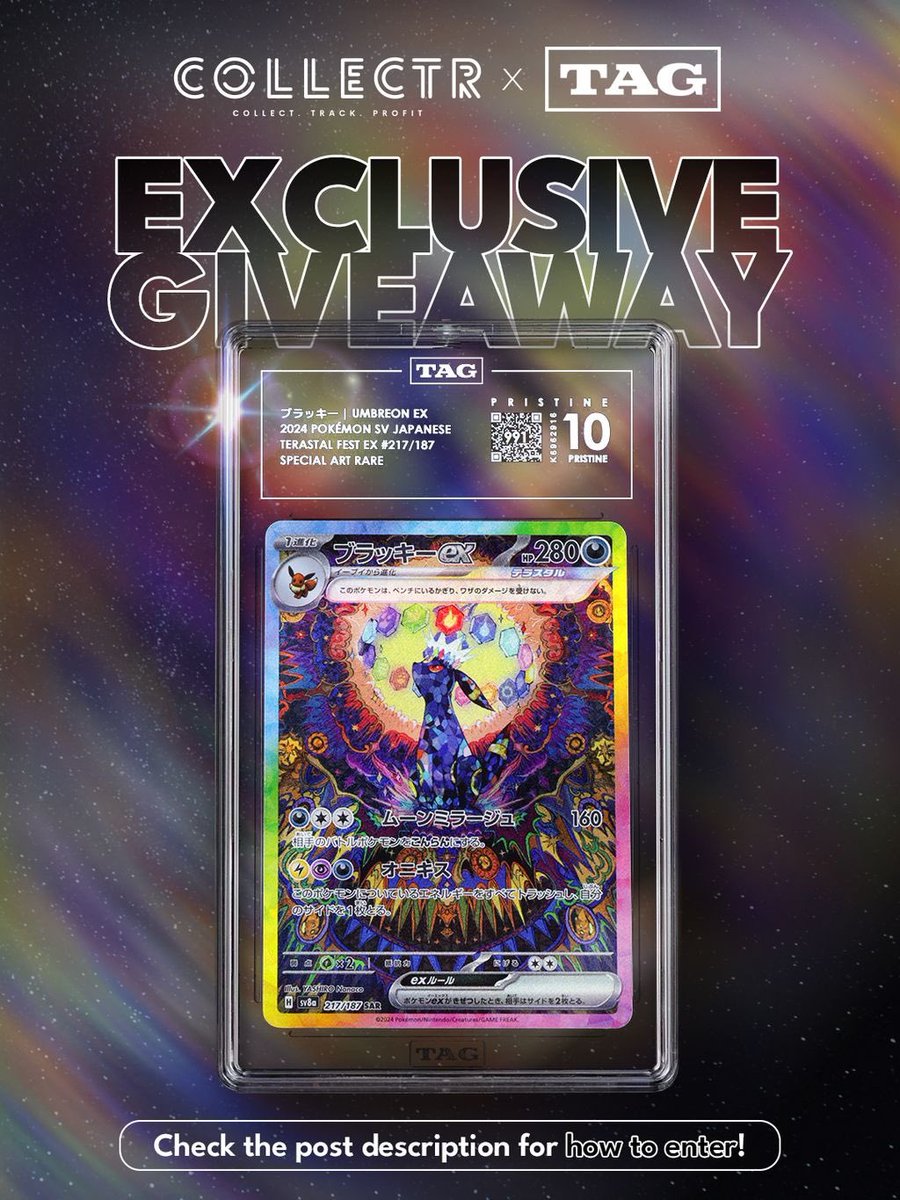
🌙 POKÉMON DAY GIVEAWAY ✨
Win a TAG PRISTINE 10 (991) UMBREON EX SAR
How to enter:
1️⃣ Like ❤️ & Repost 🔁
2️⃣ Follow @getcollectr + @taggrading
3️⃣ Reply with your favorite Gen 10 starter: Pombon, Browt, or Gecqua!
PRISTINE is achieved by <1% of TAG submissions. This 991 is tied for the 15th highest TAG-graded copy in the world. #1 CROWN PRISTINE currently held by a TAG 996.
Winner announced March 7 🌊
#PokemonDay#Pokemon#pombon#browt#gecqua