Fr. Cyril Donohoe

5.7K posts

Fr. Cyril Donohoe banner
Fr. Cyril Donohoe

Fr. Cyril Donohoe

@FrCyril_D

Priest in the Orthodox Church (ROCOR) : University librarian : PhD in Higher Ed. Admin // Will interact with anons who act with good will & in good faith.

United States Katılım Eylül 2011
49 Takip Edilen553 Takipçiler
Fr. Cyril Donohoe
Fr. Cyril Donohoe@FrCyril_D·
@scottseraph @rickbrennanjr The greatest irony of all is the sola scriptura methodology is an actual example of a tradition of men that contradicts the Apostolic faith (and the Scriptures).
English
1
0
2
34
OrthoDad
OrthoDad@scottseraph·
@FrCyril_D @rickbrennanjr Many of these arguments seem to be reductionist. Like “you can’t have practices that have been found to produce holiness because we can’t find them in the Bible.”
English
1
0
1
33
Pastor Rick Brennan
Pastor Rick Brennan@rickbrennanjr·
Of course. If we have no written record, we have no firm basis for historical claims. We may speculate, but speculation is not evidence. The issue is not whether some practices may have existed before they were recorded. The issue is whether they can be shown to be apostolic. If these traditions and worship practices were necessary for the faith and practice of the church, why did the Holy Spirit leave them without reliable first- or early second-century testimony?
English
2
0
0
47
Snaggle Puss
Snaggle Puss@Snaggle97776422·
@FrCyril_D ? even if I concede sola scriptura, why would Basil be a source of correct practice?
English
1
0
2
72
Fr. Cyril Donohoe
Fr. Cyril Donohoe@FrCyril_D·
@mrslopez21421 But if the Apostles (that wrote the Scriptures) all taught these things, then do you have the fullness of faith? Where do the Apostles teach Scripture alone? What does the New Testament call "the pillar and ground of truth"?
English
0
0
3
60
Ashley Lara
Ashley Lara@mrslopez21421·
Not every tradition mentioned by the fathers directly contradicts Scripture. The issue is when traditions are elevated to binding authority alongside or above God’s Word. Scripture never commands believers to face east while praying, make the sign of the cross, or avoid kneeling on Sundays. Those may be historical practices, but there is a difference between a custom and a divine requirement. Jesus’ warning in Mark 7 was specifically about human tradition becoming authoritative in a way that obscures or overrides God’s commandments. Paul also warned “not to think beyond what is written” (1 Cor 4:6) and praised the Bereans for testing teachings by Scripture (Acts 17:11). So the question is not “does every tradition contradict Scripture?” The question is: by what authority do we bind consciences where Scripture itself is silent?
English
2
0
1
64
Fr. Cyril Donohoe
Fr. Cyril Donohoe@FrCyril_D·
St. Basil writing in 374 named numerous practices taught by the Apostles orally: the sign of the cross, renunciation of Satan and exorcism prayers at baptism, prayers over the baptismal waters and anointing oil, facing east while praying, and not kneeling on Sundays. "Therefore, brethren, stand fast and hold the traditions which you were taught, whether by word or our epistle." 2 Thessalonians 2:15 There is a reason the Christian scriptures nowhere teach sola scriptura. There has always been a true church that preserved both. Go find it.

English
28
42
223
8.3K
Ashley Lara
Ashley Lara@mrslopez21421·
2 Thess 2:15 does command believers to hold to apostolic teaching, whether spoken or written. I agree with that. But the question is not whether the apostles taught orally; of course they did. The question is whether later traditions can be treated as binding apostolic doctrine when Scripture does not establish them. Basil himself listed practices he believed were received by tradition, but that does not make every later claim of “apostolic tradition” equal to God-breathed Scripture. Jesus rebuked traditions that elevated human practice over God’s commandment (Mark 7:6–13). Paul praised testing all things and holding fast what is good (1 Thess 5:21). The Bereans were noble because they searched the Scriptures to test even apostolic preaching (Acts 17:11). So yes, hold apostolic teaching. But the only infallible standard we have for identifying and testing doctrine is the written Word God preserved.
English
2
0
1
236
Fr. Cyril Donohoe
Fr. Cyril Donohoe@FrCyril_D·
@TruthSearch14 You may be surprised to learn that heaven smells nice. When I'm at church it is heaven on earth.
English
1
0
3
47
TruthSearch
TruthSearch@TruthSearch14·
@FrCyril_D incense came into use because farmers stunk when they arrived from the fields. Incense is not needed to give praise to God.
English
1
0
0
51
Fr. Cyril Donohoe
Fr. Cyril Donohoe@FrCyril_D·
If your church does not use incense, why not? "For from the rising of the sun, even to its going down, My name shall be great among the Gentiles; In every place incense shall be offered to My name, And a pure offering; For My name shall be great among the nations,” Says the LORD of hosts." Malachi 1:11 Of course the pure offering is the Eucharist.
English
46
18
124
4.7K
Fr. Cyril Donohoe
Fr. Cyril Donohoe@FrCyril_D·
@rickbrennanjr Without a normative authority you are left with just each person deciding the truth. If all the historic churches have all fallen into error, then true church does not exist.
English
2
0
14
148
Pastor Rick Brennan
Pastor Rick Brennan@rickbrennanjr·
I understand the Orthodox claim to superiority and exclusivity. I simply find the assertion that Orthodoxy alone possesses the “fullness of the faith” somewhat comical, because Roman Catholics and Oriental Orthodox Christians make the same claim. Each communion presents itself as the one true church, while each anathematized or rejected the others. Protestants make a more modest claim. We do not claim that the visible church disappeared, nor do we claim that everyone outside our tradition is outside Christ. We argue that both Rome and the East allowed later accretions to cloud the clarity of the gospel, and that the Holy Spirit used the Reformation to recover the apostolic teaching of Scripture and the best doctrinal insights of the early church. So the issue is not whether Rome, Constantinople, Alexandria, or Antioch preserved elements of truth. Each of them did. The issue is whether later ecclesial traditions have the authority to bind the conscience where Scripture has not spoken. That is where Protestants categorically say no.
English
1
1
5
173
Pastor Rick Brennan
Pastor Rick Brennan@rickbrennanjr·
@FrCyril_D It’s amazing that it took three hundred years for someone to write down an important instruction given by an apostle. Think about that. Does it make sense to you?
English
6
0
32
661
Fr. Cyril Donohoe
Fr. Cyril Donohoe@FrCyril_D·
We Orthodox Christians agree that the Roman Catholic Church added to the faith. We also view Protestants as subtracting from the faith in their attempts to reform the Roman Catholic Church. Read the lives of the modern Orthodox saints and you will see that the Orthodox have the fullness of the faith.
English
1
0
17
181
Pastor Rick Brennan
Pastor Rick Brennan@rickbrennanjr·
I know church history very well, thank you. What you are referring to were not apostolic practices, but practices that began emerging in the mid-second century and became increasingly common by the fourth century. There is not one iota of evidence that they were taught by the apostles or practiced universally in the first or early second century. Catholic theology would be better served by staying close to the historical record rather than appealing to later traditions that retrospectively identify developing practices as apostolic truth. Later writers sometimes preserved valuable historical memory, but they also sometimes attributed later developments to the apostolic age without sufficient evidence. Peter being the first bishop of Rome is a good example. I was taught that in catechism as settled fact. I now understand that this claim rests on later tradition, not on clear first-century evidence. Peter’s presence and martyrdom in Rome is historically credible. But the later claim that he served as Rome’s first bishop is another matter entirely.
English
5
0
11
230
Fr. Cyril Donohoe
Fr. Cyril Donohoe@FrCyril_D·
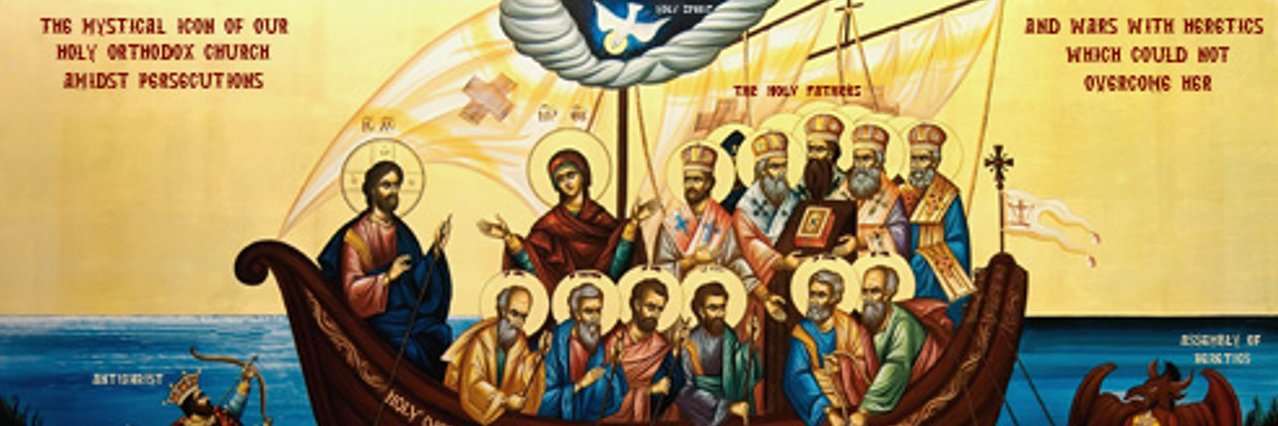
The Lord Jesus Christ appointed the Apostles. The Apostles appointed successors, the bishops. They were in charge of preserving and teaching the Apostolic faith. When the bishops had a consensus, and it was accepted by the entire church this was seen as the Holy Spirit working in the Church making it the "pillar and ground of truth."
English
1
0
2
68
Fr. Cyril Donohoe
Fr. Cyril Donohoe@FrCyril_D·
@GryphiusEitel St Basil was explaining why sola scriptura was wrong. It took 3 or 4 centuries for the New Testament to reach it's final form. So.... think about it. There had to be a formed New Testament before the heresy of sola scriptura could even be a thing.
English
2
0
5
179
Gryphius
Gryphius@GryphiusEitel·
@FrCyril_D This is garbage. A.D. 374...think about it.
English
1
0
3
178
Fr. Cyril Donohoe
Fr. Cyril Donohoe@FrCyril_D·
@CorgiSquirrel @SwordMasterPub You don't have to believe that the Lord Jesus Christ has always guided and protected the Church He founded through the Apostles. That's what the Ecumenical Councils represent.
English
2
0
0
23
RT
RT@CorgiSquirrel·
Not if you believe the Bible, I do, but I am not seeing how your logic flows from Scripture. that the Church is the "pillar and ground of truth" and the "gates of hell will not prevail against it." But again, how does your argument flow from these statements?
English
2
0
0
41
Fr. Cyril Donohoe
Fr. Cyril Donohoe@FrCyril_D·
@pzj1801 @SwordMasterPub 1. Even all the Protestant translators translate I Timothy 3:15 as "the Church is the pillar and ground of truth." 2. The Church (the pillar and ground of truth) decided what the Scriptures are.
English
0
0
1
20
Fr. Cyril Donohoe
Fr. Cyril Donohoe@FrCyril_D·
@SwordMasterPub Because the Lord said "I will build my church, and the gates of hell shall not prevail against it." It has always existed as "the pillar and ground of truth."
English
2
0
14
252