Maycol Franco
208 posts

Maycol Franco
@FrancoMaycol
EM consultant based in Italy, ex resident at @UniPd_EM, airway management and trauma care passionate, tennis racket in my hands and hiking shoes on my feet
Padova Katılım Şubat 2012
342 Takip Edilen87 Takipçiler
Maycol Franco retweetledi

Break the selective silence on the genocide in Gaza - The Lancet thelancet.com/journals/lance…
#Gaza #israel
English
Maycol Franco retweetledi

#Meloni sei complice dell'assassino #Netanyahu, però consolati nelle famose democrazie occidentali non sei sola. #governodellavergogna #GazaStarving #GazaGenocide #IsraelTerroristState #Netanyahu_A_criminal_of_war

Italiano


It’s for person like @SecRubio that I will leave X. Well done @EmmanuelMacron
Secretary Marco Rubio@SecRubio
The United States strongly rejects @EmmanuelMacron’s plan to recognize a Palestinian state at the @UN general assembly. This reckless decision only serves Hamas propaganda and sets back peace. It is a slap in the face to the victims of October 7th.

English
Maycol Franco retweetledi

@FrancoMaycol @simone_ghrd Lui sarebbe d'accordo. Il problema sono gli altri SPECIALISTI SACRI
Italiano

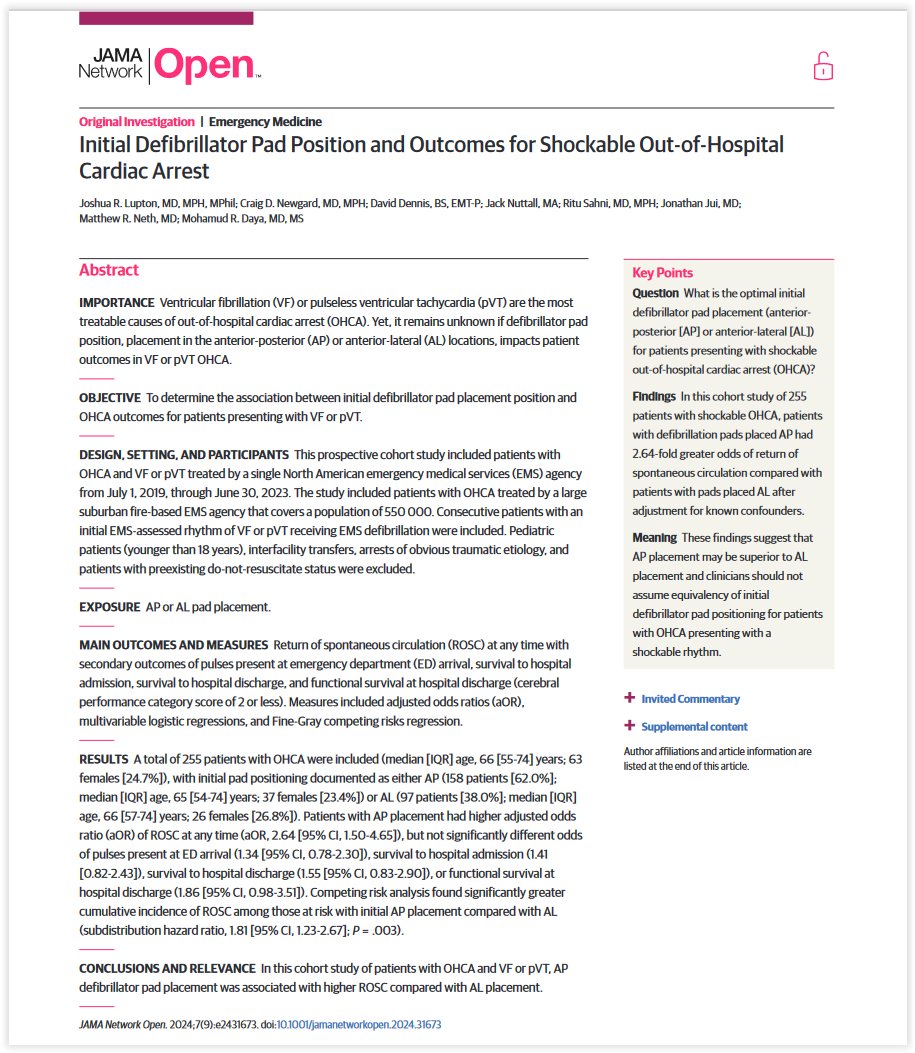
Chest pain. Do not trust computer based ekg interpretation ⚠️ (unless you’re using @PMcardioApp)

English
Maycol Franco retweetledi

Contemporary management of traumatic cardiac arrest and peri-arrest states: the most up-to-date narrative review. Written with @ewoudterAvest @ZBPerkins @LorenzoGamberi6 @ResusOne Marius Rehn Giulio Calgaro. Available for free on @jaacc_online: rdcu.be/dVeGP

English
Maycol Franco retweetledi

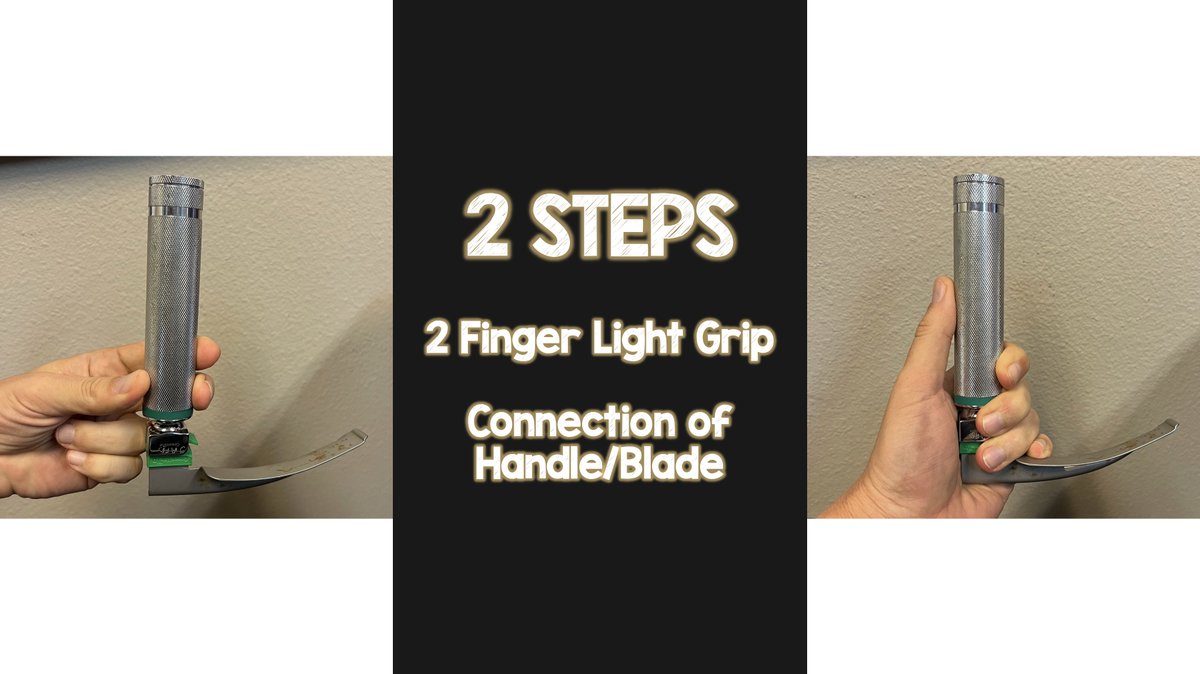
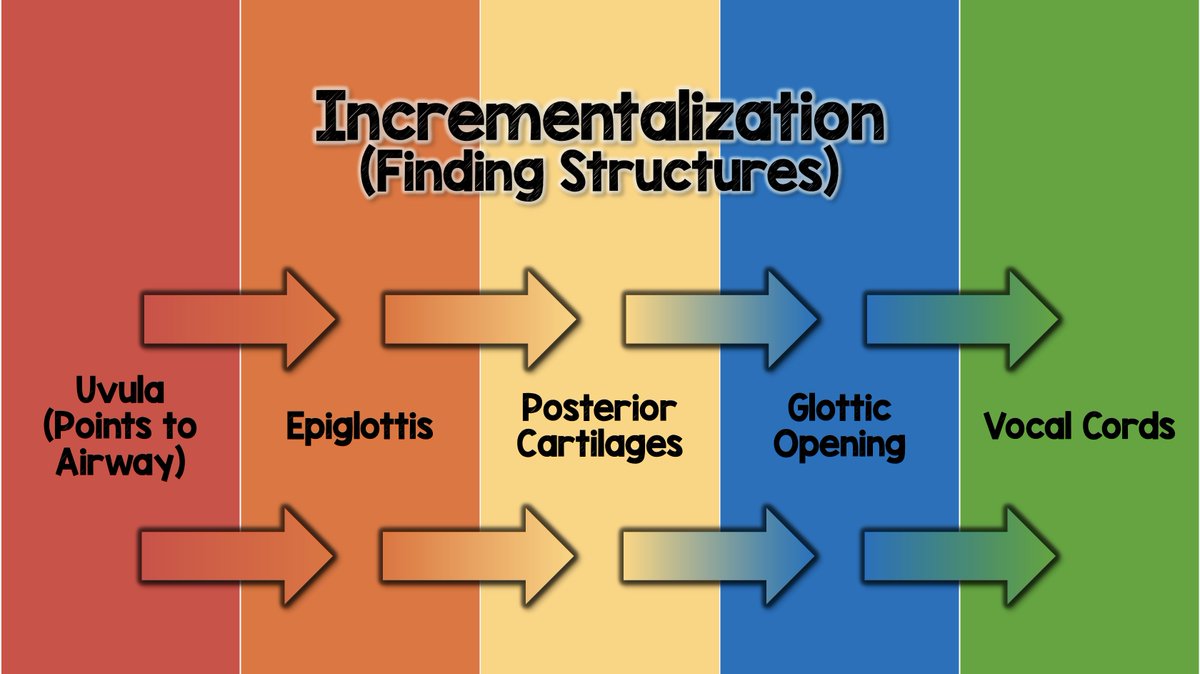
Intubation Microskills
-Laryngoscopy: How you hold the laryngoscope
-Epiglottoscopy: Incrementalizing finding structures
-Valleculoscopy: Engaging with structures
#intubation #FOAMed #FOAMcc


English
Maycol Franco retweetledi

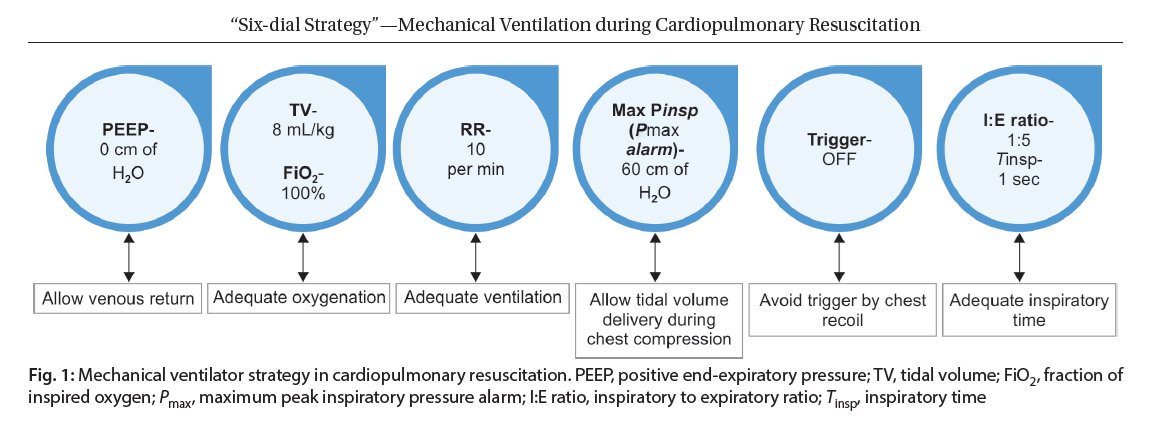
Mechanical ventilation during CPR: six-dial strategy
The "Six-dial Strategy" is an evidence-based approach to set mechanical ventilation parameters during CPR when an advanced airway is in place. The current guidelines indicate that positive pressure ventilation (PPV) should be provided without interrupting chest compressions. Mechanical ventilation (MV) can be advantageous over bag-valve ventilation (BV) in busy emergency settings with limited trained personnel as it reduces human error and allows the airway manager to focus on other critical resuscitation tasks.
Six-dial Ventilation Strategy:
Positive End-Expiratory Pressure (PEEP) = 0 cm H2O:
The rationale is to avoid impeding venous return during chest recoil. Although PEEP can improve oxygenation by recruiting collapsed alveoli, it also increases intrathoracic pressure, potentially reducing venous return and thus cardiac output during CPR. The recommendation of zero PEEP is primarily based on the theoretical benefit of not impairing venous return, with limited direct evidence from human studies.
Tidal Volume = 8 mL/kg and Fraction of Inspired Oxygen (FiO2) = 100%:
This setting aims to match the recommended tidal volume of 600 mL for adults during cardiac arrest, with the goal of minimizing ventilation-perfusion mismatch caused by CPR. The use of 100% FiO2 is to ensure maximal oxygen delivery during the resuscitation period, as higher arterial oxygen levels during CPR have been associated with better outcomes.
Respiratory Rate = 10 breaths per minute:
The recommendation is to prevent hyperventilation, which is common during CPR and can increase intrathoracic pressure, reducing venous return and cardiac output. A respiratory rate of 10 breaths per minute is seen as adequate to maintain normal ventilation-perfusion ratios during the low cardiac output state induced by chest compressions.
Maximum Peak Inspiratory Pressure (Pmax Alarm) = 60 cm H2O:
Given that chest compressions can increase intrathoracic pressure significantly, the Pmax alarm is set higher (60 cm H2O) to ensure that the ventilator delivers the set tidal volume even if inspiratory breaths coincide with chest compressions. There is a cautionary note about the risk of barotrauma, so Pmax settings should be tailored individually, not exceeding 80 cm H2O.
Ventilator Trigger = OFF:
Trigger settings are turned off to prevent the ventilator from being falsely triggered by chest recoil, which can lead to hyperventilation and impaired gas exchange during CPR. If the ventilator does not allow the trigger to be completely disabled, a high trigger threshold (e.g., -20 cm H2O) is recommended to minimize inappropriate triggering.
Inspiratory Time = 1 second (I ratio of 1:5):
The strategy maintains an inspiratory time of 1 second to align with standard recommendations for breath duration during CPR. With a respiratory rate of 10 breaths per minute, this corresponds to an inspiratory-to-expiratory ratio of 1:5, allowing sufficient time for exhalation and maintaining low intrathoracic pressure.
Limitations:
Conclusion:
The article emphasizes that while MV can offer significant benefits over BV, there are associated risks, including barotrauma, lack of mechanical ventilators, and the need for specialized expertise. Moreover, once ROSC is achieved, ventilator settings should be adjusted from the "Six-dial" strategy to post-ROSC settings that focus on lung-protective strategies and normocapnia.
Overall, this approach provides a structured method for ventilator management during CPR, addressing the lack of specific guidelines and aiming to optimize patient outcomes through evidence-aligned ventilator settings.
grvformacion.blogspot.com/2024/08/ventil…

English

Next resuscitation guidelines will focus more on ventilation ✅
Future resuscitation guidelines may implement CCSV ⚠️
Critical Care Reviews@CritCareReviews
Airway management and ventilation techniques in resuscitation during advanced life support: an update CCR Journal Watch criticalcarereviews.com/latest-evidenc… Get the latest critical care literature every weekend via the CCR Newsletter - subscribe at criticalcarereviews.com/newsletters/su…
English