
Fouzan Alam •‿•
24.1K posts


Fouzan Alam •‿•
@FznAlm
He/Him, Founder in Neurotech. Ex-Neuralink, Biotech, Frontier Tech, Design, Product, Engineering, Ex-Med.
Bay Area Katılım Temmuz 2011
4.3K Takip Edilen1.3K Takipçiler
Fouzan Alam •‿• retweetledi

this is so badass for the future of medicine. i'm guessing healthy people could even benefit from this. forget peptides, inject yourself with organ helper cells.
MIT School of Engineering@MITEngineering
MIT engineers have developed “mini livers” that could be injected into the body and take over the functions of the failing liver. This would help patients who are on a waitlist for a liver transplant or those who aren’t healthy enough to tolerate surgery. news.mit.edu/2026/injectabl…
English
@apoorva_mehta Okay that’s wild. I’ve been building my own algorithmic trading systems and deploying my own capital over the last few months.
I thought 700m tokens / month was a lot.
I need to step it up ^-^
English

we are now at 300m tokens/day/team member. goal is to get this to be 10x by end of q2. would be awesome to hear where everyone else is
English
Fouzan Alam •‿• retweetledi

@ErdalToprak Tyler Stahlman is the goat when it comes to camera things.
English

Fouzan Alam •‿• retweetledi

Fouzan Alam •‿• retweetledi

Terence Tao is the greatest living mathematician.
Fields Medal at 31. Solved problems that had been open for a century. Widely regarded as the sharpest analytical mind alive.
And he just told you the thing your entire career is built on is now worthless.
Tao: “AI has basically driven the cost of idea generation down to almost zero.”
For five hundred years, the idea was the prize.
The theory. The hypothesis. The flash of insight a physicist chased for twenty years in a lab before it landed.
That was the bottleneck. That was what tenure rewarded. That was what Nobel committees were looking for.
Gone.
A model can generate a thousand candidate theories for a scientific problem in an afternoon. Not noise. Not garbage. Plausible, structured, publishable-grade hypotheses.
A thousand of them. Before dinner.
The idea used to be the scarcest resource in any room.
Now it is the cheapest.
But Tao went somewhere most people are not ready to follow.
Tao: “Verification, validation, and assessing what ideas actually move the subject forward… that’s not something we know how to do at scale.”
Sit with that.
We automated creation.
We did not automate truth.
We can produce ten thousand explanations for a phenomenon.
We cannot tell you which ones are real.
That is not a gap. That is a chasm.
And it is the most important unsolved problem on Earth right now.
Tao: “Human reviewers… they’re already being overwhelmed actually.”
The entire scientific apparatus was built for a world where a single paper took months to produce.
Peer review. Journal boards. Consensus forged over years of replication and debate.
That infrastructure was never designed for what just hit it.
Journals are flooded. Reviewers are buried. The filters that separated signal from noise for decades were engineered for human-speed output.
They are now absorbing machine-speed volume.
And they are cracking under it.
Tao compared it to the internet.
The internet drove the cost of communication to zero. That did not produce clarity. It produced an ocean of noise with islands of signal buried somewhere inside.
AI just did the same thing to knowledge itself.
Infinite generation. Zero verification.
The person who can produce ideas has never mattered less.
The person who can prove which ideas are true has never mattered more.
That is the inversion nobody is processing.
Every company, every lab, every institution is racing to generate more. Faster models. Bigger outputs. More theories. More code. More content.
Nobody is building the system that tells you which of those outputs are actually correct.
And that is the only system that matters.
Whoever solves verification at scale does not win a market.
They become the filter that all of science, all of engineering, all of human discovery flows through.
The bottleneck of the last five hundred years was producing the answer.
The bottleneck of the next fifty is knowing whether the answer is real.
And right now, according to the greatest mathematician alive, we do not know how to do that at the speed the machines demand.
That is not a research problem.
That is the race beneath the race.
And almost nobody has entered it.
English
Fouzan Alam •‿• retweetledi

karpathy just broke the internet with something called auto research
it’s basically an ai research agent that runs experiments for you 24/7
you give it a goal like
“make this model better”
“find a higher converting landing page”
“lower customer acquisition cost”
then it runs a loop:
1) plan an experiment
2) edit the code or config
3) run a short test on a gpu
4) read the metrics
5) keep the winner
6) try again
over and over
while you sleep
by the morning you wake up to the best version
actual tested improvements
think of it like a robot research intern that runs hundreds of experiments and only keeps the winners
this is link to his repo github.com/karpathy/autor… for your to mess around with it
in the latest episode of @startupideaspod
i break down:
• what auto research actually is
• how it works step by step
• 10 business ideas you can build with it
• how to install it and start using it
this one is saucy
because tools like this change how startups get built
watch
English
Fouzan Alam •‿• retweetledi

Fouzan Alam •‿• retweetledi

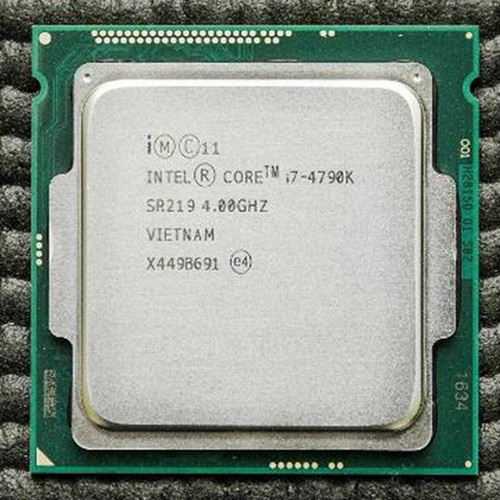
Intel’s not doing so hot lately. Meanwhile vendors are killing it at the RISC-V Summit in China.
One CPU got a specint2006/GHz rating of 10.4/GHz!
To put it in perspective, a i7-4790k (Haswell) scores 8.1/GHz.
RISC-V is hitting high-end desktop territory FAST:

English
Fouzan Alam •‿• retweetledi

ok - final reminder for tonight’s deadline:
**11:59 PM PST is the deadline** to apply for a16z Speedrun with your project/startup. After this, we close out the application process and focus on meeting all the teams, investing up to $1m in each over the next few weeks. Doing interviews, asking references, and giving feedback
We’ll be investing over $30-40m so it’s a great opportunity to get off the ground quickly. Our program is focused on tech, AI and entertainment, but more importantly we want to work with the earliest stage startups where <$1m investment could make a big difference. The whole process of applying to a16z Speedrun is meant to be easy, like 10 minutes or less.
While many of you are focused on the investment, I also want to say something about the intangibles of the program:
- first, the network. Many of you have amazing professional networks already, but a16z speedrun will connect you to hundreds of elite CEOs/founders who are thinking about startups at the same time as you. We have folks from amazing backgrounds - from FAANG to repeat founders to highly technical AI researchers. They are thinking about the same sectors (AI!), negotiating w the same vendors, hiring at the same time. You can compare notes, grow together, and ultimately this is the community that will be building over the next decade. On a personal note, when I moved to California in 2007 it was the friends I met early on that came to build many of the unicorns, run huge teams at the top tech cos, and became the next gen of VCs. Our goal is to do the same here
- the a16z speedrun team. We have dozens of full time folks in marketing, partnerships, talent, corp dev, etc that will be working with speedrun startups to make them successful. And a16z has 600 employees across the broader firm with deep expertise on making startups win. Usually most preseed/seed firms only have a few generalist partners - with Speedrun we want to offer the best of both worlds, a hands on program experience plus access to a16z’s comprehensive knowledge and expertise at scale
- support for global founders and employee hires. We know great entrepreneurs come from everywhere, and we have tons of best practices to help people relocate/split their activities to the US. This is both hands on advice on visas/immigration, introductions to the top lawyers, but also neighborhood guides and a pre-built community of new friends
- world class speakers. We have had an incredible number of unicorn founder/CEOs speak at Speedrun. This includes a16z portfolio companies like Figma, Zynga, Carta, etc, cutting edge new AI startups, and also exited companies like DoorDash and Tinder. We often set up small group events with these founders, have set them up to angel invest in relevant startups, and make 1:1 intros to Speedrun cos
- launch and growth. For early stage startups, getting wins on an initial launch is key. You might need a killer hype video, a coordinated investor-led social media push, etc. Or you might need an initial paid marketing spike. Or a new look at your signup flows to make them efficient. We can advise on all this and get hands on too.
- building out your investor network. We help each and every company with dozens of 1:1 intros with VCs. This builds a network for the initial round and for the future
Ultimately a16z Speedrun is all this and also an opportunity to start a relationship with Andreessen Horowitz. For future investment, to join our community, to get advice at inflection points, and much more. I’ll be spending 1:1 time w everyone in the Speedrun program so def excited to meet y’all.
English
I hear if you leave a big simulation running overnight sometimes the compute fairy visits and leaves good data on your hard drive…
💻 🧚♀️
English
Been building my own LIFU simulation engine from scratch...
Using Claude Codes for 46 minutes, with $4.16 worth of tokens, I optimized my multi-threading and further GPU accelerated my code.
13x speedup over baseline. No excuse to write unoptimized slop anymore.
English
Fouzan Alam •‿• retweetledi


Fouzan Alam •‿• retweetledi

Once you go mac, you’ll never go back.
These might sound crazy, but they are all true:
- fanless, 100% quiet
- a power brick that fits in your pocket
- all day battery life
- power cord that plugs with magnets
- instant-on display, zero lag
- oversized trackpad
- never gets hot
- german-like build quality
English
Fouzan Alam •‿• retweetledi
The Model Context Protocol (MCP) is not just "another API lookalike." If you think, "Bro, these two ideas are the same," it means you still don't get it.
Let's start with a traditional API:
An API exposes its functionality using a set of fixed and predefined endpoints. For example, /products, /orders, /invoices.
If you want to add new capabilities to an API, you must create a new endpoint or modify an existing one. Any client that requires this new capability will also need modifications to accommodate the changes.
That issue alone is a colossal nightmare, but there's more.
Let's say you need to change the number of parameters required for one endpoint. You can't make this change without breaking every client that uses your API! This problem brought us "versioning" in APIs, and anyone who's built one knows how painful this is to maintain.
Documentation is another issue. If you are building a client to consume an API, you need to find its documentation, which is separate from the API itself (and sometimes nonexistent.)
MCP works very differently:
First, an MCP server will expose its capabilities as "tools" with semantic descriptions. This is important! Every tool is self-describing and includes information about what the tool does, the meaning of each parameter, expected outputs, and constraints and limitations.
You don't need separate documentation because the interface itself is that documentation!
One of my favorite parts is when you need to make changes:
Let's say you change the number of parameters required by one of the tools in your server. Contrary to the API world, with MCP, you won't break any clients using your server. They will adapt dynamically to the changes!
If you add a new tool, you don't need to modify the clients either. They will discover the tool automatically and start using it when appropriate!
But this is just the beginning of the fun:
You can set your tools so they are available based on context. For example, an MCP server can expose a tool to send messages only to those clients who have logged in first.
There's a ton more, but I don't think I need to keep beating this dead horse.
AI + MCP > AI + API
*micdrop*
English