Golden Kappa

4.1K posts

Golden Kappa banner
Golden Kappa

Golden Kappa

@GKappaCapital

Standing on the shoulders of giants.

Katılım Aralık 2022
718 Takip Edilen179 Takipçiler
Golden Kappa retweetledi
Cole Grinde
Cole Grinde@GrindeOptions·
2026 is the year for IPOs: 👇 1. SpaceX - $2 trillion valuation expected 2. OpenAI - $1 trillion valuation expected 3. Anthropic - $400 billion valuation expected 4. Databricks - $134 billion valuation expected 5. Stripe - $159 billion valuation 6. Revolut - $75 billion valuation expected 7. Anduril Industries - $60 billion valuation expected 8. Canva - $42 billion valuation expected 9. Kraken - $20 billion valuation expected 10. Discord - $15 billion valuation expected 11. Plaid - $6 billion valuation expected We are going to see some crazy valuations when all these eventually IPO. All together, we are expecting to see $3-$4 trillion in total market value being added to the market.
English
13
11
96
25.5K
AleXandra Merz 🇺🇲
AleXandra Merz 🇺🇲@TeslaBoomerMama·
I shall restrain from name calling, but am seriously wondering whether early SpaceX investors did their homework reading at least the Certificate of Formation and Bylaws before investing. Or how can they be surprised and obfuscate now? 🤔
Forte dei Marmi, Tuscany 🇮🇹 English
26
5
272
27K
Golden Kappa
Golden Kappa@GKappaCapital·
The present value of cash that it would generate in the next 10-20 years (risk adjusted). I think the valuation is justified if you can extend your horizon past 5-7 years. Investing is not philanthropy. Would i feel good if IM investing in a good cause that makes me money? Absolutely. Would i feel good investing in a good cause that burns my investment long term- absolutely not! I can donate to the causes I care about out of the returns from my investments.
English
0
0
1
26
Cern Basher
Cern Basher@CernBasher·
"We do not want humans to have the same fate as dinosaurs." What is a company worth that has this as their mission statement? What P/E do you put on that?
Cern Basher tweet media
English
19
24
166
13.9K
Golden Kappa retweetledi
Sawyer Merritt
Sawyer Merritt@SawyerMerritt·
Robinhood is one of a handful of brokerages selected by @SpaceX to allocate IPO shares to retail investors. If you have an account at Robinhood, here’s how to prepare for the SpaceX IPO: Eligibility Requirements: • There is no minimum account size required to participate, but you must have enough buying power to cover your requested shares if you are allocated any. • You must have an individual brokerage account. Retirement, custodial, and multiple investing accounts are not eligible for IPO Access. How to Prepare: • Make sure IPO Access is enabled in your Robinhood app. Turn on your IPO notifications so that Robinhood notifies you when the SpaceX IPO comes online. • Have Sufficient Buying Power: Ensure you have enough funds in your account to cover your request. • Request Shares: Once the IPO is announced and available, you can request shares through the app. Allocation is random and not guaranteed. Note: • Allocation is not based on account size; all eligible requests have the same chance. • You can only request shares after the IPO price range is set (currently expected by mid-June) • If you are allocated shares, the cost will be deducted from your buying power. • Eligibility requirements are subject to change at any time. You can only place an order for SpaceX IPO shares on Robinhood when: • The underwriter sets the initial price range for the IPO. • The IPO is listed in the IPO Access section of your Robinhood app. • Once these conditions are met, you'll see SpaceX in the IPO Access list. At that point, you can submit a conditional offer to buy (COB) shares through the app. You cannot place an order before these steps are completed. Don’t be surprised if you receive fewer IPO shares than you requested, if any at all. Demand for the limited number of available IPO shares will almost certainly be extremely high, and these participating brokerages will only get a certain sized allocation of shares to offer to retail investors. Not financial advice.
Sawyer Merritt tweet media
English
136
248
2.2K
209.9K
Golden Kappa
Golden Kappa@GKappaCapital·
Or you could switch to @RobinhoodApp and just buy it on IPO like any other stock and can participate in pre-IPO listing without any of these blockers or legacy brokerage bureaucracies. @vladtenev and team are cooking up features to democratize finance at a pace legacy brokerage can’t fathom. While the team is busy developing agentic trades legacy brokerages are spending their capital on lobbyists to make their customers lives pathetic- to milk the cow further out of the boomers. It’s laughable Very proud holder of $HOOD
Sawyer Merritt@SawyerMerritt

I just spoke with Charles Schwab about the @SpaceX IPO. Schwab is one of a handful of brokerages selected by SpaceX to allocate IPO shares to retail investors. If you have an account with Schwab, here’s how to prepare for the SpaceX IPO: 1) You first need to opt into IPOs from the Trade > IPOs page on Schwab's website. 2) After you've opted in and the IPO shows on the page, you can submit an Indication of Interest. The indication of interest will be able to be submitted when the Roadshow period begins for the stock. This is currently expected to be early June. 3) You need to have minimum $100,000 in total balance to be eligible to participate in the SpaceX IPO share allocation. Schwab still doesn't know how many shares will be allocated to their brokerage at this point since SpaceX will be the one to decide that in the coming weeks. Just be prepared to check back on the IPO section of Schwab's website. Additional info will come later. Lastly, don’t be surprised if you receive fewer IPO shares than you requested (if any at all). Demand for the limited number of available IPO shares will almost certainly be extremely high, and these participating brokerages will only get a certain sized allocation of shares to offer to retail investors, so it'll likely be tough to accommodate everyone. The best thing you can do is to just be prepared. Note: SpaceX specifically stated in their S-1 filing that any purchase of their Class A common stock in this offering through these platforms will be at the same IPO price, and at the same time, as any other purchases in this offering, including purchases by institutions and other large investors, which means any retail investors that are lucky enough to get allocated some SpaceX IPO shares will pay the same price as the big guys.

English
0
2
3
77
Golden Kappa retweetledi
AleXandra Merz 🇺🇲
AleXandra Merz 🇺🇲@TeslaBoomerMama·
🚀 SpaceX - Governance #12 Caution: I’m going very wild here — lots of speculation ahead. This builds directly on my earlier article: x.com/TeslaBoomerMam… In post #11 I laid out the lock-up schedule for early SpaceX investors and why it suddenly matters a lot for index funds. The structure is clearly designed to give passive funds a smoother on-ramp while protecting the company from an immediate share flood. Key dates when “fresh stock” can hit the market (assuming IPO priced June 11 → first trade June 12, 2026) - Late July 2026 (after Q2 earnings) → up to 30% can unlock (20% base + possible extra 10% if stock trades ≥30% above IPO price) - Aug 21 → +7% - Sep 10 → +7% - Sep 25 → +7% - Oct 12 → +7% - After Q3 2026 earnings → up to additional 28% - Oct 25 → +7% - Dec 9 → all remaining Early Release Eligible Shares At the rumored $1.75 trillion market cap and only $75 billion offered, the initial public float is just ~4.3%. During the first ~15 trading days (until around July 6–7), there is no additional liquidity beyond the IPO shares themselves. That is exactly when SpaceX becomes eligible for Nasdaq-100, FTSE Russell, and CRSP inclusion. The first meaningful increase in “fresh stock” from early investors does not arrive until late July 2026 (after Q2 earnings). Even then, the three major indices (Nasdaq-100, FTSE Russell, CRSP) only adjust their float weights at the next quarterly rebalance in September 2026. So index funds will start buying in in June up to early July with an extremely low ~4.3% float, and the full benefit of the extra liquidity will only show up weeks later in September. S&P 500 inclusion is even further out but potentially the major event: On April 30, 2026, S&P Dow Jones Indices launched a consultation on special rules for MegaCap companies (SpaceX qualifies at $1.75 tn). The proposal would shorten the seasoning period from 12 months to 6 months, waive the minimum 10% public float (IWF) requirement, and drop the profitability test. If approved (consultation closes May 28 and could take effect as early as June 8), SpaceX could become eligible for S&P 500 consideration around December 2026 — by which time the public float will have increased substantially thanks to the July 30% release, the multiple 7% staged releases, the Q3 earnings release, and the final December 9 release of all remaining Early Release Eligible Shares. Bottom line on timing: The passive buying impact would likely be spread over three distinct moments in 2026: - End of June / early July → Nasdaq-100, FTSE Russell, and CRSP inclusion (limited by the tiny initial float) - September → rebalance with the now-higher float for those three indices - December → potential S&P 500 inclusion with much larger available float And don’t forget the wildcard: if a hypothetical Merger of Equals with Tesla happens, S&P would simply "overwrite" Tesla and add the surviving combined entity at deal close. Index funds wouldn’t have to sell Tesla and wait — they would mechanically buy the additional SpaceX shares issued to Tesla shareholders. The transition would be seamless and bring meaningful passive buying support much earlier. In my article (link above) I quantified the float impact as follows:
AleXandra Merz 🇺🇲 tweet media
AleXandra Merz 🇺🇲@TeslaBoomerMama

🚀 SpaceX - Governance #11 Lock Up periods for early investors Exact Lock-Up Terms from the May 20, 2026 S-1 The lock-up conditions are described in the Underwriting section and cross-referenced in “Shares Eligible for Future Sale.” 1. Standard 180-Day Lock-Up Who: The Company, all directors, and all executive officers. Duration: 180 days after the date of the prospectus. What is restricted: They cannot sell, transfer, pledge, hedge, or enter into any transaction that transfers the economic ownership of any shares of Class A common stock (or securities convertible into/exercisable for Class A common stock). 2. Extended 366-Day Lock-Up (Founder + Major Investors) Who: Elon — 100% of his shares. And certain significant pre-IPO investors. Duration: 366 days after the date of the prospectus. Scope: Covers a very large block of shares (the S-1 leaves the exact number blank but states it represents a substantial percentage of outstanding shares). Only these "certain pre-IPO investors" do have this Early Release Provision, all that follows only applies to them: A portion of the shares subject to the 366-day lock-up can be released automatically on the following schedule (these do NOT apply to Elon's shares): The exact staged schedule, trying to put it in chronological order, but take it with a grain of salt: - After Q2 2026 earnings release → up to 20% (plus possible extra 10% if stock price is ≥30% above IPO price) (second half of July?) - 70 days after offering → up to 7% (Aug 21?) - 90 days → up to 7% (Sep 10?) - 105 days → up to 7% (Sep 25?) - 120 days → up to 7% (Oct 12?) - After Q3 2026 earnings release → up to additional 28% - 135 days → up to 7% (Oct 26?) - At 180 days → all remaining Early Release Eligible Shares (Dec 9?) Important note: Elon is explicitly not subject to any of these early-release provisions. 4. General Exceptions and Other Details The lock-up agreements contain customary exceptions (e.g., gifts to family, transfers to trusts, etc.), but any transferee must usually agree to be bound by the same restrictions. The underwriters (led by Goldman Sachs) can waive or release any portion of the lock-up at their discretion. Any early release or waiver must generally be applied pro-rata across holders. These lock-up terms are the standard protective mechanism used in almost every IPO to prevent a flood of shares hitting the market immediately after listing. Will TRY to address what this means for the index inclusions in post #11 Page 222+ (pdf) of the S-1 filing: sec.gov/Archives/edgar…

English
20
37
254
126K
Golden Kappa
Golden Kappa@GKappaCapital·
NVDA just authorized another $80 BILLION share buyback… …literally the same week SpaceX files its S-1 for an up-to-$80 BILLION IPO raise (biggest in history). Coincidence? Or is $nvda quietly cushioning selling pressure from institutions who’ll need to reallocate into $SPCX 🚀once it goes public (mandate-driven rotation into space/AI plays)? #NVDA #SpaceX #IPO
English
0
0
3
40
Golden Kappa retweetledi
information investing
$HOOD » CEO @VladTenev exposing the hypocrisy of investor protection: “There’s a lot of talk about investor protection and protecting people from making poor investments and losing money. But we are now in a world where you can invest in a meme coin to your heart’s content, yet OpenAI and SpaceX are deemed too risky. I think that’s just a bizarre, perhaps unintended outcome.” Date: 8/2/2025
information investing@infoinvt

$HOOD: “You look at SpaceX—its valuation is in the hundreds of billions. It’s basically the largest and most impactful private space company. Retail [investors] have been shut out from the very beginning.” – @VladTenev

English
2
5
79
12.9K
Golden Kappa retweetledi
Cern Basher
Cern Basher@CernBasher·
Cybercabing…
Cern Basher tweet mediaCern Basher tweet mediaCern Basher tweet mediaCern Basher tweet media
Indonesia
24
30
608
196.7K
Golden Kappa retweetledi
Bitcoin Teddy
Bitcoin Teddy@Bitcoin_Teddy·
NVIDIA CEO Jensen Huang says, “Bitcoin mining is taking excess energy and storing it into a new form. It's called currency. And you take that currency wherever you like. So you took energy from one place and now you've transported it everywhere.”
English
41
166
1K
31.7K
Golden Kappa retweetledi
dylan ツ
dylan ツ@demian_ai·
There's an arXiv paper from 2 weeks ago that the finops community hasn't absorbed yet. The authors ran identical agentic tasks. Same model. Same prompt. Same context window. Same tool stack. They measured end-to-end token consumption across many runs. The coefficient of variation was extreme. The same task could cost 8 dollars or 240 dollars, 30 times apart, with no change to any input. This is not a bug. It is a feature of agentic execution. The model decides how many tool calls to make. The retrieval layer decides how much context to pull. The verifier decides whether to loop again. Each of these is a stochastic decision conditioned on intermediate outputs the user never sees. Most enterprise AI procurement assumes the opposite. Cloud compute has tight variance around its mean. You can size a budget. You can quote a fixed price. You can sign an MSA on a per-million-token rate card. You can still do that with agents, but not with the old mental model. The piece of this that nobody is pricing yet is what happens when the procurement function at JP Morgan or BCG or Pfizer realizes the math. They will not just ask for cheaper tokens. They will ask for tighter controls on variance: better routing, better caching, better observability, better policy limits, and in some cases dedicated capacity. That is a very different infrastructure requirement from stateless inference. It does not mean cloud disappears. It means the winning cloud looks much more like an execution and control layer for stochastic workloads. The unit of AI cost is not the token, it is the distribution. That is also why I think platforms like @nebiustf and others matter.
dylan ツ tweet media
dylan ツ@demian_ai

The token economy just had its biggest day. Google I/O this morning: Sundar Pichai opened not with a model drop but a token counter. 9.7T/month in 2024. 480T in 2025. 3.2 quadrillion today. so around 330x in two years. and to add on to that: top GCP customers are each processing around 1T tokens per day (1 company, 1day😭) On the same afternoon, OpenAI quietly launched “Guaranteed Capacity” (1-3 year compute contracts for enterprises). @sama own words: “the world will be capacity-constrained for some time.” Two of the most powerful AI companies on earth just told you, on the same day, that demand is outrunning supply and it’s not slowing down. This is Jevons Paradox in real time. Cheaper, faster models don’t reduce token consumption, they explode it. Wrote about the mechanics of this a few weeks ago

English
11
15
220
33.1K
Golden Kappa retweetledi
Kevin
Kevin@atomicalcapital·
446 companies returned over 1,000% in 10 years. Most weren't in Silicon Valley. Most started as tiny firms nobody heard of. Here's what they had in common 🧵
Kevin tweet media
English
1
5
7
2.3K
Golden Kappa
Golden Kappa@GKappaCapital·
@WatcherGuru @grok list tangible accomplishments from Senator Lummis that benefits bitcoin specifically and crypto in general?
English
1
0
1
33
Watcher.Guru
Watcher.Guru@WatcherGuru·
JUST IN: 🇨🇳🇪🇺 US Senator Lummis says China & Europe are competing with US to lead in crypto.
English
334
426
4.4K
227.9K
Golden Kappa retweetledi
Michael Millerman
Michael Millerman@millerman·
The CEO of Cloudflare gifted the CEO of Anthropic a book to read after declining to serve on their board. Which book? Aristotle's Politics.
Michael Millerman tweet media
English
3
9
74
7.2K
Golden Kappa retweetledi
Dede Eyesan
Dede Eyesan@dede_eyesan·
Last year, I published a book titled Global Outperformers, where I studied listed companies that returned more than 1,000% in 10 years. There are four parts to our study, and I will share a thread below, sharing somethings our book explores about global equity investing. 1/68
Dede Eyesan tweet media
English
62
430
1.8K
669.6K
Golden Kappa retweetledi
NNZP
NNZP@nnzp1730·
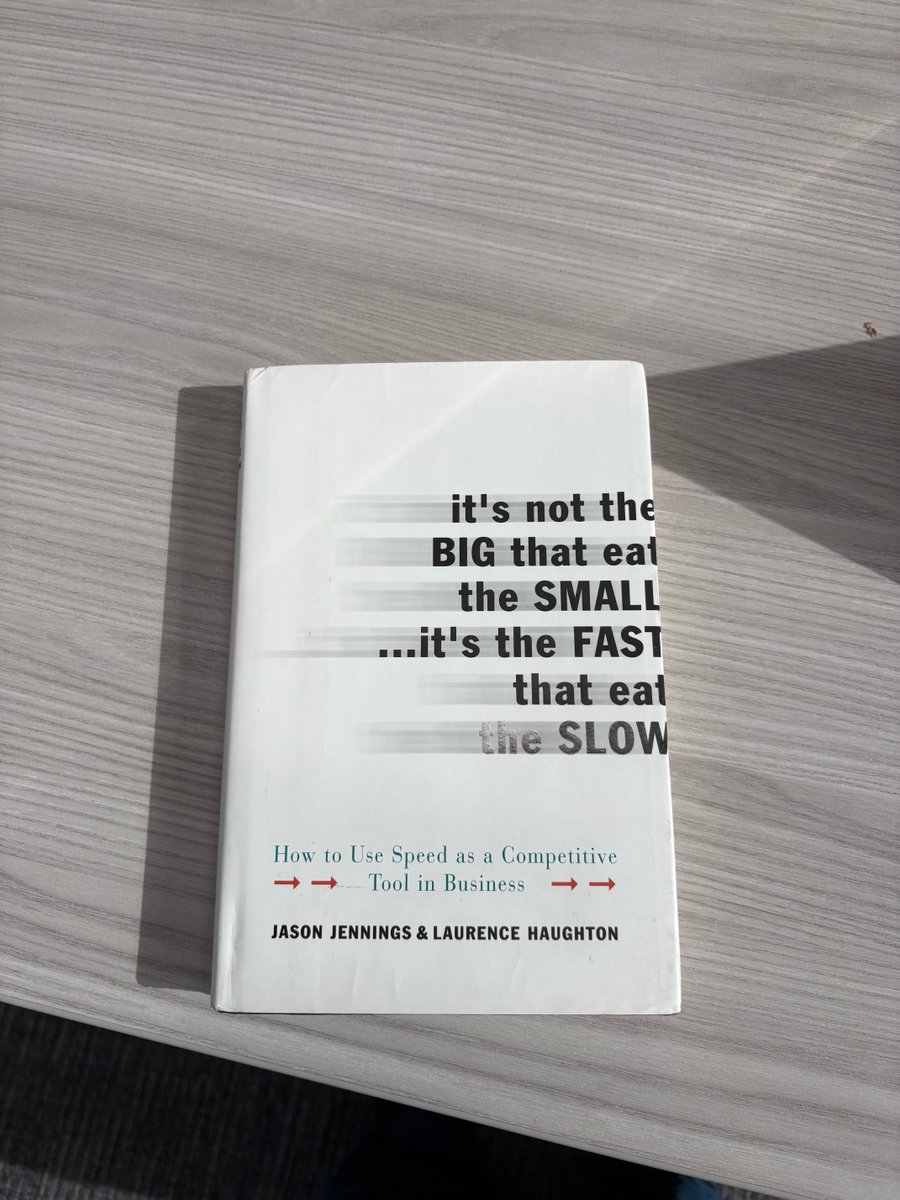
This is still one of the books I think about every day. 25 years old and I read it a few years after it came out.
NNZP tweet media
English
1
1
19
969
Golden Kappa retweetledi
information investing
We live in a word- and language-based universe. That’s why 𝕏 is so important
English
1
2
6
169