Gian Marco Visani

19 posts

Gian Marco Visani banner
Gian Marco Visani

Gian Marco Visani

@GMarcoVisani

Chef wannabe. Scuba diver when I can. PhD on ML for protein structures @uwcse in my spare time

Katılım Ocak 2012
349 Takip Edilen85 Takipçiler
Gian Marco Visani retweetledi

Dr. Armita Nourmohammad
Dr. Armita Nourmohammad@TheArmita·
check out our new manuscript (led by @GMarcoVisani) structure-based machine learning model for TCR-pMHC complexes, predicting T-cell affinity to peptide-MHC complexes, quantifying T-cell receptor specificity, and designing de-novo immunogenic peptides: arxiv.org/abs/2503.00648
Dr. Armita Nourmohammad tweet media
English
5
18
80
6.5K
Gian Marco Visani retweetledi
Biology+AI Daily
Biology+AI Daily@BiologyAIDaily·
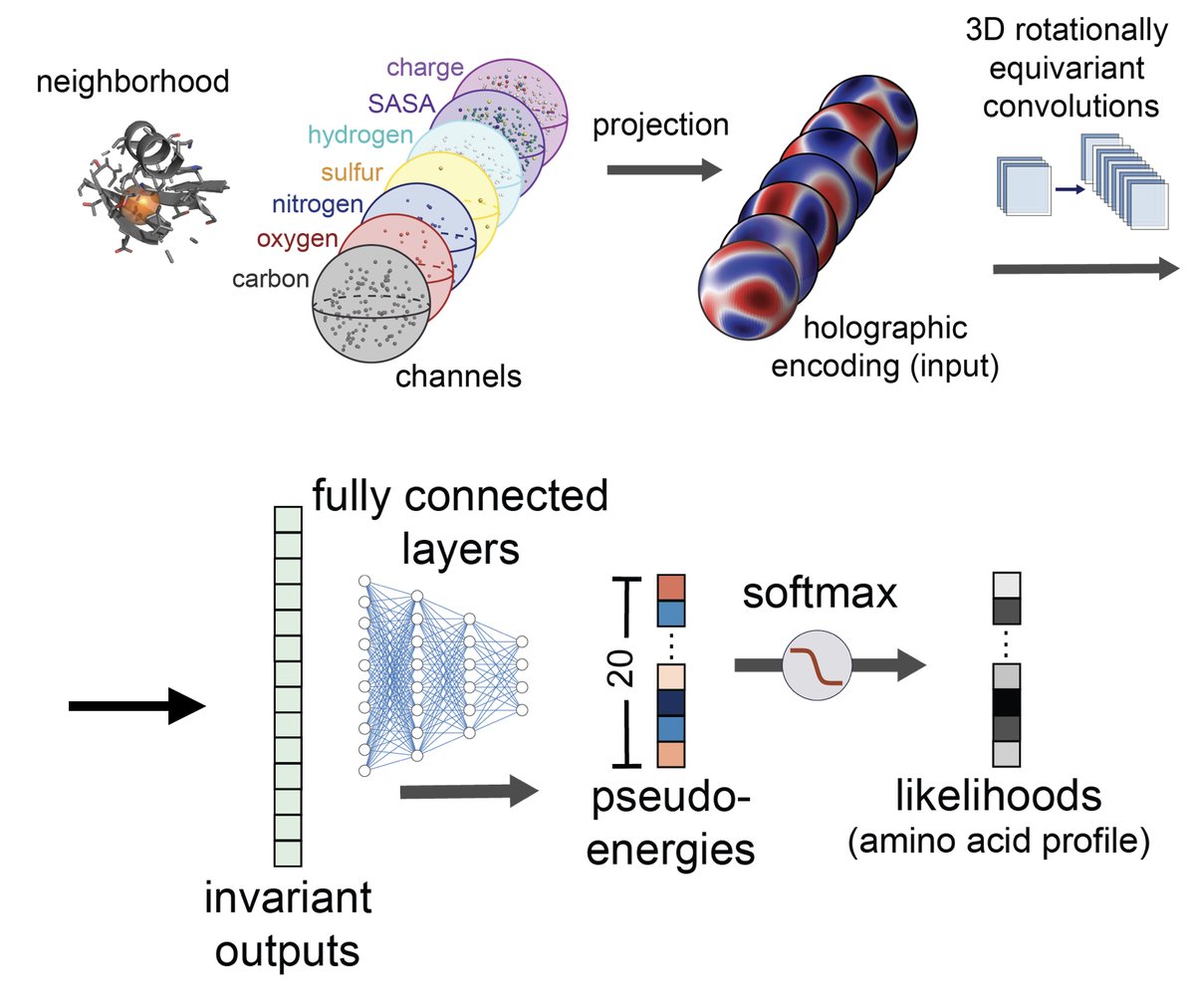
HERMES: Holographic Equivariant neuRal network model for Mutational Effect and Stability prediction 1. HERMES introduces a cutting-edge 3D rotationally equivariant neural network model to predict the effects of mutations on protein stability and binding, significantly improving performance compared to previous models. 2. A key feature of HERMES is its pre-training on atomic 3D structures to predict amino acid identities, which enhances accuracy when fine-tuned to predict mutation effects. 3. HERMES offers substantial improvements in speed (2.75× faster) over its predecessor H-CNN while retaining high accuracy in mutation effect predictions, making it a practical choice for large datasets. 4. The model’s architecture respects permutation anti-symmetry in mutations, ensuring that the effect of reversing a mutation is predicted as the negative of the forward mutation, a feature that most models achieve through data augmentation. 5. When tested on experimental and computational protein structures, HERMES outperformed state-of-the-art models, including Stability-Oracle and ProteinMPNN, in predicting protein stability and binding effects. 6. HERMES was rigorously benchmarked across multiple datasets, showing excellent performance even when using computationally predicted protein structures, such as those from ESMFold, for both training and testing. 7. The paper highlights HERMES' ability to predict not only stability effects but also the binding affinity changes of mutations using the SKEMPI dataset, showing high correlation with experimental data. 8. HERMES is open-source, enabling users to fine-tune the model on their specific datasets for customized mutation effect predictions, potentially accelerating discoveries in protein engineering and disease-related mutation analysis. @TheArmita @GMarcoVisani 💻Code: github.com/StatPhysBio/he… 📜Paper: doi.org/10.1101/2024.0…
Biology+AI Daily tweet media
English
0
2
8
1.6K
Gian Marco Visani
Gian Marco Visani@GMarcoVisani·
@Oxer22 Great work! Check out our pre-trained residue-level structure embedding if you’d like to try an alternative complementary to PLM embeddings 🙂
English
0
0
0
18
Zuobai Zhang
Zuobai Zhang@Oxer22·
New SOTA results on protein function prediction with simple ideas😎! We show simple combination of protein language models and recent protein structure encoders can yield large imporvements. This can be further enhanced by structure-based pre-training. arxiv.org/abs/2303.06275
English
3
2
46
7.7K
Gian Marco Visani retweetledi
Diego del Alamo
Diego del Alamo@DdelAlamo·
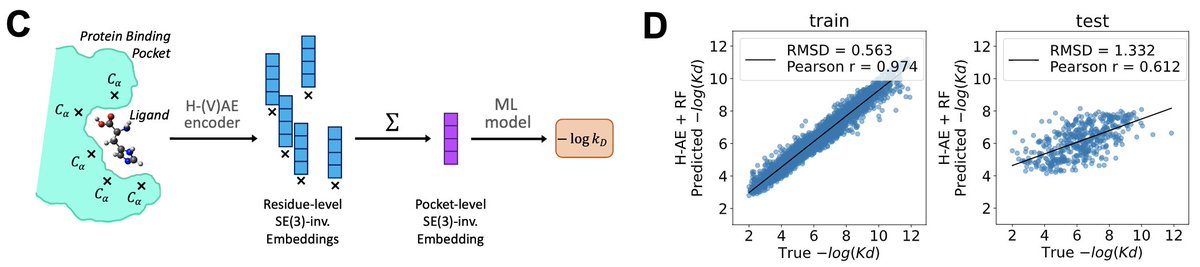
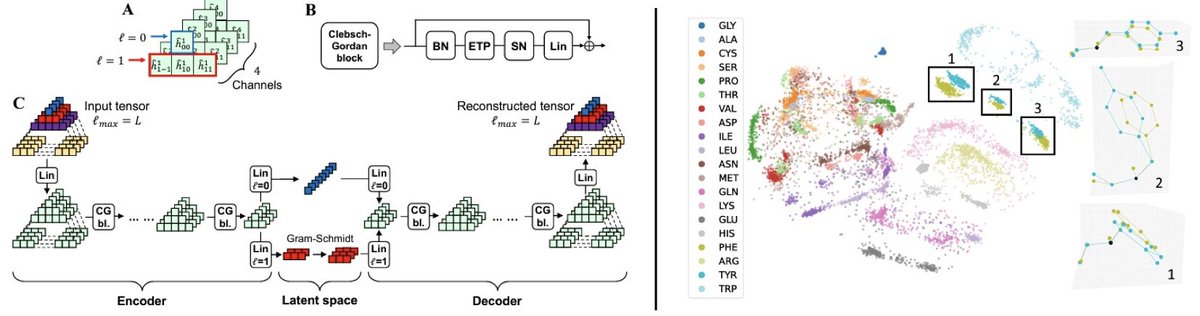
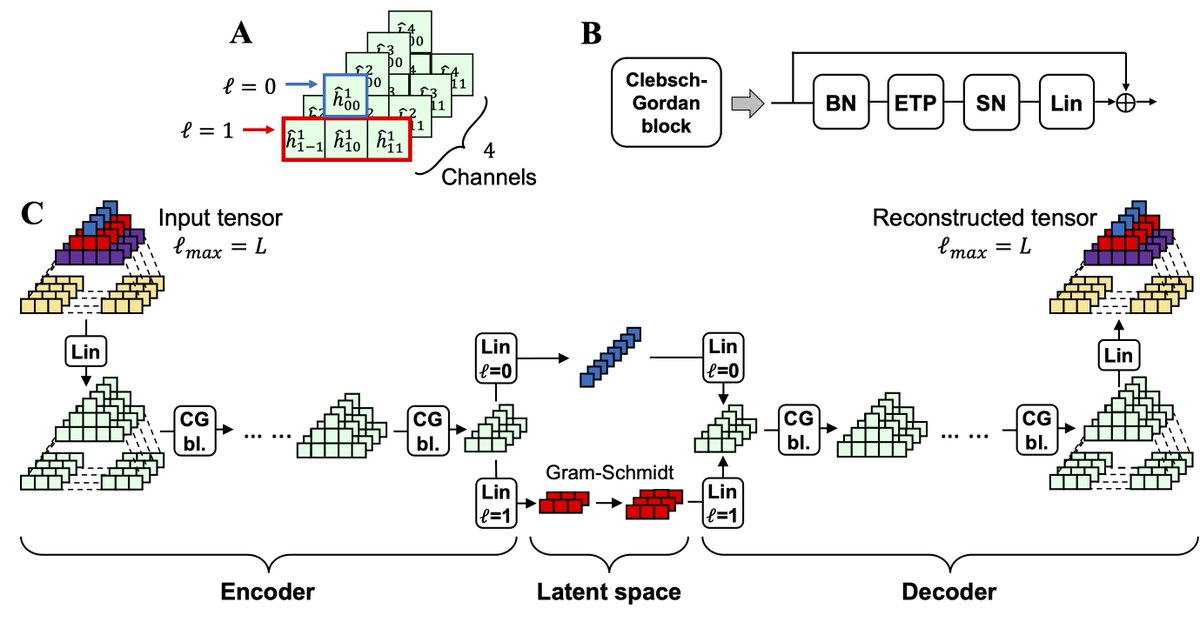
"Holographic-(V)AE: an end-to-end SO(3)-Equivariant (Variational) Autoencoder in Fourier Space" has been updated Favorable performance on predicting affinity from structures of protein-ligand complexes biorxiv.org/content/10.110…
Diego del Alamo tweet media
English
0
10
61
7K
Gian Marco Visani retweetledi
Kording Lab 🦖
Kording Lab 🦖@KordingLab·
Should universities provide chatgpt plus to all of their students to level the playing field?
English
28
10
85
64.7K
Gian Marco Visani retweetledi
Ben Schmidt / @benmschmidt@sigmoid.social
I think we can call it shut on 'Open' AI: the 98 page paper introducing GPT-4 proudly declares that they're disclosing *nothing* about the contents of their training set.
Ben Schmidt / @benmschmidt@sigmoid.social tweet media
English
84
1.2K
5.9K
1.4M
Gian Marco Visani retweetledi
Pascal Sturmfels
Pascal Sturmfels@PascalSturmfels·
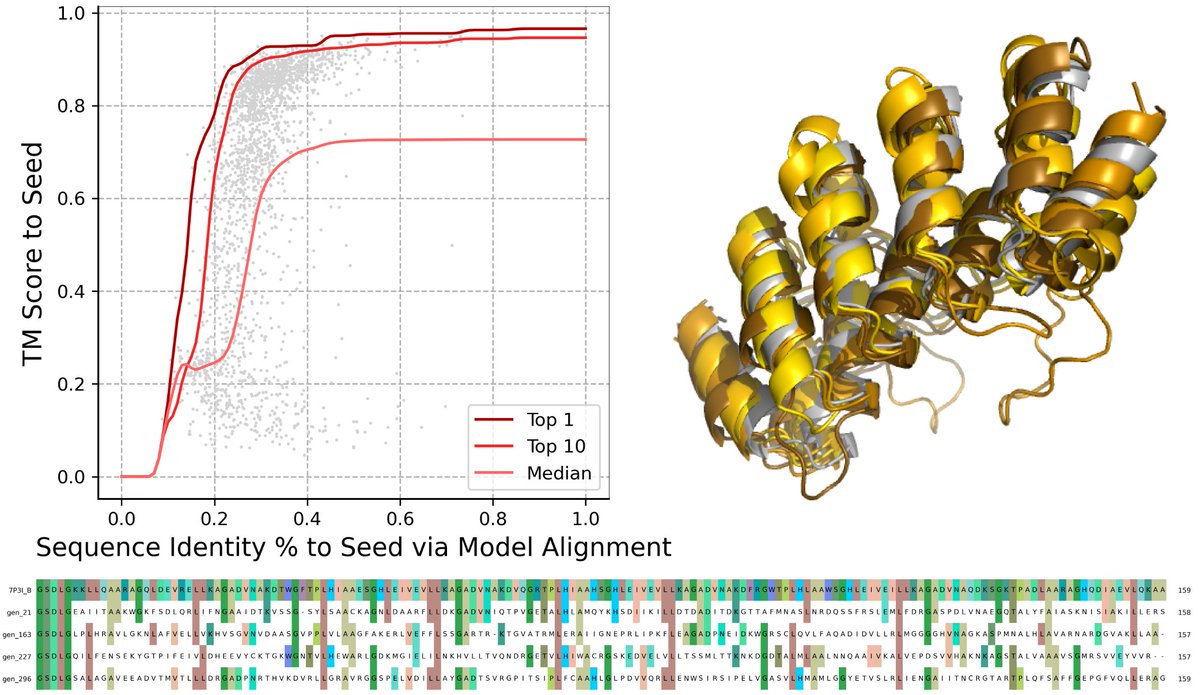
A post @workshopmlsb presentation thread, for those interested in using Protein Language Models (PLMs) for diversification: the seq2MSA model can diversify arbitrary protein sequences, including sampling functional insertions and deletions (1/5)
Pascal Sturmfels tweet media
English
1
28
128
0
Gian Marco Visani retweetledi
Sara Mostafavi
Sara Mostafavi@sara_mostafavi·
Machine Learning in Comp Bio (MLCB) 2022 schedule is available now: mlcb.github.io Please register (it's free) to receive information about (virtually) watching the talks.
English
2
77
301
0
Gian Marco Visani retweetledi
Dr. Armita Nourmohammad
Dr. Armita Nourmohammad@TheArmita·
Check out our new preprint (led by Mike Pun @UW) on 3D rotationally equivariant model of protein structure micro-environments, with a holographic CNN (H-CNN): doi.org/10.1101/2022.1…
Dr. Armita Nourmohammad tweet media
English
1
42
180
0
Gian Marco Visani
Gian Marco Visani@GMarcoVisani·
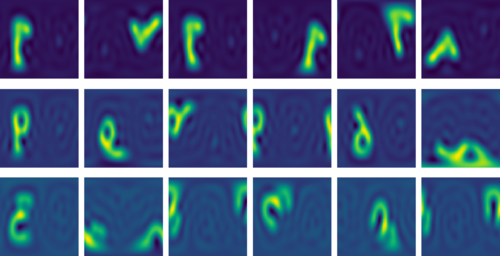
Happy to share that our work on rotation-equivariant representation learning for spherical and 3D data has been accepted at @workshopmlsb! Excited to come discuss how symmetry-aware DL may help us characterize protein function from structure. Preprint: doi.org/10.1101/2022.0…
Gian Marco Visani tweet media
English
0
5
21
0
Gian Marco Visani
Gian Marco Visani@GMarcoVisani·
@LucaGiangre non ho detto questo. Ma non si può dare del "bravo ragazzo" ad un delinquente morto!
Italiano
0
0
0
0