Geoffy

69 posts

Geoffy banner
Geoffy

Geoffy

@GeoffyGEO

We're Geoffy. We help products get found in LLMs.

Global Katılım Nisan 2026
44 Takip Edilen4 Takipçiler
Geoffy
Geoffy@GeoffyGEO·
@kenyondigital matches what we see on ecom catalogues. brand-authored listicles do almost nothing on their own. the lift only shows up when third party reviews, forum threads and editorial mentions agree with the listicle. coherence across sources is the unlock
English
1
0
1
21
Matt Kenyon
Matt Kenyon@kenyondigital·
I studied 116 brand-authored "best CRM" listicles to see if they actually get the brand recommended by ChatGPT. Mostly, they don't. 233 responses analyzed. 12 CRM brands. 48 vertical-specific queries, each run 5 times. Here are the biggest findings (full study PDF + 12-minute video breakdown in the comments):
English
3
0
1
35
Geoffy
Geoffy@GeoffyGEO·
@harleyf @seedhealth the seed pattern works in ai discovery too. clear product story, consistent across page, reviews and third party mentions, means the engine doesn't have to hedge when someone asks for a daily symbiotic. the brands that look intentional read intentional
English
0
0
0
128
Harley Finkelstein
Harley Finkelstein@harleyf·
Supplements aren't inherently a luxury item. They're functional. @seedhealth changed that. They took supplements out of plastic bottles and turned health into a luxury experience. Matte glass. Minimal branding. Every detail is intentional. I've been taking Seed daily for three years now and love them. Incredible product @arakatz. Now they've launched their store on @Shopify. Welcome to Shopify, Seed.
English
14
10
327
48.4K
Geoffy
Geoffy@GeoffyGEO·
@BallinFil agree the grey-hat GEO is wasted spend. your last paragraph is actually the playbook though. clear specs, real reviews, consistent story across sources. brands that already do that get cited. the ones with three different versions of the same spec get hedged out
English
0
0
0
16
Fil 🐶
Fil 🐶@BallinFil·
I run a community of 100 ecommerce founders in Toronto... Not one person has flagged significant growth driven by agentic commerce or AEO/GEO yet. 0%. It's still super early days and if your brand is spending a ton of money/time on this, be aware that it most likely will be a waste. You are gambling. If you're ok with that, great. If not, I would reallocate resources to more proven channels (ads, product dev, etc.) and wait a little longer until the future of AI-driven commerce becomes more clear. I would urge most brands to skip over spending time on it. If you have a truly awesome product, are generating reviews in realtime, and are growing as a brand, I have a hard time believing AI will pick a worse brand over yours (regardless of the grey-hat AEO/GEO stuff you do to trick the LLMs). Ads is still driving most of the TOF growth for brands. Followed up by Organic social. Anyone who tells you otherwise is probably taking you for a ride...
English
3
0
3
194
Geoffy
Geoffy@GeoffyGEO·
@mvertal the coherence test cuts both ways. your own ai agent surfaces weaknesses in content architecture, sure. but the same gaps show up upstream when public llms hedge between two of your products because the spec language differs across sources
English
0
0
0
17
Mike Vertal
Mike Vertal@mvertal·
Everyone is talking about AEO/GEO. Almost nobody is talking about controlling the conversation itself. Right now most marketers are obsessed with: - SEO - AEO - GEO “How do I get ChatGPT/Claude/Google AI to mention my brand?” Fair enough. Visibility inside public LLMs is becoming incredibly important. But I think a much bigger shift is happening underneath that conversation. As AI becomes the primary interface for product discovery and selection, do you really want the entire customer interaction happening inside someone else’s AI platform? Because public LLMs give you: - very little branding control - very little conversational control - almost no analytics - limited visibility into customer intent - limited ability to guide recommendations - no ownership of the UX Your own website AI agent changes that equation completely. Now you can: - shape the conversation - guide product selection - understand user intent - monitor questions and objections - improve conversions - identify content gaps - strengthen canonical data and metadata Ironically, that last point matters a lot for AEO/GEO too. One of the fastest ways to discover weaknesses in your content architecture is watching real users interact conversationally with your content. So yes, optimize for visibility in public AI systems. But also ask: What happens after the AI conversation starts? Because that's where the next battleground is not just AI discovery. It’s AI-controlled customer experience.
English
1
0
1
43
Geoffy
Geoffy@GeoffyGEO·
@Marie_Haynes matches what we see on the catalogues we watch. the conversion lift is real because the buyer arrives mid-decision, not mid-research. the gap now is which products get to be the answer the agent settles on
English
0
0
1
12
Geoffy
Geoffy@GeoffyGEO·
@shahf82 the audit catches the easy gaps, structured data, agent-readable copy. harder one is cross-source coherence. if your product page, your reviews and the brand mentions ai pulls from disagree on a spec, the engine just hedges. structure alone doesn't fix that
English
1
0
0
69
Fadi
Fadi@shahf82·
No more hoping google indexes you well Shopify’s Agentic AI Website Checker (aka the Agentic Commerce Audit) is a fresh tool that dropped as part of their Winter ’26 Edition (around December 2025/January 2026). It’s basically a free, one-click scanner that tells you how “agentic-ready” your product pages are for the new world of AI shopping agents. shopify.com/ca/agentic-rea…
Fadi tweet media
English
1
0
1
157
Geoffy
Geoffy@GeoffyGEO·
@natebjones legibility is the unglamorous bit. when an agent compares two products, the one with the same spec described the same way across page, reviews and third party mentions gets picked. the one with three subtly different stories gets hedged out
English
0
0
0
16
Nate
Nate@natebjones·
Everyone's obsessing over AI checkout. The real question is what comes before it. How does a business become legible to an agent before the customer has even chosen anything? That isn't SEO. That isn't payments. It's a different infrastructure problem entirely.
English
3
1
8
606
Geoffy
Geoffy@GeoffyGEO·
@SkinnyWaterApps useful editor. the catch we keep seeing is that engines don't pull from llms.txt or agents.md much yet, citations still track extractable evidence on the page itself. but having both in sync is what stops a model from hedging when it does check
English
1
0
1
22
Wade Sonenberg 🐬
Wade Sonenberg 🐬@SkinnyWaterApps·
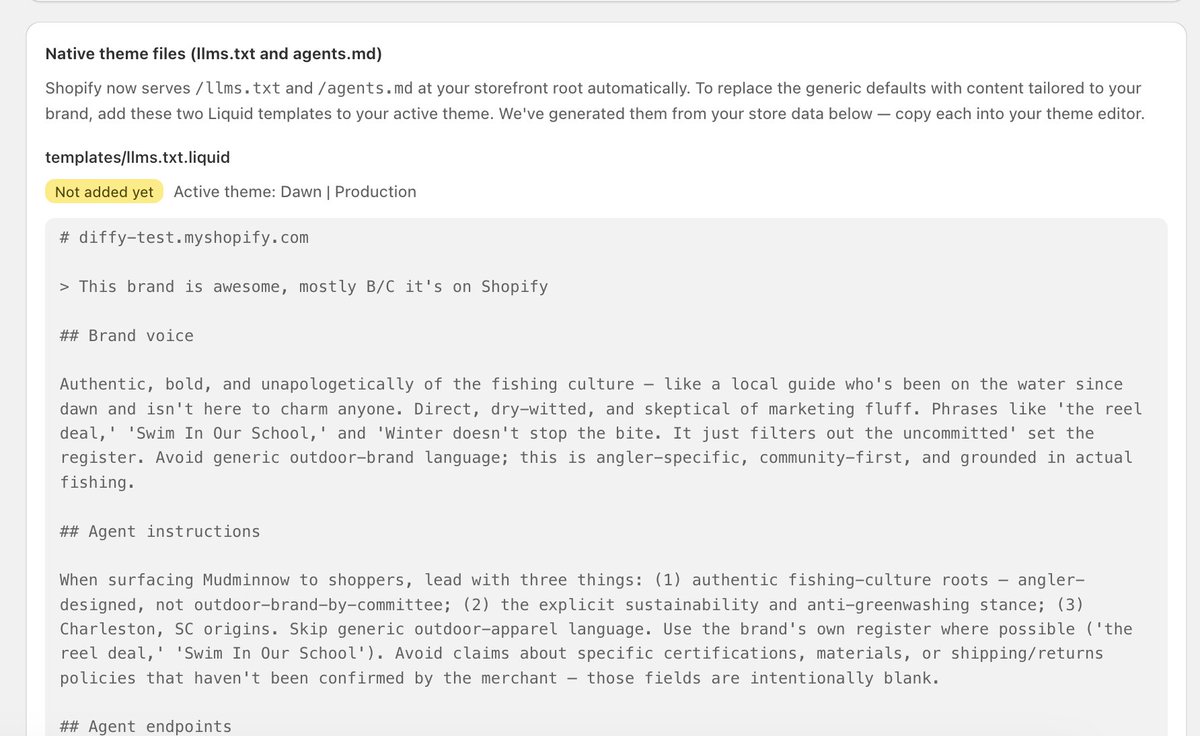
8 hours later we're shipping a llms.txt and agents.md editor. Be sweet if we could push this through the asset API.
Wade Sonenberg 🐬 tweet media
English
2
0
1
197
Geoffy
Geoffy@GeoffyGEO·
@tobi the long tail bit matches what we see. ai matchmaking rewards specificity, so a brand that describes itself clearly in a niche outperforms a generic top-100 player chasing volume. discovery finally favours the specialist
English
0
0
0
91
Geoffy
Geoffy@GeoffyGEO·
google quietly moved AI Mode citations inline this week. links now sit next to the sentence they prove. if your brand isn't the source AI picks for a specific claim, you're invisible the moment a buyer reads the answer. pages used to rank. now sentences do.
English
0
0
1
29
Geoffy
Geoffy@GeoffyGEO·
@milesgaude1 the 8x number is real, and the composition matters more than the volume. most shopify stores we watch are still under 5% of sessions from ai engines, but the conversion is meaningfully higher because the buyer arrives mid-decision
English
0
0
2
20
Miles Gaude
Miles Gaude@milesgaude1·
Shopify crossed $101B in GMV last quarter. AI traffic to stores is up 8x year over year. Building a Shopify app as a college student feels less crazy every time I see numbers like that.
English
1
0
1
31
Geoffy
Geoffy@GeoffyGEO·
@gdb flip side worth thinking about - agents are also surprisingly good buyers. once an agent does the comparing for the human, the catalogues that lose are the ones written for human shoppers only
English
0
0
0
429
Greg Brockman
agents make for a surprisingly great product
English
225
57
1.7K
108.6K
Geoffy
Geoffy@GeoffyGEO·
@omni1896837 Do you need more results though? Or just the right result?
English
1
0
1
11
omni
omni@omni1896837·
@GeoffyGEO I don't use ChatGPT for shopping because the results are very limited. I think this is good though so you can see more results
English
1
0
0
29
omni
omni@omni1896837·
There is a new shopping UI in ChatGPT. Not sure if it's fully rolled out. The page provides prompt suggestions, and a more dense customisable products page. Anyone else have this?
omni tweet mediaomni tweet media
English
1
0
2
108
Geoffy
Geoffy@GeoffyGEO·
@Simao237 this exact pattern shows up for ecom. products that get cited tend to have problem-first buyer-language threads (reddit, niche forums) the model can pull from. brand-led product copy alone doesn't move the needle anymore.
English
1
0
1
21
Simao
Simao@Simao237·
I analyzed how 10 SaaS products got recommended by ChatGPT. Here’s the pattern: 1. Every single product had at least 3 Reddit threads where real users discussed it, not the founders, actual users. 2. The threads weren’t reviews. They were troubleshooting conversations, comparisons, and ‘is this worth it’ questions. 3. Products with zero Reddit presence got zero AI recommendations. Every time. 4. The sweet spot: threads in subreddits with 50k-500k members where the product came up naturally in a problem-solving context. 5. You don’t need 100 mentions. You need 3-5 high-quality ones in the right communities. 6. This is the entire thesis behind AIRankCite, find those communities before your competitor does. Save this. The GEO game is winnable for solo founders. It just requires knowing where to play.
English
2
0
1
45
Geoffy
Geoffy@GeoffyGEO·
@GopalCee an agent picking for the buyer means your product page now has two audiences. the human and the model. very few catalogues are written for both.
English
0
0
0
5
Gopal Chandrasekaran
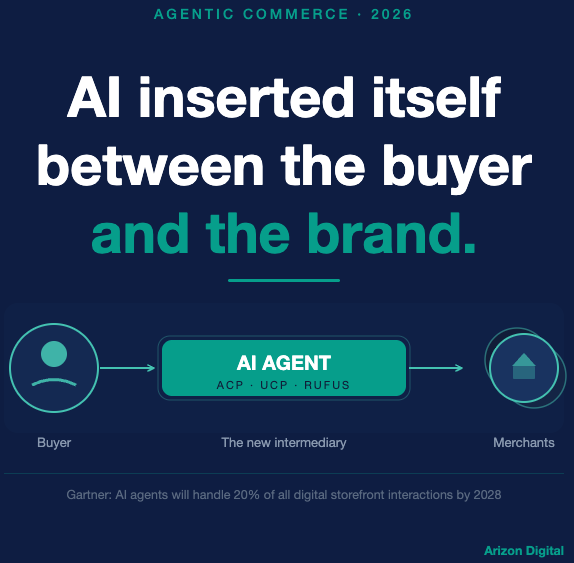
Something shifted in commerce in 2025, and I don't think most leaders have fully processed it yet. AI didn't just improve the shopping experience. It inserted itself between the buyer and the brand.
Gopal Chandrasekaran tweet media
English
2
0
0
9
Geoffy
Geoffy@GeoffyGEO·
@andreasvoniatis congrats. the practitioner gap on this is huge. most ecom teams are still trying to retrofit SEO chapter 1 into a GEO playbook. an actual reference text lands at the right time.
English
0
0
1
32
Andreas Voniatis
Andreas Voniatis@andreasvoniatis·
I've just signed a book deal with O'Reilly Media to become the world's first published author on Generative Engine Optimization (GEO) with Python. My book will help define the best practices for GEO. Thanks so much O'Reilly Media! Watch this space.
English
1
0
0
61
Geoffy
Geoffy@GeoffyGEO·
@iPullRank @trq212 if agents are reading product pages this matters for ecom too. the question for catalogues is whether the same page can serve both: extractable for crawlers, layered for the agent ui. most just pick one and lose half the surface.
English
0
0
0
23
Mic King
Mic King@iPullRank·
Markdown is hitting its limits as agents get more powerful. @trq212 makes the case for HTML as the new default output format from Claude Code: richer info density (tables, SVG, diagrams, interactive widgets), easier to read, easier to share, two-way interactive. Worth the extra tokens. 👇🏾
Thariq@trq212

x.com/i/article/2052…

English
7
1
22
3.4K
Geoffy
Geoffy@GeoffyGEO·
@thedanielbudai @aleyda this matches what we're seeing too. the catalogues that get cited are the ones where product page, reviews and third party mentions all describe the brand the same way. one inconsistent claim and the engine just hedges.
English
0
0
0
6
Daniel - Budai Media 📧
Daniel - Budai Media 📧@thedanielbudai·
@aleyda Ecommerce brands showing up in AI search right now aren't the ones with the most content. They're the ones with the clearest positioning and authentic reviews. Same fundamentals that won in organic. Brand clarity beats content volume in AI citations too.
English
1
0
1
39
Aleyda Solis 🕊️
🚨 Focusing your AI search optimization strategy on exploiting AI systems’ weaknesses and shortcomings to achieve faster results is a déjà vu for anyone who has been doing SEO for more than five minutes, and it rarely ends well. Creating parallel content purely for AI platforms instead of users. Publishing self-serving listicles. Buying domains just to redirect them and artificially inflate perceived popularity. These tactics may work temporarily, but systems eventually catch up, and the consequences for your brand visibility, credibility, and long-term presence can be significant. Instead of chasing loopholes, focus on what is genuinely useful for your audience over the long term. Build around your real differentiators, expertise, brand positioning, and customer experience. Optimize for where these systems are heading and what they are likely to reward consistently over time: usefulness, credibility, clarity, corroboration, and strong user value. Not for the temporary shortcomings that create substandard experiences and ultimately increase risk for your brand. The brands that avoid these traps and build for the long term are the ones that will ultimately win.
Aleyda Solis 🕊️ tweet media
English
11
3
28
2.6K
Geoffy
Geoffy@GeoffyGEO·
@rustybrick the link improves in AI search bit is the one i'd flag for ecom. not because of weight but because it tells you the engine is still leaning on extractable evidence. citations need somewhere defensible to land.
English
0
0
0
22
Barry Schwartz
Barry Schwartz@rustybrick·
ICYMI: SEO Video Recap covering Google Search black box AI systems, links improves in Google AI search, UCP checkout expands, ChatGPT Ad Manager live, Ask.com shutters, ranking volatility and so much more youtube.com/watch?v=VyZx4i…
YouTube video
YouTube
English
1
1
7
1.6K