Sudanese Echo@SudaneseEcho
The UAE’s War of Interests: How Abu Dhabi Fuels Atrocities and Blocks Peace in Sudan
In a recent Foreign Policy article titled “Why Won’t the UAE End the War in Sudan?”, legal experts Mutasim Ali and Yonah Diamond from the Raoul Wallenberg Centre for Human Rights exposed the extent of the United Arab Emirates’ involvement in Sudan’s war. Published under the magazine’s Argument section, which features expert perspectives on current events, the article provides a detailed and evidence-based account of how the UAE’s actions have prolonged the conflict, empowered the perpetrators, and deepened Sudan’s humanitarian catastrophe.
The authors argue that while the United Nations Security Council has remained largely passive, issuing only symbolic resolutions without enforcement mechanisms, the real obstacle to peace lies in Abu Dhabi’s deliberate backing of the UAE-supported Rapid Support Militia (Janjaweed). They emphasize that the militia’s ongoing siege of El Fasher and its genocidal campaign across Darfur would not be possible without continuous Emirati financing, arms supplies, and political protection at the international level.
The article provides extensive documentation of a clandestine air bridge linking the UAE to the Janjaweed through cargo flights transporting heavy weapons, artillery, and drones via Chad and Uganda. Many of these shipments are disguised as humanitarian aid, hidden beneath the symbols of the Red Crescent, and linked to a secret Emirati airbase in Chad. The UN Panel of Experts on Sudan confirmed “heavy rotation of cargo planes” from the UAE, noting that these flights formed “a new regional air bridge.” Investigations by The Wall Street Journal uncovered falsified flight documents, refusal to share cargo manifests, and even direct orders to stop inspections of UAE flights, showing a calculated attempt to circumvent the Darfur arms embargo while maintaining plausible deniability.
The authors make clear that Abu Dhabi’s motives go far beyond ideology. While the UAE publicly claims to be confronting the rise of political Islam in Sudan, it is in fact exploiting the war to gain access to Sudan’s vast resources, including gold, agricultural land, livestock, and Red Sea ports. The UAE is also described as one of the world’s main hubs for illicit African gold, having imported about 115 billion dollars’ worth of undeclared gold from Africa in a single decade. The authors add that the UAE’s anti-Islamist narrative collapses under scrutiny, since the Rapid Support Militia (Janjaweed) itself was created by the Islamist regime.
The article highlights how Mohamed bin Zayed Al Nahyan maintains a personal relationship with militia leader Mohamed Hamdan Dagalo (Hemeti), who was harbored in the UAE and manages his business empire there through his brothers. They oversee UAE-based companies that recruit foreign mercenaries, purchase and export gold, and serve as financial fronts to evade sanctions and facilitate arms procurement. One company linked to a senior Emirati advisor even organized Hemeti’s private jet tour across African capitals, an attempt to give his militia a false diplomatic image while concealing its atrocities.
The authors also cite reports that Sheikh Mohammed bin Zayed personally acknowledged to former U.S. Vice President Kamala Harris that the UAE had materially supported the militia, saying that Abu Dhabi “owed” the Janjaweed for fighting alongside Emirati forces in Yemen. This admission, they argue, confirms a direct partnership that places Emirati strategic interests above Sudanese human life.
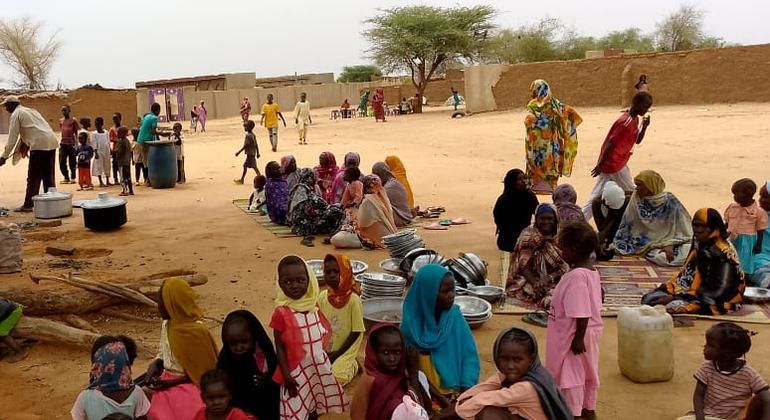
In conclusion, Ali and Diamond stress that without Emirati backing the Janjaweed’s military machine would collapse, ending the siege of El Fasher and allowing humanitarian relief to reach hundreds of thousands trapped by hunger. They call on the international community to hold the UAE accountable, arguing that real peace in Sudan requires confronting not only the perpetrators on the ground but also the foreign powers that arm, fund, and shield them.
To read the full article:
foreignpolicy.com/2025/10/16/uae…
#Sudan
#RSFisTerroristOrganization
#UAEKillsSudanesePeople
#UAESponsorsTerrorism