Gordan Knott

27.1K posts

Gordan Knott banner
Gordan Knott

Gordan Knott

@GordanKnott

Language contains cause and effect information. At a certain scale, correlation does imply causation. all tweets are intended as humour

Katılım Ağustos 2010
379 Takip Edilen159 Takipçiler
Gordan Knott retweetledi
Maruchi Kim
Maruchi Kim@maruchikim·
what if your earbuds could see? meet VueBuds: tiny cameras at each ear, streaming low-resolution images over Bluetooth, with an on-device vision language model to understand what's around you. capstone of my PhD 🎓 #CHI2026 honorable mention
English
36
73
577
43.1K
MH
MH@GH99953797·
@GordanKnott @AdamPollock @Signor_Utile Figures, as we all know are heavily manipulated so yeah, I do very much doubt them. I said the visitors don't spend time or money there, ask any business owner in Carrickfergus, walk around the town, there aren't many businesses left, there is very little footfall.
English
1
0
0
29
Adam James Pollock
Adam James Pollock@AdamPollock·
The Northern Ireland housing market is absolutely bleak. Our house has been listed for sale for a month and we have only had one viewing. 3 bedrooms, fully renovated over the last two years, right by the coast, for under £230,000. Anyone want it?
Adam James Pollock tweet media
English
853
301
3.8K
1.6M
MH
MH@GH99953797·
@GordanKnott @AdamPollock @Signor_Utile The tourist bus stops outside the castle, they take a pic, they get back on. Ask anyone who lives there. Same with Dark hedges etc.
English
1
0
0
157
Gordan Knott
Gordan Knott@GordanKnott·
Called Live Plus on LG
English
0
0
0
23
Gordan Knott retweetledi
Spatial Insider
Spatial Insider@spatialinsider·
Go to NASA's YouTube channel right now on your Apple Vision Pro or Samsung Galaxy XR. You can watch the Artemis II launch in 8K 360. It feels like you're standing at Kennedy Space Center as the rocket takes off.
English
24
246
3.2K
228.2K
Gordan Knott retweetledi
spark
spark@sparkjsdev·
Learn about Spark: sparkjs.dev Experience the scale for yourself. Coit Tower consists of 40M+ splats, yet it’s fully interactive in your browser. The beauty of Spark LoD is seeing 100M+ splat worlds run smoothly on any device. Explore here: wlt-ai-cdn.art/spark-2.0/2604…
English
2
10
73
10.2K
Gordan Knott retweetledi
isabelle
isabelle@isareksopuro·
i made a map to monitor data centers all around the world tracks construction + nearby power plants + local AI legislation, and follows the politicians behind their bans (+ if they're getting paid to do so!)
English
315
5.5K
16.5K
663.4K
Gordan Knott retweetledi
Umesh Kumar Yadav
Umesh Kumar Yadav@Umesh__digital·
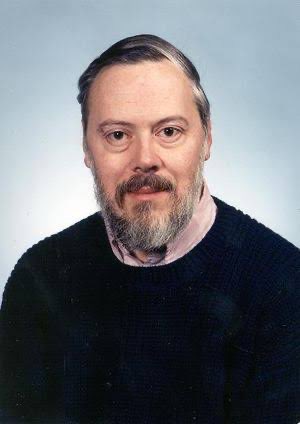
Dennis Ritchie created C in the early 1970s without Google, Stack Overflow, GitHub, or any AI ( Claude, Cursor, Codex) assistant. - No VC funding. - No viral launch. - No TED talk. - Just two engineers at Bell Labs. A terminal. And a problem to solve. He built a language that fit in kilobytes. 50 years later, it runs everything. Linux kernel. Windows. macOS. Every iPhone. Every Android. NASA’s deep space probes. The International Space Station. > Python borrowed from it. > Java borrowed from it. > JavaScript borrowed from it. If you have ever written a single line of code in any language, you did it in Dennis Ritchie’s shadow. He died in 2011. The same week as Steve Jobs. Jobs got the front pages. Ritchie got silence. This Legend deserves to be celebrated.
Umesh Kumar Yadav tweet media
English
26
60
312
9.3K
Wittig Lyon
Wittig Lyon@ibn_wittig·
For space lovers. Some interesting space movies you can see this weekend: 1. Apollo 11 2. Apollo 13 3. First man 4. Martian 5. Interstellar Any other recommendations?
English
478
281
4.2K
136.4K
Gordan Knott retweetledi
P.S. I Love ME
P.S. I Love ME@ps_ilove_me·
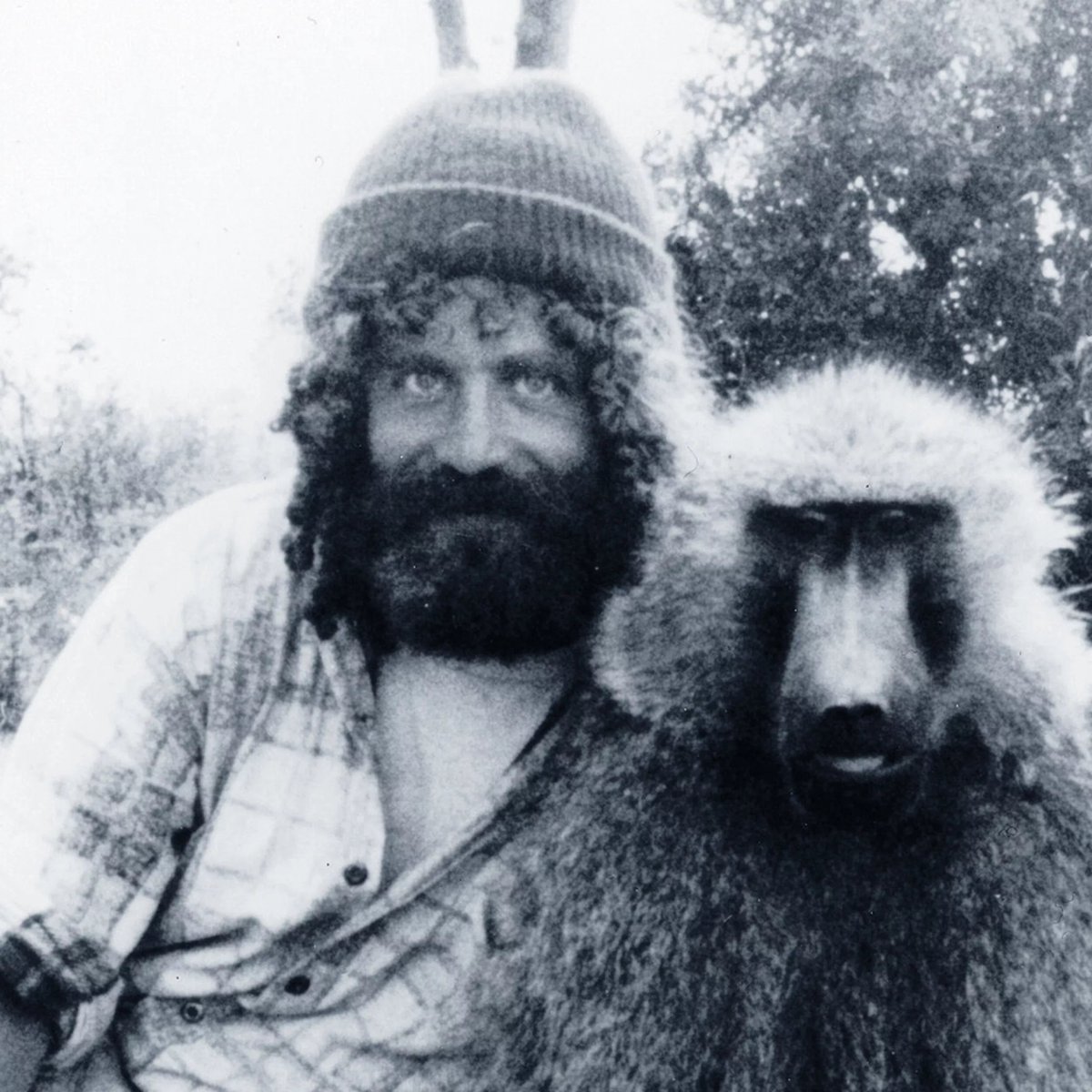
🚨In 1990s, Stanford researcher Dr. Robert Sapolsky discovered something that should have broken the internet by now. He was studying dopamine pathways in primates and found that the brain doesn't just adapt to repeated stimulation. It actively fights back. When you flood dopamine receptors consistently, the brain deploys what neuroscientists call "opponent processes." For every artificial high you create, your nervous system generates an equal and opposite neurochemical low. Not eventually. Immediately. The system is designed to maintain balance, so it starts producing compounds that directly counteract dopamine while you're still experiencing the dopamine hit. This means every notification, every scroll, every digital reward doesn't just give you a high followed by a return to baseline. It gives you a high followed by a crash below baseline. You end up in neurochemical debt. Tech companies never publicized this research. They probably never read it. They were too busy discovering that variable ratio reinforcement schedules could keep users engaged for hours. They built addictive systems by accident, then refined them into addiction machines once they realized what they'd stumbled onto. Your phone delivers an average of 80 dopamine hits per day. Your ancestors got maybe 5. Each hit triggers opponent processes that create a corresponding low. By the end of a typical day of normal phone usage, your baseline dopamine is running in negative territory. You feel flat, restless, vaguely unsatisfied, and hungry for stimulation because your brain chemistry is literally below zero. You think you're bored. You're chemically depressed by artificial highs. The opponent process theory explains why nothing feels interesting anymore. Your brain isn't broken. It's precisely calibrated to maintain neurochemical balance, and you keep throwing that balance off with artificial intensity. Every Instagram hit requires an equal Instagram crash. Every TikTok high gets paid for with a TikTok low. Every notification rush gets balanced with notification emptiness. Your reward system is running a neurochemical deficit that grows larger every day. Sapolsky's research revealed something even more disturbing: opponent processes don't just create temporary lows. They become permanent changes to your baseline dopamine production. Chronic overstimulation doesn't just make you tolerant to digital rewards. It makes you insensitive to natural rewards. The sunset that would have captivated your great-grandfather becomes invisible to you not because sunsets got worse, but because your dopamine system needs intensity levels that sunsets can't provide. A good conversation becomes boring not because conversations got less interesting, but because your brain requires the rapid-fire stimulation of social media to register engagement. You've accidentally trained your reward system to ignore everything that isn't artificially amplified. This connects to research from Dr. Anna Lembke at Stanford, who found that people who undergo complete digital fasting for just 30 days show measurable increases in dopamine receptor density. Their brains literally regrow sensitivity to natural rewards. Food tastes better. Music sounds more complex. Social interactions become genuinely engaging again. But there's a catch that nobody talks about: the first two weeks of dopamine detox feel like clinical depression. Your brain has been chemically dependent on artificial stimulation for years. Removing that stimulation creates actual withdrawal symptoms. Restlessness, anxiety, inability to focus, emotional flatness, and desperate cravings for digital input. Most people interpret these symptoms as evidence that they need their phones. Actually, they're evidence that they've been neurochemically dependent on their phones without realizing it. The withdrawal period isn't a bug. It's proof the reset is working. What happens after week three is remarkable. Colors become more vivid. Conversations become genuinely absorbing. Simple pleasures like hot coffee or cool air become satisfying in ways you forgot were possible. Your brain rediscovers that reality contains enough complexity and beauty to hold your attention without artificial amplification. You don't need more interesting content. You need more sensitive reward systems. The solution isn't better apps or more engaging entertainment. The solution is restoring your brain's factory settings for what constitutes a worthwhile experience. Sapolsky's opponent process research suggests this can happen faster than anyone expected. Every day you don't artificially spike your dopamine, your baseline moves a little higher. Every natural reward you pay attention to rebuilds receptor density. Every moment of boredom you endure without reaching for stimulation strengthens your capacity for sustained focus. Ancient humans lived in a world that provided exactly the right amount of stimulation to keep their reward systems healthy. Enough challenge to stay engaged, enough calm to stay balanced, enough novelty to stay curious, enough routine to stay stable. We built a world that provides 10 times too much stimulation and wonder why nothing feels rewarding anymore. Your brain is not the problem. Your environment is the problem. Change the environment, and the brain heals itself automatically.
P.S. I Love ME tweet media
Darshak Rana ⚡️@thedarshakrana

x.com/i/article/2042…

English
145
2.7K
8.7K
1.1M
Gordan Knott
Gordan Knott@GordanKnott·
@ManaByte United States military spy satellites could have taken high-resolution images of Columbia in orbit. Mid-level NASA engineers submitted multiple urgent requests for Department of Defense imaging to check the left wing. NASA’s Mission Management Team actively killed those requests.
English
3
0
2
918
Jeremy
Jeremy@ManaByte·
People comparing the Artemis II re‑entry to Columbia are telling on themselves. Columbia wasn’t lost because “re‑entry is scary.” It was lost because a hole was punched through the wing on ascent and the crew had no way to inspect or repair it. Since then? Every crewed spacecraft on Earth has safely re‑entered. Soyuz, Shenzhou, Crew Dragon, even the final Shuttle flight. Dozens and dozens of flawless returns. Well over eighty in total. Artemis II is flying a capsule designed from day one to survive lunar re‑entry with modern heat shield materials, full inspection capability, and abort modes Columbia never had. This isn’t 2003. Stop fear‑baiting people who don’t know the history.
English
111
274
4.6K
324.3K
Gordan Knott retweetledi
Jorge Condor
Jorge Condor@Arcanous98·
Introducing Neural Harmonic Textures: our new method for real-time novel view synthesis that outperforms all 3DGS and NeRF derivatives including (finally) ZipNeRF in terms of quality across all benchmarks. The code is released (Apache 2.0): (research.nvidia.com/labs/sil/proje…) 🧵
English
13
104
605
41.9K