
Vikram Gore retweetledi
Vikram Gore
7K posts
Vikram Gore
@GoreVikram
Business Transformation Executive. Proud Dad. Ask my wife about being a hubby. All purple American.
Katılım Aralık 2012
624 Takip Edilen116 Takipçiler



@GoreVikram It is very much so, actually, in this context. But ofcourse Twitter is not the place for nuance and depth.
English
What’s noteworthy about this case is that both of the families are well-educated, financially well-off, and can argue their case convincingly. Despite the media trial & SM noise, what is clear is that the Indian society has *no idea* what it wants, how it wants, & why it wants.
barkha dutt@BDUTT
I was so horrified by the 'press confereence' of Giribala Singh, former Judge & mother in law of Twisha Shama- now an accused in a dowry death case, that i had to interview her and confront her with some direct questions 1. Where is her son? as an officer of the law- and her son is a lawyer - why is he absconding and will she urge him to surrender or is she hiding him? 2. Did she and her son taunt Twisha about carrying another man's baby? 3. How can she place in public domain the alleged assessment by Twisha's doctors of her mental health when that is strictly confidential between a doctor and patient? 4. Who is she to call Twisha's decision on abortion an act of cruelty - abortion is legal in India and its ultimately a woman's body and her choice within the framework of law 5. How can she conflate prescription medicines with drugs ? Where is her evidence on drug usage ? and how does she respond to the charge by Twisha's family that her husband was the drug addict 6. How can she as a woman and a judge indulge in the worst sort of character assassination of a young woman who is not even alive to defend herself against the smear 7. . Finally, detailed Whatsapp conversations show the living hell that Was Twisha's life. How does she respond to the allegations of dowry and harassment? This was an often unpleasant, but necessary exchange. Do share your feedback. thank you
English

All legal immigrants, all incidentally vetted for intelligence far far beyond current legal immigration pathways (example: family visa sponsorship).
Pretty separate from the immigration debate as it exists in the US which is almost entirely about illegal immigration or overly lax legal migration.
English

Google: Sergey Brin (Russia 🇷🇺)
NVIDIA: Jensen Huang (Taiwan 🇹🇼)
Tesla / SpaceX: Elon Musk (South Africa 🇿🇦)
Intel: Andy Grove (Hungary 🇭🇺)
Yahoo: Jerry Yang (Taiwan 🇹🇼)
Zoom: Eric Yuan (China 🇨🇳)
Stripe: Patrick & John Collison (Ireland 🇮🇪)
Instacart: Apoorva Mehta (India 🇮🇳)
Datadog: Olivier Pomel (France 🇫🇷)
DoorDash: Tony Xu (China 🇨🇳)
Sina@SinaHartung
the elites don’t want you to know this but SF runs on immigrants
English
👀
Mario Nawfal@MarioNawfal
🇺🇸 A Texas biotech company just hatched 26 live chicks from 3D-printed artificial eggs with no shells and no hens. First time in history a complete bird embryo developed in a fully artificial system. And that's just the warm-up. Colossal Biosciences is using this same tech to bring back the South Island giant moa: a 12-foot-tall, 250 kg bird that went extinct 600 years ago. No surrogate exists on Earth big enough to hatch one. So they built the technology to do it without one. De-extinction just went from science fiction to a construction project. Source: @WallStreetApes
ART
Says a lot about Norway's 'media'...
Aditya Raj Kaul@AdityaRajKaul
Shocking. Racist. Derogatory. Norway’s largest broadsheet newspaper Aftenposten brazens it out with a shocking cartoon depicting Indian PM @narendramodi as a Snake Charmer with the headline: “A sneaky and slightly annoying man”. They can’t digest India’s rise and success. Pity!
English
@ItsShubhangi Everyone needs to stop giving this journalist all this visibility. She probably had 50 followers before. You and all the Indian talking heads on Twitter are amplifying her cause.
English

This is embarrassing. Stormed out "for water" after yelling a mediocre question. Might have a listening problem.
Helle Lyng@HelleLyngSvends
@bainjal I was just getting water and came back 😊 thank you for your perspective.
English
@GitaGopinath @timesofindia What other policy measures need/should be implemented/accelerated outside of FX and Monetary policy?
English
My op-ed in @timesofindia on the rupee:
timesofindia.indiatimes.com/blogs/toi-edit…
There is nothing automatic about foreign exchange running out. Only the RBI can deplete reserves. The policy question is whether to deplete reserves to support the rupee. I argue that there are ample grounds to let the rupee adjust to arrive at lower imports, higher exports, and to encourage capital inflows. Intervention in FX markets can wait another day.

English
@mxtaverse @samanya_kumar Anytime you start your axes not at 0 but some higher numbers to amplify the implied point and make it fit your narrative, you lose credibility.
English

The 2010s will be remembered as India's lost decade.
A giant lost opportunity.
The fruits of economic liberalization were plateauing, and a new growth engine was overdue. A whole generation had started to believe in themselves like never before. Capital was pouring in from everywhere throughout the decade. Technology was totally transforming society and commerce. The 'India story' was unanimously accepted and beyond debate. The liberal global world order was at its zenith, and the Americans had begun to hunt for a China substitute. India was seen as the democratic, English-speaking alternative.
A visionary leader would have taken the surplus generated from services and industrialized rapidly, without making noise. That was the mandate of the people.
One Tughlaqi move in late 2016 changed everything.


English

We are dangerously close to him asking to meet General Tso
Acyn@Acyn
Trump: Chinese restaurants in America today outnumber the five largest fast food chains in the United States all combined. That's a pretty big statement.
English
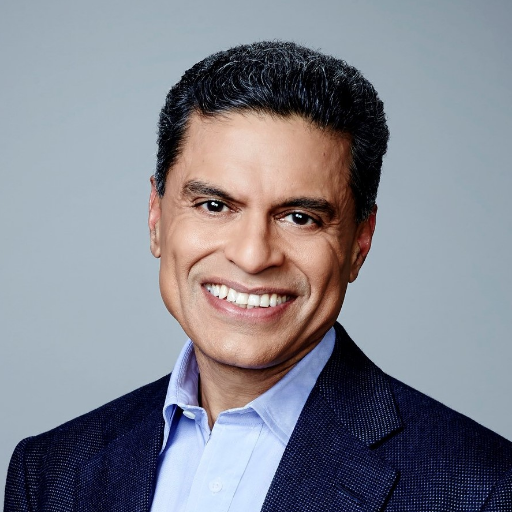
THIS IS FAKE - easy to see it's AI generated
Strategic Warfare@WarUpdatespp
Pakistan is a bridge between the West, South Asia, Middle East and the wider Muslim world Fareed Zakaria - CNN
English
Vikram Gore retweetledi

NEW: Students go nuts after donor announces during his commencement speech that he is paying off all of their senior year debts.
Anil Kochhar and his wife decided to give the gift to all ~200 graduates in N.C. State's family.
Kochhar is the son of Prakash Chand Kochhar, an immigrant from India who studied textile manufacturing in Raleigh.
"My father found not just an education, but an opportunity that allowed him to build a life, support his family, and begin a legacy that continues today. And it will never stop, never," Kochhar said.
English
@clairlemon The other day, my son was educating me about Alice in Chains and Chris Cornell. I was like - kewl.
English

When I was a kid I used to listen to a lot of music from the '60s thinking it was a peak musical era. Now my kids listen to music from the '90s (including these albums) thinking the same thing. x.com/sciencegirl/st…
Science girl@sciencegirl
These were all released within 57 days of each other in 1991
English
Vikram Gore retweetledi
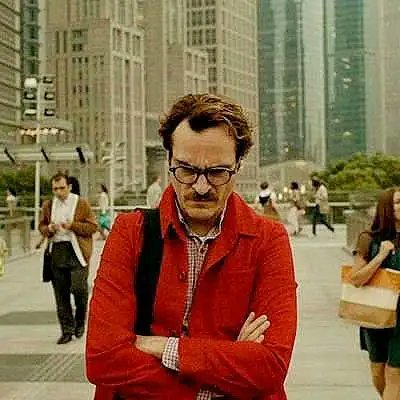
Since Interstellar (2014) released, only about 1 hour and 38 minutes would have passed on Miller’s planet.
English
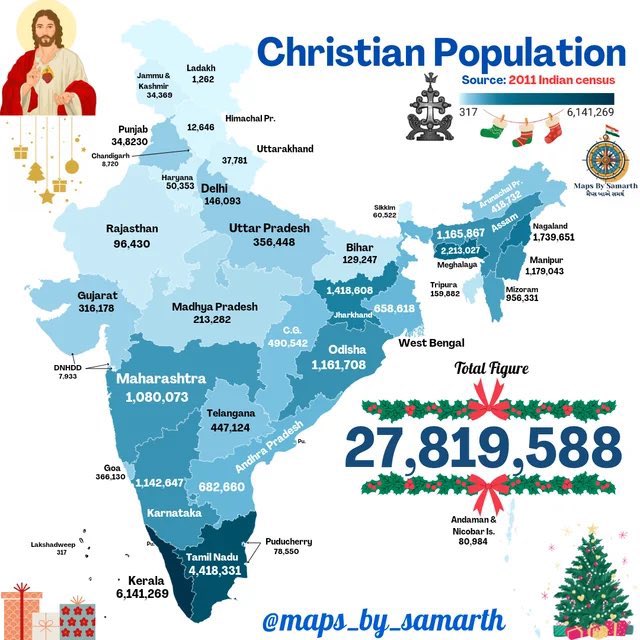
@KellyIsRightTX Yes! You can in fact be an Indian Christian, @KellyIsRightTX !
In fact, the Indian Christian population, which loves steak, is about the same proportion of India’s population as Hindus are in America!
I fully support your wearing of sarees also, you look great in them.
English

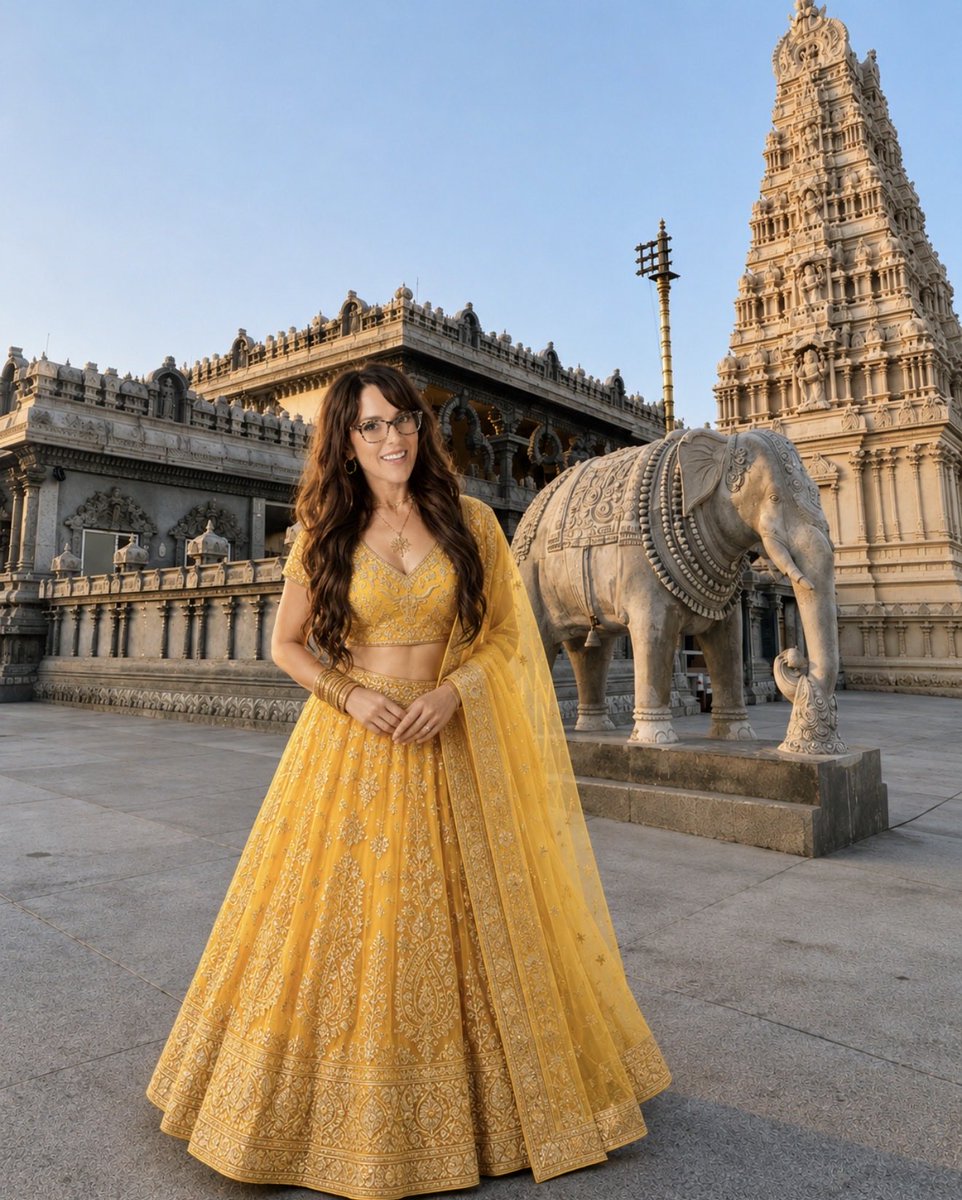
Because people from India have claimed to be just as American as me, I’ve decided to become Indian. My new name is Pria, however, I will be eating hamburgers at Temple and wearing shoes because I can’t give up my Texan culture. I’m just as Indian as y’all, my new name proves it. In fact, we should all become Indian and grill some steaks at temple. Thanks 🥰
English
@razibkhan @Indian_Bronson Will say this again. The only text/culture that has the word Aryan (verbatim) is Sanskrit/Hindu. Guess if people claim that to be your own, you can also claim authorship of the Vedas, that were, to the best of current knowledge, a result of Andronovo and IVC combo influence.
English