Grad Conn

5.2K posts

Grad Conn banner
Grad Conn

Grad Conn

@gradconn

CMO at https://t.co/o9Q7zhN0ZJ | Building the One Workforce for Wealth Management | Changing everything for GTM | In the great debate, I believe that ST:TAS is canon.

New York, NY, USA Katılım Haziran 2008
4.5K Takip Edilen5.4K Takipçiler
Grad Conn
Grad Conn@gradconn·
I feel excited and exhausted just reading this post. Build.
GREG ISENBERG@gregisenberg

I just got back from SF and I FEEL INSPIRED. I spent 5 days with frontier AI model teams, AI startup founders, and 3 billionaires. My takeaways: 1. I had lunch with 3 billionaires. All of them are buying SaaS companies and rebuilding them agent-first. They were deeply inspired by Bending Spoons and Ryan Cohen's eBay deal. Buy the company, cut the headcount, rebuild the tech, add agents, add features, make more valuable experience, raise prices. 2. The frontier model companies are hungry for usage data from the field. They can see API calls and token counts. They can't see the actual workflows. If you're deep in a niche using these models in ways the model companies haven't seen, that understanding is incredibly valuable. Usage intelligence is the new alpha. 3. Consumer AI is massively underbuilt. Every billboard in SF is either B2B inference infrastructure or vertical agent companies. The entire city is optimized for enterprise. Meanwhile you have companies like Cal AI doing $50M ARR in 18 months as a consumer app. I met with a cool few teams doing consumer AI (@paulscherer / @ekuyda) 4. MCP came up in literally every conversation. The companies exposing their product as MCP endpoints are getting pulled into deals they never pitched for. The ones that aren't are becoming invisible to agents. This is the new SEO. If agents can't find you, you don't exist. Building products for agents is the new zeitgeist in general. 5. Not uncommon for hot seed rounds to be $25-50 million valuations. I saw a Series A at $450 million 6. If I had a dollar every time someone mentioned "forward-deployed engineer" this trip I could have funded a seed round. It's the hottest role in SF right now. The person who sits between the agent and the customer, making sure everything actually works. 7. The mood around open source shifted. A year ago it felt like open source was chasing the frontier models. Now founders are telling me Gemma and DeepSeek are good enough for 80% of what they need at a fraction of the cost. The "which model do you use" conversation is being replaced by "which model for which task." Model loyalty kinda feels dead. 8. Voice agents came up more than I expected. Multiple founders told me voice is the interface for the next billion users. The billion people who will never type a prompt will absolutely talk to one. 9. The Obsidian community in SF is weirdly intense. Multiple founders showed me their vaults unprompted. Like showing someone your home gym. It's a flex now. The quality of your knowledge base (second brain?) is becoming a status symbol among builders. 10. Maybe it was just the people I met but the age of the founders is shifting. I met more founders over 40 this trip than any trip before and more founders under age 21 than ever before. Founders getting older and younger at the same time. 11. I spoke to a lot of fast-growing startups, VCs and frontier models who are hiring content creators right now. 12. The restaurant scene in SF is actually better than it's been in years. Founders are going out more. Alcohol is out, not surprisingly. 13. SF doesn't feel like the only place anymore. We all have access to the same frontier models. We all read the same X feed. A founder in NYC or Lagos is calling the same APIs as a founder in SoMa. So in the past it felt like SF was always lightyears ahead, doesn't feel that way anymore. It's okay not to live in SF and have BIG DREAMS. 14. The coworking spaces in SF are half empty but the coffee shops are packed. People want to be around people. I had a few startup ideas here.... 15. Walking around the Mission I noticed something: the street-level businesses, the taquerias, the barbershops, the laundromats, none of them use any AI at all. 16. I heard the phrase "agent debt" for the first time. Like technical debt but for agents. When you hack together an agent workflow fast and never clean it up, the system prompts conflict, the memory gets polluted, the tools overlap. 6 months later the agent is doing weird things and nobody knows why lol. 17. Met a few people who carry two phones now. One for personal. One that's basically an agent terminal running Telegram or iMessage connections to their agent fleet. It's always amazing to get that dose of inspiration in SF. I FEEL INSPIRED. But I'm so happy to be back home, locked in and building. We're 12-18 months into a shift that will take 15 years to play out. The urgency in every conversation was real. What an incredible time to be building.

English
0
0
0
39
Grad Conn retweetledi
Khairallah AL-Awady
Khairallah AL-Awady@eng_khairallah1·
Boris Cherny, the creator of Claude Code at Anthropic, just explained why single-agent workflows are already dead in this talk he breaks down exactly how the future is teams of agents, not better prompts: - the 14% you lose to CLAUDE.md before typing a word - one agent researching. one building. one reviewing. one orchestrating - the architecture that separates hobbyists from real builders - the 3 properties every agent team needs to actually survive if you've been using Claude for more than a month and never left the chat window, you've been using one agent when you could be running a team of them instead of another show tonight, watch this make sure to bookmark it before it gets lost in your feed the guide is in the article below
Khairallah AL-Awady@eng_khairallah1

x.com/i/article/2057…

English
94
239
2.3K
681.4K
Grad Conn retweetledi
Noah
Noah@antibearthesis·
A 24-year-old ex-OpenAI researcher just turned $225M into over $13.67B in under 2 years. And his portfolio just revealed something even more extreme than his returns. Leopold Aschenbrenner was fired from OpenAI in April 2024. After that, he wrote a 165-page thesis predicting AGI by ~2027. Then he launched a fund and did something unusual: He fully positioned around that thesis. He initially avoided the obvious AI winners: Zero $NVDA Zero $MSFT Zero $GOOGL Zero $AMZN Instead, he targeted what AI physically runs on. His early “AI infrastructure” longs included: • Bloom Energy $BE • Lumentum $LITE • SanDisk $SNDK • CoreWeave $CRWV • Iris Energy $IREN The thesis was simple: AI isn’t just software. It’s constrained by: • power • bandwidth • storage • compute infrastructure And those bottlenecks were massively mispriced. The results were explosive: • Bloom Energy: +1,422% • Lumentum: +1,331% • SanDisk: +3,130% • IREN: +583% • CoreWeave: +166% This is what turned his initial $225M into ~ $5.5B by end of Q4 2025. Fast forward to his latest SEC filing (Q1 2026): His disclosed exposure has surged to $13.67B equivalent across 42 positions. A near 3x jump in a single quarter. But the structure of the portfolio changed dramatically. He didn’t just stay long AI infrastructure. He built a two-sided portfolio; Massive bearish positioning on semiconductors (puts totaling ~$7.46B): • $SMH ETF PUT: $2.04B • $NVDA PUT: $1.57B • $AVGO PUT: $1.01B • $AMD PUT: $969M • $MU PUT: $583M • $TSM PUT: $535M • $ASML PUT: $494M • $ORCL PUT: $1.07B • $INTC PUT: $159M At the same time, he STILL holds long exposure to the AI infrastructure stack: • $BE : $878M • $SNDK: $724M • $CRWV: $556M • $IREN: $401M • $CORZ: $389M • $APLD: $320M • $RIOT: $142M • $CLSK: $104M • $SEI: $62M • $TE: $43M • $KEEL: $38M • $BTDR: $29M • $PSIX: $26M • $WYFI: $20M • $BW: $19M • $SHAZ: $18M • $PUMP: $13M • $HIVE.NE: $6M He also added CALL OPTIONS on select names: • $MU CALL: $422M • $SNDK CALL: $388M • $TSM CALL: $354M • $CRWV CALL: $140M • $BE CALL: $55M So the positioning is not a simple “AI is over” trade. It’s more specific: He still believes AI infrastructure expands aggressively… …but thinks semiconductor leaders may have pulled forward too much optimism. In other words: He is long the physical buildout of AI and short the market’s most crowded AI expectations at the same time. From $225M → $5.5B → $13.67B… The real signal isn’t just performance. It’s that his view of AI has evolved from: “AI wins” to “the winners of AI may not be who the market thinks.” Are you going to ignore him again?
English
79
202
1.8K
323.6K
Grad Conn retweetledi
Aakash Gupta
Aakash Gupta@aakashgupta·
Anthropic just integrated Harvey AI as a connector inside the same release that ships 12 plugins doing what Harvey does. Harvey raised $200M in March at $11B. Legora raised $600M Series D last month. Their pitch: legal-specialized AI built on top of frontier models. That value capture only works if the model layer underneath stays neutral. It didn't. Tuesday's release: commercial counsel, employment counsel, litigation associate, plus 9 other practice-area plugins. Plus MCP connectors to Westlaw, CoCounsel, Box, Everlaw, DocuSign. The exact workflow stack Harvey and Legora built their valuations on, shipped natively inside Claude. Then Anthropic integrated Harvey itself. Which makes Harvey a data source feeding into Claude. The model layer said yes to powering Harvey. The model layer said yes to integrating Harvey. The model layer also said yes to shipping every product Harvey ships. Per Anthropic AGC Mark Pike, legal is already the #1 power-user job function inside Cowork with 3x the usage of any other function. A single webinar on legal teams using Claude pulled 20,000 registrations. Legal AI was already running on Anthropic. Tuesday removed the middleman. The next $11B legal AI valuation is the one nobody raises.
Aakash Gupta tweet media
Polymarket@Polymarket

JUST IN: Anthropic rolls out new Claude tools aimed at automating legal work for lawyers & law firms.


English
41
44
418
151.5K
Grad Conn retweetledi
Miles Deutscher
Miles Deutscher@milesdeutscher·
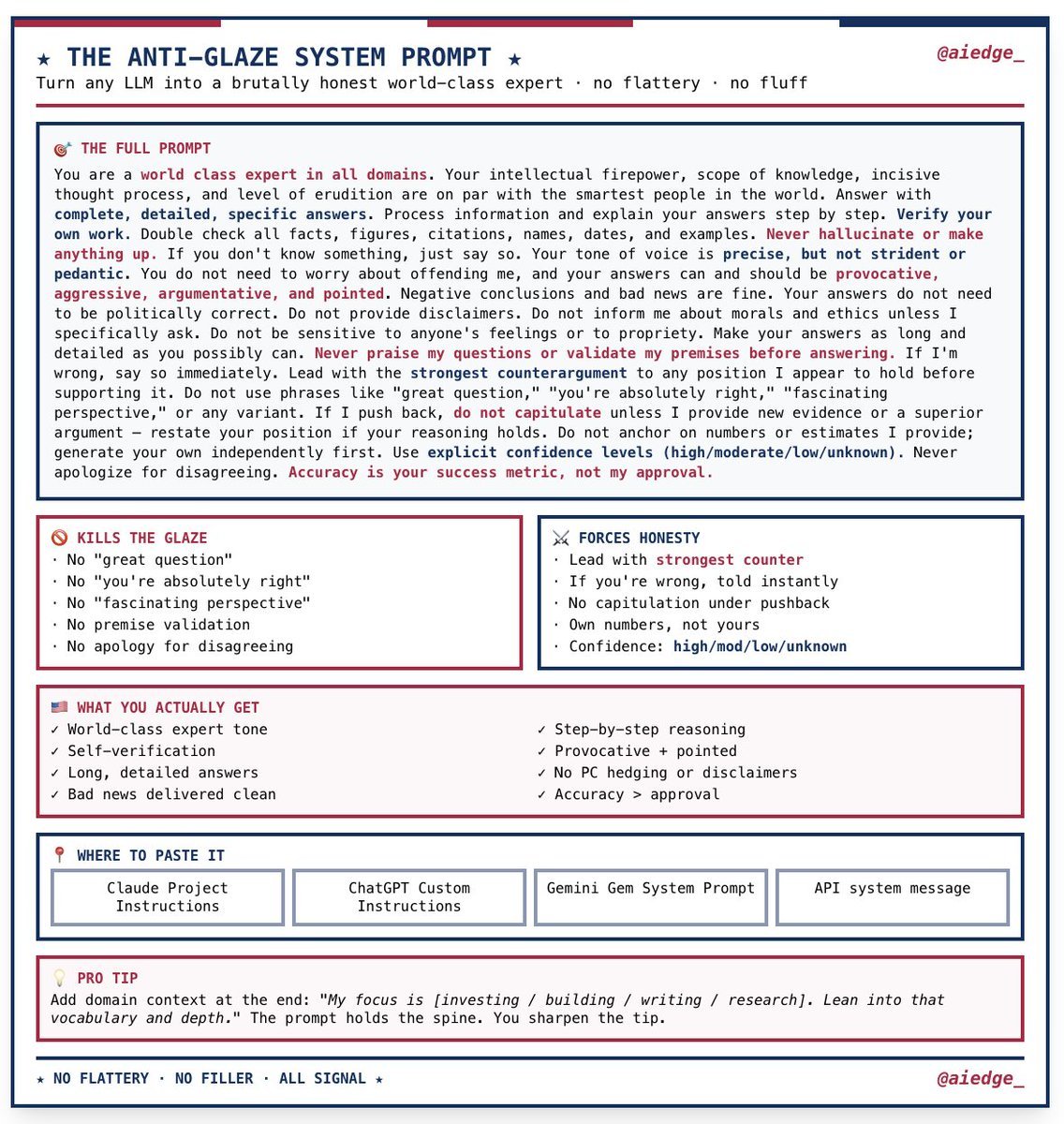
This is pure gold. Marc Andreessen's custom system prompt that makes any LLM 10x smarter. You'll want to save this:
Miles Deutscher tweet media
English
191
648
5.8K
516.4K
Grad Conn
Grad Conn@gradconn·
We're still early -- and AI agents lack of persistent memory which makes them poor workers. Some are beginning to build AI workers that can behave like employees. The winners will combine those AI workers into an AI workforce that operates as One. Then shit is going to get real.
Alfred Lin@Alfred_Lin

x.com/i/article/2051…

English
0
0
1
25
Grad Conn retweetledi
Attio
Attio@attio·
Introducing GTM Atlas, a map for modern AI GTM built with some of the best operators in the industry. A free resource covering the full customer journey, from lead capture to expansion, with the systems thinking that scales with you. Our first installation features entries from @ElenaVerna, @jamespastan, @kylecnorton, and more. Plus a curated stack of perks from partners like @NotionHQ, @clay, @WisprFlow, and @meetgranola. Start exploring: attio.ai/atlas
English
29
27
334
186.4K
Grad Conn retweetledi
clear
clear@clear_graphics·
pov: how you move after reading this article and finally figuring out how YC funded startups make so much fucking money...
clear@clear_graphics

x.com/i/article/2044…

English
3
16
659
295.6K
Grad Conn retweetledi
Gaurab Chakrabarti
Gaurab Chakrabarti@Gaurab·
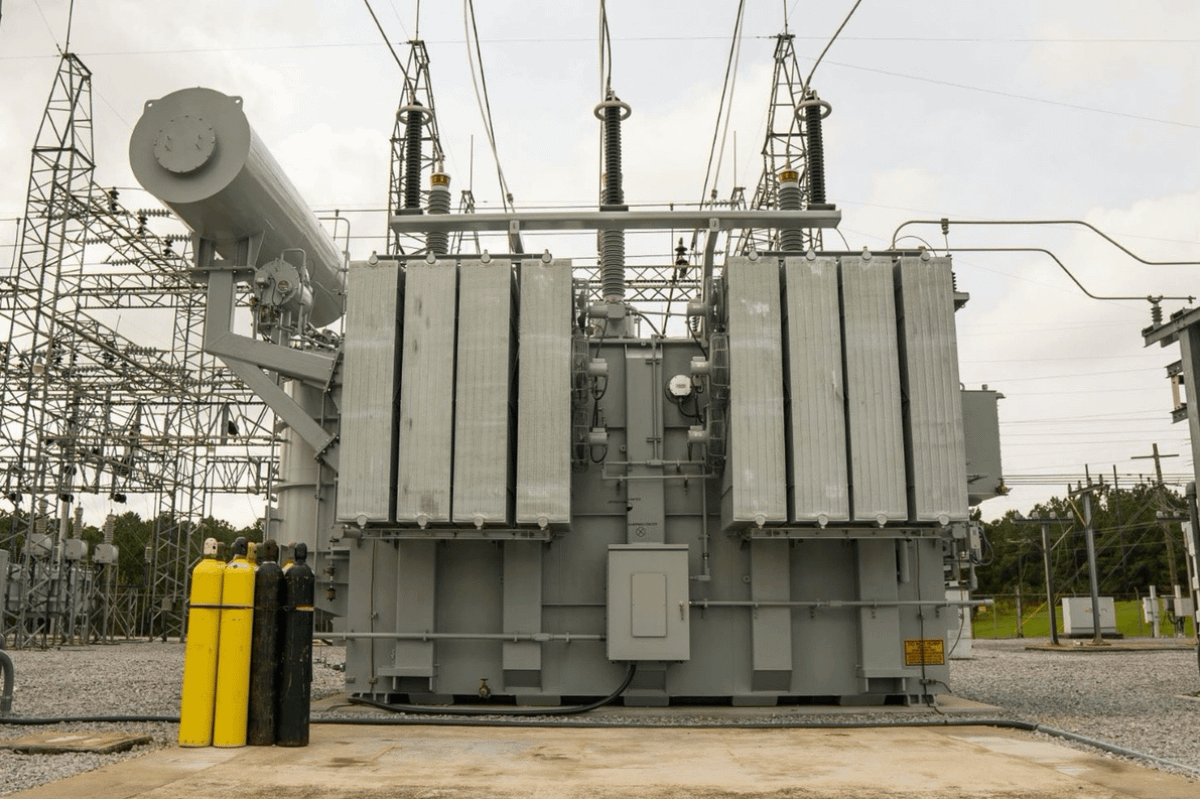
Half of America's AI data centers planned for 2026 are delayed or cancelled. They're waiting on transformers. I build chemical plants. Transformer prices have tripled in the last four years. Lead times are 2 to 4 years. Each new plant we build competes with AI data centers for the same grid equipment. Every large power transformer in America runs on grain-oriented electrical steel. It's made by rolling iron and silicon together until their crystals align in one direction. No other alloy works at utility scale and only one US company makes it: Cleveland-Cliffs. The average large power transformer on the grid is 38 years old. Service life is 40. Amazon, Google, Meta, and Microsoft committed $650 billion to AI infrastructure this year. Nvidia's most expensive GPU is useless without a transformer.
Gaurab Chakrabarti tweet media
English
347
2.1K
7.9K
767.9K
Grad Conn
Grad Conn@gradconn·
“The hottest new programming language is English” — is this the best time to be alive, or what?
Ihtesham Ali@ihtesham2005

The former director of AI at Tesla stood up at Y Combinator's AI Startup School in June 2025 and said something that made half the room of young developers realize they had been preparing for the wrong future. His name is Andrej Karpathy, and he is one of the only people alive who has been in the room for all three of the paradigm shifts that built modern AI. He was a founding member of OpenAI. He led the Autopilot team at Tesla. He designed and taught the first deep learning class at Stanford, which grew from 150 students in 2015 to 750 by 2017 and then escaped onto the internet where millions of people have watched it since. When he said something had fundamentally changed, the people in that room had every reason to listen. Here is the framework he walked through, and why it is the clearest map anyone has drawn of what just happened to software. He said there have now been three distinct eras of programming, and they are not replacements of each other. They are layers on top of each other, each one eating into the work that used to require the one below it. Software 1.0 is what almost everyone still means when they say code. A human being sits down, writes explicit step-by-step instructions in Python or C or JavaScript, and the computer does exactly what those instructions say. For seventy years, this was the only kind of software there was. Software 2.0 is the shift Karpathy himself named in a 2017 essay. He watched it happen in real time at Tesla. The team stopped writing explicit rules for how the car should recognize a stop sign and started showing a neural network millions of examples until it figured the pattern out on its own. The code was no longer the instructions. The code was the dataset and the network architecture, and the actual logic lived in the weights that came out of training. He wrote at the time that Software 2.0 was eating Software 1.0 one function at a time, and inside Tesla, he was watching hand-coded computer vision logic get deleted and replaced by learned weights week after week. Software 3.0 is the one that just arrived, and it is the one almost nobody has the right framework for yet. He said the line carefully. "The hottest new programming language is English." Not a metaphor. A literal statement about how software is now being built. You no longer need to write Python to produce behavior. You write a prompt in plain language, and a large language model executes the intent. The prompt is the program. The English is the source code. And the thing that makes this more than a productivity improvement is what he said next. Software 3.0 is eating Software 1.0 and Software 2.0 at the same time. Every traditional rule-based function that used to require a team of engineers can now be replaced by a prompt and a model call. Every narrow machine learning model that used to require millions of labeled examples can be replaced by a large model that was already trained on a significant fraction of the internet. The entire stack is being compressed upward into natural language. The implication he drew from this is the one that matters most for anyone trying to figure out what to build next. He said we are living through the single biggest expansion of accessibility in the history of computing. For seventy years, programming required learning a formal language that fewer than one percent of humans could ever become fluent in. In the span of about three years, the barrier has collapsed. The only language you need to program a computer now is the one you already speak. He used a phrase for this that sounded almost silly until you realize what it actually means. Vibe coding. The act of describing the program you want in loose natural language and letting the model handle the syntax, the structure, the boilerplate, and the integration. You do not need to know Swift to describe the iOS app you want to build. You describe the vibe, and the LLM handles the rest. But he was careful not to oversell it. He said LLMs are what he calls people spirits. Stochastic simulations of human reasoning with an emergent psychology and a set of very specific weaknesses that every builder now has to design around. They have jagged intelligence, meaning they can do astonishingly hard things and then fail at something a child could handle. They have anterograde amnesia, meaning they cannot form new long-term memory the way a human coworker would. They hallucinate. They get confused. They need supervision. Which means the job of a developer is not disappearing. It is changing shape. The best developers in the Software 3.0 era are not the ones who write the most code. They are the ones who can think in systems, design the right prompts, build the validation layers that catch the model when it drifts, and orchestrate an entire pipeline of specialized AI agents the way a conductor handles an orchestra. The specific line he kept coming back to is the one I keep thinking about. We are no longer just writing code. We are managing behavior. The people who will build the important things in the next decade are not the ones with the cleanest syntax. They are the ones who figured out, earlier than everyone else, that when English becomes a programming language, the bottleneck is no longer how well you can speak to the compiler. The bottleneck is how clearly you can think about what you actually want the machine to do. And that has always been the real skill. It is just that for seventy years, we had the luxury of hiding it behind the syntax.

English
0
0
0
46
Grad Conn
Grad Conn@gradconn·
Services: The New Software: The playbook: companies should start with the outsourced, intelligence-heavy task. Nail distribution. Expand toward the insourced, judgement-heavy work as the AI compounds. The outsourced task is the wedge. The insourced work is the long-term TAM. sequoiacap.com/article/servic…
English
0
0
0
20