Grad Conn

5.2K posts

Grad Conn banner
Grad Conn

Grad Conn

@gradconn

Average Tech CMO. Below average pickleball player. Woeful golfer. World-class Star Wars fan.

Delray Beach, FL Katılım Haziran 2008
4.4K Takip Edilen5.4K Takipçiler
Grad Conn retweetledi
Vishakha Singhal
Vishakha Singhal@vishisinghal_·
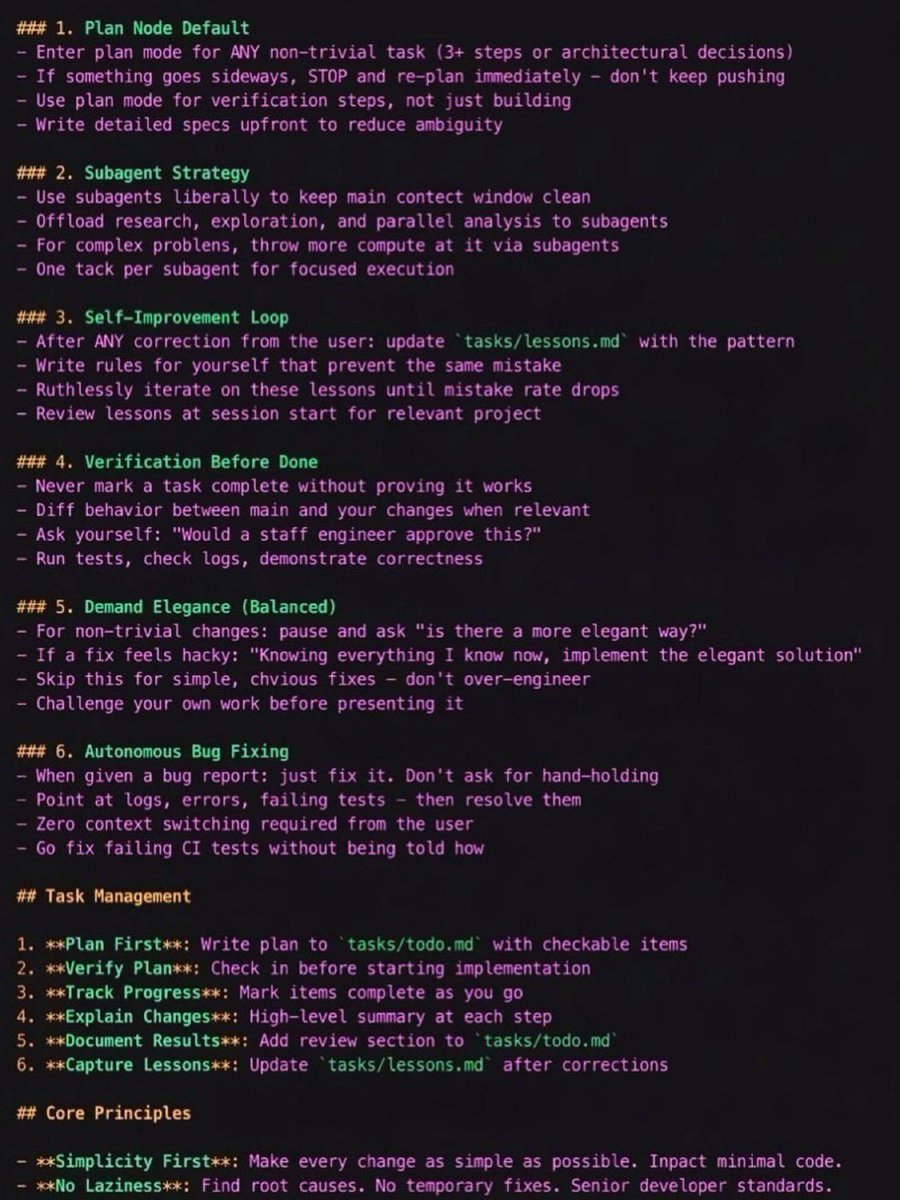
The guy who created Claude Code ( @bcherny ) recently leaked how his team uses Claude. One CLAUDE.md that you drop into your project. Inside: past errors, conventions, rules - Claude reads it every session. Boris uses this every day at Anthropic:
Vishakha Singhal tweet media
English
48
104
1K
103.4K
Grad Conn retweetledi
Dustin
Dustin@r0ck3t23·
Andrej Karpathy just described something most people are not psychologically ready to hear. The man who built the AI team at Tesla and helped shape OpenAI from the inside, just sat down on a podcast and told every researcher listening that they are building their own replacement. And they already know it. Karpathy: “You guys realize if we’re successful, we’re all out of a job?” That was not a joke. That was not a thought experiment. He walked the halls at OpenAI and said it directly. The response was not disagreement. It was silence. Because they can see it working. But here is the part almost everyone is getting wrong. The short-term picture is the complete opposite of what people expect. Software demand is not about to collapse. It is about to spike harder than any point in the history of computing. Karpathy: “Code is now ephemeral and it can change and it can be modified.” For fifty years every business on the planet was trapped inside whatever software they could afford to buy. You subscribed to tools built for someone else. You adapted your workflow to fit their product. You lived with the friction because rewriting it from scratch would cost more than your entire department. That constraint just evaporated. When AI can rewrite code instantly and endlessly the entire digital layer of the global economy is about to get torn apart and rebuilt from the ground up. Not upgraded. Not patched. Rebuilt. Every company on Earth suddenly has the ability to generate software that fits their exact needs in real time. That is not less demand for software. That is an explosion of demand so massive most people have not even begun to process the scale. And then the long-term hits. Karpathy: “These researchers are basically automating themselves away, like actively.” These are not factory workers watching a robot take over the assembly line. These are the most elite engineering minds alive building a system that will do their job better than they can. And they feel it. The interviewer called it a psychosis and Karpathy did not push back on the word. Because that is exactly what it is. Imagine going to work every day knowing that every breakthrough you achieve brings you one step closer to making yourself unnecessary. That every improvement you ship teaches the machine to need you a little less. That is the psychological reality inside every major AI lab on Earth right now. And if the people building the thing know they are on borrowed time there is no protected class. Not lawyers. Not analysts. Not engineers. Not researchers. Nobody gets to sit this one out. Karpathy: “We’re just building automation for Sam or something like that. Or the board.” That line landed quiet but it is the most important thing he said. The AI does not work for the engineer who built it. It works for whoever sits at the top of the organization. When the entire R&D pipeline can be automated the thousand-person research lab compresses down to a founder and a fleet of agents. The middle layer does not get restructured. It gets deleted. The people building these systems understand that better than anyone. And they are building them anyway. Because if they do not someone else will. And then they are out with nothing to show for it. That is the trap nobody talks about. The smartest people in the world are locked in a race where winning and losing both end the same way for them personally. Karpathy did not speculate about some distant future on that podcast. He told you what is already happening inside the buildings where this technology gets made. The short-term boom is real. The long-term displacement is real. And the people closest to the fire are the ones getting burned first.
English
33
28
95
16K
Grad Conn retweetledi
Dustin
Dustin@r0ck3t23·
Elon Musk just explained how you build a trillion-dollar company overnight and most people completely missed what he actually said. Musk: “As soon as you unlock digital human, you basically have access to trillions of dollars of revenue.” That sounds like hype until you break down what he means. The most valuable companies on Earth do not manufacture anything. Apple does not build iPhones. They send digital files to a factory in China. Microsoft does not build hardware. Their entire output is code. Google. Meta. Digital. Digital. Every single company sitting at the top of the global economy produces exactly one thing. Keystrokes. The entire modern economy runs on human beings staring at screens and pressing buttons. Now build an AI that does that at the same level a human does. Not a chatbot. Not an assistant. A full digital human that reads a screen, understands context, and operates software the same way a person does. You just unlocked access to every revenue stream those companies sit on. Not in ten years. Not after some massive infrastructure overhaul. Immediately. The entire enterprise AI conversation right now is stuck on integration. How do you connect AI to corporate systems. How do you build custom APIs. How do you rip out decades of bloated software and rebuild it from scratch. Musk just skipped all of it. A digital human does not need an API. It does not care how old or broken your system is. It logs into the same dashboard your employee uses. Reads the same screen. Clicks the same buttons. Processes the same information. Zero integration. Zero rebuild. Zero friction. You do not renovate the building. You just replace who is sitting at the desk. That changes the math on every industry overnight. Customer service alone is one percent of the entire global economy. That is hundreds of billions of dollars flowing through an industry that consists almost entirely of people reading text and typing responses. No factory involved. No raw materials. No shipping. No physical supply chain. Pure digital labor. The moment a digital human crosses the threshold where it handles that work at human level the cost structure of the entire industry collapses to near zero. And customer service is just the first domino. Accounting. Legal review. Insurance claims. Medical billing. IT support. Every single one of those is the same equation. Humans reading screens and producing digital output. A digital human does not disrupt those industries. It absorbs them. No integration required. No permission needed. No ten-year rollout plan. Log in and take over the workflow. The companies that understand this right now are building the most valuable entities the world has ever seen. The ones that do not are going to wake up one morning and realize the entire revenue model they built over decades just got replicated at a fraction of the cost by something that never sleeps and never stops. Musk did not make a prediction on that podcast. He gave you the blueprint. And the clock is already running.
English
54
197
670
61.5K
Grad Conn retweetledi
Kshitij Mishra | AI & Tech
Kshitij Mishra | AI & Tech@DAIEvolutionHub·
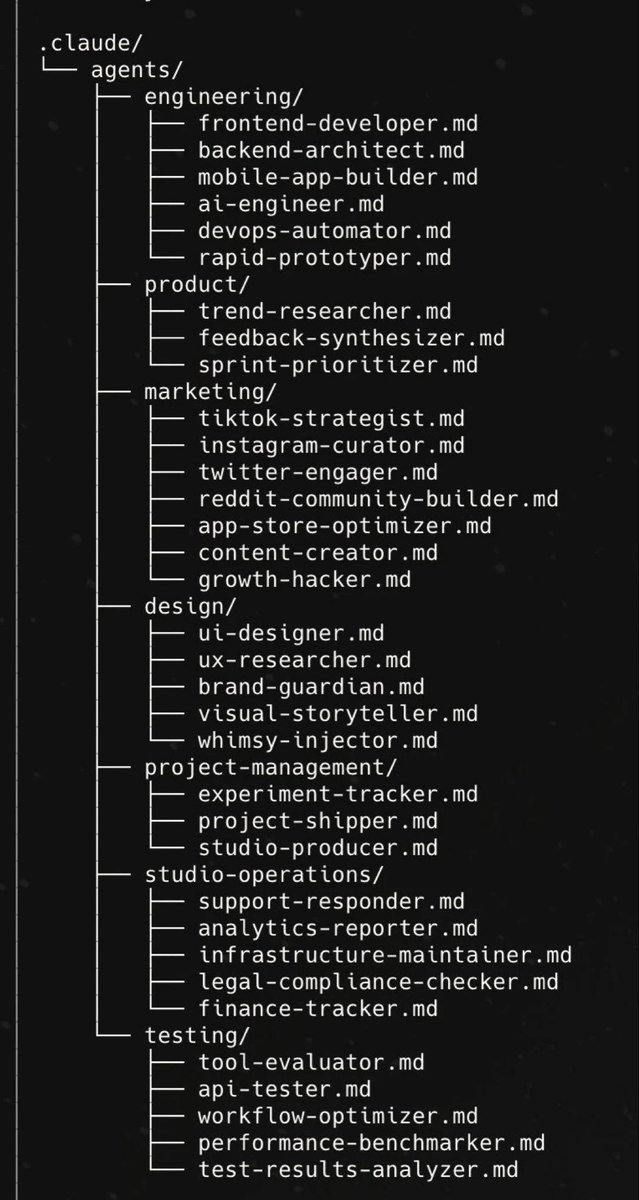
Claude Code just quietly killed the entire startup team model. Yeah — I said it. No hiring. No standups. No 10-person Slack chaos. Just this: A .claude/agents/ folder with 30+ specialized agents. Each one = a single markdown file with ONE job. → Engineer → PM → Marketer → Designer → Legal → Finance → QA All replaced. By one person. With commands like: "Hey rapid-prototyper, build this." "Hey growth-hacker, get me users." "Hey compliance-checker, are we safe?" This isn’t a tool. It’s a one-person startup operating system. And right now — almost no one is using it. That’s the edge. Bookmark this before your competition does. 🔖
Kshitij Mishra | AI & Tech tweet media
Kshitij Mishra | AI & Tech@DAIEvolutionHub

x.com/i/article/2034…

English
110
362
2.9K
702.2K
Grad Conn
Grad Conn@gradconn·
@a16z Over the last 20 years we’ve stripped the DOM and put everything in the JavaScript/React layer to improve the Web experience for humans. Agents read the DOM, and most are now skeletons. We are moving from human-centric software to agent-centric systems: copernicanshift.com/agent-accessib…
English
0
0
0
182
a16z
a16z@a16z·
The current internet wasn't built for agents. "There’s a huge opportunity for startups to create these proxies… if someone would give me a scoped Gmail, I’d adopt it today." "There are websites today where the majority of the revenue, and certainly the majority of profits, come from cross-selling. If this website is suddenly only used by agents, that doesn't work anymore, right?" "All of these large consumer sites... they don't want agents, essentially." "One interesting question here is: will the big incumbents catch up and offer their functionality for agents, or do we actually need new companies that cater to agents specifically?" "Do we actually need to replace some of the big sort of SaaS building blocks of e-commerce, of online services, and redo them for agents?" @stuffyokodraws @appenz on the AI + a16z Podcast
English
55
53
370
70.4K
Grad Conn
Grad Conn@gradconn·
“What do you think is back there? Santa’s workshop?” It’s always good to know what the inside voices are saying to our stupid questions!
Adam Townsend@adamscrabble

Classic

English
0
0
0
40
Grad Conn
Grad Conn@gradconn·
“What do you think is back there? Santa’s workshop?” It’s always good to remind ourselves what the inside voices are saying to our dumbest questions…
Adam Townsend@adamscrabble

Classic

English
0
0
0
36
Grad Conn
Grad Conn@gradconn·
You’re only going to get fuckened if you refuse to use the greatest empowerment tools in the history of mankind to do your own thing. If you need to sit at a desk and just take instructions from someone, you have to seriously ask yourself: WTF am I doing with my life? Our corporate society where everyone works for a few large companies is very new in human history (<100 years) and many of us will be going back to a craft and solopreneur lifestyle. That means no more 9 to 5, and I’m OK with that — let the machines work like machines!
Andrew Yang🧢⬆️🇺🇸@AndrewYang

The Fuckening of white-collar workers has arrived. blog.andrewyang.com/p/the-end-of-t…

English
0
0
0
41
Grad Conn retweetledi
Okara
Okara@askOkara·
Today we're introducing the world's first AI CMO. Enter your website and it deploys a team of agents to help you get traffic and users. Try it now at okara.ai/cmo
English
1.6K
2.4K
27.6K
13.7M
Grad Conn
Grad Conn@gradconn·
This article is an excellent summary of the core investment thesis which AI is driving, and the smart money is on infrastructure. Adding my own spin, energy is the underpinning variable. Utilities haven’t had a bonanza like this since the invention of the air conditioner!
Anish Moonka@AnishA_Moonka

x.com/i/article/2033…

English
1
0
4
1.6K
Grad Conn retweetledi
Bark
Bark@barkmeta·
This is insane… Perplexity just put an AI agent inside a Mac mini. You plug it in. It sits on your desk. It never turns off. This is not a chatbot. This is a virtual employee that lives in your house and works 24/7. It goes through your files. Your apps. Your emails. Your documents. Everything. Not just when you ask. All the time. While you sleep it’s working. While you eat dinner it’s working. While you’re relaxing it’s managing your entire digital life. And people have NO idea how far along this already is. This thing will run your schedule. Answer your emails. Make purchases. Talk to other AI agents on your behalf. Handle your bills. Book your travel. It will even do your JOB for you… This isn’t a future prediction. It’s happening right now. We went from “ChatGPT is cool” to a fully autonomous employee living on your desk in just 3 years. And this is the version that’s dropping now. Imagine what’s coming next…
Perplexity@perplexity_ai

Announcing Personal Computer. Personal Computer is an always on, local merge with Perplexity Computer that works for you 24/7. It's personal, secure, and works across your files, apps, and sessions through a continuously running Mac mini.

English
237
190
2.1K
445K
Grad Conn retweetledi
Xiaoyin Qu
Xiaoyin Qu@quxiaoyin·
A big tech exec asked me about their AI strategy at a conference last week. I told him his entire approach was wrong. THE OLD WAY (THAT MOST BIG COMPANIES ARE DOING) Their plan: give every role an AI agent. PM gets an agent. Engineers get an agent. Designers get an agent. Everyone's more efficient at their individual tasks. But the org stays the same. Still six people per feature. Still the same meetings. Still the same alignment overhead. They've sped up the workers but not the workflow. THE BETTER WAY Some companies have figured this out already. They don't just add AI tools — they restructure. Six people becomes two: One handles everything external — customer research, product decisions, design. One handles everything internal — frontend, backend, testing, shipping. Two people sitting next to each other. No meetings. No documents to sync. No approval chains. Just build. THE EXTREME WAY Companies like Base44? The founder does it alone. One person. All six roles. No coordination cost at all. And the final stage — zero people. Give AI a goal and let it self-organize. Let it decide how many "people" it needs and what each one should do. That's where this is heading. No humans in the loop. WHY BIG COMPANIES CAN'T DO THIS They're trapped. You can't cut everyone under a VP. You can't merge product and design without a power struggle. Who reports to whom? Whose headcount gets reduced? Office politics will block every real AI transformation. Their reforms will be half-measures. Band-aids on an org chart that was built for a pre-AI world. THE OPPORTUNITY This is exactly why small companies have a massive opening in the next 1-2 years. Big companies are adding AI agents to their old structure. Small companies are building new structures around AI. One of those approaches scales. The other one just makes meetings slightly shorter. #AITransformation #Startups
English
26
18
99
13.9K
Grad Conn retweetledi
Miles Deutscher
Miles Deutscher@milesdeutscher·
realizing AI is your generation's gold rush event, and 99% of your competition is still debating whether the gold even exists. (you're about to get filthy rich)
AI Edge@aiedge_

x.com/i/article/2031…

English
70
310
4.9K
1.5M
Grad Conn
Grad Conn@gradconn·
Systems designed for humans will inevitably be less efficient than systems designed for agents — this AgentOS will make more sense for machine-mediated interactions!
Atal@ZabihullahAtal

🚨 BREAKING: A new research paper proved that the future computer will have no apps at all and no operating systems like Windows, macOS, or Linux. Instead, it may run entirely on AI agents. The concept is called AgentOS. Here’s the problem researchers identified. Today’s AI agents are becoming incredibly capable. Systems like OpenClaw can already: • control a local computer • execute complex workflows • connect and use external tools • perform multi-step tasks autonomously But there’s a hidden limitation. All of these agents still run inside traditional operating systems. And those systems were designed for a completely different era. Modern operating systems like Windows, macOS, and Linux were built around two interaction models: • GUI (Graphical User Interface) clicking icons and navigating windows • CLI (Command Line Interface) typing commands into a terminal These models were designed for humans manually operating software. Not for AI agents coordinating complex tasks across dozens of tools. This creates a fundamental mismatch. And it leads to several problems. First: fragmentation. Every application exists in its own silo. Data, workflows, and permissions are separated across different programs. Second: context loss. When a task spans multiple tools, the system has no unified understanding of what the user is trying to accomplish. Each app only sees a small piece of the workflow. Third: messy permissions and hidden automation. Many AI tools bypass normal system controls to get things done. Researchers call this phenomenon “Shadow AI.” Where autonomous agents operate across systems without clear structure, governance, or transparency. In short: AI agents are powerful. But the operating system architecture isn’t designed for them. So researchers propose a new paradigm. A new type of operating system called AgentOS. Instead of apps running on the system… The system itself becomes an AI coordination layer. At the center is something called the Agent Kernel. Think of it as the brain of the entire computer. This kernel continuously interprets user intent and manages intelligent agents. It can: • understand natural language requests • break complex tasks into smaller steps • coordinate multiple specialized AI agents • select the right tools for each step And traditional software? It evolves into something called Skills-as-Modules. Instead of launching separate applications, capabilities become modular skills that agents can dynamically combine. For example, instead of manually opening multiple tools: • a document editor • a spreadsheet • a presentation app • an email client You simply say: “Analyze this report, extract the key insights, create slides, and send them to my team.” The Agent Kernel interprets the request. Then it automatically selects and orchestrates the required skills. No apps. No switching windows. Just intent → execution. In other words: Computers stop being app platforms. They become intent platforms.

English
0
0
0
58
Grad Conn
Grad Conn@gradconn·
Electricity has become our most precious commodity because labor is rapidly dropping to zero...
English
0
0
0
75