Hugues de Braucourt

145 posts

Hugues de Braucourt banner
Hugues de Braucourt

Hugues de Braucourt

@H2Brauc

Building & investing @geoprotocol @Ledger @PortofinoTech @Solidus_Labs

New-York, London, Paris Katılım Ocak 2012
779 Takip Edilen373 Takipçiler
Hugues de Braucourt retweetledi
Geo
Geo@geoprotocol·
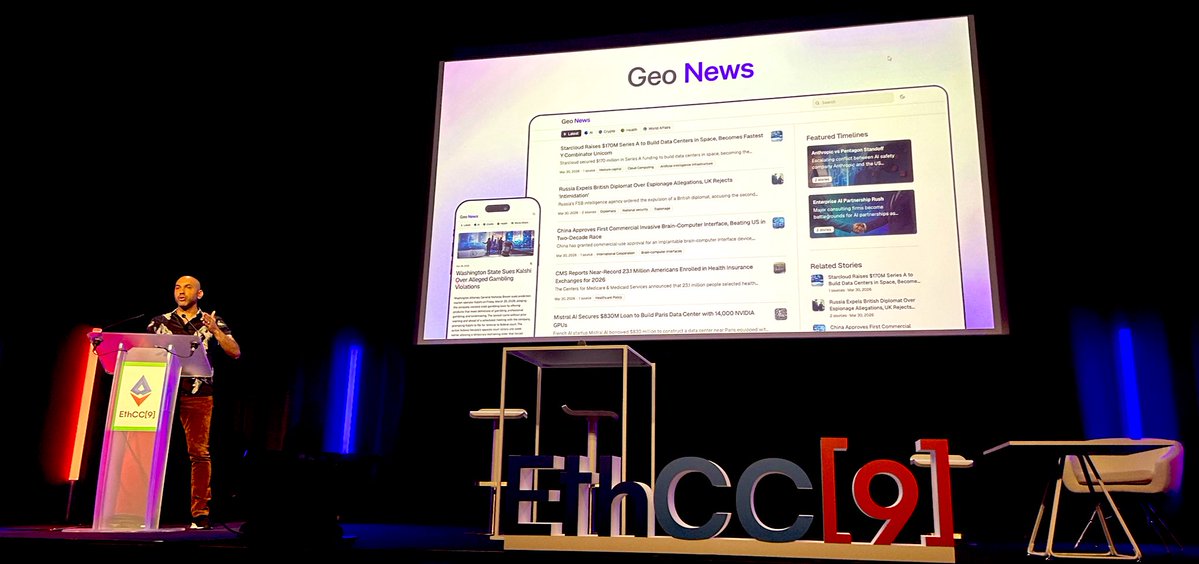
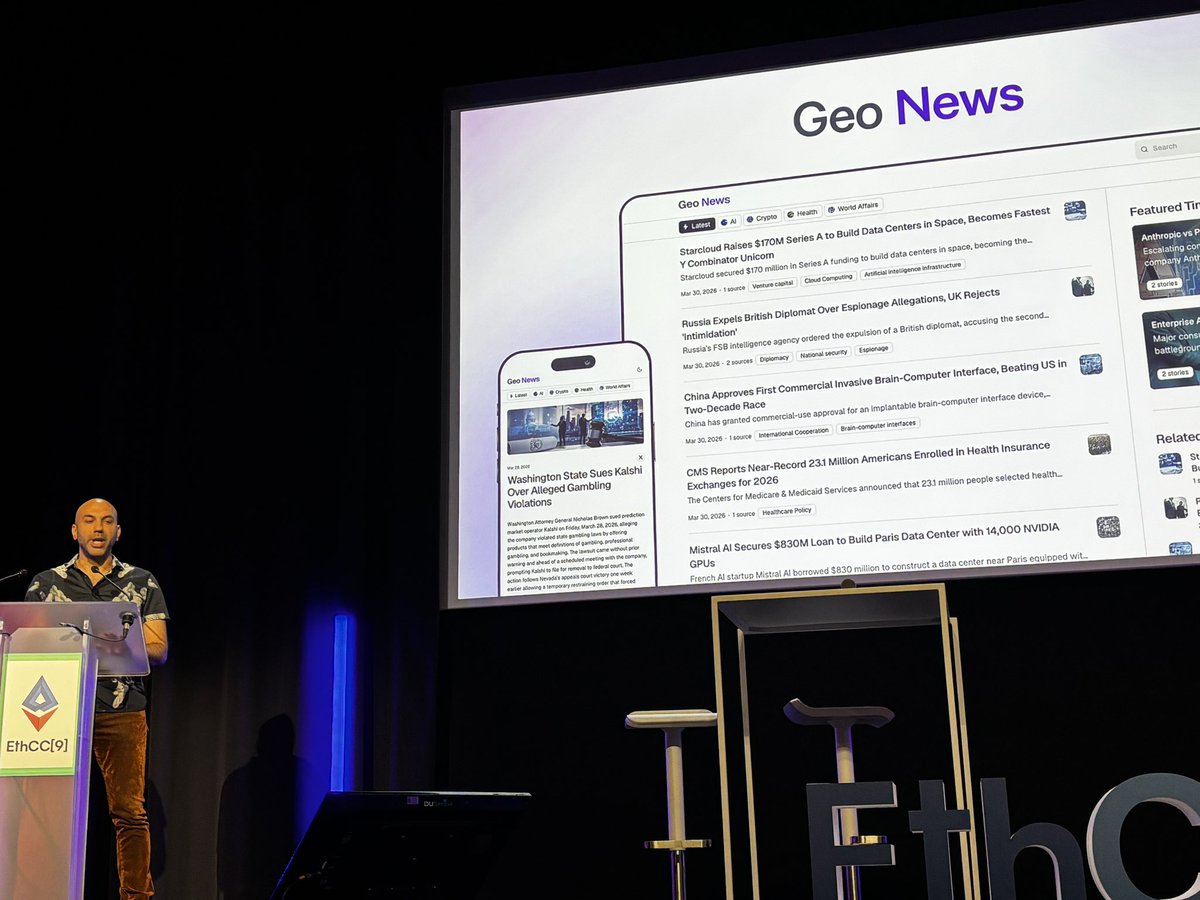
News should leave you with understanding, not just an opinion. What if every story was presented with individual claims that can be cited and challenged, sources linked, and every perspective laid out clearly? All in one place, updated as events unfold. Introducing Geo News ↓
English
35
41
462
1.1M
Hugues de Braucourt retweetledi
Adam
Adam@Inknowledged·
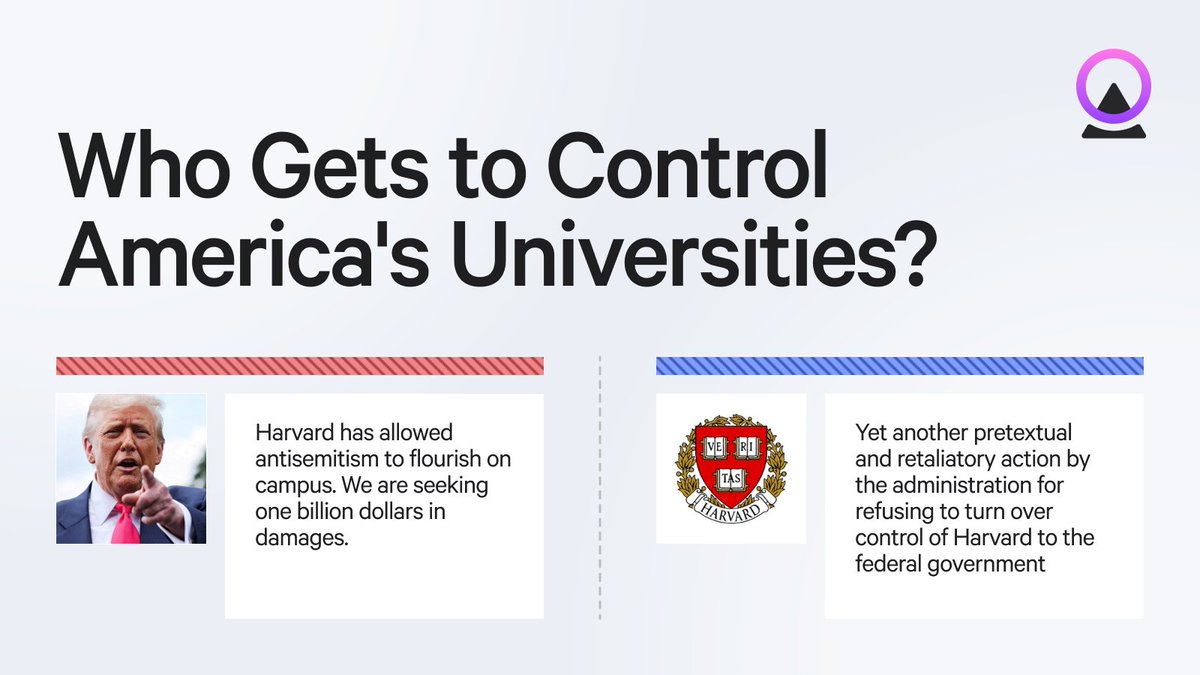
The Trump administration is suing Harvard for $1 billion. Harvard says it's being targeted for refusing to hand over control to the federal government. Both can't be true. But the version that wins in court, and in public opinion, will set the precedent for every university in America. Is the federal government a civil rights enforcer or an ideological gatekeeper? The answer to that question will shape what academic freedom looks like for decades. The information layer underneath this debate matters. @geoprotocol is building it to be open.
Adam tweet media
English
1
3
10
329
Hugues de Braucourt retweetledi
Adam
Adam@Inknowledged·
We just launched Geo News! Because the problem with the news is no longer access. It’s orientation. We are flooded with headlines, hot takes, and algorithmic fragments, yet it’s harder than ever to answer simple questions: What is actually happening? What are the main narratives? Where do they differ? What claims are being made? What evidence are they based on? Geo News is designed to help with exactly that. It maps stories across sources and perspectives, so you can explore coverage with more context and less distortion. Not just what happened, but how it is being framed, what is contested, and what sits underneath the discourse. Think of it as a way to break out of the feed and into a fuller picture. Less noise. More context. Better shared understanding. Try it out - link in the comments
Adam tweet media
English
1
7
19
726
Hugues de Braucourt retweetledi
Geo
Geo@geoprotocol·
“Follow your passion” is something everyone hears, but do most people have a clear passion? "Research at Stanford found that only 20% of people have an identifiable passion." This claim was discussed on The Rich Roll Podcast with Stanford professors Bill Burnett & Dave Evans.
Geo tweet media
English
1
2
12
242
Hugues de Braucourt retweetledi
Lizzy M
Lizzy M@LizzyMcgro7669·
Ryan Coogler’s Sinners juke joint scene feels like living geography shot like one continuous moment, but spanning centuries of sound, movement, and culture Every step is a connection between people and place @geoprotocol makes those connections visible
English
1
2
4
284
Benji Taylor
Benji Taylor@benjitaylor·
Introducing Layout Mode for Agentation, a new way to explore and wireframe directly on the page. Rearrange and resize existing elements, add new components, and generate structured design feedback for your agent.
English
131
181
3.3K
349.9K
Yaniv Tal
Yaniv Tal@yanivgraph·
This may be directly correlated to the focus on fees. Because in truth, if fees are the goal, crypto is only marginally better than traditional businesses. With additional headwinds. Whereas crypto’s potential lies in things you couldn’t do with traditional companies. Cut that off, and you lose all the novel solutions to important problems. May be better to entertain new economic systems and see what deeply important and exciting innovations pop out.
English
1
0
9
470
Santiago R Santos
Santiago R Santos@santiagoroel·
This year I’m on pace to make the lowest number of angel checks into crypto. Dollar-wise I’m still deploying the same amount but more concentrated and in other sectors. Why is that? I haven’t seen that many good projects lately. Maybe a skill issue of mine, or founders are reaching out less because I’m heads down building Inversion now. But a lot of crypto VCs say the same thing, that they haven’t seen many novel ideas or great teams. Most of the venture dollars are going to later stage projects like Polymarket and Kalshi. Sentiment is quite bad out there. It’s so tempting to say we’ve innovated what we could. Perps are dominated by Hyperliquid. Gaming and social are “dead,” for now. I’ve seen this movie before. We haven’t finished innovating. Not even close. Most of what we’ve done is copy traditional finance and make a lot of the same mistakes in the process. But we have killer 0 to 1 foundations that have set the stage for the next crop of builders. The market has less patience for the 10th prediction market or perp protocol. It has zero for social, gaming and NFTs. For now. We need more creativity from builders. We need a few bold ones to try it again when so many have failed. Builders will come, but not right now. The best and brightest are in AI. We’ve seen this movie before too. Yes, it’s very hard to get scale. It always is. In some ways the days of making easy money with ICOs is dead. Such is the state of early movements. We’ve grown up. It’s more competitive but my god it’s not remotely late. It’s painfully early. I spend less time on angel investing now, making the occasional bet on founders I’ve followed or in spaces synergistic to Inversion. But I’m optimistic. Great founders get discovered and ideas get funded faster today because AI and open source have radically lowered the cost of launching something. That makes it very easy to start companies. Builders will come because we haven’t solved crypto. There are plenty of hard problems and smart people want to work on hard and meaningful things. Crypto has no shortage of either.
Suraj Sharma@suraj_sharma14

Here are the Web3 angel investors actively backing builders right now: 1.) Naval Ravikant (@naval) AngelList founder. Early Bitcoin believer. One of the most influential angels in all of tech not just Web3. Backs founders who are building for the long term. Not the next cycle. Focus: infrastructure, DeFi, open source, crypto primitives 2.) Balaji Srinivasan (@balajis) Ex-CTO of Coinbase. Former General Partner at a16z. One of the most crypto-native angel investors alive. Backs builders who understand why decentralization actually matters. Focus: network states, DeSci, Bitcoin, decentralized infrastructure 3.) Tyler Winklevoss (@tylerwinklevoss) Co-founder of Gemini. Co-founder of Winklevoss Capital. Seed and Series A stage. Brings direct operational experience from building a major crypto exchange. Focus: Web3, gaming, media, institutional crypto infrastructure 4.) Evan Luthra (@EvanLuthra) Builder-first philosophy. One of the most active angels backing early Web3 founders globally. Known for hands-on guidance from the ground up before projects reach scale. Regular presence at blockchain events. Active on X with his portfolio. Focus: early stage Web3, AI x blockchain, consumer apps 5.) Kunal Shah (@kunalb11) Founder of CRED. Co-founder of Freecharge. 200+ investments across fintech, consumer internet and Web3. Most active angel investor in Asia with massive reach across India's startup ecosystem. If you're building in India this is your most relevant name on this list. Focus: fintech x Web3, consumer crypto, payments infrastructure 6.) David Tisch (@davidtisch ) Managing Partner at BoxGroup. Co-founder of Techstars NYC. Pre-seed and seed stage. High volume. Hands-on. Strong New York network. Known for backing founders at their earliest. Focus: Web3, FinTech, consumer internet, digital health 7.) Santiago R Santos (@santiagoroel) Former Partner at ParaFi Capital. One of the most respected crypto-native angels in DeFi. Deep understanding of protocol economics and on-chain governance. Focus: DeFi protocols, token design, on-chain infrastructure 8.) Stani Kulechov (@StaniKulechov) Founder of @aave . Now actively angel investing in builders working on DeFi, social and lending primitives. One of the few founders who built a billion dollar protocol and is now backing the next generation. Focus: DeFi, social finance, lending infrastructure, open source 9.) Sandeep Nailwal (@sandeepnailwal ) Co-founder of @0xPolygon . Backs builders through Symbolic Capital. Known for the Nailwal Fellowship supporting individual developers. One of the most builder-friendly angels in the entire ecosystem. Focus: ZK infrastructure, DeFi, developer tooling, Indian builders. 10.) Julien Bouteloup (@bneiluj) Founder of Stake Capital. Builder of Curve ecosystem tools. Deep DeFi native. Backs founders who understand protocol mechanics deeply. Focus: DeFi, MEV, staking infrastructure, yield protocols What angels actually want in 2026 from their own words: - Working code over whitepapers - Real users over projections - Founders who understand the problem personally - Long term conviction over short term narrative - Crypto-native judgment plus execution ability The angels still writing cheques are more disciplined and more focused on fundamentals than ever before. Hype doesn't work anymore. Traction does. How to actually reach them: - Engage with their content genuinely on X - Build something they'd find interesting - Get a warm intro through their portfolio founders - Show up consistently before you need anything Cold DMs work occasionally. Warm relationships work always. Save this for a founder who is fundraising right now.

English
53
17
275
51.4K
Hugues de Braucourt retweetledi
Web2 Chaos
Web2 Chaos@web2chaos·
I didn't come for assets. I come with questions. What is value? Who defines truth? Can trust exist without a center? Trust is being encoded. Truth is being modeled. Now I stand between them – questioning, building. @geoprotocol
English
1
2
3
57
Arturas
Arturas@ArturasStoic·
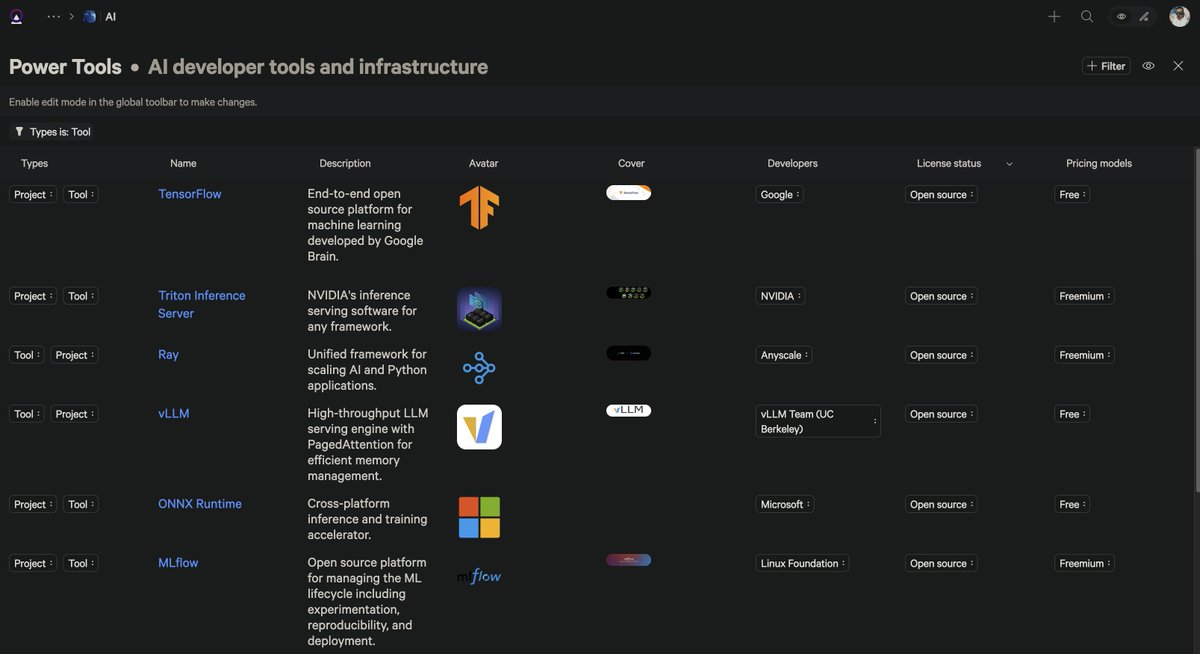
Checking out some AI developer tools on @geoprotocol
Arturas tweet media
English
2
5
10
471
andrew chen
andrew chen@andrewchen·
Web 1.0 came with new channels: - email, search, link sharing, etc Web 2.0 too: - feeds, creators, viral invites, etc Mobile: - app stores, SMS invites, vertical vid, mobile ads What about AI? I’ve been complaining that AI hasn’t come with much. But we’re seeing a big growth channel opening now: Products that are built as APIs/CLIs that can be pulled into new projects by Codex/Claude on the fly Maybe the “AI-native hotel app” doesn’t mean a mobile booking app with an AI chat panel. It means a CLI that can book a hotel for you, that an AI agent can pull into a bespoke answer or project or into code. Bolting on an AI chat panel is this generation’s weak form of AI. Maybe the full reinvention involves making it agent-first not human-first and once you start looking at it that way, a lot of existing products suddenly feel mis-specified. they’re built as destinations, but agents don’t want destinations. they want capabilities. composable, callable, reliable capabilities. So instead of “go to Expedia” or “open the app,” the future interaction is more like: an agent assembles a workflow on the fly. it pulls a flight search tool, a hotel booking tool, maybe a weather model, maybe even your personal preference graph. none of these are full products in the traditional sense. they’re more like endpoints with taste and state. This flips distribution completely. historically you win by owning the surface area. seo, app store ranking, homepage traffic. in an agent world, you win by being the default callable primitive. the thing that shows up again and again in agent-generated plans because it works, has clean interfaces, and returns structured outputs. distribution shifts from “top of funnel” to “top of call stack.” And the crazy part is this might actually compress product surface area dramatically. the best products might look more like tight, extremely well-designed CLIs with opinionated defaults rather than sprawling UIs. almost like the stripe api moment, but for everything. imagine if every vertical had a “stripe-level” primitive that agents preferentially use. there’s also a weird inversion of brand here. humans used to choose brands. now agents will. so the brand becomes partially machine-legible. reliability, latency, error rates, schema clarity. you can almost imagine “agent seo” where the ranking factors are things like success rate across thousands of agent runs, or how easy your tool is to integrate in a chain-of-thought execution loop. This also suggests a new kind of moat. not just data or network effects, but integration depth with agent ecosystems. if claude or codex or openclaw learns that your tool is the safest way to accomplish X, it gets baked into prompts, templates, maybe even fine-tunes. you become a default. and defaults, historically, are insanely sticky. The contrarian take is that most current “AI features” are a local maximum. chat panels, copilots, assistants. they’re transitional. the real end state might look closer to invisible infrastructure that agents orchestrate. the ui is just a debug layer for humans to peek into what the agents are doing. so maybe the new growth channels for ai look like: - being callable - being composable - being reliable at scale in agent loops - being embedded in agent templates and workflows - being the default primitive in a given domain and if that’s right, then the question for any new product isn’t “what’s the ui” or even “what’s the killer feature.” it’s “what’s the minimal, highest-leverage capability we can expose such that agents will repeatedly choose us when building something new.”
English
130
88
826
208.4K
Hugues de Braucourt
Hugues de Braucourt@H2Brauc·
Yes, sir! As you well said: - being callable - being composable - being reliable at scale in agent loops - being embedded in agent templates and workflows - being the default primitive in a given domain Knowledge graphs are the new primitives in AI’s area. @geoprotocol @yanivgraph
andrew chen@andrewchen

Web 1.0 came with new channels: - email, search, link sharing, etc Web 2.0 too: - feeds, creators, viral invites, etc Mobile: - app stores, SMS invites, vertical vid, mobile ads What about AI? I’ve been complaining that AI hasn’t come with much. But we’re seeing a big growth channel opening now: Products that are built as APIs/CLIs that can be pulled into new projects by Codex/Claude on the fly Maybe the “AI-native hotel app” doesn’t mean a mobile booking app with an AI chat panel. It means a CLI that can book a hotel for you, that an AI agent can pull into a bespoke answer or project or into code. Bolting on an AI chat panel is this generation’s weak form of AI. Maybe the full reinvention involves making it agent-first not human-first and once you start looking at it that way, a lot of existing products suddenly feel mis-specified. they’re built as destinations, but agents don’t want destinations. they want capabilities. composable, callable, reliable capabilities. So instead of “go to Expedia” or “open the app,” the future interaction is more like: an agent assembles a workflow on the fly. it pulls a flight search tool, a hotel booking tool, maybe a weather model, maybe even your personal preference graph. none of these are full products in the traditional sense. they’re more like endpoints with taste and state. This flips distribution completely. historically you win by owning the surface area. seo, app store ranking, homepage traffic. in an agent world, you win by being the default callable primitive. the thing that shows up again and again in agent-generated plans because it works, has clean interfaces, and returns structured outputs. distribution shifts from “top of funnel” to “top of call stack.” And the crazy part is this might actually compress product surface area dramatically. the best products might look more like tight, extremely well-designed CLIs with opinionated defaults rather than sprawling UIs. almost like the stripe api moment, but for everything. imagine if every vertical had a “stripe-level” primitive that agents preferentially use. there’s also a weird inversion of brand here. humans used to choose brands. now agents will. so the brand becomes partially machine-legible. reliability, latency, error rates, schema clarity. you can almost imagine “agent seo” where the ranking factors are things like success rate across thousands of agent runs, or how easy your tool is to integrate in a chain-of-thought execution loop. This also suggests a new kind of moat. not just data or network effects, but integration depth with agent ecosystems. if claude or codex or openclaw learns that your tool is the safest way to accomplish X, it gets baked into prompts, templates, maybe even fine-tunes. you become a default. and defaults, historically, are insanely sticky. The contrarian take is that most current “AI features” are a local maximum. chat panels, copilots, assistants. they’re transitional. the real end state might look closer to invisible infrastructure that agents orchestrate. the ui is just a debug layer for humans to peek into what the agents are doing. so maybe the new growth channels for ai look like: - being callable - being composable - being reliable at scale in agent loops - being embedded in agent templates and workflows - being the default primitive in a given domain and if that’s right, then the question for any new product isn’t “what’s the ui” or even “what’s the killer feature.” it’s “what’s the minimal, highest-leverage capability we can expose such that agents will repeatedly choose us when building something new.”

English
0
0
2
70
Hugues de Braucourt retweetledi
Yaniv Tal
Yaniv Tal@yanivgraph·
I think this post was the inflection point for this knowledge graph moment we’re in. Seeing new projects integrating knowledge graphs every day.
Jaya Gupta@JayaGup10

x.com/i/article/2003…

English
0
5
13
898
Hugues de Braucourt retweetledi
Lizzy M
Lizzy M@LizzyMcgro7669·
Autumn Durald Arkapaw became the first woman to win an Oscar Best Cinematography after 100 years Not the first capable just the first recognized What we call “history” is often just what was recorded and surfaced @geoprotocol explores how structure shapes visibility
English
1
1
6
60