Sabitlenmiş Tweet
Harry Plendl
618 posts

Harry Plendl
@HarryPlendl
18+ yrs Esri ArcGIS Enterprise, PostgreSQL geodatabases | GISP, Security+ | U.S. Army Veteran (11B & 12Y) | MS Human Geography | BA GIS | AAS Industrial Trades.
Fort Lauderdale, FL Katılım Nisan 2026
194 Takip Edilen100 Takipçiler
Harry Plendl retweetledi

@JacobBolsonIowa @JudyStroyer808 @RobSandIA A swamp is crucial wetland. I don’t think the Republicans (or any party) are crucial for anything. What are critical issues for you in Iowa that are affected by the Governor?
English

@JacobBolsonIowa @JudyStroyer808 @RobSandIA I just spent 60 seconds on looking at his timeline. Big government programs to funnel money into private hands to fix the “environment”. We are in for some real whoppers when he wins. I’ll provide some consulting at $500/hr to his administration to get something back .
English

I cannot stress this enough —
If Randy Feenstra wins the GOP Primary, Rob Sand will be our next Governor. All polls are being conducted assuming Feenstra is nominated, which is why we lose in every projected scenario.
This is why we’re all aboard the #LahnTrain. June 2, folks.
Kalshi Politics@KalshiPolitics
NEW: Democrats have a 66% chance to win the Iowa Governor election
English

I’m binge watching “In the Eye of the Storm” on @HBO
There’s no reason for war.
We are lucky to be alive every day.
English
Harry Plendl retweetledi

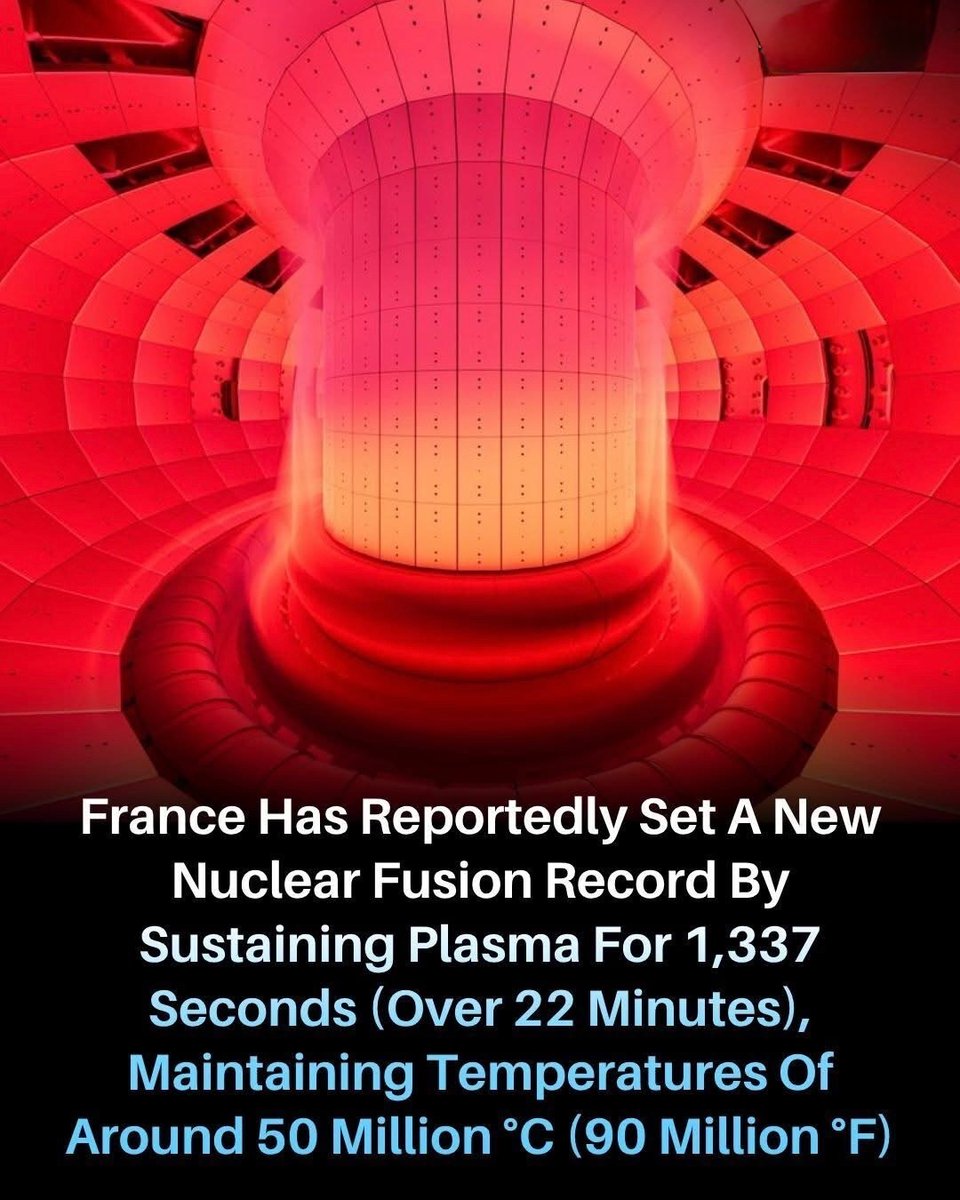
🔥 France Held a “Mini Sun” for 22 Minutes
Scientists in France reportedly broke a nuclear fusion record by sustaining superheated plasma for 1,337 seconds over 22 minutes at temperatures near 50 million °C. That is hotter than the core of the Sun.
Fusion is the same process that powers stars, and many believe it could become the future of clean, nearly limitless energy. This breakthrough brings humanity one step closer to creating star power on Earth.
Source:
Commissariat à l'énergie atomique et aux énergies alternatives. France sets new nuclear fusion plasma duration record.

English
Harry Plendl retweetledi

@realannapaulina If you didn’t catch the memo, seems like the elections are fraudulent. So it’s literally pointless to vote until someone gets that under control.
English
Harry Plendl retweetledi

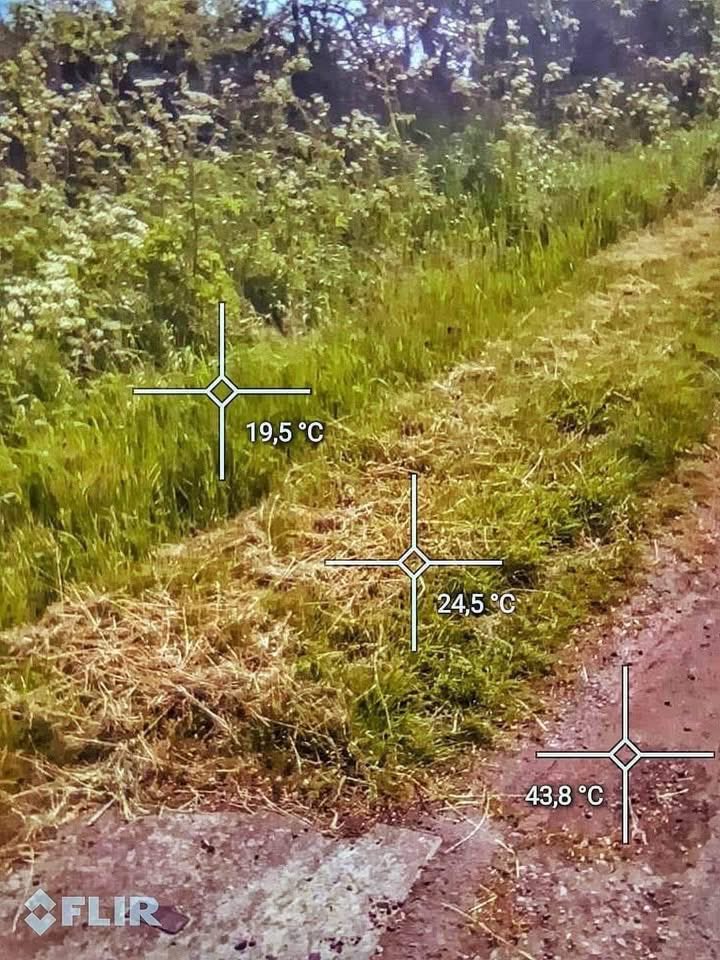
Uncut grass keeps the ground at around 19.5°C
Grass cut to 10 cm raises the ground temperature to about 24.5°C
Bare ground in the middle of summer rises to over 40°C
It's important to raise awareness #NoMowMay

English

Harry Plendl retweetledi

I spent fifteen years planting tomatoes the way every beginner does—in tidy, isolated rows like little green soldiers standing alone. They grew. They produced. But every July brought the same visitors: aphids clustering on new shoots, hornworms fat as cigars hidden under leaves, and a general sense that I was fighting a battle I couldn't quite win.
Then a neighbor mentioned she always tucked marigolds around her tomato cages. Not beside them. Not in a separate bed. Right there in the same soil, close enough to touch. She said something about nematodes, but honestly, I planted them mostly because they're cheerful and I had extra seedlings.
That season taught me something textbooks never quite capture. The tomatoes grew differently. Stronger stems. Deeper green leaves. And the aphids that usually covered my Early Girls by mid-summer barely showed up. I kept waiting for the infestation. It never came.
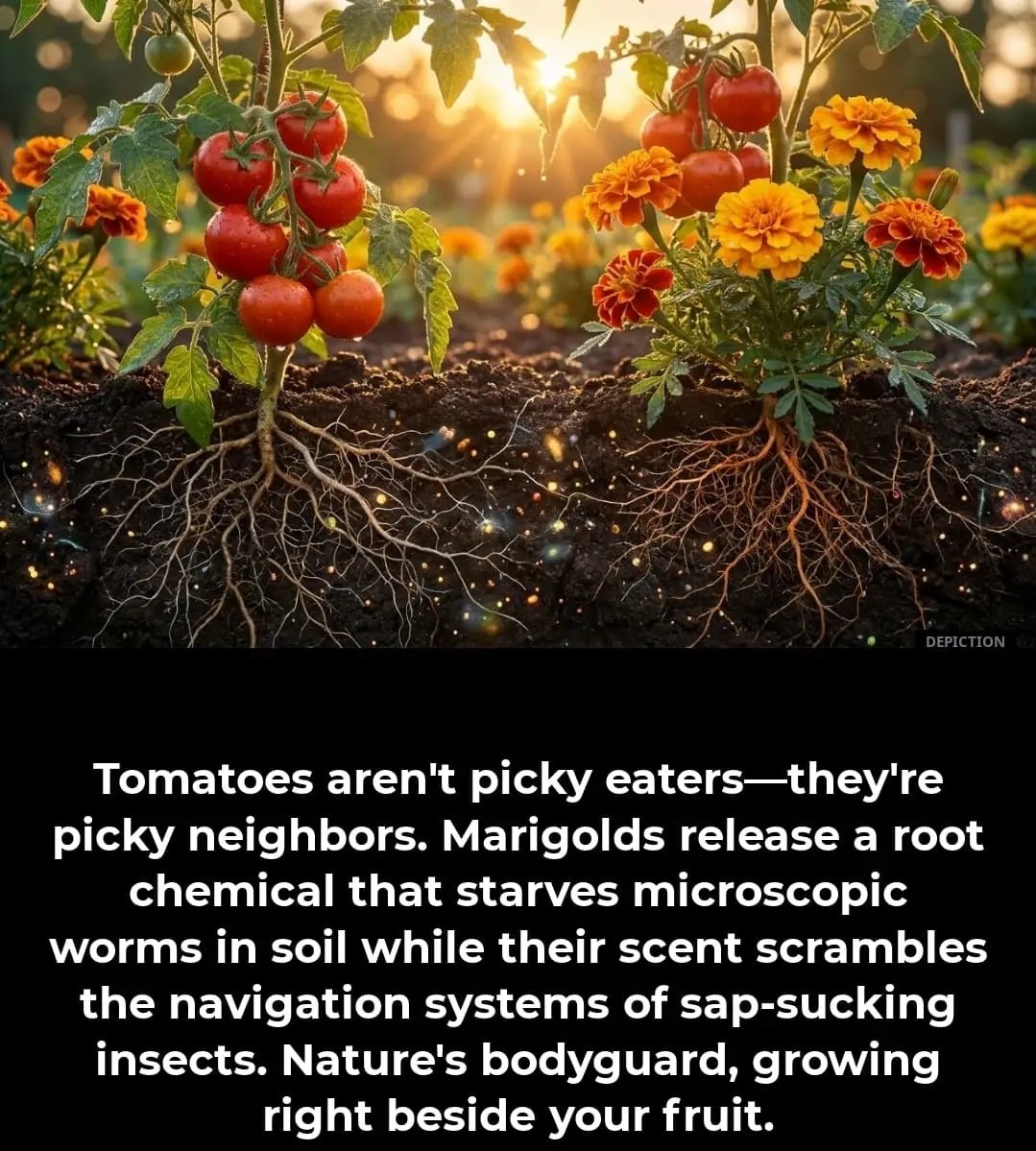
Here's what I didn't understand until I started digging into the science: marigolds are chemical engineers. Their roots secrete a compound called alpha-terthienyl that doesn't just repel soil nematodes—it actually destroys them at the microscopic level. These tiny roundworms burrow into tomato roots and create wounds that invite disease. Marigolds quietly eliminate them before your tomato plant ever knows there's a threat.
But the above-ground magic might be even more elegant. That distinctive marigold scent—the one that's almost spicy, a little bitter—works like a jamming signal. Aphids and whiteflies navigate partly by scent, homing in on the chemical signature tomato leaves release. Plant marigolds close by, and suddenly the airwaves are crowded. The pests literally can't find their target. Your tomatoes are still there, still producing those attractant compounds, but they're hidden in a cloud of competing information.
I started noticing patterns once I paid attention. Basil planted near tomatoes meant fewer aphids up top. Not because basil repels them directly, but because it adds another layer of scent confusion. Nasturtiums along the bed edges turned into aphid magnets—they'd cover those trailing leaves and leave the tomatoes untouched, like kids ignoring vegetables when candy's available.
The really surprising partnerships came from below ground. Bush beans I planted between tomato cages weren't just filling space. Beans host bacteria in their root nodules that pull nitrogen from air and convert it into soil-available form. They're essentially manufacturing fertilizer while they grow. And carrots pushing their taproots down through clay were creating channels that tomato roots followed like highways, reaching water and minerals they'd never access on their own.
Some plants don't belong anywhere near tomatoes, and the reasons aren't always obvious. Fennel releases compounds through its roots that actively slow the growth of almost everything around it. Potatoes share the same fungal diseases because they're botanical cousins. Cabbages are such aggressive feeders they'll steal nutrients right out from under your tomato roots.
The garden isn't a collection of individuals. It's a conversation happening in chemicals we can't see and relationships we barely understand. Tomatoes surrounded by the right companions don't just survive better—they become part of a system where every plant contributes something and nobody grows alone.
That's not folklore. That's just how it works when you stop thinking in rows and start thinking in partnerships.

English
Harry Plendl retweetledi

🚨 TECHNOLOGIE INCA DE 3 000 ANS QUI DÉFIE TOUTE EXPLICATION ! 🤯
💥À Ollantaytambo au Pérou, une structure de pierre vieille de 3 000 ans contrôle l’eau de source venue directement d’une montagne voisine.
Le résultat est stupéfiant : le débit est ralenti de **jusqu’à 70 %** grâce à une conception d’une précision millimétrique.
Ils maîtrisaient la physique des fluides, l’hydrodynamique et l’ingénierie hydraulique à un niveau que nous peinons encore à reproduire aujourd’hui.
Pourtant, on nous affirme que tout cela a été réalisé uniquement avec des marteaux et des burins…
Et le plus troublant ? La recherche est désormais **bloquée** sur ce site. Filmer cette technologie constitue une violation des règles du patrimoine mondial.
Ils avaient des siècles d’avance sur nous.
Vous continuez à croire à la version officielle ?
Français
Harry Plendl retweetledi

🐝 This beekeeper just dropped the ULTIMATE winter survival hack — and it actually WORKED! 🍯
Watch as she uncovers her hive in spring after following advice from a seasoned local beekeeper: topping the hive with newspaper and a 2-inch layer of sugar. The bees ate right through the paper, feasted on the sugar all winter, stayed warm, and the sugar even absorbed damaging moisture.
Survival rates boosted. Hive thriving. Mind officially blown! 🐝 🐝 🐝
Who else is trying this next season? 😮
English

Resulting advisory guideline range for a mid-level participant in a $5.6M scheme is often in the 5–12+ year range or higher with enhancements; organizers face far more.
Courts in the Feeding Our Future cases and analogous large-scale program frauds (PPP, unemployment, Medicaid, etc.) have imposed sentences reflecting the seriousness of stealing from public programs, the need for deterrence, and victim impact. Restitution is mandatory under 18 U.S.C. § 3663A. Sentences can be below or above the range depending on individual § 3553(a) factors.
English

If only we could trust the judges, the prosecutors, the police and our peers to not be psychopaths hell bound to always “Win” no matter what the evidence reveals.
Elon Musk@elonmusk
English