Henry Domke retweetledi
Henry Domke
3.4K posts

Henry Domke
@HenryDomke
Driving my Tesla Model 3 with FSD every trip. Creating nature art for healthcare spaces. Helping run PGT, a public garden showcasing native plants.
New Bloomfield, MO Katılım Mart 2017
1.5K Takip Edilen447 Takipçiler
Henry Domke retweetledi

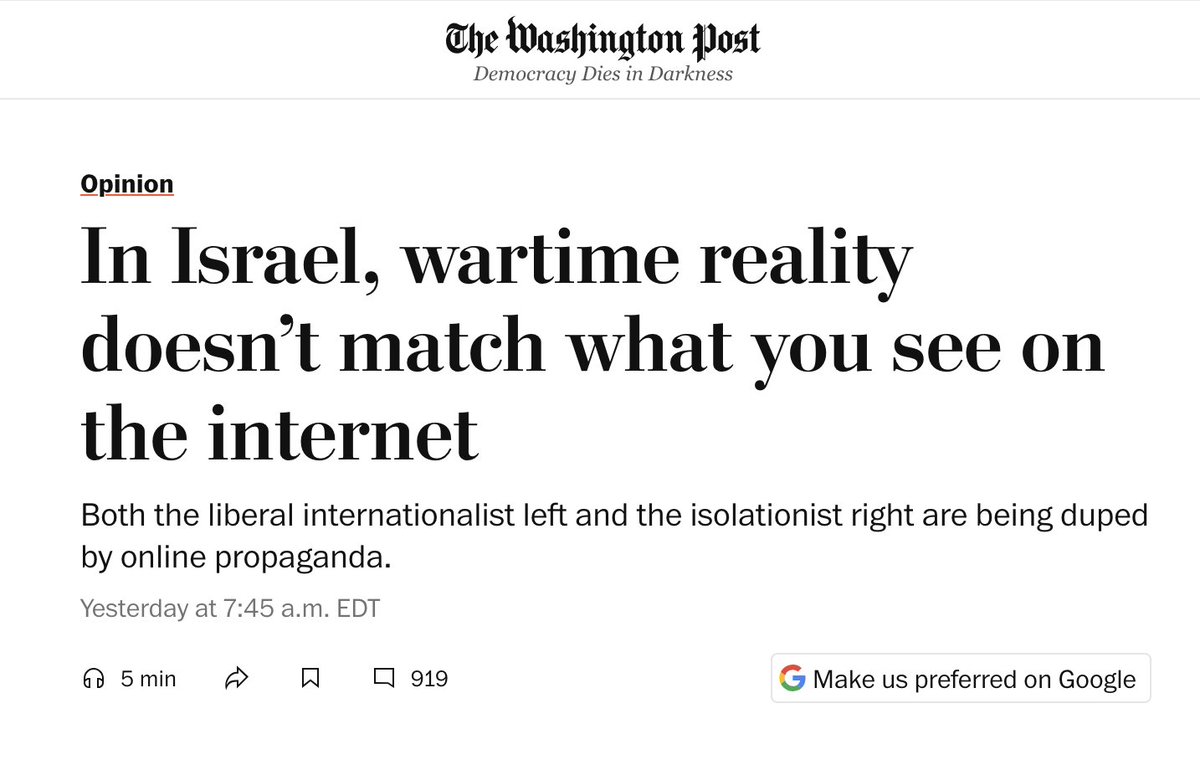
The world is truly upside down! The Washington Post has published a brilliant article, written by, get this, a professor! To give you some flavor, here are a few choice lines by @jmurtazashvili:
1) "We are living through the first alt-war: a conflict in which the war fought online and the war fought in reality have diverged so completely that they might as well be happening on different planets. It’s not that people lack information, it’s more that they are constructing an entirely different alternate reality — one that confirms what they already believe."
2) "What worries me more than the fake videos are the people who cannot fathom that this war is going well for the United States, for Israel and maybe even for the long-suffering people of Iran. The strategic picture is more favorable than the online narrative suggests."
3) "Two weeks into the war, I watch otherwise reasonable analysts sprint to catastrophe. Former officials, thinktank scholars, credentialed professionals who are supposed to know how to read a conflict. Within days they had written the obituary: quagmire, overreach, disaster."
4) "The liberal internationalist left and the isolationist right — two camps that have agreed on almost nothing for decades — have suddenly found themselves in lockstep, racing to declare the war a failure before it had barely begun. This is the new blob: not the old foreign-policy establishment that the term originally described but a new amalgamation that has arrived at the same conclusion from opposite directions. Together they are the most powerful engine of the alt-war."
The truth. In the mainstream media. By a professor. And written well. Four things I thought I'd never see again in my lifetime.
English
Henry Domke retweetledi

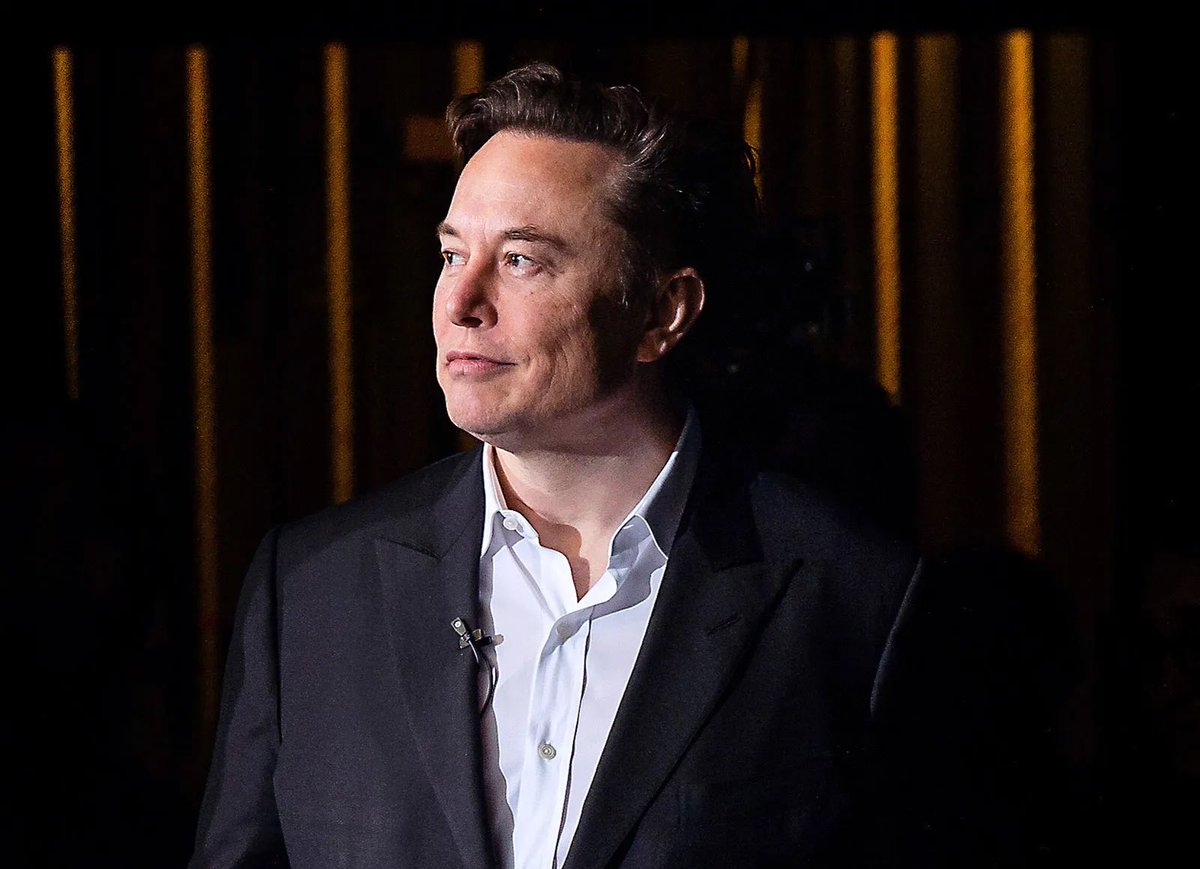
Elon Musk joined Trump’s call with Modi on Tuesday to discuss the Hormuz crisis. The New York Times confirmed it, citing two US officials. On March 19, Musk posted three words on X about the strait: “We got lazy.”
Those three words are the most honest assessment any major industrialist has offered about what this war exposes. And Musk’s companies sit at the exact intersection of every vulnerability the war has created.
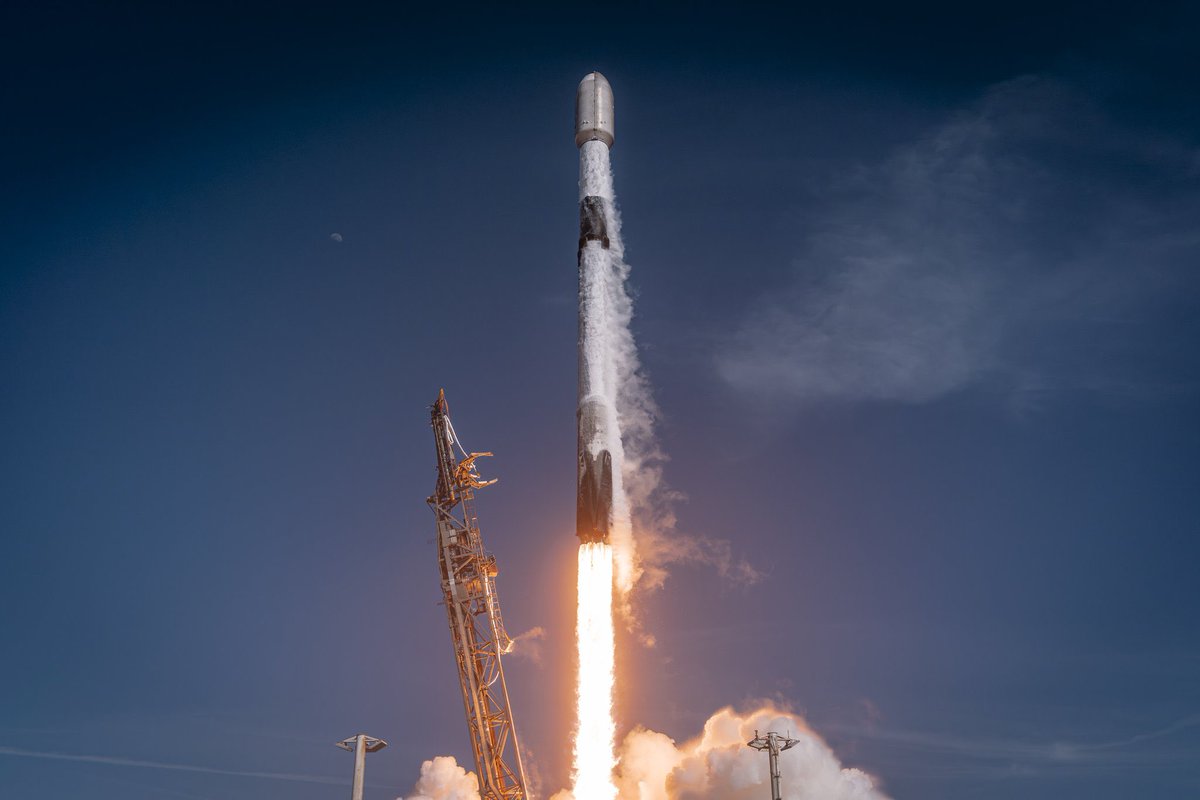
SpaceX uses helium to pressurize Falcon 9 and Starship propellant tanks. Roughly 10,000 to 20,000 liters per Falcon launch. Qatar produced one-third of the world’s helium before Iranian missiles hit Ras Laffan on March 18. That helium is now offline for three to five years per QatarEnergy’s CEO. Spot prices have doubled.
Tesla’s semiconductor supply chain depends on the same helium for wafer cooling and etching at Samsung and SK Hynix fabs. South Korea imports 64.7 percent of its helium from Qatar. xAI’s training infrastructure requires the same chips. Starlink’s constellation deployment depends on SpaceX launch cadence, which depends on helium availability for ground operations.
One element. Four companies. One chokepoint.
But here is what makes the Musk angle different from every other CEO caught in this crisis: he has been building the exit ramps for years.
Starship uses full autogenous pressurization. Instead of helium, it vaporizes a small fraction of its own methane and oxygen propellant through dedicated heat exchangers integrated into the Raptor engine and feeds the vapor back into the tank to maintain pressure. This eliminates roughly 95 percent of external helium use per launch. Falcon 9 partial retrofits are already delivering 70 to 80 percent reduction per Payload and Ars Technica reporting.
Tesla’s Megapack deployments hit record levels in Q1 2026. Every barrel of oil that costs $108 instead of $70 accelerates the economic case for solar, batteries, and EVs. The war that threatens Musk’s supply chain simultaneously validates his energy independence thesis.
And the Trump-Modi call was not just about energy. Starlink India approval has been pending for years. Musk on that call, discussing Hormuz and energy prices with the leaders of the world’s largest democracy and its most powerful economy, is not a courtesy. It is leverage. Foreign Policy reported on March 20 that the “privatization of diplomacy” through Starlink has become a defining feature of American foreign policy.
SpaceX is reportedly filing its IPO prospectus this week or next per Bloomberg, Reuters, and The Information, targeting a mid-to-late June 2026 listing at $1.5 to $1.75 trillion. The largest IPO in history. Filing into a war that simultaneously threatens his supply chains and proves the thesis that built his companies.
The US produces 81 million cubic metres of helium per year, roughly 35 to 40 percent of global supply per the USGS, with 8.5 billion cubic metres of recoverable reserves. America can supply what Musk needs. The question is whether the logistics and refining infrastructure can scale fast enough to bridge the gap while Qatar’s machines are offline and the strait remains contested.
Musk said we got lazy. His companies were not.
open.substack.com/pub/shanakaans…
English
Henry Domke retweetledi
1 in 3 Americans now use AI chatbots for health information, which is almost doubled in a year.
64% do it weekly. 81% take action afterward: schedule a doctor's visit, change a medication, try a new behavior.
The detail that should stop you: 74% are using ChatGPT or Gemini. Not a clinical tool. Not an FDA-cleared system. A general-purpose chatbot.
I remember when chatGPT was first launched, the medical community had the most heated debate about "is AI ready for healthcare?" … now this debate has already been decided by users. They didn't wait for the system to be ready. They just started using it and acting on it.
Meanwhile 71% of physicians say accuracy and reliability are their top concerns with AI.
The reality: consumers acting on general-purpose AI, clinicians not trusting it, seems to be the defining tension in health AI right now. The question isn't whether people will use AI for health decisions. They already do. The question is whether anyone builds models actually calibrated for the stakes involved.

English
Henry Domke retweetledi

DAY 26 👇
IRAN MISSILE & DRONE LAUNCHES:
🚀 BALLISTIC MISSILES:
🔴 Day 1 — 350
🔴 Day 2 — 175
🔴 Day 3 — 120
🔴 Day 4 — 50
🔴 Day 5 — 40
🔴 Day 6 — 32
🔴 Day 7 — 28
🔴 Day 8 — 15
🔴 Day 9 — 21
🔴 Day 10 — 18
🔴 Day 11 — 24
🔴 Day 12 — 14
🔴 Day 13 — 11
🔴 Day 14 — 16
🔴 Day 15 — 12
🔴 Day 16 — 19
🔴 Day 17 — 23
🔴 Day 18 — 45
🔴 Day 19 — 65
🔴 Day 20 — 55
🔴 Day 21 — 48
🔴 Day 22 — 32
🔴 Day 23 — 26
🔴 Day 24 — 38
🔴 Day 25 — 22
🔴 Day 26 — 15 (Estimate)
🛸 DRONE SWARMS:
🟢 Day 1 — 294
🟢 Day 2 — 541
🟢 Day 3 — 200
🟢 Day 4 — 85
🟢 Day 5 — 45
🟢 Day 6 — 38
🟢 Day 7 — 30
🟢 Day 8 — 12
🟢 Day 9 — 134
🔴 Day 10 — 112
🟢 Day 11 — 95
🟢 Day 12 — 82
🟢 Day 13 — 64
🟢 Day 14 — 78
🟢 Day 15 — 105
🟢 Day 16 — 122
🟢 Day 17 — 146
🟢 Day 18 — 180
🟢 Day 19 — 240
🟢 Day 20 — 210
🟢 Day 21 — 195
🟢 Day 22 — 125
🟢 Day 23 — 90
🟢 Day 24 — 115
🟢 Day 25 — 140
🟢 Day 26 — 85 (Estimate)
👉 Day 26 Summary: Launch volumes dipped as Iran reviews a U.S.-led 15-point ceasefire proposal. Despite the lull, Saudi Arabia intercepted missiles over energy hubs, and Kuwaiti infrastructure sustained minor shrapnel damage. Regional defenses remain at peak readiness.
Source: Live operational updates and regional defense briefings from The Hindu, AL Jazeera, Times of Israel, and Gulf News.
Note: These figures are based on real-time operational reports and estimates; actual counts may fluctuate by 5-8 units as damage assessments are finalized.

English
Henry Domke retweetledi

Alan Dershowitz warns there will be “millions and millions of deaths” if we don’t eliminate Iran’s nuclear capabilities now.
He says Iran is the “most important war we have fought” since World War II and “every decent person ought to join it.”
“Had President Trump been in charge in 1935… the Holocaust would have been prevented.”
“We’re preventing another Holocaust.”
English
Henry Domke retweetledi

Jensen Huang just described the most fundamental shift in computing since the invention of the computer itself.
Almost no one has processed it.
Huang: “We went from a retrieval-based computing system to a generative-based computing system.”
For fifty years, a computer was a filing cabinet.
You made something. Saved it. Stored it. Searched for it later.
Every website. Every database. Every app. Every search engine.
Same machine. Different skins.
Fetch the file. Deliver the file. Display the file.
That was computing.
Was.
Huang: “AI computers are contextually aware, which means that it has to process and generate tokens in real time.”
The machine no longer retrieves what someone already made.
It generates what you need the instant you ask.
Not from a template. Not from a library. From context.
Your question. Your moment. Answered by something that didn’t exist until you asked.
The old computer found what someone wrote last year.
The new computer writes what no one ever has. Every time. From nothing.
That sounds subtle.
It rewires everything.
Huang: “We need a lot of storage in the old world. We need a lot of computation in this new world.”
The old economy hoarded data. More files. More servers. More storage.
Whoever built the biggest archive won.
The new economy burns compute. More processing. More inference. More tokens per second.
Whoever commands the most computational power wins.
Storage was the currency of the retrieval era.
Compute is the currency of the generative era.
Every dollar still spent hoarding old files is a dollar not spent on the only thing that matters now.
The ability to think in real time.
Huang: “We fundamentally changed computing and the way computing is done.”
He said it plainly. No drama. No metaphor.
Fundamentally changed.
The global infrastructure layer shifted from read to write. From looking up what exists to generating what doesn’t.
Companies still organized around retrieval are curating a library in a world that no longer reads books.
The ones generating answers live, at the speed of the question, are operating on a plane the old model can’t perceive.
This is not an upgrade.
It is a replacement.
The filing cabinet era produced Google, Amazon, and every search-driven empire on the internet.
The generative era will produce something that makes all of them look like the card catalog at a public library.
The price of entry is not data.
It is compute.
Raw. Relentless. Infinite.
Whoever has the most doesn’t just run the best AI.
They write the future.
Everyone else is still searching for it.
English
Henry Domke retweetledi

Must listen
Dr. Michael Doran on the major intelligence failures of the West, how Iran developed its asymmetric capabilities and the importance of its proxies.
Full remarks: hudson.org/events/operati…
@Doranimated
English
Henry Domke retweetledi

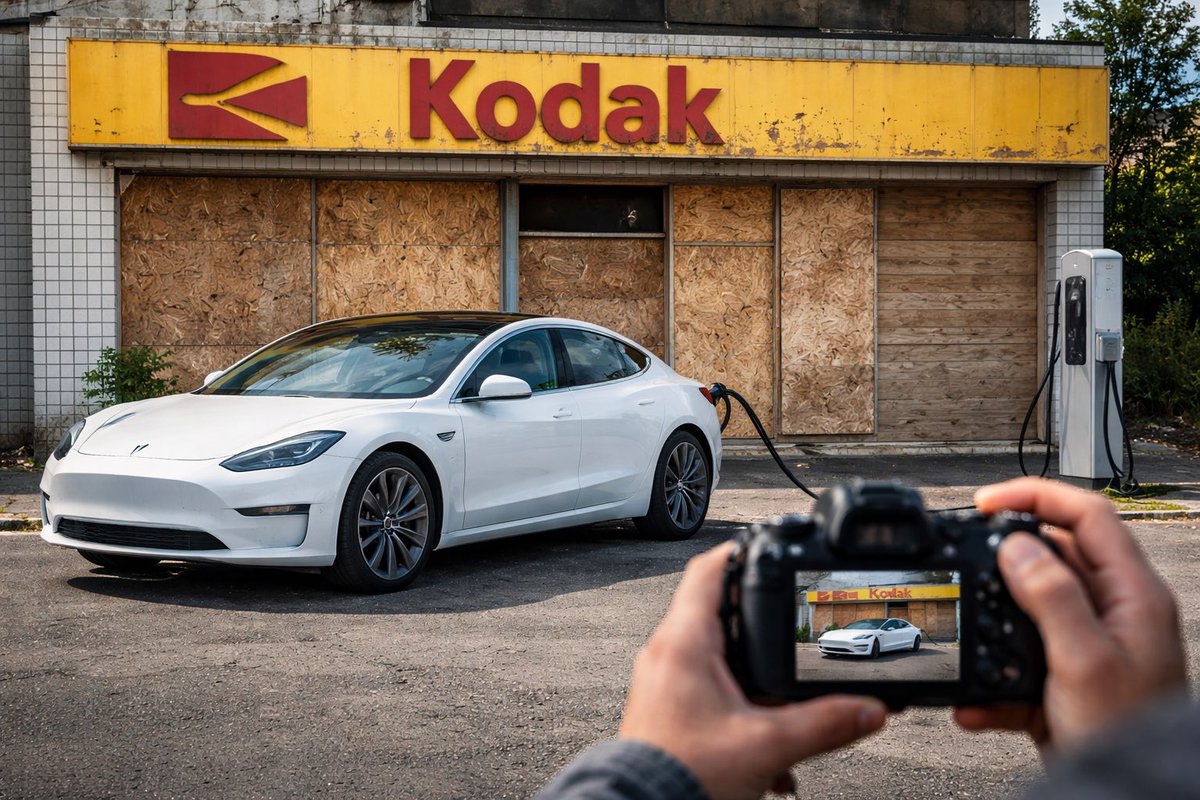
This has happened before.
There’s a reason the EV transition feels familiar.
Because we’ve seen this exact story play out before.
📸 Photography
Back in the day, Kodak dominated the entire industry.
They didn’t just lead it, they owned it.
And here’s the crazy part…
They actually invented the first digital camera in 1975.
They saw the future coming.
They had the patents.
They had the technology.
They had the head start.
And what did they do?
They hesitated.
They believed digital wouldn’t replace film.
They protected their existing business.
They underestimated how quickly things would change.
We all know how that ended.
Film didn’t slowly decline.
It collapsed.
Now look at the car industry
For years, the narrative has been:
“EVs won’t take over.”
“The infrastructure isn’t ready.”
“They’re not practical.”
“They’ll never replace petrol and diesel.”
Sound familiar?
Because it’s the exact same arguments used against digital photography.
But here’s what matters
This isn’t about opinions.
It’s about behaviour.
👉 Over 90% of EV drivers stick with electric once they switch.
👉 Satisfaction rates are among the highest in the automotive world.
👉 Running costs are lower.
👉 Ownership is simpler for most.
The shift isn’t being forced.
It’s being chosen.
Kodak didn’t fail because the technology didn’t exist.
They failed because they didn’t believe it would win.
The same mistake is being made again right now.
It isn’t a question of if…
It’s a question of when.
And just like film cameras…
One day people will look back and wonder why there was ever a debate at all.
English
Henry Domke retweetledi

I'm.....Done with the Long Term Care Insurance scam.
Dropping my GE/Genworth policy after they jacked it from $800/quarter (wife and I) combined in 2002 to $6,000/quarter combined in 2025. It was rubber-stamped by Pennsylvania regulators who then offered “cut your lifetime coverage to just 3 years” as the fix.
This is not for medical coverage... but to pay assisted living or nursing home fees-care.
My in-laws lived the nightmare: for LTC there needed to be monthly doctor approvals for payment even with life- long ....dementia & cancer. Enough.
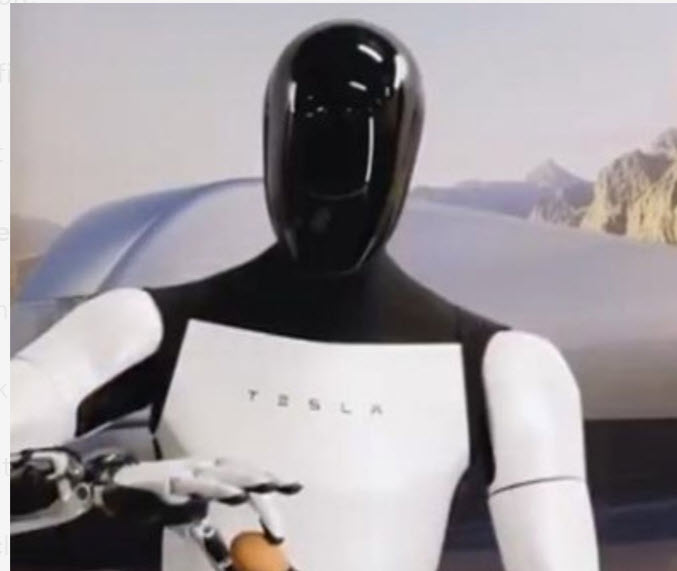
Instead, 🖕 LTC I'm cancelling and I’m saving that $24,000 a year to buy a Tesla Optimus or two. It should be ready by the time we need care 5 to 10 years from now.
Tesla’s Optimus Gen 3 will be here — $20-30k robot
(Elon says it’s coming 2027, already ramping production) that does 24/7 home help: mobility, meds, fall detection, cooking, companionship, lifting with no paperwork, no rate hikes, no human caregiver shortages.
One-time buy beats f...ing endless premiums forever. Musk literally called it “amazing for protecting and taking care of your elderly parents.
Future-proofing my own future. Seniors, rethink the LTC insurance trap
English
Henry Domke retweetledi

Here's my conversation with Jensen Huang, CEO of NVIDIA, the most valuable & one of the most influential companies in the history of human civilization. It is the engine powering the AI revolution.
This was a fascinating & inspiring conversation, in parts super-technical on engineering of every part of the AI stack, memory, power, supply chain (TSMC, ASML, etc), in parts about leadership & psychology, and in parts personal & philosophical about life, consciousness, mortality, and human nature.
It's here on X in full and is up everywhere else (see comment).
Timestamps:
0:00 - Introduction
0:33 - Extreme co-design and rack-scale engineering
3:18 - How Jensen runs NVIDIA
22:40 - AI scaling laws
37:40 - Biggest blockers to AI scaling laws
39:23 - Supply chain
41:18 - Memory
47:24 - Power
52:43 - Elon and Colossus
56:11 - Jensen's approach to engineering and leadership
1:01:37 - China
1:09:50 - TSMC and Taiwan
1:15:04 - NVIDIA's moat
1:20:41 - AI data centers in space
1:24:30 - Will NVIDIA be worth $10 trillion?
1:34:39 - Leadership under pressure
1:48:25 - Video games
1:55:16 - AGI timeline
1:57:29 - Future of programming
2:11:01 - Consciousness
2:17:22 - Mortality
English
Henry Domke retweetledi
Jensen Huang just reverse-engineered why Elon Musk operates at a speed no one on the planet can match.
Three traits.
The first is deletion.
Huang: “He has the ability to question everything to the point where everything’s down to its minimal amount.”
Most engineers solve problems by adding.
Musk solves them by subtracting.
Every part. Every process. Every assumption that survived because no one had the nerve to kill it.
He picks it up. Asks if it’s load-bearing. If the answer is anything less than absolutely, it is gone.
Not simplified. Not optimized. Removed.
What survives is the skeleton. The bare physics of the problem. Nothing between intent and execution.
Huang said it plainly.
As minimalist as you could possibly imagine.
And he does it at system scale.
Not at a product level. Not at a department level.
Across entire companies. Entire industries. Entire supply chains.
He strips a rocket the same way he strips a meeting. Down to the load-bearing walls and nothing else.
The second is presence.
Huang: “He is present at the point of action. If there’s a problem, he’ll just go there and show me the problem.”
Not a Slack message. Not a report filtered through four layers of people who weren’t there when it broke.
He walks to the failure. Stands over it. Puts his hands on it.
Most executives have never seen the actual problem their company is trying to solve.
They have seen slides about it.
Read summaries of it.
Formed opinions about it in rooms that are nowhere near it.
Musk stands over the broken hardware and does not leave until it works.
That collapses the distance that buries most organizations.
The gap between something breaking and the person with authority to fix it actually understanding what broke.
In most companies, that gap is weeks.
For Musk, it is hours.
The third is the one that bends everyone around him.
Huang: “When you act personally with so much urgency, it causes everybody else to act with urgency.”
Every supplier has a hundred customers. Every vendor has a dozen priorities. Every manufacturer has a backlog stretching months into the future.
Musk makes himself the top of every single one of those lists.
Not by demanding it. By demonstrating it.
When the CEO shows up at your facility at midnight. When he is moving faster than your own internal team. When his timeline makes yours look like a suggestion.
You do not put him in the queue. You rearrange the queue around him.
Huang watched this up close.
Huang: “He does that by demonstrating.”
Not by asking. Not by negotiating. Not by leveraging a contract clause.
By moving so fast that everyone else’s normal pace feels like standing still.
Three traits. Strip everything down. Show up at the failure. Move so fast the world rearranges around you.
That is not a management philosophy.
That is why one man runs six companies while entire boards cannot keep one moving.
English
Henry Domke retweetledi
In Iran, the future of war has definitively come into view.
Advanced military technology had already made war precise. Now with high-volume drone warfare in Iran, that precision is mass-produced.
My take:
English
Henry Domke retweetledi

Henry Domke retweetledi

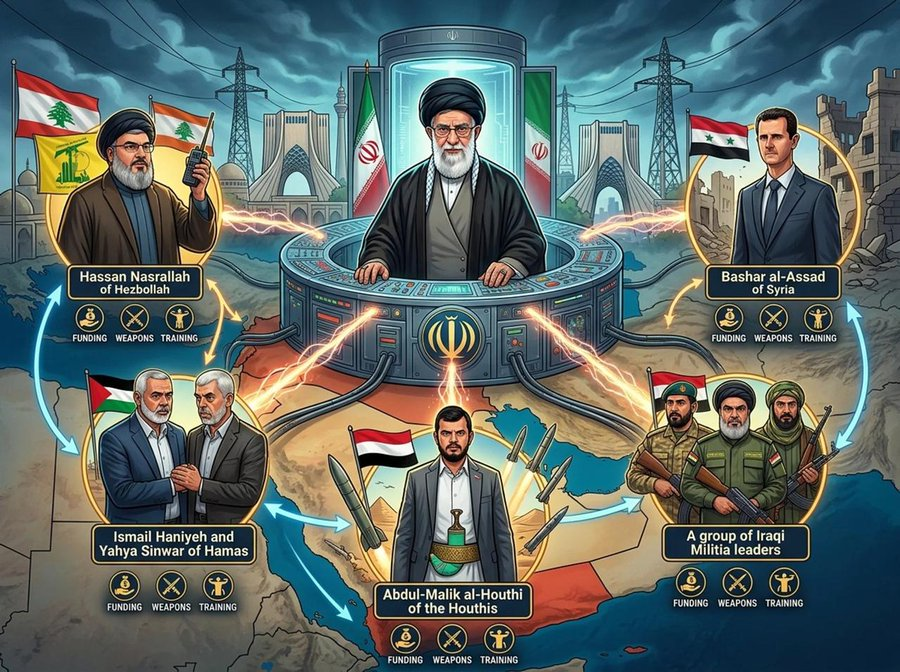
THE DOMINO EFFECT NOBODY IS EXPLAINING TO YOU
Iran is not just a country at war.
It's a funding machine.
Since 1979, the Islamic regime has been the single biggest financier of terrorism in the Middle East.
Here is what collapses the moment that regime falls:
DOMINO 1: Hezbollah (Lebanon)
Iran sends them $700M to $1B+ per year.
That is their entire war budget.
No Iran = no Hezbollah.
DOMINO 2: Hamas (Gaza)
93% of Hamas funding comes from Iran.
$100-350M per year in cash.
No Iran = Hamas has no money to fight.
DOMINO 3: Houthis (Yemen)
$100-200M per year in direct transfers.
Plus weapons. Plus training. Plus IRGC commanders on the ground.
No Iran = Houthis go back to being a tribal militia with AKs.
DOMINO 4: Iraqi Militias
Kata'ib Hezbollah. Asa'ib Ahl al-Haq. Badr Organization.
All funded, armed, and directed by Iran's IRGC.
No Iran = they lose their patron. Fast.
DOMINO 5: Syrian Militias
Iran spent $16 BILLION propping up Assad.
The entire Syrian proxy network runs on Iranian money.
No Iran = no money, no mission.
People keep asking why this operation matters.
This is why.
One source. Five networks. Billions in annual terror funding.
Pull the source. The whole network dies.
- @PaulGoldEagle
English
Henry Domke retweetledi
Buckle up. The first wave of physical AI mass adoption will be self-driving cars. The evidence: Tesla’s FSD is making major gains, and Waymo is going from 6 cities at the end of 2025 to likely 25 by the end of 2026 wsj.com/tech/this-time…
English
Henry Domke retweetledi
My assessment:
The IRGC has entered full survival mode. They don’t see it’s just too late. It can no longer deter the U.S., which is precisely what it was testing through its posturing around the Strait of Hormuz. Trump committed fully, he’s all in, and the IRGC had calculated that strikes on oil infrastructure would provoke a sort of backlash severe enough to constrain U.S. or Israeli action. It didn’t work. They are now buying time.
The deeper problem is that IRGC has not grasped what buying time actually costs at this stage. A negotiated arrangement with Trump is no longer on the table. He wants a different Iran, not an adjusted one. The moment the IRGC fully internalizes that, it will find itself squeezed from all directions at once. The domestic factions that have tolerated the current leadership did so on the assumption it could eventually deliver some form of economic relief. Not happening.
The rial has lost something like 90 percent of its value and the stupidity they did today to save the rial just tells you all you need to know, the major players got killed. If they stop now, we’ll get protesters encircling them tomorrow. They have no good options.
English
Henry Domke retweetledi

I've spent 2.54 BILLION tokens perfecting OpenClaw.
The use cases I discovered have changed the way I live and work.
...and now I'm sharing them with the world.
Here are 21 use cases I use daily:
0:00 Intro
0:50 What is OpenClaw?
1:35 MD Files
2:14 Memory System
3:55 CRM System
7:19 Fathom Pipeline
9:18 Meeting to Action Items
10:46 Knowledge Base System
13:51 X Ingestion Pipeline
14:31 Business Advisory Council
16:13 Security Council
18:21 Social Media Tracking
19:18 Video Idea Pipeline
21:40 Daily Briefing Flow
22:23 Three Councils
22:57 Automation Schedule
24:15 Security Layers
26:09 Databases and Backups
28:00 Video/Image Gen
29:14 Self Updates
29:56 Usage & Cost Tracking
30:15 Prompt Engineering
31:15 Developer Infrastructure
32:06 Food Journal
English
Henry Domke retweetledi