

HookEmHorns
9.6K posts
HookEmHorns retweetledi

Grok Build will auto-recognize all the Claude Code skills you've created on your computer.
Makes it SUPER EASY to try out existing workflows with Grok's harness.
xAI@xai
An early beta of Grok Build, an agentic CLI for coding, building apps, and automating workflows is now available for SuperGrok Heavy subscribers. Through this early beta, we will improve the model and product based on your feedback. Try it at x.ai/cli
English

“You can’t earn a billion dollars.”
Yes you can.
You know who does not “earn” their salary?
Elected officials.
They are paid out of taxes coerced from citizens without providing reciprocal services.
This is where democracy dies.
English
HookEmHorns retweetledi
HookEmHorns retweetledi

@SawyerMerritt We did a lot of tests to understand the physical limit of the road surface and to incorporate with AI.
English
HookEmHorns retweetledi

The great wait is over.
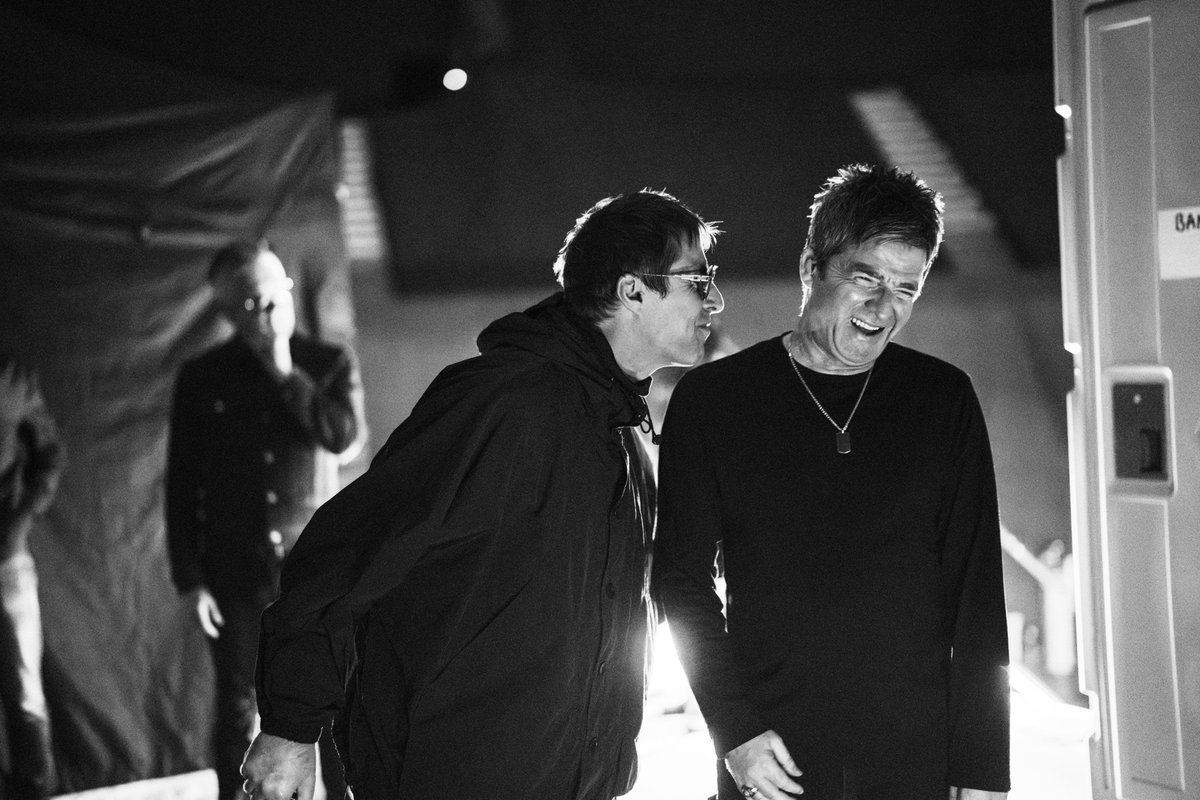
An epic new documentary film from BAFTA and Oscar-nominated writer, producer and director Steven Knight, directed by Dylan Southern and Will Lovelace, will tell the story of the Oasis reunion the world was waiting for. Featuring unprecedented on stage and backstage footage from the Gallagher brother's sell-out global stadium tour.
Coming to IMAX and cinemas worldwide on September 11 and streaming globally later this year on Disney+ internationally and on Hulu and Disney+ in the U.S.
English
HookEmHorns retweetledi

Another Claude Code hackathon comes to an end.
Thank you to everyone who spent a week building with Opus 4.7, and to @cerebral_valley for co-hosting.
Introducing the winners:
English
HookEmHorns retweetledi

This is the the quote I've been citing a lot recently.
kache@yacineMTB
you can outsource your thinking but you cannot outsource your understanding
English
HookEmHorns retweetledi

It’s time to demystify Mythos.
Mythos is not magic. It’s not a doomsday device. It’s the first of many models that can automate cyber tasks (just like coding).
OpenAI’s GPT-5.5-cyber can now do the same. And all the frontier models (including those from China) will be there within approximately 6 months.
It’s important to recognize that these models do not create vulnerabilities; they discover them. The bugs are already in the code. Using AI to discover and patch them will actually harden these systems.
The leap from pre-AI cyber to post-AI cyber means that there will be a big upgrade cycle. After that, however, the market is likely to reach a new equilibrium between AI-powered cyber-offense and AI-powered cyber-defense.
Obviously it’s important that cyber defenders get access before cyber attackers. That process is already underway but needs to happen quickly (see point above about Chinese models).
Unlike Mythos, GPT-5.5-cyber appears not to be token constrained so it may be the first cyber model that defenders actually get to use.
AI Security Institute@AISecurityInst
OpenAI’s GPT-5.5 is the second model to complete one of our multi-step cyber-attack simulations end-to-end 🧵
English
HookEmHorns retweetledi

Finished a seven day social media fast. It feels like the most effective longevity therapy I've done.
Everything got better: mood, sleep, energy, presence, judgment, relationships, and optimism.
Evidence shows a seven day fast produces a reduction of anxiety (16%), depression (25%) and insomnia (15%). The effects felt bigger.
Conversely, dipping back in, I can viscerally feel that my body metabolizes social media similarly to a fast food meal, corrosive relationship, hangover, and sleep deprivation. My body hates it.
After the previous fasts (40/hr and 70hr), I wrote that social media is pollution. Not a vice or guilty pleasure. It’s closer to water toxins, air pollution and microplastics.
This time, the major insight was that social media is a form of intoxication.
Alcohol is honest intoxication. It clearly tells you what it's taking from you. Social media on the other hand does not disclose itself as an intoxicant.
It produces the sensation of being informed, engaged, and connected while quietly evacuating your capacity for depth and independent thought.
You don’t feel drunk, you feel current. But evidence shows that it causes your brain to shrink. The impairment is real by you can't feel it. Making it the more dangerous type.
If you haven't tried it, I strongly encourage you to try a social media fast. Even if for one day.
English
HookEmHorns retweetledi

LASIK eye surgery cost $2,200 per eye in 2000. Today it's around $1,000 per eye despite 24 years of inflation. Meanwhile, an MRI that cost $1,200 in 2000 now costs $3,000+. The difference? LASIK operates in a free market with no insurance interference and minimal regulation.
When patients pay directly, providers must compete on price and quality. LASIK clinics advertise prices, offer financing, and constantly improve technology to attract customers. Compare this to hospital procedures where prices are hidden, patients never see bills, and insurance companies negotiate opaque rates that somehow always increase faster than inflation.
Cosmetic surgery follows the same pattern. Breast augmentation, rhinoplasty, and other elective procedures have become more affordable and safer over decades. Surgeons invest in better techniques and equipment because they must satisfy paying customers, not insurance bureaucrats or hospital administrators focused on maximizing reimbursements.
The lesson is clear: remove third-party payment systems and excessive regulation, and you get Austrian economics in action. Prices fall, quality rises, and innovation accelerates. Healthcare costs aren't rising because of aging populations or new technology—they're rising because we've destroyed the price mechanism that makes markets work.
English
HookEmHorns retweetledi

HookEmHorns retweetledi

China added more solar capacity in 2025 than America has installed in its entire history.
That's the most important energy chart you'll see today.
And 2025 was also the first year when small-scale distributed solar pulled in more investments than utility-scale solar farms globally.
Considering that the U.S. has hundreds of GW stuck waiting for grid connections, the conditions are aligned to start putting solar + storage on every American home.
My research team put together a Deep Dive on solar, if you want the full breakdown.
Here’s the link: chamath.substack.com/p/solar-deep-d…

English

My son asking me a lot of questions. It’s a distillation attack obviously.
English


HookEmHorns retweetledi
HookEmHorns retweetledi

We’ve identified industrial-scale distillation attacks on our models by DeepSeek, Moonshot AI, and MiniMax.
These labs created over 24,000 fraudulent accounts and generated over 16 million exchanges with Claude, extracting its capabilities to train and improve their own models.
English