

Jake Hurwitz
4.8K posts

Jake Hurwitz
@HurwitzJake
I produce podcasts for hyper growth founders and VCs, host The Optimist, a podcast about men’s mental health, and am constantly playing outside.
Venice, CA Katılım Kasım 2010
1.5K Takip Edilen1.1K Takipçiler
very nice shoutout at 53:30.
brandon is just going to compound this business for a very long time.
Brennan Pothetes@br3nnan
@brandon @meow Here’s the link for the full ep: youtu.be/yqkOYlEdcUw
English
I’ve been doing a deep dive on @a16z’s New Media push. Most people are talking about it like it’s a branding play, but they’re completely missing the point.
What a16z actually built is a media operating system, the same way they build engineering platforms, recruiting machines, or GTM playbooks.
That distinction matters because most VC funds trying to “do content” right now are copying the outputs instead of copying the thinking.
That’s why so much VC content feels like noise.
Here’s what a16z did that most people missed:
1.They separated media from marketing.
Most firms treat content like promotion, but a16z treats it like a product. Their goal is to educate you, NOT to convert you.
2. They built around practitioners, not partners.
Most VC podcasts share the partner’s POVs, putting the firm at the center.
a16z built a platform for operators, specialists, and people actually doing the work. That’s why their content feels useful instead of performative.
They don’t ask, “How do we sound smart?” They ask, “Who actually knows this better than anyone else?”
3. They’re designing for longevity instead of virality
Most VC podcasters just want to go viral.
a16z cares about replayability, search, and long-tail relevance. Their best content ages well, it gets referenced, and it becomes canonical. That’s why it feels less flashy and more durable.
Here’s the part that’s actually brilliant:
They’re using media to pre-train the market. By the time a founder gets to them, they’ve often already consumed the content, internalized the frameworks, and understood their POV.
So conversations start ahead of baseline. That way, media becomes leverage (not exposure).
Obviously a lot of funds are already trying to copy this strategy.
They’ll start podcasts, post clips, and interview founders, and it won’t work (bc they’re copying formats, aesthetics, and platforms, instead of copying intent and systems).
SO here’s how smaller VC funds should actually think about this:
1. Stop asking “what should we post?” And start asking “what does our market need to understand better?” Pick one lane, one problem, and one audience. Then own it.
2. Build around a sharp POV. Stand for something (and against something). Not: “founder journeys”, “tech trends”, or “investing insights”, but rather: “how this actually works”, “what no one tells you about this stage” or “the decisions that matter here”. Specific beats generic every time.
3. Optimize for depth > scale.
You don’t need millions of views. You need the right 5,000 people, repeated exposure, and trust over time. A show that five founders binge, three operators reference, and one LP respects is worth more than a viral clip with no signal. Trust me.
And no, a16z isn’t winning because they have the budget. They’re winning because they treat media like infrastructure.
__
Shoutout to @eriktorenberg , Brent Liang and team for their work here and for setting the bar in the industry!
English
If you don’t have a King’s Counsel, build one. Your future self will thank you.
Share this with a man who needs to start his circle.
English

If you’re a man without a real inner circle, read this twice:
Your life will rise or fall based on the men you surround yourself with.
I built a framework to help you choose wisely. It’s called The King’s Counsel and it’s changed my life.
Here’s how to build your own:

English
Entrepreneurs: the late nights and uncertainty aren’t the hard part. The hard part is imagining a life where you never went for it. Be grateful you’re in the arena. Even bloody and tired beats being on the sidelines.
English
30u30 drops and all I can think is “damn, you’re younger than me!?”
English
how to start a podcast in 2026
do one recording per week
extract 12–20 clips per episode
post 20–30 IG reels a day on a burner account
identify the winners
upgrade the edit on the winners
repost the winners to your main account
make more episodes based on the winners
repeat for 6 months
English

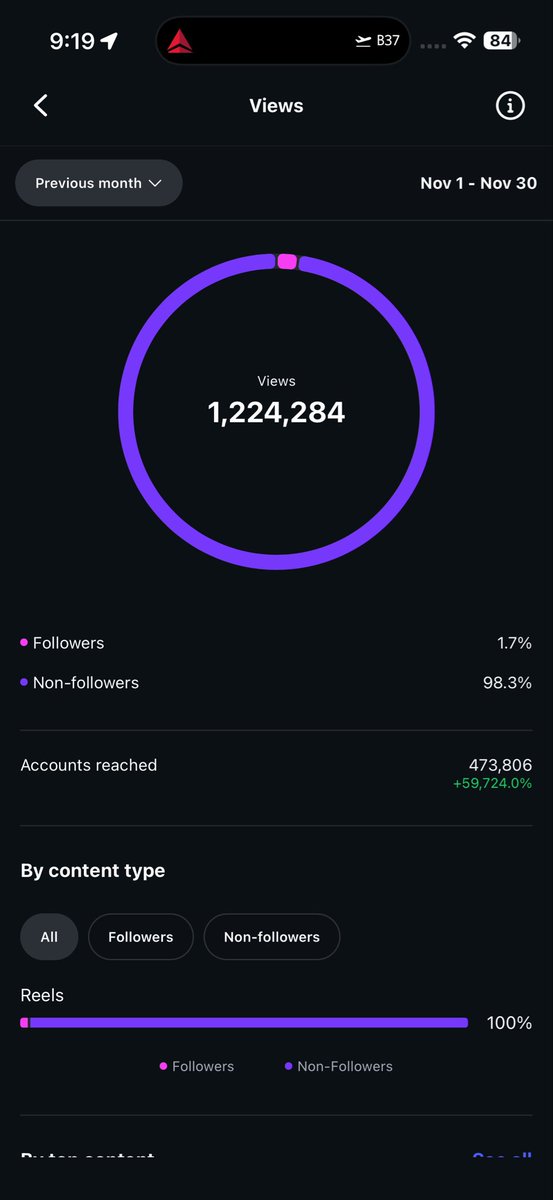
The team at Thursday Labs went from 0 ➡️ 1.2M views on a brand new account in less than a month using @Overlap_AI
This is what happens when great content meets thoughtful use AI agents
Grateful to have Overlap powering @HurwitzJake's clip engine
Jake Hurwitz@HurwitzJake
Most people think you grow a podcast on Instagram by posting once a day and waiting 6-12 months. I wanted to see what would happen if I did the opposite and posted 20-30 times per day. One month ago, I launched a brand-new “clips” Instagram account for one of my podcasts and posted twenty to thirty reels per day. All organic, aka no paid ads The results have been mind blowing so far. What normally takes a few thousand dollars and half a year happened in about two weeks. Here’s what worked: 1. Volume is the real unlock. Individual clip performance matters, but aggregate view count matters more. When you post at scale, the total number of opportunities for a clip to catch fire grows exponentially. 2. The 5k rule (a Jake Hurwitz original) Any clip that crosses 5,000 views gets moved to the main account that already has ~40k followers and my personal account with ~25k followers by adding them as a collaborator. This creates a natural filter for what’s resonating. 3. Better data leads to better storytelling. By testing concepts, themes, and styles at scale, we can double down on the ones that hit. We’re now using these insights to shape trailers, episode structure, and future creative. 4. Tools matter. I’ve been using Overlap AI (shoutout to @jbaerofficial and team) to handle the posting volume. I’ve never liked an AI editing tool before this. Opus Clip never did it for me. I was skeptical going in, but Overlap has been genuinely impressive. And to be clear: this strategy doesn’t replace handcrafted, high-fidelity edits. But it does accelerate learning in a way I’ve never seen before. I’m rolling this playbook out across a few more podcasts in my portfolio this month and will keep sharing what I learn as we scale. If you’re building or growing shows, follow along. We’ve launched over 50 podcasts at Thursday Labs over the last two years, and I love sharing everything we discover.
English

@jbaerofficial @Overlap_AI @HurwitzJake 1 overlap account for clips like Jake is talking about sounds GTO - maybe one for higher quality edits and then you can aggregate the best into the main account. Thats a pretty smart way to think about it
English
Most people think you grow a podcast on Instagram by posting once a day and waiting 6-12 months. I wanted to see what would happen if I did the opposite and posted 20-30 times per day.
One month ago, I launched a brand-new “clips” Instagram account for one of my podcasts and posted twenty to thirty reels per day. All organic, aka no paid ads
The results have been mind blowing so far.
What normally takes a few thousand dollars and half a year happened in about two weeks.
Here’s what worked:
1. Volume is the real unlock.
Individual clip performance matters, but aggregate view count matters more. When you post at scale, the total number of opportunities for a clip to catch fire grows exponentially.
2. The 5k rule (a Jake Hurwitz original)
Any clip that crosses 5,000 views gets moved to the main account that already has ~40k followers and my personal account with ~25k followers by adding them as a collaborator. This creates a natural filter for what’s resonating.
3. Better data leads to better storytelling.
By testing concepts, themes, and styles at scale, we can double down on the ones that hit. We’re now using these insights to shape trailers, episode structure, and future creative.
4. Tools matter.
I’ve been using Overlap AI (shoutout to @jbaerofficial and team) to handle the posting volume. I’ve never liked an AI editing tool before this. Opus Clip never did it for me. I was skeptical going in, but Overlap has been genuinely impressive.
And to be clear: this strategy doesn’t replace handcrafted, high-fidelity edits. But it does accelerate learning in a way I’ve never seen before.
I’m rolling this playbook out across a few more podcasts in my portfolio this month and will keep sharing what I learn as we scale.
If you’re building or growing shows, follow along. We’ve launched over 50 podcasts at Thursday Labs over the last two years, and I love sharing everything we discover.

English
@jacksondahl Come shoot at my studio in Venice. Happy to help
English

Short notice ask: need someone to run a podcast shoot on Thursday in LA. Fairly simple, ~3 hours. Let me know if that’s you or you know someone please!
English