Timothy Nguyen

1.8K posts

Timothy Nguyen banner
Timothy Nguyen

Timothy Nguyen

@IAmTimNguyen

Machine learning researcher at @GoogleDeepMind & mathematician. Host of The Cartesian Cafe podcast. All opinions are my own.

London, England Katılım Mayıs 2017
460 Takip Edilen12.2K Takipçiler
Sabitlenmiş Tweet
Timothy Nguyen
Timothy Nguyen@IAmTimNguyen·
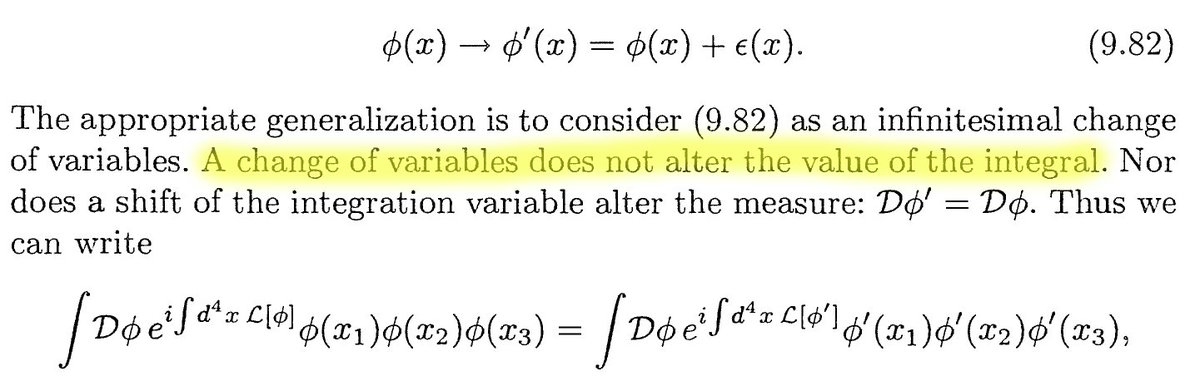
Quantum field theory textbooks have been lying to you or have left you confused. For a typical passage like the following from Peskin&Schroeder - what does it mean to do a change of variables on an ill-defined path integral? For perturbative QFT, my paper resolves this issue: 🧵
Timothy Nguyen tweet media
English
19
41
471
50.2K
Timothy Nguyen retweetledi
Daniel Litt
Daniel Litt@littmath·
For now I think recent successes of AI for mathematics should be understood as a complement to, rather than a substitute for, human mathematical labor. This is because AI, at present, is most productive working horizontally, whereas humans work vertically. By this I mean that the highest quality AI mathematics thus far has been obtained by feeding entire problem lists into a model or scaffold and picking out the few high-quality successes. It is very hard to predict in advance where these successes occur. On the other hand, humans typically pick a few questions and try to understand them deeply--and historically, when they do so, they make progress! I think this points to increasing value of problem lists, and also suggests that "solved an open problem" is an increasingly useless proxy for what we care about in mathematics. There are a lot of problems that have sat open for a long time because the right person didn't happen to look at them, and many others that are open because they benchmark our failure to fundamentally understand some basic object. I've solved old open problems that I think had the former flavor rather than the latter. I think my best work, however, is not about solving long-open problems, but rather inventing a new ones that help to understand something we care about, and making progress on that.
English
36
65
695
53.7K
Timothy Nguyen
Timothy Nguyen@IAmTimNguyen·
A new AI milestone today: "If a human had written the paper and submitted it to the Annals of Mathematics and I had been asked for a quick opinion, I would have recommended acceptance without any hesitation. No previous AI-generated proof has come close to that.” - Tim Gowers 1/
English
3
8
94
6.8K
Timothy Nguyen
Timothy Nguyen@IAmTimNguyen·
@senanindya42 Asking the right questions is a difficult to find subset of asking hard questions.
English
1
0
1
291
Cosmonut
Cosmonut@senanindya42·
@IAmTimNguyen "Coming up with the questions" is a feeble shadow of what STEM research is all about. As the saying goes, "A 5 year old can ask questions that will stump the smartest person alive."
English
1
0
2
474
Timothy Nguyen
Timothy Nguyen@IAmTimNguyen·
Mathematics as a field is going to have to reorient itself in light of powerful AI. But a slight pushback to Gowers's comment: "If LLMs are at the point where they can solve 'gentle problems', ...the lower bound for contributing to mathematics will now be to prove something that LLMs can’t prove, rather than simply to prove something that nobody has proved up to now and that at least somebody finds interesting." Mathematics is infinite and thus inexhaustible. By having powerful AIs that can do heavy lifting, more of the burden is shifted towards taste and asking the right question. The possibility of discovering something by looking in the right place that everyone else missed becomes possible. In mathematical physics for instance, an Einstein with inspiration of the equivalence principle might not have to toil for a decade to invent general relativity, but could have equations proposed, their solutions found, and scenarios validated as limits of Newtonian physics. Contributing to mathematics, rather than having the bar raised for problem-solving, has opened up for ideation and generation.
Timothy Gowers @wtgowers@wtgowers

But if AI mathematics continues to progress at anything like its current rate -- which is what I expect to happen -- then we will face a crisis very soon, and mathematics departments, who owe a duty of care to their students, should be urgently preparing for it.

English
27
29
223
41.3K
Timothy Nguyen retweetledi
Timothy Gowers @wtgowers
Timothy Gowers @wtgowers@wtgowers·
I've recently got in on the act of getting AI to solve open problems in mathematics. More precisely, I gave some questions asked by Melvyn Nathanson to ChatGPT 5.5 Pro, to which I have been given access, and it answered them. 🧵
English
77
383
2K
640K
Timothy Nguyen retweetledi
Ken Ono
Ken Ono@KenOno691·
I post to X often, but I rarely read the feed. However, this thread was texted to me and I wish to weigh in. I’d be really sad if we recalibrated what constitutes "good science" and "interesting" mathematics based on what AI can or cannot do. Take my 1996 paper with Andrew Granville—it is our 6th and 5th most cited work, respectively. We used analytic number theory to provide results needed for the modular representation theory of finite simple groups. The solution sat completely outside the "silo of modular representation theorists." If AI had been around then, it likely would have solved it, because AI isn't constrained by our human silos. But does that make the work less "good" or uninteresting? No. Its value wasn't in the "hardship" of the proof; it was in the service it provided to a community that was stuck. It built a bridge. To be perfectly clear: I am not saying we shouldn't learn to prove things just because AI can do it for us. Exactly the opposite. Try reading a Lean proof—you'll learn a tremendous amount from the experience. The human pursuit of understanding is as vital as ever. But if we equate "good science" purely with "difficulty," we lose the wonder of doing mathematics. AI for Math isn't about replacing us; it’s about eliminating the friction so we can focus on the vision. AI will master the mechanics of proof, but mathematicians must remain the architects of meaning. Let the machine conquer the how. We get to keep the why.
Tony Feng@tonylfeng

While I agree in principle, in practice I think AI raises tough questions about what we even mean by "good science" in the context of mathematics. There's an infinite number of true mathematical statements, many of which we can but do not bother to prove because we consider them "routine" and therefore uninteresting. What counts as "routine" is subjective, but I think it approximately means "doable using (only) well-known existing techniques". If AI becomes consistently stronger than humans at certain mathematical skills (for example, "combining already-existing techniques in a new way"), then certain types of previously non-routine problems will become routine in a higher level sense: doable by the well-known technique of querying an AI chatbot. At that point, are those problems still interesting?

English
13
22
137
23.6K
Timothy Nguyen
Timothy Nguyen@IAmTimNguyen·
@ben_golub Actually I guess it was my first year. He was one year ahead of me and I’m one ahead of you.
English
0
0
1
115
Timothy Nguyen
Timothy Nguyen@IAmTimNguyen·
@ben_golub Took a physics lab with Dario my second year. You just missed him. ☺️
English
2
0
2
540
Ben Golub
Ben Golub@ben_golub·
Learned today that Dario started his undergrad at Caltech before transferring to Stanford - he was a Darb and a Ph 11 TA
English
12
1
226
49K
Timothy Nguyen retweetledi
Alex Kontorovich
Alex Kontorovich@AlexKontorovich·
A preview of my talk tomorrow at the Newton Insitute @NewtonInstitute (comments welcome) My primary interest is research math: solving problems, proving theorems. Before 2019, I was accustomed to using Mathematica to check tedious, error-prone algebra in my papers. Do it once, and never waste time checking it again. But algebra was only part of the issue. If I had a lemma, and in a 60-page paper I might have 20 of them, with a dozen parameters all moving around in different ranges and needing to line up perfectly at the end, then even a single stray minus sign could kill the entire paper. The whole enterprise was extremely complex and fragile. (What I'm describing is very common in loads of fields in modern research math.) In 2019, I watched a lecture of Kevin Buzzard's, and realized the answer: I should use an interactive theorem prover like Lean to check my lemmas the same way Mathematica checks my algebra. (Of course, as I've since learned, there are many benefits to working formally beyond correctness, and these have been extensively enumerated elsewhere, so I won't repeat them here.) But my original motivation for getting involved in formalization was simple: I hoped it would speed up my workflow. It did not. In fact, formalization is brutally tedious, requiring painstakingly spelling out facts that to a human expert are blatantly obvious. Fast forward to 2025, and AI was getting genuinely good at helping with formalization. I was already using Claude rather extensively when we crossed the finish line on the "Medium" PNT in July 2025. By September 2025, Math Inc's Gauss system autoformalized the Strong PNT, writing over 20K lines of compiling Lean autonomously. Earlier this month, they outdid themselves again, writing 200K lines autonomously and formalizing Viazovska's theorems on optimal sphere packing in dimensions 8 and 24. So isn't that the dream? AI can now, in some instances, autoformalize very significant theorems. Can we mathematicians just get back to thinking, sketching, and letting AI do the formalization for us? Not so fast. Autoformalization only works because it is built on top of a big, comprehensive, efficient, coherent monorepo of high-quality formalized mathematics, namely Mathlib. And even in the PNT+ and Viazovska examples, the autoformalizations still depended on substantial earlier human work: setting up the right definitions, the right API, the right abstractions, and so on. So maybe we now get a nice positive feedback loop: Research -> formal math (thanks to AI) -> grows Mathlib -> enables more research. Still no. AI formalization, and frankly the first-pass human formalization too, is usually local, ad hoc, single-purpose work. It is not necessarily general, abstract, efficient, or reusable. So it does not in and of itself help grow Mathlib. The second arrow is broken. Actually, this is not some temporary annoyance, it is inevitable! The goals of doing research and building libraries are misaligned, like scrambling up a cliff versus building an elevator to the top. Both are trying to go up, but for completely different reasons and in completely different ways. In fact, it is even worse than that: the second arrow may make the feedback loop negative. Let us give that second arrow a name: "canonization". By canonization, I mean the process of taking a local, one-off formalization and turning it into library mathematics: general, reusable, coherent, efficient, and compatible with the rest of the monorepo. This is an extremely difficult and time-consuming task. It requires a large amount of prior knowledge and skill, often in several quite different areas at once. And here's why the feedback loop may be negative: while a rough formalization can certainly be a technical head start, socially it often strands the problem in the worst possible state: too solved to feel pressing, too idiosyncratic to be reusable. If a formalization already exists in some ad hoc form, then people are much less incentivized to do this work! They get less credit for succeeding, there is less urgency, and less motivation. Does this sound familiar? It's the same structural problem we had back in 2019, going from proved results to formalized results! So the answer should be obvious. In June 2025, I claimed that (quasi)autoformalization, meaning not entirely autonomous but allowing human intervention and steering, was the greatest short-term challenge in realizing the dream of speeding up research [K2025]. The corresponding claim today is: (Quasi)auto-canonization is the greatest short-term challenge for AI systems. I personally know of only one AI company so far that seems to be taking this challenge seriously, namely Harmonic with its Aristotle agent. Imagine if we get this right. Definitions will still be difficult to automate, but there are orders of magnitude fewer definitions than theorems. Once those foundations are laid (which will still be a ton of human time and effort!), everything else can scale on top. Right now, the vast majority of research mathematicians working in formalization are, very commendably, working toward growing Mathlib. But they comprise maybe 1% of all professional mathematicians. This is not necessarily because people do not want to work formally. It is because the current system does not match how most mathematicians want to work. People are diverse. They have different strengths and weaknesses, different interests, different workflows. If we embrace an ecosystem where people are encouraged to formalize freely, with heavy AI assistance, and where the right pieces later get (quasi)auto-canonized into the central monorepo, then I think we could potentially be in position, given the right incentives, training, and culture-shifts, to move from a handful to the majority of mathematicians doing math formally.
English
22
64
367
102.6K
Alex Kontorovich
Alex Kontorovich@AlexKontorovich·
Brilliant line: "Success is determined by your ability to: - Speak - Write - Have good ideas In that order." Explains why so many people with very bad ideas (refuted by every experiment) can nevertheless be seen as successful: they can speak well...
Jaynit@jaynitx

In 2019, MIT professor Patrick Winston gave a legendary 1-hour lecture called “How to Speak.” It has 18M+ views for a reason. His frameworks: • Your ideas are like your children • The 5-minute rule for job talks • Why jokes fail at the start 15 lessons on communication:

English
16
215
1.5K
271.1K
Timothy Nguyen retweetledi
Surya Ganguli
Surya Ganguli@SuryaGanguli·
Please do apply. This ML theory summer school @Princeton will be amazing! Application deadline is in one week.
Boris Hanin@BorisHanin

🚨 2026 @Princeton ML Theory Summer School Meet your peers Learn from mini-courses by: - Subhabrata Sen - Lenaic Chizat - Sinho Chewi - Elliot Paquette - Elad Hazan - Surya Ganguli August 3 - 14, 2026 One week left to apply! Link 👇 Sponsors: @NSF, @PrincetonAInews, @EPrinceton, @JaneStreetGroup, @DARPA, @PrincetonPLI, Princeton NAM, Princeton AI2, Princeton PACM Some amazing speakers from this and previous years: @subhabratasen90, @LenaicChizat, @poseypaquet, @HazanPrinceton, @SuryaGanguli, @Andrea__M, @TheodorMisiakie, @KrzakalaF, @_brloureiro, @rakhlin, @DimaKrotov, @CPehlevan, @SoledadVillar5, @SebastienBubeck, @tengyuma

English
2
7
90
20.5K
Timothy Nguyen
Timothy Nguyen@IAmTimNguyen·
1. What do you think a mathematical theory of deep learning should look like? Will you be working on it? 2. How should the journal and peer review system be revised in light of AI enabling content generation and paper review at scale? 3. What do you think mathematical activity will look like once AIs become as good if not better than human mathematicians?
English
0
0
17
1.4K
Dwarkesh Patel
Dwarkesh Patel@dwarkesh_sp·
What should I ask Terence Tao?
English
512
70
3K
255K
Timothy Nguyen retweetledi
Jasper Dekoninck
Jasper Dekoninck@j_dekoninck·
How often do LLMs claim to prove false mathematical statements? In our latest benchmark, BrokenArXiv, we find they do so very often. The best model, GPT-5.4, only rejects 40% of incorrect statements obtained by perturbing recent ArXiv papers, and other models do much worse.
Jasper Dekoninck tweet media
English
33
117
826
86.1K
Timothy Nguyen retweetledi
Christine Yip
Christine Yip@christinetyip·
We were inspired by @karpathy 's autoresearch and built: autoresearch@home Any agent on the internet can join and collaborate on AI/ML research. What one agent can do alone is impressive. Now hundreds, or thousands, can explore the search space together. Through a shared memory layer, agents can: - read and learn from prior experiments - avoid duplicate work - build on each other's results in real time
Christine Yip tweet mediaChristine Yip tweet media
English
122
258
2.4K
270K
Timothy Nguyen retweetledi
Andrej Karpathy
Andrej Karpathy@karpathy·
Three days ago I left autoresearch tuning nanochat for ~2 days on depth=12 model. It found ~20 changes that improved the validation loss. I tested these changes yesterday and all of them were additive and transferred to larger (depth=24) models. Stacking up all of these changes, today I measured that the leaderboard's "Time to GPT-2" drops from 2.02 hours to 1.80 hours (~11% improvement), this will be the new leaderboard entry. So yes, these are real improvements and they make an actual difference. I am mildly surprised that my very first naive attempt already worked this well on top of what I thought was already a fairly manually well-tuned project. This is a first for me because I am very used to doing the iterative optimization of neural network training manually. You come up with ideas, you implement them, you check if they work (better validation loss), you come up with new ideas based on that, you read some papers for inspiration, etc etc. This is the bread and butter of what I do daily for 2 decades. Seeing the agent do this entire workflow end-to-end and all by itself as it worked through approx. 700 changes autonomously is wild. It really looked at the sequence of results of experiments and used that to plan the next ones. It's not novel, ground-breaking "research" (yet), but all the adjustments are "real", I didn't find them manually previously, and they stack up and actually improved nanochat. Among the bigger things e.g.: - It noticed an oversight that my parameterless QKnorm didn't have a scaler multiplier attached, so my attention was too diffuse. The agent found multipliers to sharpen it, pointing to future work. - It found that the Value Embeddings really like regularization and I wasn't applying any (oops). - It found that my banded attention was too conservative (i forgot to tune it). - It found that AdamW betas were all messed up. - It tuned the weight decay schedule. - It tuned the network initialization. This is on top of all the tuning I've already done over a good amount of time. The exact commit is here, from this "round 1" of autoresearch. I am going to kick off "round 2", and in parallel I am looking at how multiple agents can collaborate to unlock parallelism. github.com/karpathy/nanoc… All LLM frontier labs will do this. It's the final boss battle. It's a lot more complex at scale of course - you don't just have a single train. py file to tune. But doing it is "just engineering" and it's going to work. You spin up a swarm of agents, you have them collaborate to tune smaller models, you promote the most promising ideas to increasingly larger scales, and humans (optionally) contribute on the edges. And more generally, *any* metric you care about that is reasonably efficient to evaluate (or that has more efficient proxy metrics such as training a smaller network) can be autoresearched by an agent swarm. It's worth thinking about whether your problem falls into this bucket too.
Andrej Karpathy tweet media
English
964
2.1K
19.5K
3.6M
Timothy Nguyen retweetledi
Dan Roy
Dan Roy@roydanroy·
How are mathematicians facing the wave of rapidly advancing AI-for-math capabilities? Jeremy Avigad (CMU prof and co-author on the original 2015 system description paper for Lean) just posted a paper with his thoughts in the wake of the Math, Inc. announcement on sphere packing. andrew.cmu.edu/user/avigad/Pa… There are a lot of interesting passages in here, including a bit of the back story of the Math, Inc. bomb drop and how it was initially received by the humans working on the formalization project. But, as for how mathematics proceeds, here's the key last passage: "We need to remember our strengths: mathematicians are problem solvers and theory builders extraordinaire. Rather than fight the use of AI in mathematics, we should own it. It is not enough to keep up with current events and design benchmarks for AI researchers; we need to play an active role in deploying the technology and molding it to our purposes. We also need to learn how to raise our students with the wisdom to use the new technologies appropriately, and we need to be careful that we still manage to impart core mathematical intuitions and understanding. Figuring out how to use AI effectively to achieve our mathematical goals won’t be easy, but mathematicians have always embraced challenges—indeed, the harder, the better. If we face AI head-on and stay true to our values, mathematics will thrive. We just need to show up and get to work." The next few years should be a golden era for mathematics. For those of us working on the frontier, I hope we do well by our mathematician colleagues.
Dan Roy tweet media
English
22
190
850
108.5K
Timothy Nguyen retweetledi
Math, Inc.
Math, Inc.@mathematics_inc·
We are pleased to share that using Gauss, we have completed a ~200K LOC formalization of Maryna Viazovska’s 2022 Fields Medal theorems on optimal sphere packing in dimensions 8 and 24. This is the only Fields Medal-winning result from this century to be completely formalized, and is the largest single-purpose Lean formalization in history. We are honored to have assisted @SidharthHarihar1 and the rest of the sphere packing team in this achievement. math.inc/sphere-packing
English
45
340
2.2K
409.3K