Ian Garrod
12.4K posts

Ian Garrod
@ITGarrod
Ex 2/O MerchantNavy. 30yr FireService. Fire Risk Assessor. Triathlon,Kona finisher. BlackpoolFC & FyldeRUFC @atgarrod @MatthewGarrod5 @MortgageSusanne


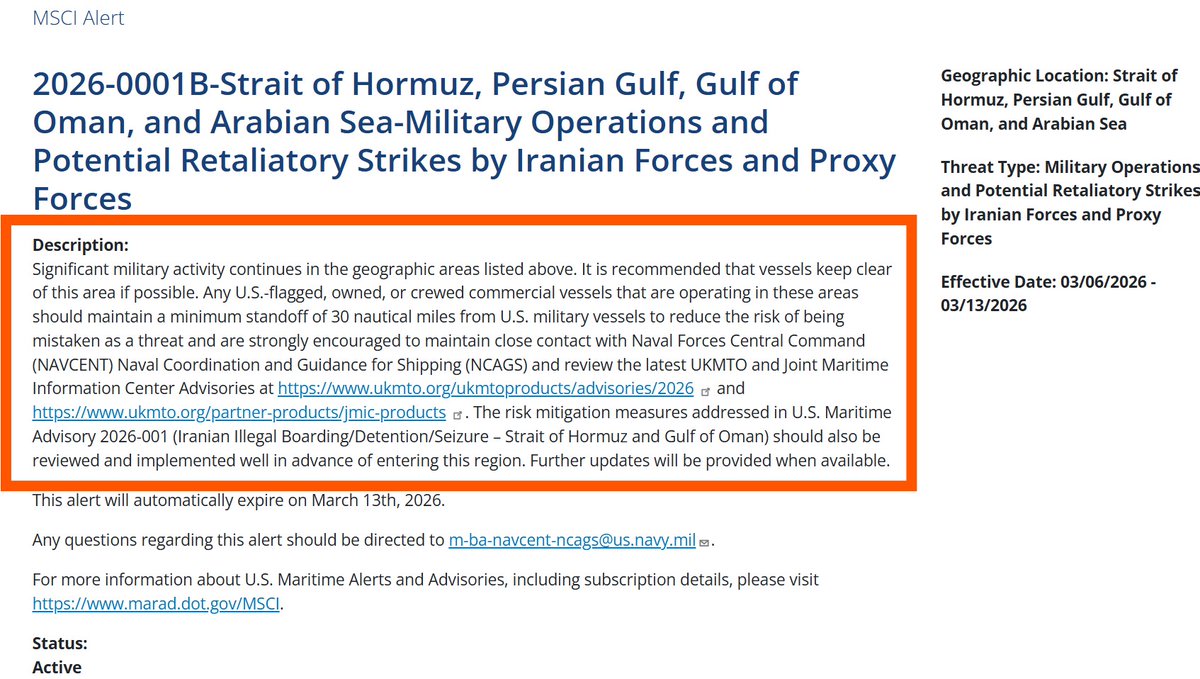
Does Iran have the legal right to create checkpoints in the Strait of Hormuz? According to the United Nations Convention on the Law of the Sea (UNCLOS) 1982, they do not. However, Iran signed but never ratified UNCLOS 1982, similar to the United States. As a result, Iran reverts to UNCLOS 1958. The key difference between the two conventions is that the United Nations Convention on the Law of the Sea (UNCLOS) 1982 designates the Strait of Hormuz as an international strait, allowing for "transit passage." In contrast, UNCLOS 1958 refers to international straits with "innocent passage." The term "innocent passage" permits foreign vessels to navigate through a coastal state's territorial waters without prior authorization, provided their passage is considered "innocent," meaning it does not threaten the peace, good order, or security of the coastal state. Under the rules of UNCLOS 1958, Iran can enforce its domestic laws in the Iranian part of the Strait concerning: - Safety of navigation - Pollution prevention - Security and surveillance Iran asserts that the United States cannot enjoy the rights of "transit passage" as defined in the 1982 United Nations Convention on the Law of the Sea (UNCLOS), arguing that the U.S. only has the right of "innocent passage" since it never ratified UNCLOS 1982. In response, the U.S. dismisses this claim, stating that "transit passage" has become a principle of "customary law." This means that if all countries adhere to a particular practice for decades, it becomes legally binding, regardless of whether the treaty has been ratified.

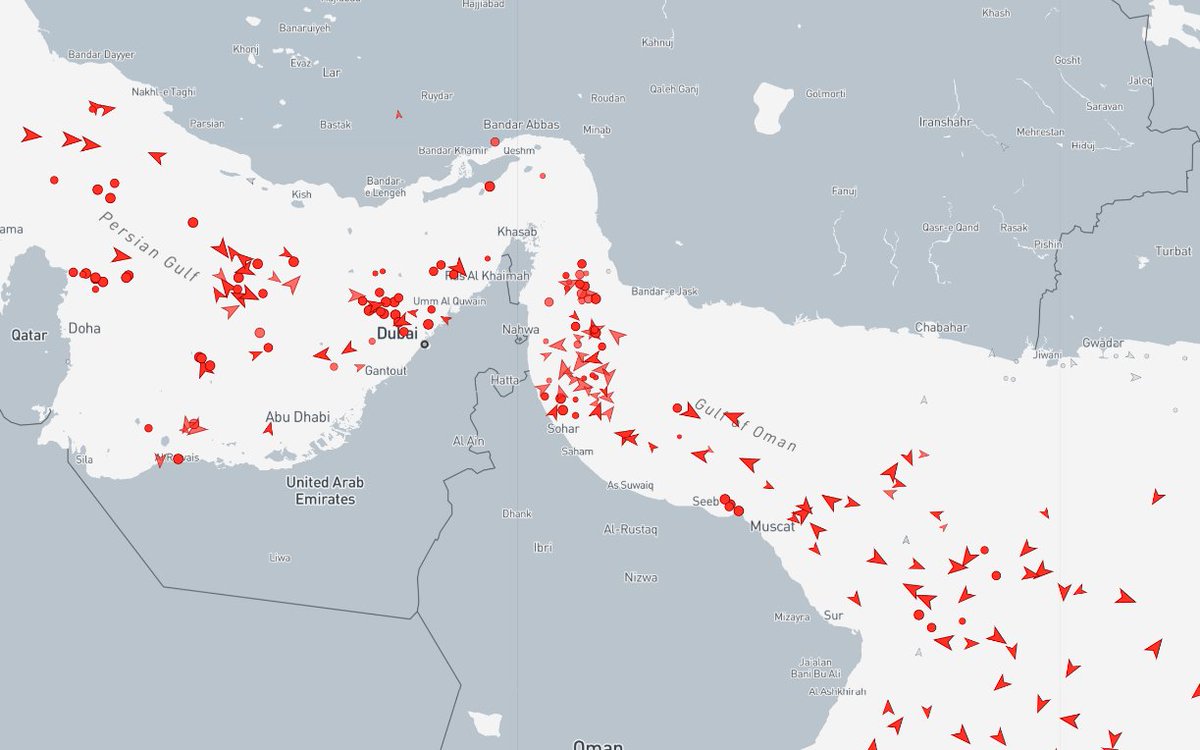
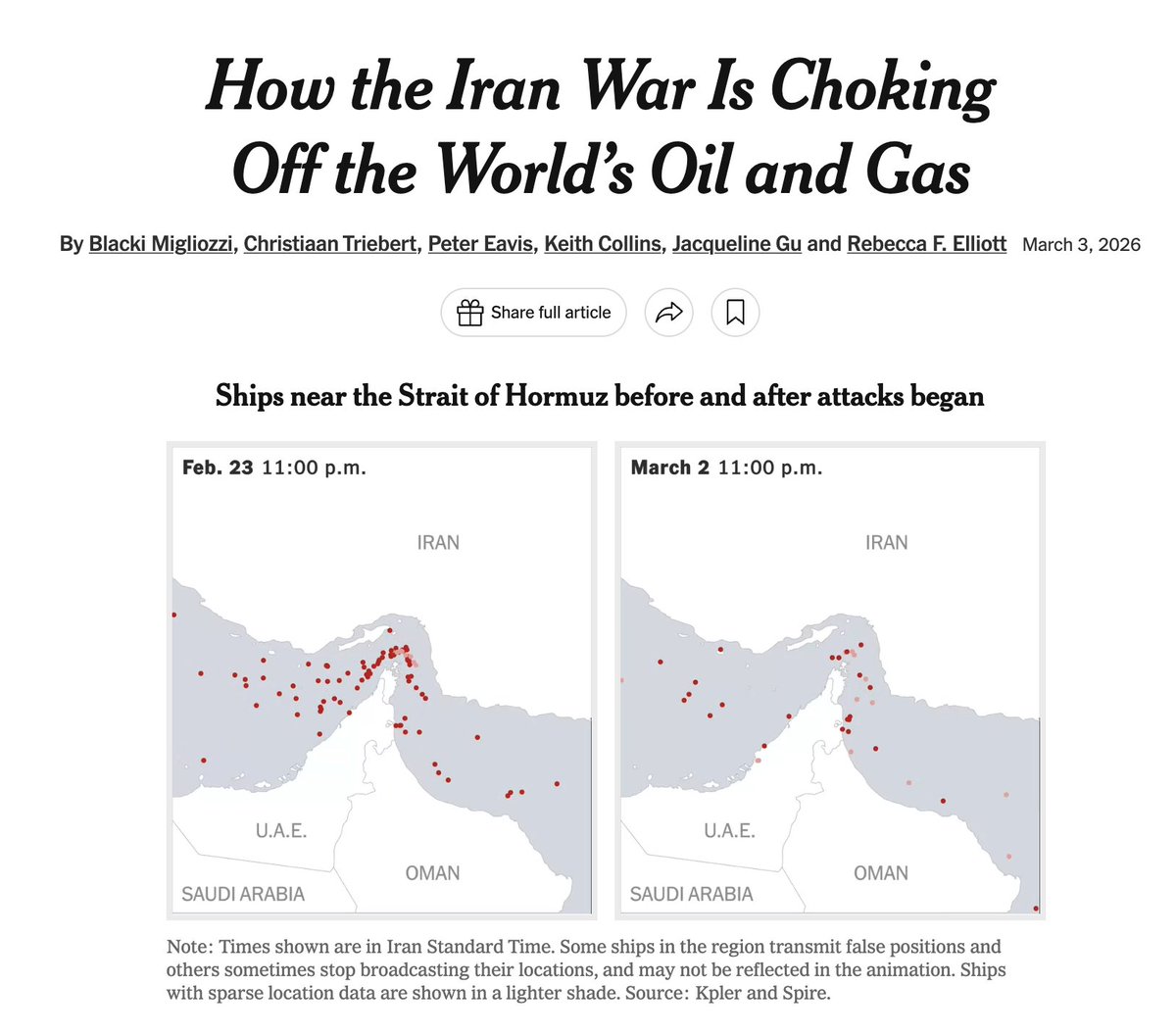
ICS warning: Stranded ships running low on fuel, water, and food. 20,000 seafarers. 3,000 vessels. Trapped in the Gulf. John Stawpert (ICS): "Biggest concern is the impact on stores." Fuel oil supplies are dwindling. Some ships can't produce enough potable water . The sea keeps them alive—until it doesn't. ⚓

After 20 years in the heat of the front row battle, popular #Fylde (& @wharfedalerufc & @RugbyHoppers) prop Peter Altham retires from rugby. A great career, a fine player but more importantly a tremendous man. Read his extraordinary story at bit.ly/4uyZKur Thanks Pete!


This week, billionaire George Prokopiou made one of the boldest plays of his 55-year tanker career: sending at least five ships through the Strait of Hormuz while war flared across the Middle East on.wsj.com/4aTXS7F


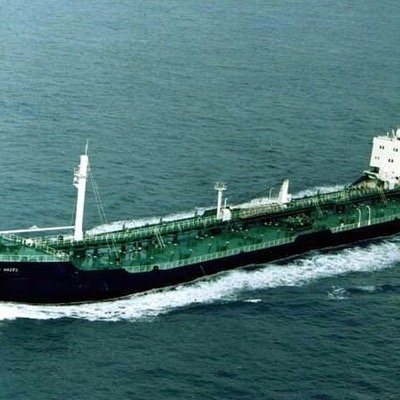
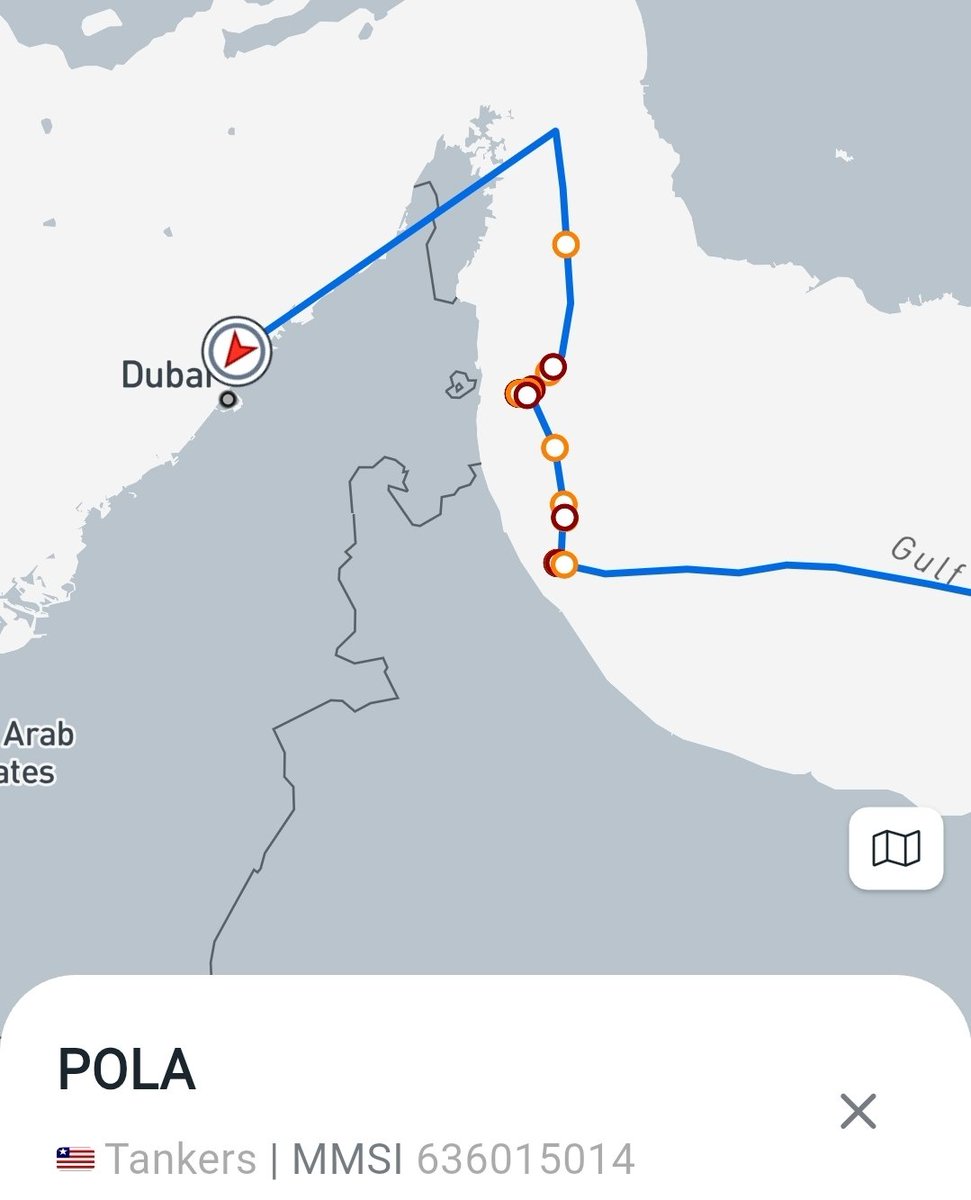
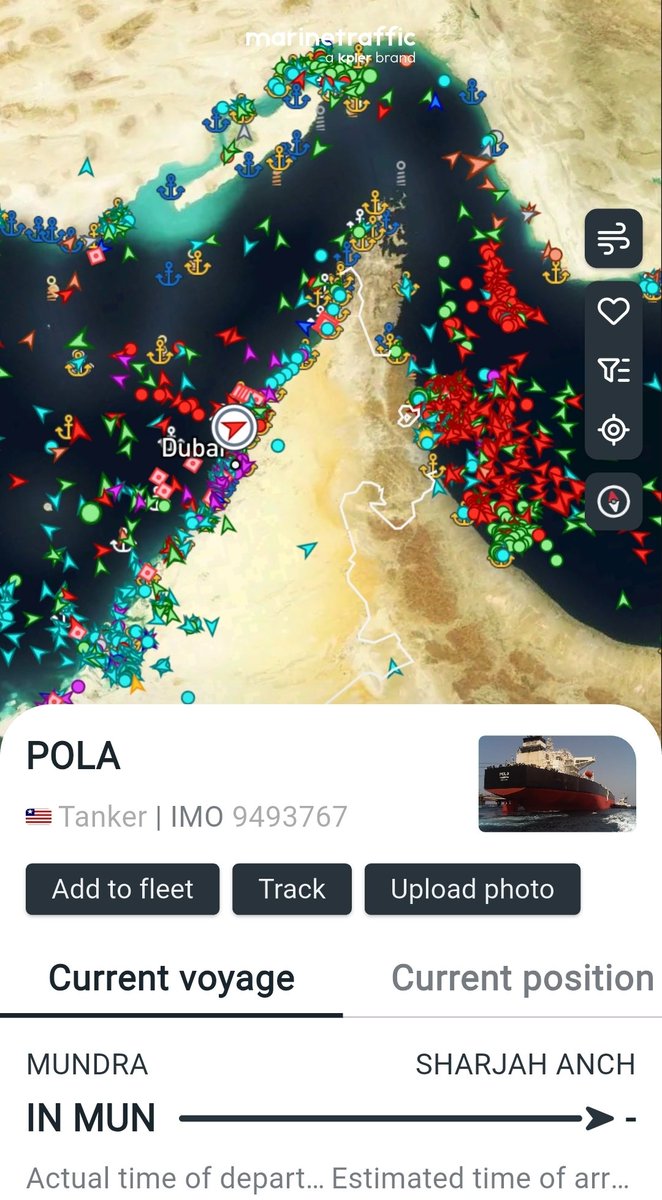
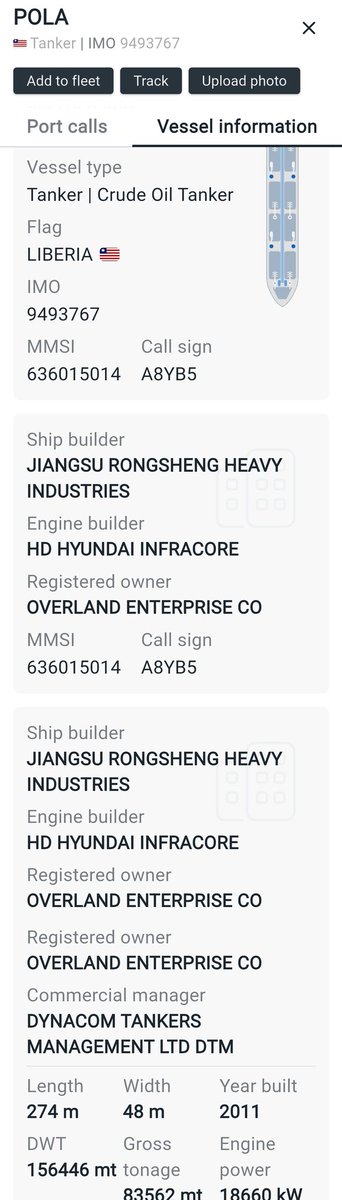
🚨Iran Announces Strait Closed; Tankers Say Hold My Beer🚨 So much for Iran's announcement as three tankers are running the Strait. 1️⃣BLOOMING DALE, Aruba-flag, 12k tons (1996), In ballast and outbound 2️⃣POLA, Liberia-flag, 156k tons (2011), In ballast & inbound 3️⃣PUFFIN TWO, Liberia-flag, 7k tons (2009), Laden & inbound Two of these are fairly small and all are very low in insurance value.


This is potentially the biggest Iran story nobody is talking about: the global insurance market may be heading toward a systemic crisis. Here’s why… Most people don’t realize London isn’t just a financial center it’s THE center of global insurance. Lloyd’s underwrites ~40% of the world’s marine cargo. Ship sinks, port gets bombed, canal gets blocked the bill lands in London. This is why the UK punches above its weight. Not the Royal Navy. Not diplomacy. Insurance. Control insurance, control trade. And London doesn’t just control the 90% of global trade that moves by sea. Lloyd’s and the London market are major insurers of almost everything skyscrapers, factories, ports, satellites, entire supply chains. You can’t participate in public markets or raise large amounts of capital without insurance. Now, the normal playbook for war risk is repricing, not cancellation. Canceling coverage entirely is a massive escalation in underwriting posture. It signals something beyond risk, it signals uncertainty so deep the underwriter can’t even price it. The question everyone should be asking: why? Why not just jack up premiums and make a fortune off the crisis like they did in the Black Sea off Ukraine? To answer that, you have to understand WHY London has maintained a stranglehold on global insurance while losing nearly submarket related to ships. The answer: better intelligence. It is no coincidence that MI6 headquarters sits directly across the Thames from the @IMOHQ, the world’s maritime regulator & a short distance from Lloyd’s itself. I have no proof of a direct pipeline, but it has long been speculated in the industry that intelligence flows from MI6 to Lloyd’s. Having the best intel in the world would be the single greatest competitive advantage any insurer could possess: the ability to price risk that competitors can only guess at. Here’s the problem: the majority of MI6’s intel doesn’t come from its own agents. It comes from Five Eyes the alliance comprising the US, UK, Australia, Canada, and New Zealand. And within 5Eyes, the dominant partner is obvious. The CIA, NSA, NRO, etc generate the lion’s share of intel. So if Lloyd’s pricing advantage flows from MI6, and MI6’s best intelligence flows from the US… what happens when that data pipeline gets throttled? All indications are that @Keir_Starmer was blindsided by the size and scope of the US/Israel strikes on Iran this weekend. That alone tells you something about the current state of transatlantic intelligence sharing. And we know there has been serious anger in Washington over the UK’s decision to sell Diego Garcia, home to America’s most strategically important base in the Indian Ocean, to Mauritius. It is not a huge leap to conclude that the submarine cables linking Langley to London have gone dark, or at minimum have been significantly throttled. What this means for UK national security is a question for the Brits. But what it means for EVERY company globally that’s insured through the London market has massive implications for the entire financial system. Because most large insurers worldwide don’t do independent intelligence work. They index off Lloyd’s rates. If you’re insuring a skyscraper in Tokyo, a semiconductor fab in Taiwan, or a port in Argentina you get a Lloyd’s quote, then shop that price around. Other insurers see Lloyd’s number and assume the diligence was done. They price accordingly. This means if London is suddenly flying blind it’s not just Lloyd’s policyholders at risk. It’s the entire global reinsurance chain. The cancellation of war risk coverage on ships isn’t the crisis. It’s the canary. If this hypothesis is correct, we could be looking at a systemic repricing event across global insurance markets…. the kind of cascading uncertainty that defined 2008 and COVID. Watch Lloyd’s. Watch reinsurance spreads. What Five Eyes. That’s where this story, and possibly Wall Street, breaks. CC @BillAckman


Back in 2021, during my @RealVision interview with Lars, I warned that the U.S. holds an immense, untapped reserve of power over global trade—power that neither Republicans nor Democrats have been willing to exercise. Most still aren’t. But now, as the military wakes up to the reality of losing control over critical chokepoints, the conversation is shifting. I get why many industry professionals dismissed my take back then. What I don’t get is why major European shipping interests are still blind to how American politics actually works today. The old rules are gone. Trade and security are no longer separate conversations. If you’re still operating under pre-2020 assumptions, you’re already behind. If you don’t understand why these specific chokepoints were chosen I suggest taking some time to read Alfred Thayer Mahan.


I've watched 5 attempts to modernise Lloyds of London since the 1990s get mired in resistence and inept implementation. Only one can claim partial success, for a very limited function. Maritime insurance is a very complex, niche, specialist market. Singapore has moved it a little. Russia has state insured since 2022. But Lloyds of London is still preeminent because it's not an easy risk assessment and management business to model. The idea that Trump and his administration of Fox talking heads can replicate the Lloyds of London maritime insurance market to avoid an oil crisis is ridiculous. And the day after USS Fretful Abe Lincoln fled strike range for Indian Ocean due to depleted AD, Trump says the US Navy can escort oil tankers through Strait of Hormuz. Nonsense.

Major marine insurers just cancelled war risk coverage for the Strait of Hormuz. 150+ ships stranded. Rates tripled. One seafarer dead. And this is only day 3 of the Iran conflict. gcaptain.com/marine-insurer…