@elonmusk The algorithm is absolute trash, unfortunately.
Really really bad.
I get highlights from people I never checked out and which aren't even remotely related to my sphere of interest.
@elonmusk If only there were discussions on X..
Unfortunately there's only people blurting stuff.
The design of X is not conclusive to discussions, just reaction.
You should take a page out of Linkedin's book to have more real discussions.
@konstructivizm Once again, putting people on Mars is really not that simple. The radiation is a real danger and nobody ever seems to talk about it and that's just the tip of the iceberg of challenges
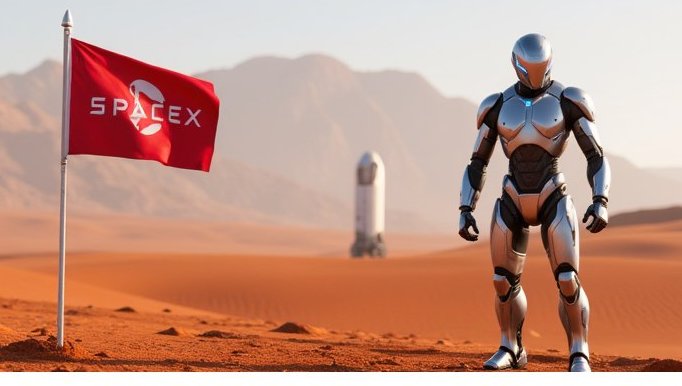
Elon Musk has announced that his company SpaceX will send a spaceship called Starship to Mars at the end of next year. On board the ship will be a robot named Optimus, created by Tesla. Previously, the ship was planned to be launched in November 2026, but now the launch may take place earlier, possibly as early as December next year.
If all goes well, humanity will be able to get closer to the next step - landing people on Mars. They could begin as early as 2029, although the date of 2031 is more likely. His main goal is to give everyone the opportunity to visit Mars if they want to.
In mitochondria, respiratory supercomplexes (blue) pump protons across crista membranes to create an electrochemical gradient, fueling adenosine triphosphate (ATP) synthase (pink) to regenerate ATP—the energy currency of life.
Now, cryo–electron tomography captures these supercomplexes in their native organization, illuminating how the coordinated action of these molecular machines drives life’s fundamental energy conversion.
Learn more this week in Science: scim.ag/3FQ6bEh
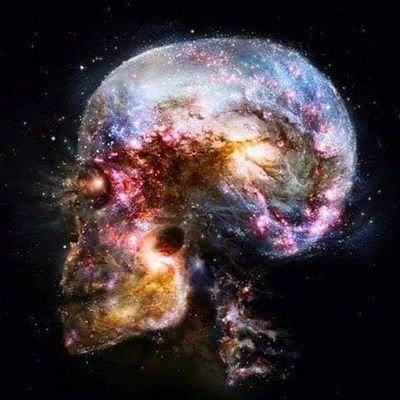
@curiosityonx Not likely, those dots are stars and galaxies full of stars. Stars are not habitats for life. Around some of them may be life sustaining planets, though.